3CX AI 128SC Annual License in Dubai, UAE
Built for organizations with substantial voice traffic, customer-service activity, multi-department communication and advanced reporting needs, this annual 3CX AI subscription provides a 128 simultaneous-call capacity tier with a current maximum of 896 users or extensions. It combines business telephony, contact-center functionality, mobile and web access, AI-assisted communication tools, reporting, integrations and flexible deployment choices in one platform. FourTeck.com helps buyers translate call volume, user structure, SIP trunking, hosting, migration and operational requirements into a practical licensing and deployment plan.
Request QuoteAsk for Configuration Support
Quick Product Information
3CX
AI Edition, 128SC
Annual
128 simultaneous calls
Up to 896 on the current 3CX sizing table
3CX Hosted, self-hosted or on-premise options
High-call organizations, contact centers and large business environments
Contact FourTeck.com for current UAE quote and licensing terms
License sizing, migration planning, configuration guidance and renewal review
SIP trunk, supported endpoints, hosting resources, network readiness and integrations
Fast Buyer Decision Summary
A 128SC license should be selected because of peak concurrent calling demand, not simply because a business has hundreds of employees. The edition and capacity are most valuable when voice traffic, queues, outbound teams, reception activity, branch communication and internal calling can overlap heavily during busy periods. The current 3CX table positions 128SC at a maximum of 896 users or extensions, while the platform itself is licensed by simultaneous calls. That distinction is important for procurement teams comparing cost and scale.
Busy customer-facing environments, large office groups, multi-site organizations and operations that need significant concurrent call capacity.
System-based annual licensing avoids a simple per-seat model and lets capacity planning follow real communication traffic.
Confirm peak calls, total extensions, queues, trunks, recording policy, integrations, hosting choice and expected growth.
FourTeck.com can review license fit, migration needs, endpoint compatibility and project scope before a commercial quotation is prepared.
Product Overview
The 3CX AI 128SC Annual License is a large-capacity subscription tier for the 3CX business communications platform. Its defining sizing point is 128 simultaneous calls, meaning the system is licensed around the number of active internal and external calls occurring at the same time. This is different from software that charges only by named user or seat. For a company with many extensions but moderate call concurrency, that structure can make planning more closely connected to how the organization actually communicates during peak periods.
The current 3CX pricing table identifies 128SC as supporting a maximum of 896 users or extensions. That figure should not be interpreted as a guarantee that every 896-user deployment has identical infrastructure needs. A customer-service organization with heavy queue traffic, call recording, reporting, AI processing and external integrations may place different demands on its hosting environment than a corporate office where many extensions are lightly used. Network design, SIP trunk capacity, storage, CPU resources, backup strategy, security controls and integration traffic therefore remain part of a proper deployment review.
Within the AI Edition, 3CX currently highlights capabilities such as AI-assisted call handling, transcription, call summaries, sentiment analysis, advanced reporting, real-time dashboards, CRM and data integrations, APIs and enterprise continuity functions. The platform also provides established PBX capabilities such as extensions, routing, queues, ring groups, voicemail, mobile and web access, conferencing and supported endpoint connectivity. For IT teams, the advantage is that communications, contact-center operations and selected automation functions can be managed within one broader system rather than built from unrelated tools.
Deployment flexibility is another important planning factor. 3CX currently offers 3CX Hosted, self-hosting and on-premise approaches. The best choice depends on internal IT capability, data-control requirements, preferred cloud provider, backup design, operational ownership and the level of management a business wants to retain. An organization with a capable infrastructure team may prefer greater control, while another company may value a managed hosting route that reduces day-to-day server responsibility.
For UAE buyers, FourTeck.com can help turn these choices into a structured procurement requirement. Instead of requesting “128SC” in isolation, buyers can share expected peak calls, total users, branch count, queue design, SIP provider, existing phones, migration target, CRM requirements, recording policy, AI use cases and hosting preference. That allows the quotation conversation to include the license plus the supporting elements needed for a workable deployment.
Key Business Benefits
The value of this license tier is not simply the number “128.” The business case comes from matching concurrent call capacity with communication workflows that require scale, visibility, continuity and more intelligent handling. The following benefits explain why buyers may consider this tier when moving beyond smaller PBX deployments.
◆ Capacity for Busy Calling Periods
A 128 simultaneous-call license is designed for organizations where many conversations can be active at once across inbound, outbound and internal traffic. That capacity can help avoid undersizing when reception teams, service queues, sales users, managers and branches are all communicating during the same peak window. Correct sizing still requires real call statistics or a reasonable traffic estimate.
◆ System-Based Annual Licensing
3CX bases the annual subscription primarily on simultaneous-call capacity instead of a simple user-by-user monthly charge. For larger organizations this gives procurement teams a different budgeting model: they can consider peak usage, extension count and edition requirements together rather than assuming every employee automatically creates the same recurring license cost.
◆ AI-Assisted Communication Workflows
The AI Edition brings transcription, summaries, sentiment-related insight and AI-assisted call handling into the communications environment. These tools can reduce manual note-taking, support review of customer interactions and help teams surface useful context from conversations. Actual usage should be planned around privacy, data handling, provider choice and internal approval policies.
◆ Better Management Visibility
Advanced reports, real-time dashboards and integrations can give supervisors and operations managers clearer visibility into call handling, queue performance and communication activity. This matters to customer-service operations because capacity decisions are stronger when they are based on real activity patterns instead of guesswork.
◆ Flexible Deployment Control
Organizations can evaluate hosted, self-hosted or on-premise approaches according to their operational model. That flexibility can be useful when IT policy, data governance, geographic architecture, cloud strategy or disaster-recovery planning make a single deployment method unsuitable for every customer.
◆ Integration and Automation Potential
3CX highlights integration options involving Microsoft Teams Direct Routing, Power BI, Grafana, CRM systems, data warehouses and APIs. For buyers, this creates a path to connect communication data with reporting and workflow systems already used by the business, subject to configuration and application compatibility.
◆ Continuity Planning for Enterprise Use
The AI Edition includes enterprise-focused continuity capabilities such as failover and standby licensing. Those features are valuable only when they are implemented as part of a broader architecture that also covers infrastructure resilience, network paths, SIP services, backup procedures and operational testing.
Product Highlights
The license tier is sized around 128 active internal and external calls at the same time, making concurrency the central planning metric.
The current 3CX sizing table lists a maximum of 896 users/extensions for this tier. Real-world infrastructure and call behavior still need assessment.
Current AI Edition capabilities include transcription, call summaries, sentiment-related tools and AI-assisted handling, with provider and deployment choices to review.
Reporting, dashboards and queue-focused tools help managers examine communication performance and customer-service operations.
3CX lists integrations with tools such as Microsoft Teams Direct Routing, Power BI, Grafana and CRM platforms, plus API options for workflow connection.
Businesses can consider 3CX Hosted, self-managed cloud or on-premise deployment according to IT policy and control requirements.
One of the strongest reasons to review the AI Edition is the combination of established communications functions and newer intelligence features. A buyer is not selecting a standalone transcription tool or a standalone call-center dashboard. The goal is to place telephony, user communication, queue handling, reporting and selected AI functions inside the same broader operating environment. That can reduce fragmentation, but it also makes design discipline more important. The business should decide which teams need AI functions, who can view transcripts, how long communication data should be retained and how access permissions will be managed.
Buyers should also separate license capability from implementation scope. The annual subscription gives access to the relevant edition and call capacity, but a successful project may additionally require SIP trunks, supported IP phones or headsets, server or cloud resources, DNS and certificates, firewall configuration, backup design, endpoint provisioning, CRM integration, user training and migration work. FourTeck.com can help identify those dependencies before the order is finalized.
Configuration and Buyer Guidance
The most useful question before ordering is not “How many employees do we have?” but “How does our organization communicate at the busiest point of the day?” A 128SC tier can be appropriate for a large extension base, but concurrent calls should be estimated from call records, queue statistics, existing PBX data or a carefully documented forecast. Include internal calls as well as external calls because 3CX defines simultaneous calls around active internal and external conversations.
How many calls overlap at peak time?
Check reception, customer-service queues, sales calls, branch traffic, internal conversations and scheduled campaigns. Use the busiest normal period rather than a daily average.
How many users and extensions are planned?
The current maximum is 896, but user count should be mapped by role, department, phone type, remote-work requirement and expected growth.
Which communication features matter?
Document queues, recording, reporting, AI transcription, AI agents, conferencing, messaging, CRM integration, Microsoft Teams requirements and supervisor controls.
Where will the system run?
Decide whether 3CX Hosted, self-hosted cloud or on-premise deployment best fits internal governance, IT capability, data handling and continuity requirements.
What infrastructure already exists?
Identify SIP trunks, public numbers, supported desk phones, headsets, firewall rules, internet links, VLANs, QoS settings, DNS, certificates and backup arrangements.
Is this a new license, renewal or migration?
The commercial and technical steps differ. Existing customers should share current edition, license size, expiry timing, version, hosting method and planned changes before quotation.
For the most accurate FourTeck.com review, provide the current extension count, expected growth, peak concurrent calls, number of queues and agents, SIP provider, number ranges, preferred hosting model, current phones, CRM or analytics platforms, recording policy, AI requirements, branches, migration timeline and UAE delivery or service location. This information reduces the risk of buying the correct license name but the wrong overall solution.
Ideal Business Use Cases
The 128SC tier is most meaningful in environments where communication traffic is concentrated, visible to supervisors or important to day-to-day operations. It can support a range of business models, but every use case should be validated against real concurrency and system architecture rather than selected from headcount alone.
Customer Service and Contact Centers
Busy inbound environments can combine queues, IVR routing, supervisor visibility, call recording, reporting and AI-assisted analysis. Peak calling is often more important than total staff because a concentrated service window can create high concurrency even when the overall user count is moderate.
Multi-Department Corporate Offices
Large organizations can centralize extensions for reception, finance, HR, operations, sales, service and management while supporting web and mobile users. Department-specific routing and reporting help make a large phone system easier to administer and analyze.
Multi-Site and Branch Operations
Organizations with several offices can use a central communications platform to simplify extension dialing, branch routing and remote-user access. Network quality, local emergency-calling requirements, SIP trunk design and resilience should be reviewed for each deployment geography.
Sales and Outbound Calling Teams
Sales organizations with significant outbound activity can benefit from centralized calling, reporting, CRM connection and supervisor oversight. Campaign design, outbound rules, telecom compliance, number presentation and trunk capacity should be established before rollout.
Healthcare, Education and Service Organizations
Appointment desks, admissions teams, help desks and front-office groups often need high availability, clear routing and easy user access. Data privacy, recording rules and AI-processing choices should be aligned with the organization’s governance requirements.
Hospitality, Logistics and Operations Centers
Businesses that coordinate customers, field staff, vendors and internal departments can use queues, extension groups, mobile access and reporting to structure communication. The correct 128SC design depends on how many conversations overlap during check-in peaks, delivery windows, dispatch periods or service surges.
The license can also fit organizations consolidating several legacy PBX systems into a more standardized communications platform. In that scenario, migration planning should include number porting or SIP trunk transition, extension mapping, call-flow documentation, endpoint replacement, user training, recording retention, failover testing and a staged cutover plan. FourTeck.com can help buyers separate license procurement from the implementation tasks that must be scheduled around it.
3CX AI 128SC Call Capacity and Workload Planning
The most important technical concept in this license is simultaneous-call capacity. A business may have 500 employees, but only a portion of them may be on active calls at the same time. Another organization may have fewer users yet operate a high-volume contact center where most agents are speaking continuously. Those two companies can require very different license sizes despite similar or even reversed headcounts. The 128SC tier is therefore best assessed from peak traffic rather than employee totals alone.
Start with existing call statistics when available. Review the maximum number of concurrent calls during normal busy periods, then consider expected growth, new branches, planned support queues, seasonal peaks and outbound campaigns. Include internal calling because the 3CX definition covers active internal and external calls. If the organization is migrating from another PBX, export call-detail data where possible and compare the busiest time blocks instead of relying only on monthly call totals.
The current 3CX pricing table maps 128SC to a maximum of 896 users or extensions. That gives a useful boundary, but infrastructure sizing remains separate. Recording, conferencing, reporting, integrations and AI processing can introduce storage, CPU, bandwidth or data-retention requirements beyond the license count. A self-hosted deployment should therefore be designed from the current 3CX technical guidance for the chosen version, while a hosted deployment should be reviewed against the service package and operational model.
3CX AI 128SC Intelligent Call Handling and Analytics
The AI Edition extends the communication platform beyond routing and calling by adding tools that can help organizations understand and process conversation content. 3CX currently highlights transcription, summaries, sentiment analysis, AI receptionist and AI agent functions, together with speech diarization and options to connect supported AI providers. These capabilities can be useful to service teams that spend significant time taking notes, reviewing calls or identifying customer themes.
For management teams, AI features should be connected to a clear business workflow. Transcription can support quality review or record creation; summaries can reduce the time required to capture the main points of a long call; sentiment-related indicators can help supervisors focus attention on interactions that may need review. AI agents or receptionist functions can assist with selected first-line tasks. None of these should be treated as a reason to deploy AI without governance. Buyers should define who can access transcripts, where data is processed, how long information is stored and whether customer notices or internal approvals are required.
3CX also promotes advanced reports and real-time dashboards for the AI Edition. In a large environment, reporting helps management connect call capacity with operational decisions. Queue peaks, missed calls, agent workload and service patterns can inform staffing and licensing reviews. Integrations with Power BI, Grafana, CRM systems, data warehouses and APIs can extend this information into existing reporting workflows where supported and correctly configured.
3CX AI 128SC Deployment, Integration and Continuity
A large communication system should be planned as infrastructure, not simply activated as a license. 3CX currently supports hosted, self-hosted and on-premise deployment choices, giving organizations several ways to balance management effort and control. The right choice depends on internal IT skills, desired cloud platform, data location, security policy, backup ownership, change management and how quickly the company wants to recover from a service interruption.
Integration planning is equally important. The AI Edition highlights Microsoft Teams Direct Routing, CRM connectivity, Power BI, Grafana, data-warehouse integration and APIs. A business may use only one or two of these, but those connections can materially affect the project. IT teams should confirm supported versions, authentication methods, user mapping, data permissions, firewall access and whether the existing CRM or reporting design needs customization. Testing should occur with representative users before a broad rollout.
Continuity deserves its own design. 3CX lists built-in failover and standby licensing within the AI Edition, but the business should still evaluate redundant internet connections, SIP trunk resilience, DNS, backup schedules, restore procedures, cloud or server availability and operational responsibilities. Failover is strongest when it is tested rather than assumed. Decide how often recovery procedures will be rehearsed and who has authority to switch or restore services.
FourTeck.com can help coordinate the procurement-side planning around these choices. That can include reviewing the preferred license, compatible phones, network prerequisites, hosting approach, migration scope and the information your technical team or implementation provider will need. The goal is to make the annual subscription part of a controlled communications design instead of a disconnected line item.
What Should You Know Before Choosing This 3CX License?
The questions below focus on the decisions that usually determine whether a 128SC AI Edition subscription is the right fit. They are intended to help technical teams, procurement managers and business stakeholders prepare enough information for a precise license and deployment discussion.
Is 128SC the right size for a company with hundreds of users?
It can be, but user count alone is not enough to decide. The current 3CX table allows up to 896 users or extensions at this tier, while licensing is based on simultaneous calls. Review the maximum number of overlapping calls during busy periods, including internal calls, queues and outbound activity. A lightly calling organization may need less capacity, while a busy contact center may need more.
What should we measure before moving from a smaller 3CX license?
Collect peak concurrent-call statistics, total extensions, queue counts, agent activity, missed-call patterns and growth plans. Also check whether the upgrade is driven by additional call capacity, AI functions, advanced reporting, continuity requirements or a combination of factors. Share the current license size, edition, version, hosting method and renewal date so the commercial path can be reviewed correctly.
Can the AI Edition work with our existing SIP trunks and IP phones?
Potentially, but compatibility should be verified rather than assumed. Document the SIP provider, trunk type, phone brands and models, provisioning method, SBC use, firewall design and current firmware. 3CX maintains supported providers and endpoint guidance that can change over time. FourTeck.com can help buyers identify what should be checked before a migration or renewal quote is finalized.
Which hosting model should an IT team choose?
Choose according to ownership, security and operational responsibility. 3CX currently offers hosted, self-hosted and on-premise options. A managed approach can reduce server administration, while self-managed or on-premise deployment can provide greater infrastructure control. Review data handling, backup ownership, network resilience, upgrade responsibility, disaster recovery and internal support skills before deciding.
What AI requirements should be defined before purchase?
Start with the business outcome: transcription, call summaries, sentiment-related review, AI receptionist, AI agents or analytics. Then decide which teams will use the functions, who can access results, which supported AI provider or processing method is appropriate, and what privacy or retention rules apply. This creates a clearer implementation scope than purchasing the edition without a defined operational use case.
Do we need extra infrastructure beyond the annual license?
Usually, yes. The software license is one part of a complete business phone system. Depending on the deployment, you may also need SIP services, compatible phones or headsets, cloud or server resources, network configuration, storage for recordings, backup, DNS, certificates, migration work and user training. The exact list depends on your existing environment and the services already in place.
How should a multi-site company prepare for rollout?
Map each site’s users, numbers, queues, business hours, internet links, local calling requirements and support contacts. Decide whether branches will share a central system or require specific routing and resilience measures. Test network quality and endpoint provisioning before the main cutover. For large migrations, use staged deployment groups so problems can be identified without affecting every location at once.
What should we confirm about renewal and future growth?
Record the subscription expiry date, current edition, expected extension growth and peak-call trend well before renewal. Review whether new branches, queues, campaigns or AI workloads could change capacity needs. Pricing and commercial terms can change, so the next-year budget should be confirmed through a current quotation rather than copied from an old invoice or previous public price list.
What information helps FourTeck.com prepare a more accurate quote?
Share whether the requirement is new, renewal or upgrade; your current license details; desired 128SC AI Edition term; total users; peak concurrent calls; number of branches; SIP provider; hosting preference; phones; queue and recording needs; integrations; AI use cases; implementation timeline; and UAE billing details. This lets the quote reflect both licensing and any related project requirements.
Business Requirements to Match Before You Buy
For a high-call customer service operation
A suitable fit when many inbound and outbound conversations overlap and managers need queues, reporting and centralized call control. Confirm the actual peak call figure and trunk capacity before selecting the tier.
For businesses replacing a legacy PBX
Plan number migration, extension mapping, IVR logic, call groups, phone compatibility, user training and cutover timing. The license does not replace the need for a controlled migration plan.
For organizations wanting AI-assisted call review
The AI Edition is relevant when transcription, summaries, sentiment-related analysis or AI agents have a defined business purpose. Confirm privacy, data processing and access controls before rollout.
For teams planning future expansion
Check growth in extensions and, more importantly, growth in simultaneous calls. New branches, sales campaigns or support queues can change concurrency faster than headcount alone suggests.
For IT teams that need deployment choice
Hosted, self-hosted and on-premise options allow different levels of control. Match the deployment to governance, infrastructure skills, continuity objectives and support responsibility.
For procurement teams comparing total project scope
Ask for the license, hosting, SIP trunk, endpoints, migration, configuration, integration and training elements to be separated clearly so commercial approvals reflect the complete solution.
What Buyers Should Check Before Purchase
A large communications license can look straightforward on a quotation, yet the real purchasing risk is usually outside the product name. Buyers should confirm whether the requested capacity matches actual traffic, whether the AI Edition is required for the planned features, and whether the organization already has the infrastructure needed for deployment. Treat the quote as a system-planning document rather than only a subscription line.
Capacity Fit
Verify current and forecast peak calls. If historical usage never approaches the selected capacity, a smaller tier may deserve review. If normal peak traffic already nears 128 concurrent calls, discuss growth headroom instead of buying at the limit.
Compatibility Check
List SIP trunks, desk phones, headsets, SBCs, CRM systems, identity services and analytics platforms. Compatibility and integration methods can change by 3CX version and vendor release, so current support guidance should be checked.
Hosting and Network Readiness
Confirm where the system will run, who manages it, how backup and recovery work, which internet connections carry voice traffic, and whether firewall, DNS, QoS and security policies are prepared for the chosen design.
AI Governance
Decide which AI features are required, what communication data may be processed, who can view transcripts or summaries, what retention applies and which supported provider or processing method is acceptable to the organization.
Renewal and Lifecycle Planning
An annual subscription should be tracked well before expiry. Review license size, edition and system version during the renewal cycle so growth, platform changes and commercial adjustments can be handled without a last-minute decision.
Quote Preparation
Give FourTeck.com enough detail to distinguish software licensing from hosting, SIP service, endpoints, migration, support and integration work. Clear scope helps procurement compare the complete requirement and reduces unexpected add-ons later.
For an upgrade from an older 3CX deployment, also identify the running version, operating environment, current backup status, existing license key information, number of extensions and any legacy phones or integrations that may require replacement. For a migration from another PBX brand, prepare the number plan, hunt groups, IVRs, queues, call forwarding rules, business hours and user list in advance. These details often determine project effort more than the license itself.
UAE Availability and Service Support
FourTeck.com supports business inquiries for 3CX licensing in Dubai and across the UAE with assistance for license selection, current commercial quotation, renewal review, deployment planning and related infrastructure requirements. Availability can vary according to subscription status, current 3CX commercial terms, supplier processing, requested services and whether the order is a new license, renewal, upgrade or capacity change.
For a new deployment, FourTeck can help buyers define the appropriate simultaneous-call tier, identify whether the AI Edition is required, review hosting choices, list compatible endpoints and outline the technical information needed for installation. For an existing system, the review can focus on current edition, call capacity, expiry timing, version, hosting, user growth and operational issues that should be addressed during renewal or upgrade.
Delivery coordination for software licensing is different from physical hardware delivery, so the commercial process should distinguish electronic license or subscription handling from any phones, headsets, gateways, servers or networking equipment included in the project. Warranty guidance applies to related hardware according to the manufacturer and supplier terms, while software support and subscription entitlements should be confirmed in the quotation.
Service Coverage Across Key UAE Business Areas
Businesses in Dubai, Abu Dhabi, Sharjah and Ajman can contact FourTeck.com for current licensing guidance, configuration review and quote assistance. Multi-location organizations can also discuss centralized user design, branch calling, SIP routing, migration planning and related endpoint requirements as one coordinated project. The practical scope depends on the customer’s existing PBX, telecom provider, number ranges, network readiness, preferred hosting method and implementation responsibility. Instead of creating a different product requirement for every office, procurement teams can provide one consolidated list of sites, users, departments and call patterns so the communication design is reviewed as a whole.
Regional Availability for GCC and Africa Projects
FourTeck.com also supports business technology inquiries that involve regional operations across selected GCC and Africa markets. Organizations with teams in the UAE, Saudi Arabia, Qatar, Oman, Kuwait, Bahrain, Kenya, Uganda or other supported locations can discuss licensing and communication-system requirements through the appropriate FourTeck inquiry channel. Regional availability, invoicing, delivery methods, telecom requirements, support arrangements and commercial terms can differ by country.
For multi-country companies, the most useful starting point is a site-by-site communication matrix: users, call volumes, local numbers, SIP providers, working hours, queue requirements, language needs, recording rules and hosting policy. This helps determine whether one centrally managed design, separate deployments or a mixed approach is more practical. Regulatory and telecom obligations should be checked for each market rather than assumed from one country’s setup.
Regional buyers can explore FourTeck Africa, FourTeck Kenya, FourTeck Uganda and FourTeck Kuwait for country-focused business technology inquiries. Final licensing and deployment recommendations should always be based on current vendor terms and the local project requirement.
Related FourTeck.com Solutions to Consider
A 3CX license is usually one element of a wider communication project. The following FourTeck.com pages can help buyers plan endpoints, call-flow controls and adjacent communication tools. Choose related products based on the actual deployment rather than adding hardware or software that does not serve a defined requirement.
3CX Business Phone System
Useful for buyers who want a broader overview of 3CX availability and PBX planning before selecting a specific license tier.
DNCR Setup with 3CX
Relevant to UAE organizations that need to plan outbound calling controls and internal processes around 3CX workflows.
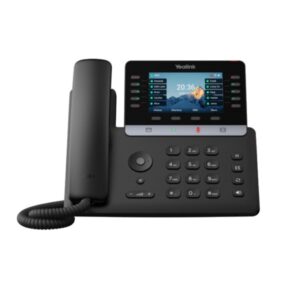
Yealink SIP-T74W
A professional SIP desk-phone option for users who require physical endpoints as part of a compatible business telephony rollout.
Auto Dialer Planning
For outbound teams that need structured campaign calling, review dialer requirements separately from core PBX licensing.
VoIP Auto Dialer Software
A related planning path for sales and service organizations comparing campaign workflows, reporting and PBX integration.
Project and Quote Assistance
Use the FourTeck contact page to share license, endpoint, trunk, hosting, migration and integration requirements in one request.
Why Business Buyers Work with FourTeck.com
FourTeck.com approaches software licensing as part of a business technology requirement rather than as an isolated product code. That is particularly useful for communications platforms because the correct license depends on real operational details: call concurrency, users, queues, SIP services, endpoints, hosting, recording, integrations, migration and support responsibilities. A procurement team may know the requested model name, while the IT team knows the technical environment and operations knows the daily call behavior. FourTeck can help bring those inputs together before quotation.
Coordinate licensing with related phones, networking, server or cloud requirements where the project needs them.
Review simultaneous calls, edition choice, user scale and deployment model before finalizing the order.
Prepare a commercial request that distinguishes subscription, implementation, hosting and hardware components.
Identify extension lists, number plans, call flows, old endpoints, integration requirements and transition risks.
Support buyers with product inquiry, configuration discussion and delivery or project coordination across the UAE.
Discuss whether a current license should be renewed as-is, resized or paired with updated infrastructure as requirements change.
FourTeck.com does not need to assume stock, fixed pricing or one-size-fits-all deployment to be useful. The practical value comes from helping the buyer define a complete requirement and obtain current commercial information for that requirement. This is especially important for annual software subscriptions because licensing terms, edition features and public pricing can change over time.
Frequently Asked Questions
What is the 3CX AI 128SC Annual License used for?
It is an annual 3CX AI Edition subscription tier sized for up to 128 simultaneous internal and external calls. It is intended for larger or high-call business environments that need enterprise telephony, contact-center tools, reporting, integrations and current AI Edition capabilities such as transcription and AI-assisted communication functions. The correct fit should be confirmed from real or forecast peak calling data.
How many users can the 128SC tier support?
The current 3CX pricing table lists a maximum of 896 users or extensions for 128SC. However, the platform is licensed by simultaneous calls, so 896 should not be treated as a universal sizing target. A deployment with heavy queue traffic or concentrated call activity should be evaluated from peak concurrency, infrastructure resources and operational requirements.
Does the license include AI features?
Yes. The current 3CX AI Edition includes AI-related capabilities such as transcription, call summaries, sentiment analysis and AI-assisted call handling, alongside advanced communication and contact-center functions. Exact feature availability, provider choices and configuration requirements can evolve with 3CX releases, so current vendor documentation should be checked for the deployment version.
Can 3CX AI be deployed in the cloud or on-premise?
3CX currently provides multiple deployment choices including 3CX Hosted, self-hosting and on-premise options. The right approach depends on the organization’s IT skills, data-control requirements, preferred infrastructure, backup responsibilities, security policy and disaster-recovery design. FourTeck.com can help buyers define the preferred model before quotation.
Is this license available for businesses in the UAE?
FourTeck.com can assist UAE businesses with current 3CX license inquiries, configuration review and quotation. Availability and commercial terms can vary according to vendor pricing, subscription status, order type and requested services. Share whether the requirement is a new license, renewal, upgrade or capacity change so the correct commercial path can be checked.
Can FourTeck.com help with an existing 3CX renewal?
Yes. For renewal planning, provide the current license details, edition, simultaneous-call capacity, expiry date, system version, hosting method and any planned changes in users, branches, queues or features. FourTeck.com can use that information to help structure a renewal or upgrade quotation and identify related technical items that may need review.
Does the annual license include SIP trunks and desk phones?
No assumption should be made that SIP trunks, phone numbers, physical phones, headsets or implementation services are included in the software subscription. These are normally separate project components and depend on the customer’s existing environment. A FourTeck quotation can identify which additional elements are required for the intended deployment.
What should we provide for a 128SC quote?
Provide the required edition and term, current or expected extension count, measured peak concurrent calls, number of queues and agents, SIP provider, hosting preference, branch count, endpoint models, recording policy, integration needs, AI use cases and project timeline. Existing 3CX customers should also share current license and renewal details where appropriate.
Can the license support Microsoft Teams, CRM and analytics integrations?
The current AI Edition highlights Microsoft Teams Direct Routing, CRM connectivity, Power BI, Grafana, data-warehouse integrations and APIs. Whether a specific customer application is supported and how it should be configured depends on the 3CX version, the third-party platform, authentication method and project design. Integration requirements should be confirmed before the implementation scope is approved.
Can businesses request a larger or smaller 3CX capacity instead?
Yes. 3CX offers multiple simultaneous-call tiers. The correct tier should reflect peak traffic, maximum extension limits and planned growth. If 128SC is more than the business requires, a smaller option may be suitable; if normal peak usage approaches the 128-call limit, a higher capacity should be reviewed. FourTeck.com can help compare the requirement before quotation.
Need Help Planning Your 3CX License and Deployment?
FourTeck.com can help review simultaneous-call capacity, AI Edition requirements, renewal or migration status, hosting choice, SIP trunks, endpoint compatibility, integrations and UAE project requirements before preparing a commercial quote.