3CX Basic 128SC Annual License in Dubai, UAE
Built for organizations that value reliable calling over complex contact-center extras, this annual 3CX Basic license provides capacity for 128 simultaneous calls while keeping licensing tied to the phone system rather than charging every user individually. It is particularly relevant for IT teams that need a modern PBX with core call handling, user synchronization, paging, intercom, BLF, SSO, fax capability and basic reporting, yet do not require CRM integration, call queues, recordings, bridges, hot desking, failover, advanced APIs or AI-driven functions. FourTeck.com helps UAE buyers review capacity, deployment method, renewal requirements and supporting VoIP infrastructure before quotation.
Request QuoteCheck UAE Availability
Quick Product Information
3CX
Basic, 128SC
Annual system subscription
128 simultaneous internal and external calls
Up to 896 under current fair-use guidance
3CX Hosted, self-hosted or on-premise
Reliable business telephony without advanced contact-center features
Annual renewal required
Separate services or hardware may be required
Software support and commercial terms depend on selected service arrangement
Quote and configuration assistance through FourTeck.com
Confirm capacity, features, deployment and renewal details before ordering
Fast Decision Summary for Busy Buyers
A 128SC license is a capacity decision, not simply an employee-count decision. Buyers should evaluate the highest realistic number of internal and external calls that may take place at the same time, then confirm that Basic edition functionality is sufficient for the organization.
Large single-system environments that mainly need dependable voice calling and core PBX administration.
System-based annual licensing can be easier to forecast than a per-user subscription when many extensions share a known call-capacity requirement.
Confirm whether queues, call recording, CRM integration, bridging, hot desking, failover, APIs or AI functions are required, because Basic does not include them.
The edition supports 3CX Hosted, self-hosted and on-premise deployment, but infrastructure and service requirements differ by architecture.
128SC means up to 128 concurrent calls; extension allowance does not mean all extensions can call simultaneously.
Share extension totals, peak call estimates, SIP trunk details, hosting preference and required functions for a more accurate recommendation.
Product Overview
The 3CX Basic edition is designed around a straightforward idea: many organizations still need a capable, maintainable IP phone system even when they do not need a full contact-center platform. At the 128SC capacity level, that approach becomes relevant to larger offices, campuses, operational facilities and institutions where a substantial number of calls can overlap during busy periods. The subscription is licensed by simultaneous calls rather than by charging every extension as a separate seat. Both internal and external active calls count toward simultaneous call capacity, so proper sizing begins with peak calling behavior rather than payroll headcount alone.
The Basic feature set concentrates on practical telephony. 3CX lists user synchronization with Google or Microsoft, intercom and paging, Single Sign-On, Busy Lamp Fields, fax support, wake-up reminders, hotel integration for qualifying license sizes and basic reports among the included functions. This makes the edition useful when communication workflows revolve around extensions, calls, simple operational visibility and manageable administration. It intentionally omits functions that can materially change system design, including queues, call recording, CRM and API integration, bridges between 3CX systems, hot desking, failover, call-processing scripts, transcription and AI agents. That distinction is important because a buyer should select the edition from the workflow backward, not from the price forward.
For a UAE organization replacing an older PBX, moving from legacy lines to SIP, consolidating desk phones, or standardizing telephony for a main facility, the license can provide a clean modernization path. However, the annual subscription is only one part of the complete solution. A working deployment can also depend on a compatible SIP trunk, phone numbers, supported endpoints, network readiness, firewall configuration, DNS, server or cloud resources, backup planning, security practices and implementation support. Buyers should also verify whether 3CX Hosted, self-hosting or on-premise installation best matches internal IT policy and data-control requirements.
FourTeck.com approaches the purchase as a solution-sizing exercise. A useful quotation request should include expected extension count, busiest-hour concurrency, current or planned SIP provider, preferred hosting model, handset inventory, branch topology, call-flow requirements and any functions that are operationally mandatory. This prevents an organization from choosing 128SC merely because the number looks large, or choosing Basic when a missing advanced feature would later require an edition upgrade. The goal is a license and deployment plan that fits how the business actually communicates.
Key Business Benefits
◆ Capacity Based on Real Call Activity
Licensing around simultaneous calls helps an IT team think about actual telephony load. A company can have many registered extensions while only a portion are active on calls at any given moment. This can make capacity planning more aligned with operational use than a simple seat count, provided peak concurrency is measured carefully and headroom is included for busy periods.
◆ Predictable Annual License Structure
A system-based annual subscription gives procurement teams a defined renewal cycle to budget and review. Instead of treating each new extension as an automatic new license seat, organizations can manage extensions within the permitted capacity and fair-use framework. Renewal still requires planning because pricing and vendor policies can change from year to year.
◆ Focus on Essential Telephony
Basic avoids turning every deployment into a contact-center project. For environments that primarily require voice, paging, intercom, BLF, fax, user synchronization, SSO and essential reporting, a narrower feature set can simplify decision-making. It also makes the gaps visible: if the business depends on queues, recording or CRM workflows, a higher edition should be evaluated before purchase.
◆ Flexible Deployment Choices
Organizations can evaluate 3CX Hosted, self-hosted cloud or on-premise deployment. That flexibility supports different approaches to infrastructure ownership, operational control, cloud policy and internal IT capability. The right choice depends on more than preference: connectivity, security policy, backup responsibility, server resources and support ownership all need to be considered.
◆ Administration for Structured Environments
Functions such as SSO, user synchronization, basic reports and centralized PBX administration can reduce manual effort in organizations with many extensions. The benefit is strongest when identity data, extension naming and user lifecycle processes are planned before rollout. Basic user synchronization should not be confused with the broader Microsoft 365 or Google Workspace integrations reserved for higher editions.
◆ Clear Upgrade Path When Requirements Change
A business can start with essential telephony and move to PRO or AI editions if future requirements introduce contact-center tools, CRM integration, recording, advanced collaboration or automation. Planning the likely roadmap matters because edition changes can affect budget, implementation work and user expectations. FourTeck.com can help buyers identify those future triggers at the quotation stage.
Product Highlights That Matter in a Business Deployment
The headline figure is 128 simultaneous calls. In practical terms, this defines the number of internal and external calls that can be active at the same time on the licensed system. It does not mean 128 users, and it does not mean every extension can be busy at once. 3CX currently associates this tier with a maximum fair-use extension allowance of 896, so the organization should size both extension count and concurrency instead of relying on only one figure.
The most important purchasing highlight is therefore not a single included feature but the boundary of the edition. A buyer who needs dependable voice services and straightforward administration can keep the design focused. A buyer who expects supervisor queues, compliance recording, multi-system bridging or CRM-driven calling should identify that requirement before procurement and compare a higher 3CX edition. This saves the disruption of discovering a feature gap after migration planning has already started.
Technical Specifications
| Specification | Details | Buyer Note |
|---|---|---|
| Brand | 3CX | Business communications / IP PBX software |
| Edition | Basic | Core telephony focused edition |
| License Size | 128SC | SC means simultaneous calls |
| Simultaneous Calls | 128 | Internal and external active calls count toward capacity |
| Maximum Extensions | Up to 896 | Subject to current 3CX fair-use policy |
| Subscription Term | Annual | Renewal required to continue licensed use |
| Pricing Basis | Per system, based on simultaneous-call capacity | Not a simple per-user monthly seat model |
| Deployment Options | 3CX Hosted, self-hosted, on-premise | Hosting and infrastructure costs may be separate |
| Included Administration | SSO, user synchronization, basic reports | Broader productivity-suite integration is not included in Basic |
| Included Telephony Functions | Intercom, paging, BLF, fax, wake-up reminders | Exact workflow should be verified against current 3CX release |
| Hotel Integration | Supported for Basic 16SC and above | Confirm supported hotel system and project requirements |
| Not Included | Queues, recording, CRM, APIs, bridging, hot desking, failover, call scripts, transcription, AI agents | Consider PRO or AI edition if these are mandatory |
| SIP Trunk | Separate service requirement | Check supported provider, channels, numbers and routing |
| Endpoints | Configuration dependent | Confirm supported IP phones, apps and provisioning method |
| Commercial Availability | Contact FourTeck.com for current options | Supplier status, renewal date and order quantity can affect quotation |
Infrastructure sizing is configuration dependent. Self-hosted or on-premise deployments require suitable compute, storage, networking, security and backup resources; 3CX Hosted shifts more infrastructure responsibility to the hosted service but still requires correct SIP, endpoint and network planning. The software license does not by itself define internet bandwidth, SIP channels, handset quantity or firewall readiness. Those items should be reviewed as part of the complete solution design.
Configuration and Buyer Guidance
A 128SC license should be selected from real calling data whenever possible. Start by reviewing the busiest hour of a normal business day, then look at exceptional periods such as shift changes, emergency announcements, booking peaks, school registration, campaign periods or end-of-month operations. Count internal calls as well as external calls because both consume simultaneous-call capacity. If the existing PBX provides call detail records, those logs can give a much stronger basis for sizing than employee count alone.
Provide current extensions, expected new users, shared phones, common-area devices and anticipated growth. Keep the 896-extension fair-use ceiling in mind.
Use real peak traffic where available and allow sensible headroom rather than sizing exactly to today’s maximum.
Flag requirements for queues, recording, CRM, APIs, bridging, hot desking, failover or advanced analytics because Basic does not provide them.
Choose between 3CX Hosted, self-hosted cloud and on-premise based on IT policy, skills, resilience and data-control needs.
List SIP trunk provider, DIDs, desk phones, cordless devices, gateways, paging equipment and any existing telephony hardware that must remain in service.
Record license anniversary, approval cycle, budget owner and the time needed to review edition or capacity changes before expiry.
For an accurate FourTeck.com quotation, share the existing phone-system model, user and extension count, current SIP carrier, estimated peak calls, required phone quantities, preferred hosting approach, delivery location, migration timing and any regulatory or internal policy requirements. If the project is replacing another 3CX edition, state which functions users currently depend on. That single detail can reveal whether a downgrade to Basic would remove a business-critical feature.
Ideal Business Use Cases
The strongest use cases are environments where dependable voice remains essential but advanced contact-center tooling is not central to operations. The examples below describe deployment patterns rather than guarantees; the actual fit depends on call concurrency, extension count, architecture and required features.
Hotels and Hospitality Properties
Front desk, room extensions, paging, wake-up reminders and hotel integration can make Basic relevant to properties that want a focused telephony platform. Buyers should confirm the supported hotel interface, emergency calling design, handset quantities and whether contact-center features are needed for reservations or centralized service desks.
Schools and Education Campuses
Administrative offices, reception, staff extensions, paging and internal calling can create a good fit where communication is mostly voice based. Project teams should examine emergency communication procedures, paging zones, after-hours routing and whether the campus requires multi-system bridging or call recording.
Healthcare and Care Facilities
Core calling, internal extensions and paging can support operational communication where calls must remain dependable. The buyer must separately evaluate compliance, recording requirements, redundancy expectations and integration needs. Basic should not be assumed suitable where mandatory resilience or recording features exceed the edition.
Factories and Operational Sites
Factories often need practical telephony linking offices, supervisors, security points, stores and production areas. Intercom and paging may be valuable where the network and endpoints support the design. Buyers should verify environmental handset needs, analog gateways, paging interfaces and network segmentation separately.
Large Administrative Offices
Organizations with many extensions but straightforward call requirements can benefit from system-based licensing. Reception, departments, meeting areas and remote workers can share one planned environment, provided the organization does not require queues, CRM-driven workflows, hot desking or advanced analytics.
Service Organizations with Simple Call Flows
A service business that routes calls through reception or direct extensions without a formal contact center may find Basic sufficient. If customer operations depend on queue metrics, supervisor controls, recording or CRM screen-pop functionality, the project should be scoped for a higher edition instead.
A practical rule is to separate “many calls” from “complex call handling.” The 128SC size addresses call volume, while the Basic edition defines available functionality. A high-capacity organization can still have simple telephony requirements, and a much smaller organization can require advanced contact-center tools. Both dimensions must be assessed independently.
3CX Basic 128SC Annual License Capacity Planning
Capacity planning is the central technical decision for this tier. The 128SC entitlement allows up to 128 calls to be active at the same time, and 3CX states that internal calls count as well as external calls. This means a busy organization should not estimate capacity from outbound SIP trunk channels alone. If two internal employees are speaking to each other, that activity still contributes to the licensed simultaneous-call count. A sizing exercise should therefore look at the entire communication pattern, including reception, internal departments, transfers, remote users and unusual peak events.
Extension count is related but not equivalent. The current vendor table associates 128SC with a maximum of 896 users or extensions under its fair-use policy. That upper figure is useful for understanding scale, but it is not a promise that an 896-extension organization will always be comfortable on 128SC. A hotel with hundreds of room phones may have relatively light average concurrency, while a sales-led operation with fewer extensions may place much heavier simultaneous demand on the PBX. The correct size depends on traffic behavior.
For a replacement project, ask the existing PBX administrator for busy-hour call records. Review several normal business days and any known seasonal peaks. Add capacity for growth, special events and incidents that cause a surge in calling. Also compare SIP trunk channel capacity with the software license: purchasing 128SC does not automatically provide 128 external carrier channels. The SIP service must be sized separately according to inbound and outbound requirements.
3CX Basic 128SC Annual License Core Telephony Fit
The value of Basic comes from deliberately concentrating on essential phone-system functions. The edition includes user synchronization with Google or Microsoft, Single Sign-On, Busy Lamp Fields, intercom, paging, fax support, wake-up reminders and basic reporting. At a large license size, those capabilities can support a substantial population of extensions without requiring the organization to buy a feature-rich contact-center edition when its workflows remain simple.
The same simplicity also creates a firm qualification checklist. Basic does not include queues, call recording, CRM integrations, APIs or data connectors, bridges, hot desking, failover, call-processing scripts, transcription or AI agents. It also lacks the broader Teams, Exchange, Microsoft 365 and Google Workspace integrations available in higher editions. Buyers should pay attention to the distinction between user synchronization and full productivity-suite integration: Basic can synchronize users with Google or Microsoft, but that should not be interpreted as including every integration associated with those ecosystems.
This is especially important in migration projects. An older phone system may have accumulated small operational features over many years, even if users do not think of it as a contact center. A receptionist may rely on a queue, management may depend on recordings for dispute handling, or multiple offices may use bridging. Removing any of those functions can alter workflows significantly. The license should therefore be validated against a feature inventory before the migration date is set.
3CX Basic 128SC Annual License Deployment Flexibility
3CX states that Basic supports its main deployment models: 3CX Hosted, self-hosted and on-premise. At 128SC, the license is well above the minimum size for 3CX Hosted Basic. This gives organizations flexibility to align the PBX with their internal IT strategy rather than being forced into one infrastructure model. The decision should nevertheless be deliberate because each deployment type changes responsibility for compute resources, operating system management, security, backup, connectivity and incident response.
A 3CX Hosted deployment can reduce the infrastructure that the customer needs to operate directly, while still requiring correct planning for SIP trunks, endpoints, internet connectivity and user access. A self-hosted deployment can fit organizations that already standardize on public cloud infrastructure and want greater control over the virtual machine and surrounding network services. On-premise deployment may suit sites with specific data-control, connectivity or infrastructure policies. In all cases, the license itself should not be confused with hosting, carrier service or implementation labor; those commercial components can be separate.
Network readiness is particularly important for a 128SC environment. Voice quality depends on stable connectivity, appropriate routing and firewall configuration, healthy LAN design and sensible endpoint provisioning. High concurrent call capacity also makes resilience planning more important because a larger population can be affected by a single infrastructure issue. Basic does not include 3CX failover, so organizations with strict high-availability requirements need to review whether the edition is suitable or whether a different architecture or higher edition is required.
What Should You Know Before Choosing This License?
The questions below reflect the decisions that usually determine whether this license size and edition are appropriate. They focus on capacity, feature boundaries, deployment, renewal and surrounding infrastructure so that both technical and procurement teams can evaluate fit before requesting a quote.
Is 128SC the same as 128 users?
No. 128SC refers to the maximum number of calls that can be active simultaneously on the system, counting both internal and external calls. The current fair-use table permits up to 896 extensions at this tier, but extension count and concurrent call demand are separate sizing factors. A buyer should measure peak call activity rather than equating the license size with employee count.
Who is this Basic tier best suited for?
It is best suited to organizations that need a substantial number of concurrent calls but rely mainly on core telephony rather than contact-center workflows. Hotels, schools, factories, healthcare facilities and large offices can be candidates when paging, intercom, BLF, fax, SSO, user synchronization and basic reports cover the requirement. The fit changes if recording, queues, CRM or advanced integrations are mandatory.
How should we estimate simultaneous-call capacity?
Use call records from the busiest operating periods where possible. Count internal calls as well as inbound and outbound calls, then include headroom for growth and unusual peaks. Review shift changes, campaigns, booking periods or emergency scenarios that may increase demand. If historical data is unavailable, document departments, user behavior and SIP trunk channels so the estimate can be reviewed conservatively.
Can we use it if we need call queues or recording?
No, not if those functions are required from the 3CX edition itself. Basic does not include queues or call recording. It also excludes CRM integration, APIs, bridges, hot desking, failover, transcription and AI agents. A buyer with any of these requirements should compare PRO or AI before procurement rather than assuming they can be switched on later within the same Basic feature set.
Can the license run in the cloud or on our own infrastructure?
Yes. 3CX lists Basic as supporting 3CX Hosted, self-hosted and on-premise deployment, and 128SC qualifies for the hosted option. The commercial license should still be scoped together with infrastructure. Self-hosting and on-premise operation need suitable compute, security, backup and network resources, while hosted deployment still requires correct SIP trunk and endpoint planning.
Will our existing IP phones and SIP trunk work?
Compatibility must be checked against the current 3CX supported-device and supported-SIP-provider guidance. Do not assume every legacy handset, gateway or carrier configuration will migrate unchanged. Share exact phone models, firmware, gateway details, trunk provider, DID range and required features with FourTeck.com so the project can identify equipment that can remain and items that may need replacement.
What should we check before downgrading from PRO or AI?
Create a feature inventory before renewal. Identify whether users rely on queues, recordings, CRM links, APIs, Teams or broader productivity integrations, bridging, hot desking, failover, transcription or automated call logic. If any of those functions support a real process, moving to Basic can change operations. Compare actual usage with the Basic inclusion list instead of judging only by annual license cost.
What should we plan for future expansion?
Plan both extension growth and concurrency growth. The current 128SC tier has an extension fair-use maximum of 896, while call capacity remains 128 simultaneous calls. Also consider whether future business projects will introduce contact-center, recording, CRM or multi-system requirements. Growth can therefore trigger a capacity upgrade, an edition upgrade, or both. Reviewing the roadmap before renewal can reduce rushed changes.
What information produces a more accurate quotation?
Provide the existing license or PBX details, required edition, extension count, peak simultaneous-call estimate, deployment preference, SIP provider, number of DIDs, handset models, migration target date and required support scope. Also list any mandatory features and the UAE delivery or billing location. Clear requirements help FourTeck.com separate license cost from hosting, implementation, carrier or hardware items.
Common Business Requirements This License Can Support
For organizations with many extensions but simple calling needs
This tier can suit a large extension population when peak activity remains within 128 concurrent calls and the 896-extension fair-use limit. Buyers should verify real traffic rather than assuming extension quantity determines capacity.
For businesses replacing a legacy PBX
A migration can modernize telephony while retaining a voice-first operating model. Before ordering, list every legacy function, analog device, paging interface, number range and handset type that needs to be carried forward.
For teams that prefer system-based annual licensing
Organizations can budget around a defined annual system license rather than a simple monthly fee multiplied by every user. The renewal plan should still account for vendor price changes and possible capacity or edition upgrades.
For projects requiring hosting choice
The software can be considered for hosted, self-hosted or on-premise architectures. Match the deployment model to IT skills, resilience requirements, security policy and responsibility for backups and infrastructure.
For front-desk, paging and internal communication environments
BLF, intercom, paging, fax, SSO, user synchronization and basic reports can support straightforward operational telephony. Confirm any associated devices and integrations needed by reception, security or facilities teams.
For procurement teams comparing editions
Basic is not simply a lower-priced version of every 3CX function. It intentionally removes advanced features. Compare required workflows line by line before choosing between Basic, PRO and AI.
What Buyers Should Check Before Purchase
A successful 3CX purchase depends on more than selecting an edition and SC figure. Business buyers should document the system boundary: how many extensions belong to the PBX, where users work, which numbers must be ported or retained, which SIP carrier will be used, what endpoints are already installed and what call-handling behaviors people rely on every day. The aim is to avoid hidden scope changes during implementation.
Configuration Fit
Check peak simultaneous calls, total extensions, expected growth and whether a smaller or larger SC tier would provide a better margin. Capacity should reflect busy-hour data and not just average usage.
Feature Compatibility
List queues, recordings, integrations, APIs, hot desks, bridges, failover, scripts and reporting requirements. Any mandatory excluded function can justify a different edition even when 128SC is the correct capacity.
Infrastructure Readiness
Confirm network quality, firewall design, public DNS, server or cloud resources, backup approach and endpoint provisioning. The annual license does not replace these deployment requirements.
SIP and Numbering
Review the supported SIP trunk provider, channel count, DID inventory, outbound caller ID, emergency calling and number-porting requirements. Carrier charges are normally separate from the software license.
Endpoints and Accessories
Verify supported IP phones, cordless handsets, headsets, conference devices, analog gateways and paging equipment. Reusing older hardware can reduce cost only when compatibility and firmware support are confirmed.
Availability and Renewal
Ask for current license pricing, renewal date, supplier terms, hosting charges and implementation scope. Do not rely on a historic public price because vendor commercial terms can change.
Continuity Expectations
Basic does not include 3CX failover. If telephony downtime carries high operational risk, document recovery-time expectations and evaluate whether the edition and architecture meet business-continuity requirements.
Quote Preparation
Send FourTeck.com the exact license requirement, current system details, extension count, traffic estimate, deployment choice, feature checklist, hardware list and requested service scope. This separates optional services from required licensing.
Long-term cost should include more than the annual license. Depending on the project, the budget may also include 3CX hosting or cloud infrastructure, SIP trunk service, phone numbers, handsets, gateways, network upgrades, implementation work, migration, administrator training and ongoing support. A clear bill of requirements helps finance teams compare options on a consistent basis.
UAE Availability and Service Support
FourTeck.com supports business inquiries for 3CX licensing in Dubai and across the UAE with assistance around product selection, annual renewal planning, license sizing, deployment requirements and related VoIP infrastructure. Commercial availability can vary according to the license term, vendor pricing cycle, supplier status, renewal eligibility and the services requested with the license. For that reason, a current quotation is recommended rather than relying on a previous public price or an older renewal invoice.
The sales review can also separate the components of the project. A customer may require only an annual license renewal, or may need a wider scope that includes hosting, migration, SIP trunk planning, endpoint replacement, provisioning guidance or implementation coordination. Buyers should state whether the requirement is a new 3CX deployment, renewal, edition change, capacity upgrade or migration from another PBX. That context affects the questions that need to be checked before a quote is prepared.
Warranty language for software differs from hardware warranties, so FourTeck.com can help clarify the applicable license, vendor support and service terms at the quotation stage. Availability does not imply guaranteed stock because a digital license is governed by current commercial entitlement and ordering processes rather than a physical warehouse count.
Coverage Across the UAE
Businesses in Dubai, Abu Dhabi, Sharjah, Ajman and other UAE locations can contact FourTeck.com for license quotation, configuration review and purchasing guidance. The same pre-sales process applies whether the request comes from a single office, a hotel property, a school, a healthcare facility, an industrial site or a centrally managed enterprise environment. Share the billing entity, deployment location, required term, current 3CX key or system details where applicable, and any supporting hardware requirement. FourTeck.com can then help identify whether the requested capacity and edition align with the business use case and can coordinate the commercial inquiry accordingly.
Regional Availability for GCC and Africa Projects
FourTeck.com also supports business technology inquiries for selected regional projects beyond the UAE. Organizations with requirements in Saudi Arabia, Qatar, Oman, Kuwait, Bahrain, Kenya, Uganda and other Africa markets can request guidance on licensing, project scope and related VoIP infrastructure. Availability, billing, delivery coordination, hosting options and support arrangements can vary by country, customer entity, vendor terms and supplier status.
Regional projects benefit from a consistent requirement document. State the country of deployment, number of sites, number of extensions, anticipated simultaneous calls, SIP provider, preferred hosting model and whether the system must connect multiple independent PBX instances. Because Basic does not include bridging, a multi-system or multi-site architecture should be reviewed carefully rather than assuming the same edition fits every location.
For regional inquiry channels, buyers can use FourTeck.com, FourTeck Kuwait, FourTeck Kenya, FourTeck Uganda and FourTeck Africa. These links are intended for inquiry routing; final commercial conditions should be confirmed for the destination market.
Other Options Buyers May Consider
A good comparison starts with the reason the 128SC Basic tier is being considered. If the call capacity is correct but the feature set is too limited, compare a higher edition at the same SC level. If Basic functionality is sufficient but actual concurrency is lower or higher, compare adjacent capacity tiers. Related hardware should then be selected around the final phone-system design.
3CX Basic 96SC Annual License
Consider when Basic features are sufficient and measured call concurrency does not justify 128SC capacity.
3CX Basic 192SC Annual License
Consider when the organization needs more simultaneous-call headroom while keeping the Basic feature set.
3CX PRO 128SC Annual License
A stronger comparison when 128SC capacity is right but the business needs queues, CRM integration, advanced reporting or broader collaboration functions.
3CX AI 128SC Annual License
Relevant when the same capacity is required with enterprise-grade AI, transcription and advanced communication capabilities.
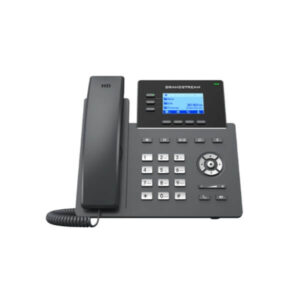
Business IP Phones
Endpoint selection should match supported-device guidance, user roles, BLF needs and provisioning strategy.
VoIP and PBX Solutions
Use the wider category when comparing phone-system platforms, gateways, accessories and supporting infrastructure for a new deployment.
Why Business Buyers Contact FourTeck.com
The discussion can cover the annual license together with IP phones, gateways, networking and related infrastructure where the project requires them.
Buyers can review SC capacity, extension scale, edition fit and deployment model before placing an order.
The quotation can distinguish license, hosting, services and hardware so approvers understand what each line item covers.
Physical components associated with a project can be reviewed with the customer location and order scope in mind.
Existing customers can discuss renewal timing, capacity changes and edition requirements rather than treating renewal as a purely administrative repeat order.
When requirements have changed, FourTeck.com can help compare adjacent 3CX license sizes or editions and related VoIP options.
For business technology purchases, the most expensive mistake is often not paying slightly more for the correct item; it is buying the wrong configuration and discovering the mismatch during rollout. FourTeck.com therefore encourages buyers to provide operational details before quotation. A procurement team may know the requested product name while the IT team knows the traffic pattern and the reception team knows the missing workflow. Bringing those inputs together creates a more reliable buying decision.
Support scope should also be explicit. Some customers have internal 3CX capability and need only licensing, while others need planning assistance, hardware sourcing or project coordination. Stating the desired level of help makes the quotation easier to evaluate and avoids assuming that hosting, SIP service, migration, configuration or ongoing technical support is automatically included with the annual software entitlement.
Frequently Asked Questions
What does 128SC mean in 3CX licensing?
128SC means the licensed phone system can support up to 128 simultaneous calls. 3CX counts internal and external active calls, so sizing should include all concurrent voice activity rather than only calls using the external SIP trunk. It is a system-capacity figure, not a count of licensed employees. The associated extension allowance is a separate fair-use limit.
How many extensions can this 128SC Basic tier support?
The current 3CX pricing and fair-use information associates 128 simultaneous calls with a maximum of 896 users or extensions. This maximum does not guarantee that 128SC is correctly sized for every organization with that many extensions. Businesses with unusually high call activity may need more concurrency, while others may operate comfortably with less. Confirm current limits at quotation and renewal.
Does Basic include call queues and call recording?
No. 3CX lists queues and recordings among the functions not included in Basic. The edition is intended for reliable core telephony rather than contact-center and advanced workflow requirements. If a department needs queue management, supervisor functions, compliance recording or related advanced features, compare PRO or AI before purchase so the selected edition matches operational needs.
Can FourTeck.com help size the license?
Yes. Share the number of extensions, peak simultaneous-call estimate, call records if available, SIP trunk channel count, deployment model and expected growth. FourTeck.com can use that information to discuss whether 128SC is proportionate and whether Basic has the required feature set. Final licensing limits and commercial terms should always be confirmed against current vendor information.
Is the annual license available for 3CX Hosted?
Yes. 3CX states that Basic supports 3CX Hosted from 16SC upward, so the 128SC tier is eligible. Hosting is a separate service consideration and may add cost beyond the license. Buyers should confirm the current hosted offering, SIP trunk compatibility, migration approach and service scope before ordering rather than assuming hosting is automatically included.
Can we self-host or run the system on-premise?
Yes. Basic supports self-hosted and on-premise deployment as well as 3CX Hosted. Self-managed deployments require suitable server or cloud resources, operating system compatibility, network and firewall configuration, backup planning and administrator responsibility. The exact infrastructure should be sized for the deployment and current 3CX requirements rather than inferred from the license size alone.
Is the SIP trunk included with the license?
A SIP trunk is a separate telecommunications service and should be scoped independently. The business should confirm its provider, channel capacity, phone numbers, number-porting plan, outbound identity requirements and any emergency-calling needs. A 128SC software license does not automatically supply 128 external carrier channels. The trunk and the PBX license need to be sized together.
What should we review before annual renewal?
Review current extension count, peak call usage, upcoming growth, features in active use, deployment method and any business projects planned for the next term. If the organization now needs queues, recording, CRM, APIs, bridging, failover or AI capabilities, renewal is a good time to compare editions. Also confirm current pricing and vendor policy rather than relying on last year’s invoice.
How do I request a current UAE quotation?
Contact FourTeck.com with the required license size and edition, whether the request is new or renewal, the existing key or system details where applicable, your extension count, preferred deployment, SIP provider, required supporting hardware and UAE billing or delivery information. A complete request makes it easier to distinguish licensing from optional hosting, migration, hardware and technical services.
Need Help Confirming the Right 3CX Capacity and Edition?
Send FourTeck.com your extension count, peak call estimate, deployment preference, SIP trunk details and must-have features. The team can help review the requested license, related VoIP requirements, current availability and quotation scope for your UAE business project.