3CX Basic 16SC Annual License in Dubai, UAE
A practical 3CX subscription for organizations that want secure, manageable core telephony with capacity for 16 simultaneous calls, straightforward administration and a clear annual renewal cycle. The Basic edition focuses on everyday calling rather than advanced contact-center, CRM, recording or artificial-intelligence workflows, making it useful when the business requirement is reliable voice communication without paying for functions the organization does not plan to use.
Request QuoteCheck UAE Availability
Quick Product Information
3CX
Basic Edition, 16SC
Annual subscription
16 simultaneous internal and external calls
Up to 80 under the current fair-use model
41–80 extensions according to current 3CX sizing guidance
3CX Hosted at 16SC+, self-hosted or on-premise
Organizations needing essential PBX functionality
Annual renewal planning required
PRO or AI edition required for queues, recordings, bridges and advanced integrations
License sizing, quote and deployment guidance from FourTeck
Share user count, peak call demand, deployment method and renewal status
Fast Decision Snapshot for Procurement Teams
Busy buyers usually need to establish four things before they spend time on a longer technical review: whether 16 simultaneous calls are enough, whether the Basic feature set covers the required business workflows, where the PBX will run, and whether the order is a new subscription, renewal or edition change. The cards below provide a fast way to decide whether this license deserves a place on the shortlist.
Organizations where dependable calling, simple administration and predictable annual licensing matter more than contact-center tools or deep application integrations.
Confirm the highest number of internal and external calls that may be active at the same time. Sixteen simultaneous calls are the licensing boundary.
Do not choose Basic if the project depends on queues, recordings, bridges, CRM/API connections, hot desking, failover or advanced contact-center functions.
Plan 3CX Hosted, self-hosted or on-premise deployment before ordering because infrastructure, responsibility and commercial scope change with the chosen model.
If call concurrency or functionality expands later, a higher SC size or an edition upgrade can be considered instead of replacing the communication platform.
FourTeck can help map users, peak call traffic, SIP trunks, endpoints, hosting and renewal dates into a clearer quote requirement for UAE procurement teams.
Product Overview
The 3CX Basic 16SC Annual License is a software subscription for businesses that want a modern IP-based phone system centered on essential telephony. 3CX prices commercial editions by system capacity rather than charging a separate software subscription for every user seat. In this case, the key sizing figure is 16 simultaneous calls. That number covers active internal and external calls at the same time, so the buyer should think about peak concurrent communication rather than only total staff headcount. Under current 3CX sizing guidance, the 16SC tier can support up to 80 extensions, with 41 to 80 shown as the recommended extension range for this capacity.
Basic Edition is intentionally focused. It includes everyday capabilities such as user synchronization with Google or Microsoft directories, Single Sign-On, Busy Lamp Field status, intercom, paging, fax support, wake-up call reminders, hotel integration at 16SC and above, and basic reports. This makes the license relevant to organizations where the phone system must be secure, current and manageable, but where advanced customer-service workflows are not part of the requirement. Examples can include general offices, schools, selected hospitality environments, healthcare administration, factories and other organizations that prioritize core calling over complex integrations.
The edition boundary is just as important as the included feature list. Basic does not provide call queues, recordings, bridges between separate offices, CRM integrations, data connectors, APIs, hot desking, built-in failover, call-processing scripts or AI functions. A company that expects those capabilities should evaluate 3CX PRO or AI rather than buying Basic and discovering the limitation during deployment. For UAE buyers, this distinction can prevent rework, licensing changes and project delays after phones, trunks and call flows have already been planned.
Deployment remains flexible. At the 16SC level, organizations can consider 3CX Hosted, self-hosting in supported infrastructure, or on-premise deployment. Hosting, infrastructure, SIP trunk service, phones and implementation are separate planning items rather than assumptions bundled automatically into the license. FourTeck.com can help a buyer turn these technical choices into a practical procurement checklist, review whether the edition matches the required communication workflow, and coordinate a quote for Dubai or another UAE location.
Key Business Benefits
The value of a business phone system is not measured only by the length of its feature list. For many organizations, a simpler licensing tier is more useful when it matches the actual communication requirement, is easier to explain to finance and can be managed without unnecessary complexity. The following benefits show where the Basic 16SC option can make commercial and operational sense.
◆ Capacity-Based Licensing
Licensing around simultaneous calls helps buyers separate user population from peak call activity. A company can have many extensions while only a portion of users are on active calls at one time. This makes capacity planning a traffic question rather than a simple headcount calculation and can produce a clearer annual cost model for organizations with moderate concurrent calling.
◆ Essential Features Without Excess
Basic Edition concentrates on core PBX functions. Buyers that do not need CRM integration, call-center queues, recording or AI workflows can avoid selecting a higher feature tier purely out of uncertainty. Matching the edition to real operating needs can make annual licensing easier to justify and reduce the number of unused functions administrators must understand.
◆ Flexible Deployment Planning
At 16SC, the license supports 3CX Hosted as well as self-hosted and on-premise approaches. This gives IT teams room to select a deployment model that aligns with internal skills, infrastructure policies and responsibility boundaries. The license choice does not force every organization into the same hosting architecture.
◆ Familiar Business Telephony Controls
BLF, paging, intercom, SSO and basic reporting support common workplace tasks without turning the PBX into a large contact-center project. Reception, administration, supervisors and general office users can work with recognizable calling functions while IT retains a manageable software platform.
◆ Clear Upgrade Path
The organization is not permanently locked into the original capacity or edition decision. If concurrent calls increase or advanced requirements emerge, the business can plan an SC upgrade or move to PRO or AI. This is useful for growing companies that want to start with a focused requirement while keeping a route to broader functionality.
◆ Better Procurement Clarity
Because the license term, capacity and edition boundaries are explicit, procurement teams can request quotations using concrete information: 16SC, annual term, deployment method and required services. This reduces ambiguity between software, hosting, SIP trunking, endpoints and implementation, which are often separate cost and responsibility areas.
Product Highlights That Matter Before Ordering
The capacity is based on active internal and external calls occurring at the same time, not on monthly call volume and not simply on the number of employees.
Current 3CX fair-use guidance lists a maximum of 80 extensions for 16SC. Buyers should still size by actual call concurrency and business behavior.
User synchronization, SSO, BLF, basic reports, intercom and paging support a manageable day-to-day PBX for organizations that do not need advanced integrations.
3CX lists hotel integration for supported Mitel and Fidelio environments at 16SC and above. Exact PMS workflow and project compatibility should be confirmed before purchase.
The business can evaluate 3CX Hosted, self-hosted or on-premise deployment. Hosting and infrastructure should be quoted and planned separately from the software license.
Queues, recordings, bridges, hot desking, failover, CRM/API integrations and advanced automation are outside the Basic feature set and may require a higher edition.
A reliable quote should therefore confirm more than the product name. The buyer should share whether the request is for a new license or renewal, the present SC size if an existing 3CX system is already in use, the number of active extensions, the highest expected concurrent call level, deployment preference, SIP trunk provider, endpoint mix and any requirement for queues, recording or application integration. These details allow the commercial license choice to match the actual system design.
Technical Specifications
| Specification | 3CX Basic 16SC Details |
|---|---|
| Brand | 3CX |
| Edition | Basic Edition |
| License Size | 16SC |
| Simultaneous Call Capacity | 16 active internal and external calls at one time |
| Maximum Extensions | Up to 80 under the current 3CX fair-use policy |
| Recommended Extension Range | 41–80 according to current 3CX sizing guidance |
| Subscription Term | Annual |
| Deployment Models | 3CX Hosted at 16SC+, self-hosted or on-premise |
| Included Core Features | User sync with Google or Microsoft, SSO, BLF, intercom, paging, fax, wake-up reminders and basic reports |
| Hospital Integration | Supported hotel integration at 16SC+ for specified Mitel/Fidelio environments; project compatibility should be confirmed |
| Not Included in Basic | Queues, recordings, bridges, hot desking, built-in failover, CRM, data connectors/API, call-processing scripts and AI functions |
| Upgrade Path | Higher SC capacity and PRO or AI edition can be considered as requirements grow |
| Hosting Cost | Separate commercial consideration; confirm selected deployment and current offer |
| Availability | Contact FourTeck.com for current UAE options |
The 80-extension figure should not be treated as a promise that every organization with 80 users is automatically well sized. A company with 50 staff who are frequently on calls together may require more capacity than a company with 80 extensions where only a small percentage are active at one time. The correct SC size depends on peak concurrency, internal calling patterns, external call traffic, conference requirements and operational tolerance for busy conditions. Likewise, the correct edition depends on workflow. A business with modest call volume but a mandatory call queue or recording requirement may need PRO even when Basic has enough SC capacity. Buyers should therefore make two separate decisions: capacity and feature edition. FourTeck can help review both before a quotation is finalized.
Configuration and Buyer Guidance
A software license can be easy to order and still be wrong for the project. Before choosing the 16SC Basic tier, the buyer should document how the phone system is expected to work during a normal day and during busy periods. Start with peak call concurrency. Count active internal calls as well as calls to or from external numbers. If reception, management, sales and operations frequently call at the same time, the required SC capacity may be higher than a simple user-count estimate suggests.
List desk-phone users, web-client users, mobile users, shared phones and service extensions. Confirm the current and planned extension total.
Identify the highest likely number of simultaneous internal and external calls, not the average number of calls made in a day.
If queues, recording, CRM connections, bridges, hot desking, failover or advanced automation are required, Basic is not the right edition.
Decide whether the PBX will be 3CX Hosted, self-hosted or on-premise. This affects infrastructure, support ownership, backup planning and commercial scope.
Confirm SIP trunk provider, phone models, network readiness, firewall rules and any analog gateway or intercom devices that must work with the system.
Record the license expiry date, current edition and current SC size so renewal, upgrade or downgrade decisions can be made before service continuity becomes urgent.
When requesting a quote from FourTeck.com, share the number of users, approximate simultaneous-call requirement, whether this is a new system or renewal, current license details if available, desired deployment method, SIP trunk provider, phone models and any non-negotiable features. A short requirement summary is more useful than sending only the words “16SC license,” because it gives the sales and technical team enough context to identify an edition or sizing mismatch before the order is processed.
Ideal Business Use Cases
The Basic edition is best understood by looking at communication patterns rather than industry labels alone. It is suitable when the organization primarily needs secure, dependable telephony and does not depend on the advanced capabilities excluded from the edition. These examples show where the 16SC tier can fit, subject to actual call concurrency and extension count.
General Offices
Administrative, finance, operations and management teams that require extensions, direct calling, BLF visibility, paging and basic reporting can use Basic when they do not need queue-based customer service or CRM-linked call workflows. The 16SC level can suit a medium extension population with moderate concurrent call activity.
Schools and Education Sites
Schools can use core PBX functionality for administration, reception, staff rooms, departments and internal communication. Paging and intercom are particularly relevant in some environments. Buyers should confirm whether campus design requires multiple bridged systems, because bridging is not part of Basic.
Hospitality Environments
At 16SC and above, 3CX lists hotel integration for supported Mitel and Fidelio environments. A hotel considering this tier should verify PMS compatibility, extension count, guest-room calling, front-desk workflow and whether required features fall within Basic before treating the license as a complete hospitality solution.
Factories and Warehouses
Operations sites often need straightforward extensions across offices, security points, supervisor desks and service areas. Basic can fit where voice communication, paging and simple administration matter more than contact-center reporting or application integration. Network coverage and endpoint selection should be reviewed for large physical sites.
Healthcare Administration
Administrative offices, reception areas and support departments may use core calling features where the PBX requirement is simple. Buyers must independently evaluate any regulatory, recording, integration or resilience needs; Basic should not be assumed to satisfy specialized healthcare compliance or failover requirements.
Budget-Controlled Projects
Organizations that have already confirmed they do not need advanced 3CX functions can use Basic to keep the commercial scope focused. This is most effective when the buyer has a clear list of required call flows and does not select the edition solely because it has a lower annual license cost.
3CX Basic 16SC Simultaneous Call Sizing
The most important technical idea in 3CX licensing is simultaneous-call sizing. A 16SC license does not mean 16 users, 16 phones or 16 extensions. It means the system is sized for up to 16 active calls at one time. Those calls can include external conversations through SIP trunks and internal calls between extensions. This distinction matters because two organizations with the same number of staff can have very different telephone traffic.
Consider an office with 60 extensions. If most employees use email and messaging and only a handful of people are on the phone together, 16SC may offer comfortable capacity. Another organization with 45 extensions could have receptionists, booking teams and operations staff making constant calls, producing peak concurrency above 16. In that case, the lower user count does not make the smaller license automatically suitable. Peak demand must be measured or estimated from real behavior.
Procurement teams should also allow for growth and unusual busy periods. Month-end finance calls, seasonal booking demand, morning customer traffic or incident coordination can increase concurrency beyond the normal daily pattern. A system that is exactly sized to the average may create avoidable contention at the busiest time. If historical PBX reports are available, they can provide a better basis for sizing than guesswork. For a new deployment, departments can estimate typical and maximum concurrent calls separately.
3CX Basic 16SC Deployment Flexibility and Administration
A useful software phone system should fit the organization’s infrastructure strategy rather than force every buyer into one hosting pattern. The Basic edition supports on-premise and self-hosted deployments, and the 16SC size also qualifies for 3CX Hosted. This gives IT teams three broad approaches to consider. An on-premise installation can suit organizations that prefer to run the PBX inside their own environment. Self-hosting can suit teams that already manage supported cloud or virtual infrastructure. 3CX Hosted can reduce the need to operate the underlying PBX server directly, although hosting is a separate commercial and service consideration.
The deployment decision should be made alongside network and support planning. SIP traffic depends on stable internet connectivity, correct firewall handling and appropriately configured endpoints. Remote users, mobile apps and branch scenarios can add further requirements. Basic does not include bridging between separate office PBX systems, so a multi-office organization must be careful not to assume that choosing a hosted deployment automatically provides every multi-site topology feature. When connecting offices is a requirement, edition selection should be revisited.
On the administration side, Basic includes user synchronization with Google or Microsoft directories, Single Sign-On, BLF and basic reports. These capabilities can reduce routine user-management friction and provide everyday visibility without introducing the broader integration layer of PRO or AI. The distinction between user sync and full productivity-suite integration is important: Basic can synchronize users, but it does not include the advanced Microsoft 365, Google Workspace, CRM, API and data-connector capabilities listed for higher editions.
3CX Basic 16SC Feature Boundaries and Future Growth
The strongest reason to choose Basic is not that it is the cheapest edition; it is that its feature boundary matches the business requirement. A company that needs ordinary extensions, calling, BLF, paging, intercom, fax and basic reports can benefit from a focused platform. A company that expects contact-center queues, call recording, CRM integration, advanced application connections, hot desking, bridges, built-in failover or AI should not try to force those workflows into Basic.
Feature planning is especially important when the phone system is replacing an older PBX. Legacy systems often contain informal processes that were never documented: reception overflow, call recording for selected departments, linked branch dialing, executive hot desks or automatic customer record popups. During migration, these hidden requirements can appear late and change the edition decision. A short discovery exercise should list every call flow that staff consider essential, then mark whether Basic supports it. Anything uncertain should be confirmed before ordering.
Growth can occur in two dimensions. The first is capacity. More active calls may require a higher SC size. The second is functionality. New customer-service teams, reporting expectations, recording policies or integration projects may require PRO or AI even if 16SC remains sufficient. Treating these as separate upgrade paths helps finance teams understand why a future change may be needed. An organization might remain at 16SC but move to PRO for functionality, or stay on Basic but increase capacity because concurrency has grown.
Questions Business Buyers Ask Before Selecting This License
The questions below focus on fit, sizing, compatibility and purchasing details that commonly determine whether a 16SC Basic subscription is appropriate. They are designed to help both technical and non-technical stakeholders make a clearer decision before a quotation is requested.
Does 16SC mean the license is only for 16 users?
No. The 16SC value refers to active calls occurring at the same time, not the total number of users. Current 3CX guidance lists up to 80 extensions for the 16SC tier. A buyer should therefore review both extension count and peak call concurrency. A company with many users but relatively few concurrent calls may have a very different requirement from a smaller team that spends most of the day on the phone.
Is this tier suitable for an organization with 41 to 80 extensions?
It can be. 3CX currently shows 41–80 as the recommended extension range for 16SC, with 80 as the maximum under the fair-use model. That recommendation does not replace call-traffic analysis. If a large percentage of users are regularly on active calls together, a higher simultaneous-call capacity may be needed even when the extension count remains within the listed range.
Can the 16SC Basic system be hosted by 3CX?
Yes. 3CX states that Basic supports its hosted deployment model at 16SC and above, while self-hosted and on-premise deployment are also supported. Hosting should be treated as a separate commercial item rather than assumed to be included automatically in the annual software license. Buyers should confirm hosting, backup responsibilities, support scope and infrastructure choices as part of the quotation.
Can several offices be connected using Basic?
Not through the 3CX bridging feature, because bridges are not included in Basic Edition. A business planning linked PBX systems across several offices should not assume that 16SC capacity alone solves the multi-site design. Share the site count, call-flow requirement and desired user experience with FourTeck so the edition and architecture can be reviewed before procurement.
Does Basic include call queues and recording?
No. 3CX lists queues and recordings among the functions not included in Basic. This is a critical edition check for reception-heavy, sales, service-desk and regulated call workflows. If callers must wait in managed queues, supervisors need queue reporting, or the organization has a valid requirement to record calls, a higher edition should be assessed before the license is ordered.
Can it connect directly with CRM or custom applications?
Basic is not intended for that requirement. CRM integrations, APIs, data connectors and broader automation are outside the edition. User synchronization with Google or Microsoft and Single Sign-On should not be confused with full business-application integration. If customer records, workflow automation, BI tools or custom call-processing logic are mandatory, evaluate PRO or AI and confirm the exact integration path.
What if the business grows beyond 16 simultaneous calls?
The system can be reviewed for a higher SC capacity rather than treated as a dead end. Growth planning should look at real peak concurrency, extension count and future departments. If the organization also needs new functions, capacity and edition can be reviewed together. FourTeck can help buyers distinguish whether the next step is more simultaneous-call capacity, a higher feature edition, or both.
Can a hotel use the Basic 16SC tier?
Potentially. 3CX lists hotel integration for 16SC and above with specified Mitel and Fidelio environments. A hotel should still confirm its PMS platform, room-extension plan, front-desk call flow, wake-up requirements and any features outside Basic. The license should be selected as part of the full hospitality communication design rather than assumed compatible from the hotel label alone.
What information should be sent for an accurate quote?
Share the current edition and expiry date if this is a renewal, required SC capacity, total extensions, estimated peak concurrent calls, deployment preference, SIP trunk provider, phone models and any mandatory functions such as queues, recording, CRM integration or multi-site connectivity. Also provide the UAE delivery or billing requirement and whether implementation, migration or endpoint configuration support is needed.
Business Requirements to Match Before You Buy
For businesses that need straightforward calling
This edition fits best when the requirement centers on extensions, normal call handling, BLF, paging, intercom and basic reports. If the project brief already includes contact-center queues, recordings or application integration, choose the edition based on those functions before comparing annual cost.
For teams replacing an older PBX
Document every existing call flow before migration. Reception overflow, branch dialing, recording, hot desks and legacy integrations may be easy to overlook. The replacement should be matched against actual user behavior, not only the old PBX extension count.
For organizations choosing cloud or local deployment
At 16SC, buyers can consider 3CX Hosted, self-hosted or on-premise deployment. Select the model according to infrastructure policy, internal skills, responsibility for backups and updates, network design and commercial preference.
For projects with future growth
Plan growth in two ways: more active calls and more advanced functions. Either can trigger a future license change. Recording peak concurrency and anticipated workflow changes now makes annual renewal decisions easier later.
For buyers standardizing office phones
Confirm supported SIP phone models, provisioning method, PoE availability, VLAN design, headset needs and any analog devices before bulk endpoint purchase. The license is one layer of the complete communication system.
For procurement teams comparing annual options
Compare the complete requirement: edition, SC size, hosting, SIP trunking, endpoints, migration and support. A lower software tier can be a strong fit when the feature boundary is correct, but it should not be used to mask missing project requirements.
What Buyers Should Check Before Purchase
Before requesting a quotation, buyers should make sure the license size, feature edition and deployment design are all aligned. The product name alone does not reveal whether the system will serve the intended workload. A good procurement brief separates must-have requirements from optional features and includes enough technical context to avoid a later edition change.
Capacity Fit
Check peak concurrent calls, not just user count. Include internal calls, reception activity, outbound departments and periods of unusually high demand. If 16 active calls may be exceeded regularly, review a larger SC size.
Feature Fit
Write down any requirement for queues, recordings, CRM, APIs, bridges, hot desking, failover or call-processing scripts. These are not included in Basic and can change the edition choice even when 16SC capacity is sufficient.
Deployment and Infrastructure
Confirm whether the PBX will be hosted by 3CX, self-hosted or on-premise. Then identify server or cloud responsibility, internet connectivity, firewall readiness, backup approach and who will manage the environment after deployment.
SIP Trunks and Numbers
Confirm the SIP trunk provider, number-porting requirements, incoming number range, outbound policy and emergency-calling obligations that apply to the deployment. Licensing and telecom service are separate parts of the solution.
Endpoints and Accessories
List existing and planned IP phones, headsets, conference devices, door intercoms and analog gateways. Confirm compatibility and provisioning before a large hardware order is placed alongside the software subscription.
Renewal and License Status
For an existing system, provide the current edition, SC size and expiry date. Renewal, upgrade and downgrade scenarios can have different commercial handling, so these details help prevent a quotation from being prepared for the wrong transaction type.
Long-term cost should also be considered beyond the license itself. Hosting, SIP trunks, internet resilience, implementation, endpoint replacement, support and staff training may all contribute to the project. None of these should be assumed to be included unless the quotation states so. FourTeck.com can help buyers review the requirement and identify whether they need only the annual license or a broader communication project covering deployment, phones, network readiness and migration assistance.
UAE Availability and Service Support
FourTeck.com supports inquiries for 3CX licensing in Dubai and across the UAE with assistance for license sizing, quotation, deployment planning and renewal preparation. Software availability and commercial terms can vary according to the current 3CX price structure, license status, edition, SC size, hosting selection and supplier conditions. For that reason, the page does not assume a fixed selling price or guaranteed activation timeline.
A useful inquiry should state whether the requirement is a new subscription, renewal, capacity upgrade or edition change. Existing customers should provide the current license details and expiry date where possible. New deployments should provide estimated users, peak simultaneous calls, deployment preference and any requirement for SIP trunking, phones, migration or implementation support. FourTeck can then help determine whether the Basic 16SC option is commercially and technically appropriate before preparing a quote.
Warranty language is different for software than for physical hardware. Buyers should review the applicable 3CX subscription, support and service terms rather than expecting a conventional device warranty. If the project also includes IP phones or other hardware, hardware warranty conditions should be confirmed separately by model and supplier. Delivery coordination for digital licensing and any physical equipment will depend on the final order scope.
Dubai, Abu Dhabi, Sharjah and Ajman Coverage
Businesses in Dubai, Abu Dhabi, Sharjah, Ajman and other UAE locations can contact FourTeck.com for 3CX license quotation and requirement review. The same planning process applies whether the PBX supports a headquarters, school, hotel, warehouse, clinic administration team or general office: confirm extension count, peak calls, edition features, deployment model and the services required around the license. For orders that include physical IP phones, gateways or networking equipment, delivery coordination is reviewed according to the destination, quantity and current supplier status. For software-only requirements, the team can focus the inquiry on license type, renewal status and activation planning.
Regional Availability Across GCC and Africa
FourTeck also handles business technology inquiries through regional platforms serving selected GCC and Africa markets. Organizations with procurement requirements in Saudi Arabia, Qatar, Oman, Kuwait, Bahrain, Kenya, Uganda and other regional locations can use the appropriate FourTeck inquiry channel to discuss 3CX licensing, related phones and broader communication-system requirements. Commercial terms, tax treatment, currency, delivery, hosting options and service scope can differ by country, so a UAE quotation should not automatically be treated as the commercial basis for another market.
Multi-country organizations should also distinguish commercial coverage from PBX architecture. Basic Edition does not include 3CX bridging between separate office PBX systems. If the organization wants several sites to operate as a connected communications environment, the technical topology and edition requirement should be reviewed independently from where licenses are purchased. Regional supply coordination cannot substitute for a correct multi-site system design.
Other Options Buyers May Consider
A buyer should compare alternatives according to the reason the Basic 16SC tier is being considered. If capacity is correct but more functionality is needed, a higher edition may be the better comparison. If functionality is correct but concurrency is higher, a larger Basic SC size may be more relevant. Hardware endpoints and SIP devices should then be selected around the chosen PBX design.
3CX PRO 16SC
Consider when 16SC capacity is suitable but the business needs features beyond Basic, such as more advanced call handling, reporting and integrations. Confirm exact required functions before choosing the edition.
3CX AI 16SC
Relevant when advanced automation, transcription or AI-oriented communication workflows are part of the roadmap. The edition should be justified by actual business requirements rather than selected only for future possibility.
3CX Basic Higher SC Sizes
A larger Basic license may suit organizations that are happy with the essential feature set but need more simultaneous call capacity. Capacity should be based on peak concurrency rather than extension count alone.
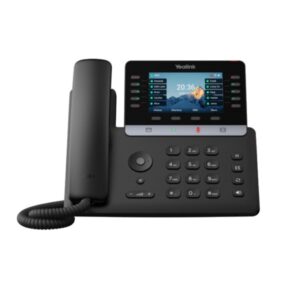
Yealink SIP-T74W IP Phone
A professional SIP desk-phone option for organizations planning 3CX-compatible business endpoints. Check supported provisioning, firmware, PoE, headset requirements and user role before bulk ordering.
Dinstar DP85U SIP Intercom
Useful for projects that need a SIP-based door communication endpoint alongside the phone system. Confirm PBX registration, network, PoE and access-control requirements before integration.
Why Business Buyers Contact FourTeck.com
A phone-system license is easier to buy when the requirement has already been translated into the right technical and commercial terms. FourTeck.com supports buyers that need help moving from a general request such as “we need 3CX for 60 users” to a more complete brief covering edition, simultaneous calls, deployment, SIP connectivity, endpoints and renewal status. This practical review is intended to reduce wrong sizing, missing accessories and surprises during implementation.
License requests can be considered together with IP phones, networking, gateways, intercoms and related infrastructure when the project scope extends beyond software.
The team can help buyers distinguish user count from simultaneous-call capacity and identify when a feature requirement points toward a different edition.
Commercial requests can include license term, SC size, renewal status, hosting preference and any services needed around deployment or migration.
When hardware is part of the project, delivery is coordinated according to model, quantity, destination and supplier status rather than assumed from a software-license request.
Existing 3CX users can share edition, SC size and expiry details so renewal, capacity changes and edition changes are discussed with better context.
If Basic does not cover the required workflow, FourTeck can help compare a higher 3CX edition or related communication components without forcing the original request into an unsuitable configuration.
The most productive sales conversation begins with real usage information. Buyers do not need to prepare a full engineering document; even a simple summary of users, call activity, existing phones, SIP provider, required functions and preferred deployment can make the quotation process more accurate and reduce back-and-forth.
Frequently Asked Questions
What does the annual term mean for this license?
The commercial 3CX license is renewed on an annual subscription cycle. Buyers should track the renewal date and review capacity and edition requirements before the next term. Renewal is a good time to check whether user count, simultaneous-call demand or required features have changed rather than repeating the previous order automatically.
Can desk phones, web users and mobile users be part of the same system?
3CX supports business calling through supported endpoints and its software clients, but the exact device and user deployment should be planned around compatibility and provisioning. The number of endpoints is not the same as simultaneous-call capacity. Buyers should list the endpoint mix so phone support, network readiness and user onboarding can be reviewed together.
Is 3CX hosting automatically included in the annual license?
No assumption should be made that hosting is included. The Basic 16SC tier is eligible for 3CX Hosted, but hosting is a separate commercial consideration. A quotation should state whether the requirement is license-only, hosted by 3CX, self-hosted or on-premise and identify any implementation or support services included.
Does the 80-extension limit mean 80 people can call at once?
No. The 80 figure is the current maximum extension count for the 16SC tier under the fair-use model, while the simultaneous-call capacity remains 16. Extensions describe how many users or endpoints can be configured within the policy; SC describes how many active calls can occur at one time.
How early should an existing license be reviewed for renewal?
Reviewing the license before the expiry date gives the organization time to confirm the correct edition, SC size, hosting choice and any planned upgrade. The exact commercial timing can depend on supplier processes, so buyers should avoid leaving renewal discussion until the final day, especially when an edition or capacity change is being considered.
Can FourTeck help plan phones and SIP trunks around the license?
FourTeck can discuss the broader communication requirement, including supported IP phones, SIP trunk planning, network considerations and deployment scope. Final compatibility and service availability depend on the selected products, provider and project conditions. Share existing phone models and telecom details if the goal is to reuse current infrastructure.
Is Basic a suitable choice for a contact center?
Basic is not designed for organizations that require 3CX queue-based contact-center functions, call recording or advanced reporting and integrations. A company running structured customer-service operations should document queue, supervisor, recording and reporting needs and compare higher editions before buying. Capacity alone does not make an edition suitable for a contact-center workflow.
Can the license be upgraded later?
Yes, 3CX provides a path to higher capacities and editions as requirements change. The right upgrade depends on why the current license is no longer sufficient. More concurrent calls point to SC capacity; requirements such as queues, recordings, integrations or AI point to edition functionality. Both can change at the same time when a business grows.
What should a UAE buyer include in the first inquiry?
Provide the license type requested, new or renewal status, present edition and expiry if applicable, approximate user count, simultaneous-call estimate, deployment preference, SIP provider and any mandatory functions. If phones or related hardware are also needed, include models, quantities and destination so the quotation can separate software, services and physical equipment clearly.
Need Help Confirming the Right 3CX License?
Send FourTeck.com your user count, expected peak simultaneous calls, required features, deployment preference and current license details if this is a renewal. The team can help review whether Basic 16SC matches the business requirement and prepare a quotation that separates licensing, hosting, hardware and deployment items clearly.