3CX Basic 8SC Annual License in Dubai, UAE
Built for organizations that want essential IP telephony without the added complexity of contact-center, CRM, recording, failover, bridging, hot-desking, or advanced automation functions, this 8 simultaneous-call license provides a practical annual foundation for everyday business calling. The key buying question is not simply how many employees you have; it is how many internal and external calls can be active at the same time during your busiest period. FourTeck.com helps business buyers review that capacity, deployment method, supported endpoints, SIP trunk requirements, renewal planning, and whether Basic is the correct edition before a commercial quotation is prepared.
Request QuoteAsk for License Sizing Support
Quick Product Information
3CX
Basic, 8SC
Annual system subscription
8 simultaneous internal and external calls
Up to 40 extensions under current fair-use guidance
Current 3CX guidance places 8SC in the 16–40 user/extension range
Self-hosted or on-premise for this size; 3CX Hosted starts at 16SC for Basic
Telephony, paging/intercom, BLF, fax, SSO, user sync and basic reports
Queues, recordings, CRM/API integrations, bridges, hot desking, failover and AI tools
Annual renewal planning required
SIP trunk, supported IP phones/headsets and hosting infrastructure as required
Share peak concurrent call demand, extension count and deployment plan
Fast Decision Summary for Business Buyers
The 8SC Basic tier makes sense when a company needs a modern phone system centered on reliable calling and administration, but does not need the workflow features normally associated with service desks, sales queues, advanced integrations, recording policies, multiple connected PBX sites, or automated intelligence. The most important check is peak concurrency: eight simultaneous calls can serve far more than eight extensions, but a busy reception, support desk, sales floor, or multi-department operation can consume capacity quickly.
Organizations that value core telephony over advanced contact-center functions.
System-based annual licensing avoids a simple per-seat purchase model.
Measure busiest-hour concurrent calls, including internal calls.
Plan self-hosted or on-premise infrastructure for 8SC Basic.
Move up if you need queues, recordings, CRM/API functions, bridges or failover.
License sizing, renewal, endpoint, SIP trunk and deployment review.
Product Overview
3CX uses a capacity-based approach in which commercial licensing is sized by simultaneous calls rather than charging only according to the number of user accounts. For the 8SC tier, a business can have up to eight active internal and external calls at one time, while the current fair-use guidance allows up to 40 extensions. This distinction matters because extension count and actual call concurrency are not the same. A 25-person office may be perfectly comfortable on eight simultaneous calls if staff make calls intermittently, while a smaller sales or customer-service team may require more capacity because many people are on the phone at the same time.
Basic is positioned around the essentials of a modern PBX. It includes everyday telephony functions along with user synchronization from Google or Microsoft, single sign-on, busy lamp fields, intercom and paging, fax capability, wake-up call reminders, and basic reporting. Mobile and web-based user access form part of the wider 3CX experience, helping employees place and manage calls without being restricted to a physical desk phone. The edition is intentionally simpler than higher tiers. Features such as call queues, recordings, CRM integrations, APIs and data connectors, Teams integration, bridges, hot desking, failover, call processing scripts, transcription, and AI agents are not part of Basic.
That makes edition selection as important as capacity selection. A company that only needs extensions, direct calling, routing, basic administration, and user mobility may avoid paying for capabilities it will not use. A company with a contact center, regulated recording requirements, multiple PBX locations that must be bridged, or a strong CRM workflow should not choose Basic simply because the annual cost looks attractive. The correct decision should start with workflow and operational requirements, then confirm simultaneous-call sizing.
For UAE buyers, deployment also deserves attention. Official guidance states that Basic can be deployed on-premise or self-hosted, while 3CX Hosted for this edition starts at 16SC. Therefore an 8SC project normally needs a suitable on-premise or self-hosted environment, plus a supported SIP trunk and compatible endpoints where desk phones are required. FourTeck.com can help buyers structure these questions before purchase so the license, infrastructure, handsets, network, and renewal plan are treated as one communication system rather than disconnected line items.
Key Business Benefits
The value of this license is best understood through the business outcomes it supports. Basic is not intended to imitate a full contact-center edition. Its strength is that it keeps the focus on core calling, manageable administration, and predictable annual licensing for organizations that do not need advanced workflow tooling.
◆ Capacity Based on Real Call Demand
Eight simultaneous calls let a business license around peak communication activity rather than simply multiplying a fee by every extension. This can be efficient for offices where many users need extensions but only a smaller group are on active calls at any one moment.
◆ Focused Core Telephony
The edition concentrates on calling, paging and intercom, BLF, fax, user synchronization, SSO, and basic reports. Buyers who do not need call-center or integration-heavy functions can keep the deployment simpler and easier to explain to users and administrators.
◆ Centralized User Administration
User sync and single sign-on can reduce repetitive account administration and help organizations maintain cleaner access processes. Exact identity configuration should still be planned according to the selected Microsoft or Google environment and the organization’s security policy.
◆ Mobility for Everyday Calling
Employees can use 3CX applications as part of a modern communications workflow rather than relying only on a desk handset. This is useful for hybrid staff, managers moving between work areas, and teams that want extensions available on approved devices.
◆ Clear Upgrade Path
Basic can serve as a disciplined starting point. If the organization later needs queues, recording, CRM connectivity, API work, bridging, hot desking, failover, or advanced automation, an edition upgrade can be evaluated instead of forcing those requirements into the wrong license.
◆ Better Procurement Visibility
An annual system license encourages procurement teams to review renewal timing, call capacity, hosting, SIP trunking, endpoints, and support as separate cost components. That makes it easier to understand the complete operating requirement rather than seeing only a license line.
These benefits depend on selecting the edition for the correct operating model. A business that expects a call center, advanced reporting, recording-based compliance, multiple connected PBX instances, or application integrations should treat those requirements as decision gates. FourTeck.com can help map the requested workflow to the appropriate 3CX tier so the business does not discover a missing function after purchase.
Product Highlights
Designed for up to eight concurrent calls, counting internal and external calls together when measuring capacity.
Current published guidance allows a maximum of 40 extensions for the 8SC size, with 16–40 shown as the recommended range.
Plan for yearly renewal and review capacity before each renewal cycle if staff count or call behavior has changed.
Includes core telephony plus paging/intercom, BLF, fax, SSO, user sync and basic reporting.
Queues, recordings, CRM/API integration, bridges, hot desking, failover, call scripts and advanced intelligence are excluded.
For the 8SC Basic size, plan self-hosted or on-premise deployment because official 3CX Hosted availability for Basic begins at 16SC.
Before ordering, confirm three things in writing: the maximum number of extensions you expect during the license term, the highest number of calls likely to be active simultaneously, and any business workflow that depends on a higher-edition feature. It is also wise to identify the SIP trunk provider, existing handsets, firewall or network environment, host platform, and renewal owner. That information gives the quotation process a technical foundation rather than relying on the model name alone.
Technical Specifications
| Specification | Confirmed Buyer Information |
|---|---|
| Brand | 3CX |
| Edition | Basic |
| License Size | 8 simultaneous calls (8SC) |
| License Term | Annual subscription |
| Simultaneous Call Definition | Active internal and external calls count toward the concurrent call total |
| Maximum Extensions | Up to 40 under current published fair-use guidance |
| Recommended User / Extension Range | 16–40 shown for the current 8SC tier |
| Core Telephony | Included |
| User Sync | Google or Microsoft user synchronization supported |
| Single Sign-On | Included |
| BLF | Included |
| Intercom / Paging | Included |
| Fax | Included |
| Reporting | Basic reports included; advanced analytics are not the focus of this edition |
| Excluded Features | Call queues, recordings, CRM, APIs/data connectors, bridges, hot desking, failover, call processing scripts, advanced AI/transcription and selected collaboration integrations |
| Deployment for 8SC Basic | Self-hosted or on-premise; official 3CX Hosted availability for Basic starts at 16SC |
| SIP Trunk / Phone Hardware | Separate and configuration dependent; compatibility should be confirmed before deployment |
| Support / Warranty | Software subscription terms and support conditions depend on vendor and purchased service arrangement; contact FourTeck.com for guidance |
A practical sizing exercise should use observed or estimated busy-hour behavior. Review call reports from the existing PBX if available, ask departments about peak call patterns, and allow room for staff growth. The 16–40 extension guidance can help frame typical deployment scale, but it does not replace concurrency analysis. Equally, a buyer should not assume that moving to a larger simultaneous-call tier automatically adds every advanced feature; edition and capacity are separate choices. Determine whether Basic is functionally sufficient, then choose the SC size. FourTeck.com can help translate current extension count, busiest-hour usage, and required call workflows into a quotation request that is easier for both technical and procurement teams to approve.
Configuration and Buyer Guidance
Start with the busiest 30 to 60 minutes of a normal working day. How many employees are on calls at the same time? Does reception handle several concurrent incoming calls while staff also make outbound calls? Are internal extension-to-extension calls common? Because internal calls count toward the SC total, an office with strong internal coordination can consume capacity faster than expected. If historical call data exists, use it. If not, create a conservative estimate and include a growth margin.
Estimate the highest number of simultaneous internal and external calls, not only the total daily call count.
Confirm that queues, recordings, CRM/API integrations, bridges, hot desking, failover and automation are not required.
For 8SC Basic, identify the on-premise or self-hosted environment and verify resource, operating-system and network requirements.
Confirm the SIP trunk provider, number range, caller ID requirements, inbound routing and any porting plan.
List existing IP phones, headsets, door phones or paging devices so supported models can be checked before rollout.
Record the expiry date, internal license owner and approval cycle so the annual renewal does not become an urgent last-minute task.
Also distinguish user synchronization from the richer application integrations excluded from Basic. Basic includes Google or Microsoft user sync and SSO, but that should not be interpreted as full CRM, Microsoft 365, Teams, Exchange, or Google Workspace workflow integration. If your business process depends on those integrations, explain exactly what users need to do so the right edition can be evaluated. For a precise FourTeck.com quotation, share extension count, peak concurrent calls, current PBX details, SIP provider, deployment preference, number of sites, required features, existing phone models, and renewal or migration deadline.
Ideal Business Use Cases
This license is most appropriate where telephony remains important but the communication workflow is straightforward. The examples below describe environments in which the edition can fit when eight simultaneous calls are sufficient. Final suitability still depends on actual call patterns and required features.
Professional Offices
Accounting, legal, consulting, trading, engineering and administrative offices may need reliable extensions, direct inbound and outbound calls, receptionist transfer functions, user mobility and basic reports without a formal contact center. The key check is whether busy-hour call concurrency remains within eight.
Schools and Training Centers
Administrative teams can use extensions for reception, offices and internal coordination, with paging or intercom features where appropriate. Buyers should confirm whether the site requires recording, queues, emergency integration, multiple connected campuses, or other features that would change the edition choice.
Clinics and Smaller Healthcare Offices
A clinic focused on reception, appointments and departmental calling may value a simple PBX foundation. If the operation depends on call recording, a queue for appointment agents, CRM integration, advanced reporting, or multi-site bridging, those requirements point beyond Basic.
Factories and Warehouses
Operations that prioritize dependable internal and external voice, paging/intercom, supervisor communication and basic administrative reporting can be a strong fit. Network quality, handset placement, paging design and shift-call peaks should be reviewed before sizing.
Retail Back Offices and Service Locations
A single-site business with a modest number of concurrent calls can use the system for reception, management and office lines. If customer service evolves into a structured queue or multi-site network, plan an edition and capacity review rather than assuming the same license will remain suitable.
Budget-Controlled Telephony Refresh
Organizations replacing an older PBX can use Basic when the goal is to modernize core telephony while avoiding advanced functions they do not require. The migration plan should still include SIP trunk readiness, supported phones, host infrastructure, number routing, backup, cutover and administrator training.
Basic is less appropriate where users rely on call queues, recorded calls, integrated CRM pop-ups, data connectors, custom call scripts, hot-desking workflows, PBX-to-PBX bridging, failover architecture, or advanced AI-assisted communication. Those are not minor add-ons; they can shape the entire operating model. A buyer should therefore write down the daily process before choosing the edition. FourTeck.com can review whether the requested outcome belongs in Basic or whether another 3CX edition should be quoted.
3CX Basic 8SC Annual License Simultaneous Call Sizing
Simultaneous-call sizing is the most important technical concept for this product. Eight SC does not mean eight employees, eight extensions, or eight calls per day. It means the PBX can support up to eight calls at the same time within the licensed capacity. When planning, count internal and external calls together. For example, if three employees are speaking to customers, two users are on internal calls, and reception is handling two additional calls, seven simultaneous calls are already active. A further call would use the eighth slot.
This model can be efficient for organizations whose users make calls intermittently. A company may have 25 or 30 extensions yet rarely exceed six active calls. Conversely, a 15-person sales office could exceed eight simultaneous calls if most representatives spend long periods on the phone. That is why extension count alone is not a safe sizing method. Use PBX reports from the current system where possible. Review busy-hour peaks over several representative working days rather than relying on a quiet period.
Procurement teams should also separate capacity from edition. Moving to 16SC increases simultaneous-call capacity and extension limits, but the functional scope still depends on whether the edition is Basic, PRO, or another available tier. Decide which features are required first; then select the appropriate capacity inside that edition. FourTeck.com can help turn extension counts and call-pattern information into a clearer sizing discussion before quotation.
3CX Basic 8SC Annual License Core Telephony and Administration
The Basic edition is designed around the communication functions that many organizations use every day. Its published feature set includes core telephony, paging and intercom, busy lamp fields, fax, wake-up call reminders, basic reports, Google or Microsoft user synchronization, and single sign-on. These tools support a conventional business PBX workflow in which users need extensions, calling, transfers, visibility of colleague status, and a manageable administration model without operating a full contact-center platform.
For administrators, user synchronization and SSO can make account management cleaner, particularly when an organization already maintains its workforce identities in a Microsoft or Google environment. However, buyers should avoid assuming that these features equal the richer integrations available in higher editions. Basic user sync is not the same as full Microsoft 365, Teams, Exchange, Google Workspace, CRM, API, or data-connector integration. If a workflow depends on those systems exchanging call data or enabling application-driven actions, the requirement should be documented before license selection.
Basic reporting can help administrators review essential system activity, but organizations that need advanced contact-center analytics should evaluate higher editions. The same principle applies to recording and queues: because those features are excluded, Basic is best for businesses where calls are handled through straightforward routing rather than formal agent queueing or recorded quality/compliance processes.
3CX Basic 8SC Annual License Deployment and Renewal Planning
A software license does not operate in isolation. The 8SC Basic tier needs an appropriate deployment platform, network path, SIP connectivity, user devices, and an annual renewal process. Official 3CX guidance allows Basic to be self-hosted or deployed on-premise, while 3CX Hosted for Basic begins at 16SC. Therefore a buyer planning specifically around 8SC should identify where the PBX will run and who is responsible for maintaining that environment.
For on-premise deployment, review the server or supported platform, operating-system requirements, local power protection, backup strategy, firewall rules, DNS/FQDN planning, internet reliability and administrative access. For self-hosted deployment, the organization should understand the selected cloud provider, region, compute sizing, public IP, backup arrangements, security responsibilities and recurring infrastructure charges. The license fee is only one component of total ownership; SIP trunk charges, DID numbers, hosting, endpoint hardware, implementation and optional support may be separate.
Renewal should be treated as a controlled business process. Record the license expiry date, purchasing owner, technical administrator, current edition, SC size, extension count and any planned change in call behavior. Several weeks before renewal, ask whether the business has grown, whether more staff are making calls concurrently, or whether new requirements such as queues, recording, CRM integration, bridging or failover have appeared. Renewal is an efficient moment to correct sizing or edition fit.
What Should You Know Before Choosing This License?
Business buyers often know the model name but still need answers about capacity, fit, deployment, compatibility and renewal. The questions below address the decisions that normally determine whether the 8SC Basic tier is the right purchase or whether another configuration should be considered.
Is 8SC enough for a 20- to 30-user office?
It can be, because 3CX sizes the license by concurrent calls rather than by extension count alone. The current 8SC tier supports up to 40 extensions, but your real test is the busiest period. If more than eight internal and external calls may be active together, move to a larger simultaneous-call size even if the extension total remains below 40.
Can I use Basic for a customer-service call queue?
No, not if a formal call queue is required. Queues are excluded from the Basic edition. A business that routes callers to agents in a queue, needs queue reporting, or depends on contact-center workflow should review a higher edition. Describe the desired call flow before requesting a quote so the license is selected around the process, not only the number of extensions.
Does Microsoft or Google user sync mean full application integration?
No. Basic includes user synchronization and SSO, but the vendor separately excludes richer integrations and data connectivity found in higher editions. If you need Microsoft Teams, Exchange, CRM functions, APIs, data connectors, or automated application workflows, specify those requirements explicitly. Do not treat directory sync as proof that every Microsoft or Google collaboration feature is included.
Can this 8SC license use 3CX Hosted?
For Basic, official guidance states that 3CX Hosted begins at 16SC. An 8SC Basic deployment should therefore be planned as self-hosted or on-premise unless the vendor changes the available hosting options. Confirm the intended hosting model at quotation because infrastructure responsibility, recurring hosting cost and maintenance tasks differ significantly between deployment methods.
What should I check when replacing an older PBX?
List existing DIDs, SIP trunks, extension numbers, phone models, analog devices, paging equipment, door phones, firewall rules and important call routes. Then identify any feature the old PBX provides that users expect to keep. Migration planning should include number porting, supported endpoint checks, backup, cutover timing and staff communication rather than treating the license as a stand-alone replacement.
Which extras may be required beyond the license?
Depending on the project, you may need a SIP trunk, phone numbers, supported IP phones, headsets, a self-hosted or on-premise server environment, network/firewall preparation, implementation services, backup and ongoing support. These are not automatically included just because the annual license is purchased. Ask for a complete bill of requirements when planning a new deployment.
How do I know when to move above 8SC?
Upgrade capacity when measured or expected busy-hour concurrency approaches the eight-call ceiling. Leave operational headroom rather than waiting until users encounter call-capacity limits. Growth in reception traffic, outbound sales, internal calling or new departments can all change the calculation. Review call reports before renewal when available and consider future hiring or site expansion in the sizing decision.
Can Basic connect multiple PBX offices with bridges?
No. Bridging is not included in Basic. If your organization has separate PBX instances that must be connected as a multi-office architecture, explain that topology before purchase. A single PBX serving users in different locations is a different design question from PBX-to-PBX bridging, so the network, security and edition requirements should be reviewed by the technical team.
What information gives FourTeck.com the clearest quote request?
Share the number of extensions, peak simultaneous calls, current or planned SIP provider, new deployment or renewal status, hosting preference, number of sites, required features, existing phone models, migration deadline and any integration requirement. If this is a renewal, include the current edition, SC size and expiry timing. These details help identify both the correct license and the supporting infrastructure.
Business Requirements to Match Before You Buy
For a single office needing straightforward telephony
This tier can suit a business that mainly needs extensions, inbound and outbound calling, paging/intercom, BLF and basic administration. Confirm that queue-based customer service, recording and advanced integrations are not part of the operating process.
For teams expecting up to 40 extensions
The current fair-use limit supports that extension scale, but the license is still constrained to eight simultaneous calls. Buyers should validate concurrency separately, especially for reception, sales, support and management teams that may all call at once.
For companies moving from traditional PBX hardware
A migration can simplify the communications platform, but existing trunks, DIDs, phones, analog devices and call routes must be checked. Create a cutover plan and verify which legacy functions users still depend on before ordering.
For self-hosted or on-premise deployment
This is the practical deployment direction for 8SC Basic. Plan the host, network, firewall, backup, public connectivity and administrative ownership as part of the project, not as an afterthought to the license purchase.
For procurement teams comparing editions
Compare required workflows before comparing prices. If call queues, recordings, CRM/API integration, bridges, failover, hot desking or advanced automation are mandatory, Basic is not the right functional fit regardless of capacity.
For annual renewal planning
Use the renewal cycle to re-check busy-hour call peaks, extension growth, site changes and new feature requirements. This avoids automatically renewing a size or edition that no longer reflects the business environment.
What Buyers Should Check Before Purchase
A license quote can look simple, but telephony projects often fail because one dependency was assumed rather than confirmed. Before purchase, make the buying team and technical team agree on the operating requirement. Start with call concurrency and extension count. Next, document every function users consider essential: queueing, recording, reporting, integrations, remote use, paging, fax, user sync, SSO, multi-site communication and failover. If any must-have capability is excluded from Basic, resolve the edition choice before discussing final commercial terms.
Configuration Fit
Confirm peak simultaneous calls, total extensions and expected growth. If the company is regularly near eight concurrent calls, allow headroom and review a larger SC tier.
Feature Compatibility
Check the actual workflow, not only generic feature names. Basic excludes queues, recordings, CRM/API integration, bridges, hot desking, failover and advanced automation.
Infrastructure and Endpoint Check
Identify where the PBX will run, which SIP trunk will be used, and whether current phones, headsets, analog devices or paging equipment are supported.
Renewal and Commercial Terms
Treat the license as an annual commitment. Confirm current vendor pricing, currency, tax treatment, renewal date and any implementation or support services separately.
Long-term cost should include more than the subscription. Depending on the deployment, there can be hosting or server expense, SIP trunk charges, phone hardware, network remediation, implementation, backup, maintenance and support. If the company is replacing another system, consider the cutover and training cost as well. When requesting a FourTeck.com quote, include whether the project is new, renewal or migration; the number of users; busy-hour call estimate; required edition features; existing devices; preferred deployment; SIP provider; sites; target date; and any procurement documentation required. That information reduces the risk of missing accessories or quoting an edition that cannot support the expected workflow.
UAE Availability and Service Support
FourTeck.com supports business inquiries for 3CX licensing in Dubai and across the UAE with help around license sizing, edition selection, renewal planning, compatible IP phones, SIP trunk requirements, deployment choices and quotation preparation. Availability and commercial terms can vary with vendor policy, currency, supplier status and order timing, so current details should be confirmed for each request rather than assumed from an older price list.
For a new deployment, the FourTeck team can review whether 8SC offers enough simultaneous-call capacity, whether the Basic feature set matches the workflow, and what supporting components may be needed. For a renewal, share the current key details, edition, SC size, expiry timing, extension count and any changes in business requirements. This is a useful point to decide whether the organization should remain on Basic, increase call capacity or evaluate another edition.
Deployment assistance can also be scoped around the host environment, network readiness, SIP trunk, phone provisioning and migration planning where required. Software licensing is governed by vendor subscription and support terms rather than a conventional hardware warranty, so buyers should ask which support arrangement applies to their order. FourTeck.com can provide guidance and coordinate the commercial request, while final entitlement, activation and vendor terms are confirmed at the time of purchase.
Business Coverage Across Major UAE Cities
Businesses in Dubai, Abu Dhabi, Sharjah and Ajman can contact FourTeck.com for license quotation, renewal coordination, capacity review and deployment planning. A company may be opening a new office, replacing an older PBX, standardizing a single business location, or reviewing an annual renewal. In each case, the most useful starting point is the same: extension count, peak simultaneous calls, required features, current phones and SIP services, preferred deployment, and project timing.
For multi-location organizations, explain whether every user will belong to one PBX deployment or whether separate PBX systems need to be connected. Basic does not include bridging, so the site architecture can influence edition selection. FourTeck.com can review the requirement and help the buyer identify a suitable license path, compatible endpoints and supporting infrastructure before a quote is finalized.
Regional Availability for GCC and Africa Projects
FourTeck.com also supports business technology inquiries for selected GCC and Africa requirements. Organizations operating from the UAE with projects in Saudi Arabia, Qatar, Oman, Kuwait, Bahrain, Kenya, Uganda and other regional markets can discuss licensing, communication hardware, IP phone requirements and procurement coordination through the appropriate FourTeck inquiry channel. Exact availability, activation conditions, tax treatment, support arrangements and delivery options can differ by country and project type.
For regional projects, avoid assuming that one quote or deployment design applies everywhere. SIP trunk availability, number regulations, hosting choices, network conditions and local commercial terms can vary. A useful project brief should identify each country, number of extensions, expected simultaneous calls, deployment model, SIP provider status, endpoint requirement and whether the project is a new installation or renewal. This allows the technical and commercial scope to be separated clearly.
Buyers can also review FourTeck regional resources such as 3CX Basic licensing information for Kuwait, together with the FourTeck Kenya and FourTeck Uganda platforms where relevant. Regional support is inquiry-based and should be confirmed for the specific license, country and project timeline.
Other FourTeck Solutions Buyers May Consider
A phone-system license normally sits within a wider voice environment. The following FourTeck pages can help buyers review the platform, deployment services and endpoint choices that may be relevant to the same project. Use them as planning references rather than assuming every item is required.
3CX Dubai Product Reference
Useful when reviewing FourTeck’s broader 3CX product path and general PBX inquiry options.
DNCR-Aware 3CX Setup
Relevant for UAE organizations reviewing controlled outbound calling processes, PBX rules and operational governance.
VoIP Auto Dialer Software
A separate option for projects where outbound campaign workflow is more important than simple PBX calling.
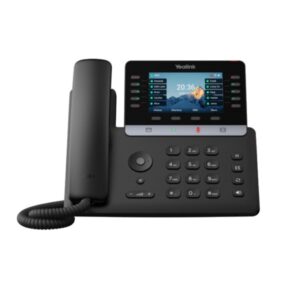
Yealink SIP-T74W
A business SIP phone reference for buyers planning compatible desk endpoints around a VoIP deployment. Final interoperability should always be confirmed.
When comparing alternatives, decide whether the gap is capacity, edition features or endpoint requirements. If eight simultaneous calls are insufficient but Basic features are still suitable, a larger Basic size may be the logical next step. If capacity is adequate but queues, recordings, CRM/API integration, bridging, hot desking or failover are required, the comparison should move to a higher edition rather than simply increasing SC. FourTeck.com can help separate these two decisions.
Why Business Buyers Contact FourTeck.com
A software license is easy to name but not always easy to specify correctly. FourTeck.com approaches the request as a business communication requirement: what users need to do, how many calls happen at once, where the system will run, how it connects to the telecom provider, which phones are required, and who will own the renewal. That creates a more useful procurement discussion than simply quoting a model code without context.
Review simultaneous-call capacity against actual busy-hour behavior.
Check whether required workflows belong in Basic or another tier.
Discuss self-hosted or on-premise requirements for the 8SC Basic size.
Identify compatible phone, trunk and network dependencies before ordering.
Use renewal as an opportunity to verify capacity, features and project changes.
Support procurement teams with a clearer technical scope for current commercial confirmation.
FourTeck.com does not need to promise fixed stock, guaranteed pricing or a specific activation time to provide useful value. The practical role is to help the buyer reduce selection mistakes, identify missing infrastructure, prepare the right information for a quotation and understand the difference between license capacity and feature edition. That is especially important for renewals, where an organization may have changed significantly since the previous subscription was purchased.
Frequently Asked Questions
What does 8SC mean in this 3CX license?
8SC means the system is licensed for up to eight simultaneous calls. 3CX counts active internal and external calls when assessing concurrency. It does not mean the system is limited to eight users. The current 8SC tier supports up to 40 extensions under fair-use guidance, so buyers should size by the busiest call period rather than by extension count alone.
What features are included in 3CX Basic?
Basic focuses on core telephony and published essentials such as Google or Microsoft user synchronization, single sign-on, paging and intercom, BLF, fax, wake-up call reminders and basic reports. It is designed for organizations that need a modern, manageable phone system without the advanced contact-center, integration and automation features offered in higher editions.
Does Basic include call queues and call recording?
No. The current Basic edition excludes call queues and recordings. If your reception, support or sales workflow depends on callers waiting for agents in a queue, or if the organization needs calls recorded for service, training or compliance reasons, those are important reasons to evaluate a higher edition before purchasing or renewing the license.
Can the 8SC Basic license be hosted directly by 3CX?
Official guidance states that 3CX Hosted for the Basic edition starts at 16SC. For an 8SC Basic project, plan around self-hosted or on-premise deployment unless the vendor publishes a change. FourTeck.com can help review the intended host environment, network, SIP connectivity and supporting requirements before the order is finalized.
Is the license suitable for a business with 40 users?
Potentially, because 40 extensions are within the current maximum for the 8SC size. However, 40 users can generate very different call loads. If many employees are on calls simultaneously, eight SC may be too small. Review historical PBX data or estimate the busiest working period, including internal calls, and keep reasonable headroom for growth.
Can FourTeck.com help with a renewal?
Yes. Share the current license edition, SC size, expiry timing, extension count and any changes in the business. A renewal review is useful for checking whether the existing capacity is still sufficient and whether new requirements such as queues, recordings, integrations, bridging or failover mean the organization should change edition rather than renew automatically.
Are SIP trunks and IP phones included with the annual license?
They should be treated as separate project components unless a specific quotation states otherwise. A complete deployment can require a SIP trunk, DIDs, compatible IP phones or headsets, hosting or server infrastructure, network preparation, implementation and support. FourTeck.com can help buyers identify which components are already available and which should be added to the commercial request.
Does Basic support multiple offices connected by PBX bridges?
No. Bridging is excluded from Basic. If the organization operates separate PBX instances that must communicate through 3CX bridging, describe the site architecture before selecting the license. A single centralized PBX serving users in multiple locations is a different design and should be reviewed for network, security, latency and capacity requirements.
How do I request a more accurate UAE quotation?
Send FourTeck.com the extension count, estimated peak simultaneous calls, required features, deployment preference, SIP provider, current phone models, number of business locations, target go-live or renewal date and whether the project is new, replacement or renewal. Current vendor pricing and availability can then be confirmed against a clear technical scope instead of relying on an old online figure.
Need Help Choosing the Right 3CX License?
FourTeck.com can help you review simultaneous-call sizing, Basic edition suitability, deployment options, renewal timing, SIP connectivity, compatible phones and current UAE commercial terms. Share your user count and busiest call pattern so the quote reflects your real communication requirement.