Fortinet FortiSwitch 124F-POE in Dubai, UAE
Build a cleaner access layer for users, phones, wireless access points, cameras, printers, and other Ethernet devices with a 24-port managed switch that combines selected PoE+ power with four high-speed 10GE SFP+ uplinks. The 124F-POE is especially practical when only part of the edge needs switch-delivered power, allowing an IT team to avoid paying for a full-PoE design where it is not required. FourTeck.com can help UAE buyers review port demand, PoE load, uplink optics, FortiGate management, rack requirements, and related network components before quotation.
Request QuoteAsk for Configuration Support
Quick Product Information
Fast Decision Snapshot for Network Buyers
This model is most compelling when a site needs a conventional 1 Gigabit access layer, only a portion of the 24 copper ports require PoE+, and the uplink design benefits from four 10 Gigabit SFP+ interfaces. A buyer should not select it only by total port count. The number of powered endpoints, each endpoint’s maximum draw, uplink topology, firewall platform, VLAN plan, and expected growth matter just as much as the label on the switch.
Mixed wired and powered endpoint networks where 12 PoE+ ports are enough.
A balanced access design with four 10GE uplinks without requiring full PoE on all copper interfaces.
Total PoE wattage, exact powered-port count, SFP+ optic type, fiber medium, and FortiGate compatibility.
Office floors, branches, classrooms, clinics, retail, hospitality, and structured network closets.
Plan growth early if more than 12 powered devices or more than 185 W could be required later.
Model comparison, BOM review, optics guidance, quote preparation, and delivery coordination.
Product Overview
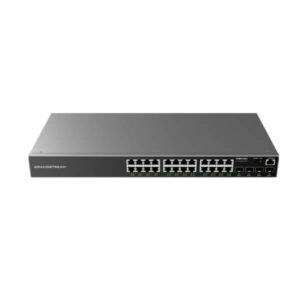
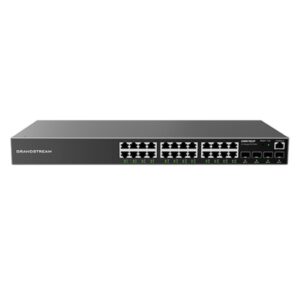
The 124F-POE sits in Fortinet’s secure access switching family and targets networks that need a practical combination of copper access ports, PoE+ capability, high-speed uplinks, and managed network controls. The hardware provides 24 Gigabit RJ45 interfaces for user and device connections. Twelve of those interfaces can supply standards-based 802.3af/at power, with a 185 W shared budget. Four 10GE SFP+ slots give the network designer faster options for connecting back to a distribution switch, core, server room, firewall area, or another suitable aggregation point. This balance is useful in sites where perhaps phones, access points, selected cameras, access-control endpoints, or other compatible devices need power, while desktops, printers, workstations, or fixed appliances use data-only ports.
From a network architecture perspective, the attraction is not simply the quantity of interfaces. A managed switch is normally selected because the business needs segmentation, visibility, predictable uplink design, controlled access, and easier administration than an unmanaged desktop switch can provide. Fortinet positions FortiSwitch for standalone management as well as integration with Fortinet management platforms. In FortiGate-centered environments, FortiLink can extend centralized configuration and visibility to the access layer, subject to the FortiGate model, FortiOS release, FortiSwitchOS compatibility, topology, and supported features. That can be valuable for organizations standardizing firewall, switching, and access policy under a common operational model.
For UAE projects, a common decision is whether to select partial PoE, full PoE, or a newer multi-gigabit platform. Partial PoE is often efficient when the site has a known mix of powered and non-powered endpoints. Full PoE becomes more appropriate when most access ports are expected to power phones, wireless access points, cameras, or IoT devices. Multi-gigabit access may be preferable for newer high-performance wireless or workstation requirements. FourTeck.com can help buyers map these choices to the actual floor plan and bill of materials instead of choosing a model solely because it appears in an existing standard or older quotation.
Procurement teams should also consider what surrounds the switch. SFP+ transceivers, fiber type, patch panels, copper cabling category, UPS capacity, rack depth, ventilation, firewall interfaces, endpoint PoE class, and support expectations can change the suitability of an otherwise correct model. Treating the switch as one part of a complete access-layer design usually reduces late-stage surprises and helps finance, IT, and project teams compare quotations on equivalent scope.
Key Business Benefits
◆ Balanced PoE Spending
Twelve powered ports can be a sensible fit when only part of the access layer needs PoE+. A business can connect powered endpoints without automatically moving to a model that powers all 24 ports. The value is strongest when the project team has already counted powered devices and calculated their worst-case consumption rather than assuming all endpoints draw the same amount.
◆ Faster Uplink Planning
Four 10GE SFP+ interfaces provide room for higher-bandwidth uplinks, aggregation, or resilient designs where supported. This can prevent a 24-port access switch from being constrained by a single 1 Gigabit uplink when many users and devices are active. The final optic, fiber standard, link distance, and topology should still be checked for the actual installation.
◆ Centralized Operational Control
In compatible Fortinet environments, FortiLink can bring switching into the broader FortiGate operational workflow. For an IT team already responsible for firewall policy and branch networking, this can simplify day-to-day visibility, configuration, and troubleshooting. It also reduces the need to treat every switch as an isolated device with a separate administration process.
◆ Cleaner Segmentation
Managed switching supports business designs that separate users, voice, guest access, cameras, management interfaces, or other device classes. Proper VLAN and access-policy planning can make the network easier to operate and safer to change. The switch provides the access-layer foundation, while the exact policy behavior depends on the configured network architecture and management mode.
◆ Rack-Ready Deployment
The 1RU format fits standard business network racks and cabinets, which makes it suitable for structured installations rather than improvised desktop cabling. A rack-ready switch encourages cleaner patching, labeling, power protection, and access control. Buyers should verify cabinet depth, ventilation, cable bend radius, power outlet position, and UPS sizing before installation day.
◆ Growth Without Immediate Replacement
Twenty-four access ports and four high-speed uplinks give many branch and office networks useful headroom when the current requirement is smaller. Good planning can leave spare ports for new staff, access points, security devices, or room changes. If expected growth is mainly in PoE endpoints, however, the available powered-port count and wattage should be treated as the limiting factor.
Product Highlights That Matter in Real Deployments
The strongest hardware characteristic is the combination of 24 Gigabit copper access interfaces and four 10 Gigabit SFP+ uplink slots. That gives the switch enough access density for a typical wiring closet while keeping uplink capacity significantly above ordinary 1 Gigabit connections. Fortinet lists 128 Gbps duplex switching capacity and 190 Mpps packet forwarding performance for the 124F family, along with a 32K MAC address table and support for up to 4K VLANs. These values are platform specifications, not a guarantee that every application will achieve a particular end-to-end result, because traffic patterns, connected systems, cabling, optics, configuration, and upstream devices all affect real performance.
IEEE 802.3af/at support on selected ports makes the switch useful for mixed powered and non-powered access networks.
The total PoE design should be calculated from endpoint maximum draw, not simply the number of PoE-capable ports.
High-speed optical or DAC uplink planning can reduce bottlenecks and support cleaner distribution designs.
A standard rack-mount profile suits organized server rooms, branch cabinets, and floor distribution closets.
A useful distinction is that the POE model is not the same as the FPOE variant. The partial-PoE unit provides 12 PoE+ ports and a 185 W budget, while the full-PoE family member increases powered-port coverage and power capacity. Buyers should quote the exact model code FS-124F-POE on the purchase request when the partial-PoE design is required, especially if a reseller catalog uses shortened names such as “124F PoE.”
Technical Specifications
| Specification | Details |
|---|---|
| Brand | Fortinet |
| Model | FS-124F-POE |
| Product Type | L2+ managed PoE access switch |
| Network Interfaces | 24× GE RJ45 plus 4× 10GE SFP+ |
| PoE Ports | 12 ports, IEEE 802.3af/at |
| PoE Power Budget | 185 W |
| Switching Capacity | 128 Gbps duplex |
| Packet Rate | 190 Mpps duplex |
| MAC Address Storage | 32K |
| VLANs Supported | 4K |
| Network Latency | < 1 µs platform specification |
| Packet Buffer | 2 MB |
| Memory / Flash | 512 MB DDR3 / 64 MB flash |
| Console | 1× RJ-45 serial console |
| Form Factor | 1RU rack mount |
| Dimensions | 44 × 260 × 440 mm (H × D × W) |
| Weight | 3.56 kg |
| Power Input | 100–240 V AC, 50–60 Hz; built-in AC power supply |
| Redundant Power | No |
| Power Consumption | 235.9 W average / 237.4 W maximum when PoE load is included |
| Operating Temperature | 0°C to 45°C |
| Humidity | 10% to 90%, non-condensing |
| Airflow / Noise | Side-to-back airflow / 46.3 dBA |
| Certifications | FCC, CE, RCM, VCCI, BSMI, UL, CB, RoHS2 |
| Warranty | Fortinet lists limited lifetime warranty; eligibility and service terms should be confirmed for the supplied unit |
For configuration selection, start with three numbers: total Ethernet endpoints, total powered endpoints, and the maximum PoE wattage those powered devices can demand at the same time. Then define the uplink path. A 10GE SFP+ interface may use fiber transceivers or suitable direct-attach connectivity depending on the device at the other end and the physical distance. Match both ends, not just the switch side. Finally, check the management architecture. If FortiGate will manage the switch through FortiLink, verify the intended FortiOS release, supported topology, and switch-controller scale. If the switch will operate independently or through another Fortinet management option, confirm the feature set and licensing or service expectations appropriate to that design.
Configuration and Buyer Guidance
A good quotation begins with the network requirement rather than the model name. Before requesting pricing, list every device that will connect to the switch and mark whether it needs PoE. For a phone with a passthrough PC connection, count the switch port once but consider the phone’s power class. For access points, cameras, door controllers, or other powered devices, use the manufacturer’s maximum power requirement rather than a typical draw. The combined requirement should remain within the switch’s supported PoE budget with reasonable headroom for startup behavior and future additions.
How many ports are really needed?
Include active devices, planned additions, uplink use, and spare capacity. Avoid filling every access port on day one if growth is expected.
What is the PoE load?
Share endpoint model numbers and maximum draw. Twelve PoE+ interfaces do not mean every possible endpoint combination will fit within 185 W.
What connects upstream?
Confirm whether the switch connects to a FortiGate, core switch, distribution switch, server network, or fiber handoff, and identify interface types at both ends.
Which optics and cables are required?
Fiber type, connector, distance, transceiver speed, and compatibility all matter. Copper patching should also match the desired access speed and site standards.
How will it be managed?
State whether the project uses FortiGate/FortiLink, standalone operation, on-premises management, or cloud-based management so compatibility can be reviewed.
What support is expected?
Clarify hardware warranty expectations, FortiCare or support requirements, installation scope, configuration assistance, and any project documentation needed for handover.
When contacting FourTeck.com, provide quantity, delivery location, target date, current firewall or management platform, powered endpoint list, uplink requirements, and any preferred transceiver models. That information allows the sales and technical discussion to focus on a complete bill of materials instead of a switch-only quote that may later require unplanned accessories.
Ideal Business Use Cases
Office Floor Access
A business office can use the switch for desktops, printers, IP phones, meeting-room devices, and selected wireless access points. The 24 copper ports give useful density in a floor cabinet, while 10GE uplinks can connect the floor back to a distribution or core layer. This fit is strongest when the number of powered endpoints remains within the twelve-port and 185 W limits.
Branch Network Standardization
Organizations with FortiGate at branch sites may consider this model as part of a repeatable secure access design. A standardized branch bill of materials can simplify deployment and support, but each branch should still be checked for WAN handoff, user count, local PoE devices, rack conditions, and FortiGate switch-controller capacity.
Retail and Customer-Facing Sites
Retail locations often mix POS terminals, office PCs, printers, access points, phones, cameras, and back-office equipment. A managed switch can keep these device classes logically separated and easier to troubleshoot. PoE planning is important because a camera-heavy site can consume powered ports and wattage faster than a conventional office.
Education and Training Rooms
Schools and training centers may use the switch for teacher workstations, classroom PCs, phones, wireless access points, and networked learning devices. Four 10GE uplinks can help where classroom traffic aggregates toward a faster backbone. The design should account for wireless AP power demand and expected device growth over the lifecycle of the classroom.
Clinic and Professional Services Networks
Clinics, legal firms, consultancies, and other professional environments can use managed switching to separate staff, guest, voice, security, and administrative traffic. The platform can provide a structured access layer, but any regulated application or sensitive system still needs appropriate firewall, endpoint, identity, logging, and policy controls beyond the switch itself.
Hospitality and Mixed Device Areas
Hotels, serviced offices, and meeting facilities often need a combination of wired endpoints, phones, APs, security devices, and management equipment. Partial PoE can work well in a back-office or floor distribution area with a known device mix. Dense AP or camera deployments may be better served by a full-PoE or higher-budget model.
The product can also support structured network refresh projects where an older 24-port switch is being replaced. In that scenario, the most important task is not matching the old port count but documenting what has changed: more wireless devices, higher uplink demand, new VLANs, additional cameras, revised security controls, or a move to FortiGate-managed switching. A refresh is an opportunity to correct undersized PoE and uplink designs rather than simply reproducing them.
Fortinet FortiSwitch 124F-POE PoE Planning and Endpoint Power
PoE is often the deciding factor in access-switch selection because a switch that has enough Ethernet ports can still be the wrong product if its powered-port count or total wattage is too low. This model exposes twelve PoE+ capable ports based on IEEE 802.3af/at and provides a 185 W shared budget. The right way to evaluate that figure is to create an endpoint schedule. List each phone, access point, camera, intercom, badge reader, or other PoE device, then record its maximum supported or required draw. Add the totals and preserve headroom for future additions and model changes.
For example, a site may have eight phones and four access points. That appears to fit twelve powered ports exactly, but the power budget must still be checked. Newer wireless access points can require more power than older phones, and future replacements may increase demand. If the entire 185 W budget is nearly consumed on day one, a full-PoE or higher-budget switch could be a safer design even though only twelve devices are connected today. Conversely, an office with six phones, two access points, and many desktop PCs may find partial PoE very efficient because most access ports never need switch-delivered power.
Cabling and endpoint negotiation matter too. PoE should be delivered over structured cabling that meets the installation’s electrical and data requirements. Poor terminations, excessive bundle heat, damaged patch leads, or incorrect cabling can create problems that look like switch faults. During procurement, treat patch panels, patch cords, cable category, rack ventilation, and UPS capacity as part of the PoE design. FourTeck.com can help review the device list and distinguish between a port-count requirement and a real power-budget requirement before the order is finalized.
Fortinet FortiSwitch 124F-POE 10GE Uplink and Traffic Design
Four 10GE SFP+ interfaces give network designers more flexibility than a basic access switch with only Gigabit uplinks. They can be used for high-speed connections toward distribution switching, core infrastructure, a compatible firewall environment, or other network devices where the interface standards and topology match. This is useful because twenty-four 1 Gigabit access ports can collectively generate more traffic than a single 1 Gigabit uplink can comfortably carry during busy periods. High-speed uplinks provide additional headroom for aggregate traffic, backups, large file transfers, voice, video, wireless traffic, and north-south application access.
The SFP+ slots do not remove the need for design work. Buyers must select transceivers that match the fiber type, distance, wavelength, connector, and device on the far end. A short rack-to-rack link may use a different solution from a building-to-building fiber path. Existing fiber should be identified before the quote so the optic does not become a last-minute mismatch. Where redundancy or link aggregation is planned, the configuration on both ends must support the intended design, and the network team should understand how spanning tree, LAG behavior, or failover will operate.
Uplink planning also affects firewall sizing and VLAN architecture. A 10GE uplink from the switch does not mean a downstream application or internet service runs at 10 Gbps; every segment has its own capacity and policy limits. The practical benefit is that the access switch is less likely to be the immediate bottleneck when many local users communicate toward shared infrastructure. For project quotations, share the upstream device model, interface type, fiber length, redundancy requirement, and whether the uplink carries one network or multiple VLANs. This allows the switch, optics, and upstream interfaces to be reviewed as one path.
Fortinet FortiSwitch 124F-POE FortiLink Management and Visibility
Fortinet’s switching portfolio is designed to work independently or within a broader Fortinet operational model. In compatible FortiGate deployments, FortiLink can allow the firewall platform to discover and manage FortiSwitch devices and can centralize functions such as VLAN configuration, switch monitoring, firmware management, device visibility, and selected access-control capabilities. This is attractive to organizations that want firewall and access-layer operations to use a more consistent workflow rather than maintaining separate tools for every branch switch.
The management decision should be made before purchase because supported features can depend on the FortiSwitchOS and FortiOS versions, the FortiGate model, switch-controller scale, topology, and whether the switch runs in FortiLink or standalone mode. Fortinet documentation includes feature matrices and compatibility information for this reason. A network design that requires a specific capability—such as a particular NAC function, monitoring feature, automation workflow, or advanced Layer 3 behavior—should be checked against the exact software release instead of assuming the family name guarantees identical behavior across every hardware generation.
Operationally, centralized management can improve change control for distributed sites. An administrator can approach the switch as part of the branch security architecture rather than as a disconnected appliance. That can make onboarding, VLAN changes, endpoint visibility, and troubleshooting more systematic. It does not replace good network documentation, backups, maintenance windows, access-control policy, or firmware planning. FourTeck.com can help procurement teams identify whether the project is FortiGate-managed, standalone, on-premises managed, or cloud managed, then make sure the requested hardware and services align with that plan before the quotation is approved.
What Should You Know Before Choosing This Switch?
These buyer questions focus on fit, power, integration, accessories, and replacement planning. They are useful when a model appears suitable on paper but the project still needs technical confirmation before procurement.
Is this model suitable for a 24-port office network?
Yes, when the site needs up to 24 Gigabit access connections and its powered-device requirement fits within 12 PoE+ ports and 185 W. Leave practical spare capacity for growth. If the office expects many more phones, APs, or cameras, compare a full-PoE or higher-density option before standardizing the floor design.
How do I know whether 185 W of PoE is enough?
Add the maximum power requirement of every endpoint that will receive power from the switch, not only its typical consumption. Compare the total with 185 W and retain headroom for replacements or additions. Share endpoint model numbers with FourTeck.com if you want the PoE calculation reviewed before quotation.
Can all 24 copper ports power devices?
No. The FS-124F-POE variant provides PoE+ on 12 access ports. Buyers who need powered-device capability across more of the 24 ports should review the FS-124F-FPOE or another model with a larger PoE design. This distinction should be written clearly on the bill of materials.
Will it work with my existing FortiGate?
It can participate in FortiLink-managed designs, but the exact FortiGate model, FortiOS release, FortiSwitchOS release, topology, and switch-controller scale should be checked. If a specific feature is mandatory, verify it against the current Fortinet compatibility and feature documentation rather than relying only on family-level support.
Which SFP+ modules should I order?
Choose optics from the link requirement: fiber type, distance, wavelength, connector, speed, and the interface at the opposite end. Fortinet publishes transceiver compatibility information. A quote should identify the intended optic or DAC rather than leaving the SFP+ ports as an unspecified accessory requirement.
What should I check when replacing an older 24-port switch?
Record existing port use, VLANs, trunk links, link aggregation, PoE endpoints, uplink media, rack space, management IPs, and any device-specific settings. Also identify new requirements that did not exist when the old switch was installed. Replacement is safer when the migration plan captures both the old configuration and the desired future state.
Do I need extra licenses just to use the switch?
Basic hardware operation is distinct from optional support, cloud management, and broader Fortinet service choices. The commercial requirement depends on the intended management and support model. State whether you need FortiCare, cloud-based management, project support, or other services so the quotation includes the correct items rather than unnecessary subscriptions.
What rack and power details should be prepared?
The switch is 1RU and uses an internal AC supply. Confirm rack width and depth, cable management, airflow, available power outlets, UPS capacity, grounding practice, and ambient temperature. A tidy network cabinet with correct ventilation and power protection is part of reliable deployment, especially when PoE load adds to total power consumption.
What information produces a more accurate quote?
Send the exact model code, quantity, delivery location, required date, powered endpoint list, total port need, uplink type, fiber distance, preferred management approach, FortiGate model if applicable, and support expectations. Mention whether optics, patch cords, rack accessories, UPS, installation, or configuration assistance should be included in the same bill of materials.
Business Requirements to Match Before You Buy
For an office with mixed powered and non-powered devices
This platform is a natural fit when workstations, printers, and other data-only devices share the access layer with a smaller set of phones, APs, or cameras. Confirm that powered endpoints fit the twelve-port PoE limit and the combined 185 W budget.
For a branch standardized on Fortinet security
Organizations using FortiGate can consider FortiLink-managed switching for a more unified operational model. Before ordering, check the FortiGate hardware, software versions, desired topology, and required switch features so the branch standard remains supportable.
For a network that needs faster aggregation
Four 10GE SFP+ interfaces can provide strong uplink flexibility. Buyers should specify transceiver type, link length, far-end interface, and redundancy plan. This is especially important when replacing an older switch that previously relied on 1 Gigabit uplinks.
For projects replacing a legacy access switch
Do not match only the old port count. Review existing VLANs, trunks, PoE use, optics, rack conditions, management process, and future wireless or camera growth. A modern replacement should solve current limitations rather than reproduce them.
For a multi-site rollout
Standardize a bill of materials that includes the switch, optics, rack accessories, power protection, firmware approach, configuration baseline, and support process. Validate exceptions at each site because one branch may have very different PoE or fiber requirements from another.
For procurement comparing partial PoE with full PoE
Compare lifecycle demand, not only initial price. If powered devices are likely to increase beyond twelve ports, a full-PoE model may reduce an early replacement. If most ports remain data-only, partial PoE can be a more proportionate design.
What Buyers Should Check Before Purchase
Before approving a purchase request, confirm that the model code matches the project design and that every supporting component is included. Partial-PoE and full-PoE models can look almost identical in a catalog but lead to very different outcomes in a camera, wireless, or voice deployment. The same applies to uplinks: four SFP+ slots are only useful when the optics, fiber, far-end interfaces, and configuration are correct.
Configuration Fit
Check 24-port access density, the count of powered ports, 185 W budget, uplink design, VLAN plan, and whether future growth changes any of those assumptions. If multiple switches will be deployed, define stacking, aggregation, or inter-switch topology before the BOM is frozen.
Compatibility Check
Verify current FortiGate and FortiSwitchOS compatibility where FortiLink is required, plus transceiver support, endpoint Ethernet speed, PoE standards, structured cabling, and the upstream device. Specific software functions should be confirmed for the planned release.
Availability and Warranty
Ask for current supplier status, lead time, product condition, serial-number documentation, and applicable warranty or support terms. Fortinet publishes limited lifetime warranty language for the family, but the actual procurement route and service entitlement should be documented on the quotation.
Accessories and Infrastructure
Include compatible SFP/SFP+ transceivers, fiber or copper patch leads, rack mounting requirements, cable management, labels, UPS sizing, and any console or deployment accessories needed on site. Missing optics can delay a project even when the switch arrives on time.
Long-Term Operating Fit
Consider likely additions such as extra access points, cameras, phones, or high-bandwidth users. A lower initial hardware cost can be misleading if the switch reaches its PoE or port ceiling too quickly and must be replaced or supplemented earlier than expected.
Quote Preparation
Give FourTeck.com the exact model, quantity, delivery location, endpoint list, PoE calculation, uplink media, firewall model, support expectations, and project schedule. For bulk rollouts, include a site count and whether every location follows the same network design.
A complete quote should let the technical team understand what will connect, the procurement team understand what is included, and the finance team compare equivalent scopes. FourTeck.com can help identify replacement or alternative Fortinet models when the original request no longer matches the deployment, but the final choice should always be tied to documented requirements.
UAE Availability and Service Support
FourTeck.com supports business technology inquiries across Dubai and the UAE with assistance for product selection, configuration review, quotation, delivery coordination, and warranty guidance. Availability can change according to distributor or supplier status, order quantity, exact model code, support bundle, project timing, and import or logistics conditions. For that reason, this page does not present unverified stock claims. The practical next step is to submit the requirement so the current commercial position can be checked against the exact quantity you need.
A switch quotation can include more than the chassis. Buyers can ask FourTeck.com to review SFP+ transceivers, fiber patch cords, copper patching, rack accessories, UPS requirements, FortiGate compatibility, FortiCare or support expectations, and related network components. This is useful for a new office, branch rollout, floor expansion, network refresh, or replacement project where missing accessories can affect installation readiness.
Warranty guidance should be confirmed at quotation stage because entitlement depends on the supplied product, serial number, country or channel terms, and any support services purchased. Fortinet’s datasheet lists a limited lifetime warranty for the family, but buyers should rely on the written commercial terms for the unit being quoted. Share your target delivery date and project location so FourTeck.com can coordinate the inquiry realistically.
Dubai, Abu Dhabi, Sharjah, and Ajman Coverage
Businesses in Dubai, Abu Dhabi, Sharjah, Ajman, and other UAE locations can contact FourTeck.com for availability checks, configuration guidance, and quote assistance. The team can help review the switch model, quantity, powered-device requirement, uplink accessories, and delivery details before the purchase order is issued. For project supply, share whether the request is for one network cabinet, several office floors, or a multi-site rollout so packaging, bill-of-material consistency, and delivery coordination can be discussed. Location coverage does not imply local branch stock or guaranteed lead time; those details are confirmed during the quotation process.
GCC and Africa Availability
FourTeck.com also supports business technology inquiries for selected GCC and Africa markets through regional inquiry channels. Organizations in Saudi Arabia, Qatar, Oman, Kuwait, Bahrain, Kenya, Uganda, and other supported markets can submit project requirements for model guidance, sourcing review, and logistics discussion. Availability, shipping route, warranty handling, import requirements, and local support arrangements can vary significantly by country, so regional requests should include destination, quantity, target schedule, and any required documentation.
For distributed organizations, consistency matters as much as unit price. A multi-country rollout should define the same baseline for switch model, optics, firmware, rack accessories, labeling, and configuration unless a site has a documented exception. This helps technical teams support branches after deployment and reduces the chance of receiving different variants that look similar but have different PoE capabilities. FourTeck can review whether the partial-PoE model is appropriate across every site or whether some locations should use full-PoE, higher-density, or newer multi-gigabit models.
Regional buyers can use the FourTeck Africa FS-124F-POE page, FourTeck Kenya, FourTeck Uganda, or FourTeck Kuwait where relevant to the project. Commercial terms are confirmed for each destination.
Other Options Buyers May Consider
The correct alternative depends on whether the requirement changes in port density, PoE coverage, access speed, or management strategy. The following options help frame the decision without assuming one model is automatically superior.
FS-108F-FPOE
A compact full-PoE option for smaller branches or edge areas that need eight powered Gigabit ports but do not require 24-port access density.
FS-108F
A smaller non-PoE model for wired-only branch networks where powered endpoints are not required and compact installation is preferred.
FS-124F-FPOE
Consider the full-PoE member of the family when the project needs PoE+ capability across more access ports and a substantially larger total PoE budget.
FS-124G
A newer multi-gigabit direction for buyers whose priority is higher access speed and more 10GE uplink flexibility rather than conventional 1 Gigabit access.
FS-148F-POE Family Direction
A 48-port access direction for larger floors that need more copper density while retaining PoE and 10GE uplink planning. Exact variant selection should follow the powered-port requirement.
For a replacement project, compare the model requested by procurement with the current Fortinet portfolio before locking the purchase order. A newer platform may make sense when multi-gigabit wireless, additional uplinks, or different PoE requirements are now part of the project. On the other hand, a direct 124F family replacement may remain appropriate when the existing design is stable, documented, and compatible with the required software.
Why Business Buyers Contact FourTeck.com
Enterprise networking purchases often fail at the boundaries between technical design and commercial ordering. The engineer may know the switch family but not the exact sourcing terms. Procurement may have the model code but not the optics list. Finance may see two quotations that appear comparable even though one excludes support or accessories. FourTeck.com approaches the request as a bill-of-material review so those gaps can be identified before the order is finalized.
Assistance with model identification, quantity planning, alternatives, and project sourcing discussions for SMB and enterprise requirements.
Review of access ports, PoE demand, uplink requirements, FortiGate integration, optics, and surrounding infrastructure before quotation.
A clearer commercial request built around exact model, quantity, delivery destination, accessories, services, and timing.
Coordination of delivery requirements after availability and commercial terms are confirmed for the order.
Help understanding the warranty or support terms attached to the quoted supply rather than relying on generic catalog language.
Comparison with related FortiSwitch options where powered-port demand, access speed, or lifecycle requirements have changed.
FourTeck.com does not need to claim that every product is always available or that one model fits every network. The useful role is to help the buyer define the requirement, check the current sourcing position, and make the technical and commercial scope explicit. That is especially important for switches because optics, support, cables, firmware compatibility, and power design can materially change project readiness even when the main hardware model is correct.
Frequently Asked Questions
What is the FS-124F-POE used for?
It is a managed access switch for connecting wired business endpoints and selected PoE+ devices such as compatible phones, access points, cameras, and other network equipment. It provides 24 Gigabit RJ45 interfaces, four 10GE SFP+ uplinks, and PoE+ on 12 ports. It is commonly considered for offices, branches, classrooms, retail sites, clinics, hospitality networks, and structured access-layer deployments.
How many PoE devices can it power?
Up to 12 switch ports support IEEE 802.3af/at PoE+, but the actual powered-device count also depends on the combined wattage. Fortinet specifies a 185 W PoE budget for this model. A safe design checks the maximum draw of every endpoint and preserves headroom, because twelve high-draw devices may have a different total requirement from twelve low-power phones.
What is the difference between POE and FPOE variants?
The POE variant provides PoE+ on 12 access ports with a 185 W budget. The FPOE member of the same family provides PoE+ across all 24 access ports and a higher power budget. Choose based on the number and power demand of endpoints rather than assuming the names are interchangeable. The exact SKU should appear on the quotation and purchase order.
Can FourTeck.com help with configuration selection?
Yes. Share your user and device count, powered endpoint models, total port requirement, uplink path, fiber distance, FortiGate model, management preference, quantity, and delivery location. FourTeck.com can use those details to review whether the requested switch and accessories match the business requirement before a quotation is prepared.
Is the switch available in the UAE?
FourTeck.com can check current UAE availability when you submit an inquiry. Supplier status, quantity, support bundle, and project timing can affect lead time. The page does not claim permanent stock because that information changes. For an accurate availability check, provide the exact FS-124F-POE model, quantity, delivery location, and required date.
Does it support FortiLink management?
The 124F family supports FortiLink-managed deployment with compatible FortiGate environments. The exact capabilities depend on the FortiGate model, FortiOS and FortiSwitchOS releases, topology, and supported features. Check the current Fortinet compatibility information when a specific management, NAC, monitoring, or automation feature is mandatory for the project.
Which accessories should be included in the quote?
Common items include SFP/SFP+ transceivers, fiber patch cords, copper patch leads, rack accessories, cable management, UPS capacity, labeling, and relevant Fortinet support services. The exact list depends on the uplink media, rack design, and support model. Include the far-end network device and fiber distance in the inquiry so optics can be selected correctly.
What warranty applies to this product?
Fortinet’s secure access datasheet lists a limited lifetime warranty for the family. The practical warranty and service process for a purchased unit should be confirmed on the supplier quotation, including eligibility, serial-number documentation, region, and any FortiCare services. FourTeck.com can provide warranty guidance for the specific supply being quoted rather than relying only on generic family wording.
Can businesses request bulk or multi-site supply?
Yes, businesses can submit bulk or project requirements for review. For multi-site deployment, provide site count, quantities per location, delivery schedule, standard optics, rack requirements, and whether all branches use the same FortiGate and configuration baseline. This helps ensure the commercial request covers a consistent bill of materials and highlights any site-specific exceptions before procurement.
How do I request a quotation?
Use the FourTeck.com contact page and include FS-124F-POE, required quantity, destination, preferred delivery window, endpoint and PoE details, uplink type, optics requirement, FortiGate model if applicable, and any support or configuration services. A more complete technical request normally produces a more accurate bill of materials and reduces back-and-forth during procurement.
Need Help Finalizing the Right FortiSwitch Configuration?
FourTeck.com can help review the switch model, PoE demand, 10GE uplinks, optics, FortiGate integration, warranty expectations, quantity, and delivery requirement before you issue the purchase order. Send your network requirement to receive current availability and quotation assistance.