Fortinet FortiSwitch 148F-POE in Dubai, UAE
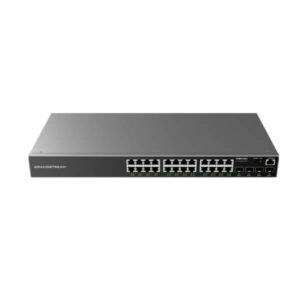
The FortiSwitch 148F-POE is built for organizations that need a dense 48-port Gigabit access layer with PoE for selected endpoints and four 10 Gigabit SFP+ uplinks for higher-speed network connections. Its 24 PoE-capable ports share a 370 W power budget, making the switch suitable for projects combining standard Ethernet users with devices such as wireless access points, IP phones, cameras and other IEEE 802.3af/at powered equipment. FourTeck.com helps business buyers review port demand, PoE consumption, uplink optics, Fortinet management requirements and project quantities before quotation.
Request QuoteCheck UAE Availability
Quick Product Information
Fortinet
FS-148F-POE
Managed secure access switch
48 × Gigabit Ethernet RJ45
24 × IEEE 802.3af/at, 370 W budget
4 × 10GE SFP+
1RU rack mount
Business access networks, PoE endpoints and branch/campus edge
Configuration review and quote assistance
Fortinet limited lifetime terms; confirm current eligibility
SFP/SFP+ optics, patching, rack and support options as required
Share port count, PoE load, uplink and management requirements
Buyer Snapshot: Is This the Right 48-Port PoE Switch?
This model fits best when a network needs many Gigabit access ports but only part of the endpoint population requires PoE. The key purchasing question is not simply whether 48 ports are enough; buyers should also map which endpoints need power, how much power those devices draw, what uplink speed the network core requires and how the switch will be managed.
Dense office or branch access where up to 24 ports may need standard PoE/PoE+.
A 48-port access layer plus four 10GE SFP+ interfaces in one 1RU chassis.
Total PoE wattage, number of powered endpoints and individual device class.
Rack-based business networks with copper access and fiber or DAC uplinks.
The FPOE variant when PoE is required across more than 24 access ports.
Model selection, compatible accessory guidance and UAE quotation support.
Product Overview
The Fortinet FortiSwitch 148F-POE is a 48-port managed access switch designed for networks where wired user connectivity and powered edge devices must coexist in a compact rack footprint. All 48 copper interfaces provide Gigabit Ethernet connectivity, while ports 1 through 24 are designed to supply IEEE 802.3af/at PoE. A 370 W shared PoE budget gives network planners room to power a mix of devices, but the final supported endpoint count depends on the wattage requested by each powered device. The switch also provides four 10 Gigabit SFP+ interfaces that can be used for higher-speed uplinks, aggregation or supported inter-switch connections.
For a business buyer, the practical value is consolidation. Rather than installing one large non-PoE switch and a separate smaller PoE switch, a project can use one 1RU unit when the environment has a balanced mix of conventional Ethernet endpoints and devices that need power from the network. This is common in offices with desk phones and computers, education environments with access points, hospitality sites with a combination of user ports and wireless infrastructure, or surveillance projects where only part of the access layer is dedicated to cameras.
The switching platform is specified for 176 Gbps duplex switching capacity and 260 Mpps packet forwarding. It supports up to 32,000 MAC addresses and 4,000 VLANs, providing room for segmented access-layer designs. Fortinet also positions the family for integrated operation with Fortinet network-security environments through FortiLink. Management architecture, software versions and any optional cloud or support services should be confirmed during project planning, especially when the switch will be integrated into an existing FortiGate-managed environment.
Dubai and UAE buyers should evaluate this switch as part of the complete access-network design rather than by port count alone. Uplink optics, fiber type, PoE power demand, rack ventilation, available power circuits, VLAN architecture, Fortinet management compatibility and support expectations can all affect the correct bill of materials. FourTeck.com can help translate these requirements into a quotation that includes the appropriate switch model and related items without assuming that every project needs the same configuration.
Key Business Benefits
◆ Dense Access Connectivity
Forty-eight Gigabit copper ports let a business concentrate a large number of desktops, phones, printers, cameras, access points and other Ethernet devices into one rack unit. This can simplify patch-panel mapping and reduce the number of separate access switches required in a wiring cabinet.
◆ Selective PoE Deployment
Twenty-four PoE-capable interfaces suit mixed environments where only part of the user population needs network-delivered power. That can be more economical than specifying PoE on every port when the remainder of the network connects standard computers, printers or other self-powered devices.
◆ 10 Gigabit Uplink Headroom
Four SFP+ interfaces provide a path beyond 1 Gigabit uplinks. For networks carrying traffic from many access users, faster connections to distribution or core switching can reduce uplink bottlenecks and give architects more flexibility for redundancy or aggregation.
◆ Segmentation Capacity
Support for up to 4,000 VLANs and a large MAC address table makes the platform suitable for structured network segmentation. This matters when IT teams separate voice, wireless, user, guest, surveillance, management and other traffic according to their network policy.
◆ Fortinet-Oriented Management
Organizations using Fortinet infrastructure can evaluate FortiLink-based switch management as part of a unified access design. The exact management path depends on the deployed FortiGate, software versions and licensing or service choices, so compatibility should be verified before rollout.
◆ Rack-Space Efficiency
A 1RU form factor helps organizations build higher-density access layers in server rooms and telecommunications cabinets. This can be valuable in branches and retrofit projects where available rack space is limited and every additional unit affects cooling, cabling and power planning.
These benefits are strongest when the switch is selected from an actual endpoint schedule. A deployment with 24 low-power phones has a very different PoE profile from one with higher-power wireless or surveillance devices. The 370 W budget must therefore be checked as a shared resource, not treated as 370 W available to every port.
Product Highlights
All RJ45 network interfaces support Gigabit Ethernet for standard business endpoint connectivity.
Half of the copper ports can deliver IEEE 802.3af/at power with a 370 W aggregate budget.
Higher-speed uplinks support connection toward distribution, core or other compatible switching infrastructure.
The platform is specified for 176 Gbps duplex switching capacity and 260 Mpps forwarding.
Up to 4,000 VLANs, 32K MAC entries, 640 ACL entries and 32 spanning-tree instances are specified.
The chassis measures 44 × 310 × 440 mm and weighs approximately 4.68 kg.
Before purchase, buyers should confirm whether the 24 PoE-port design matches the endpoint map. If most or all 48 access ports must power devices, the corresponding full-PoE model may be more suitable. Likewise, SFP+ transceivers or DAC cables should be selected according to distance, fiber type, peer device and supported Fortinet compatibility.
Technical Specifications
| Specification | FortiSwitch 148F-POE |
|---|---|
| Brand / Model | Fortinet FS-148F-POE |
| Product Type | Managed secure access Ethernet switch |
| Network Interfaces | 48 × GE RJ45 + 4 × 10GE SFP+ |
| Console | 1 × RJ45 serial console |
| PoE Ports | 24 × IEEE 802.3af/at |
| PoE Power Budget | 370 W aggregate |
| Switching Capacity | 176 Gbps duplex |
| Packet Forwarding | 260 Mpps duplex |
| Network Latency | Less than 1 µs |
| MAC Address Storage | 32K |
| VLANs Supported | 4K |
| Link Aggregation | Group size 8; total 16 groups |
| Packet Buffer | 2 MB |
| Memory / Flash | 512 MB DDR3 / 64 MB flash |
| ACL / Spanning Tree | 640 ACL entries / 32 spanning-tree instances |
| Form Factor | 1RU rack mount |
| Dimensions | 44 × 310 × 440 mm |
| Weight | 4.68 kg |
| Power Input | 100–240 V AC, 50–60 Hz; built-in AC power supply |
| Redundant Power | No |
| Average / Maximum Power Consumption | 474.8 W / 476.3 W under specified PoE conditions; consumption is much lower when PoE is not in use |
| Operating Temperature | 0°C to 45°C |
| Humidity | 10% to 90% non-condensing |
| Airflow / Noise | Side-to-back airflow / 46.9 dBA |
| Warranty | Fortinet limited lifetime warranty terms apply; confirm current policy and support entitlement |
When interpreting the table, do not confuse PoE port count with total powered-device capacity. The switch provides 24 PoE-capable ports, but the aggregate power budget is 370 W. A design using many high-draw devices can reach the power ceiling before every PoE port is occupied. Conversely, a phone-heavy deployment with lower per-device power may remain comfortably within budget. The four SFP+ ports also require their own planning: choose optics or DAC cables according to distance, fiber type and the interface on the upstream switch. If uplink redundancy, LAGs or multiple distribution links are part of the design, reserve the required SFP+ ports in the topology before finalizing the access-layer count.
Configuration and Buyer Guidance
A correct switch quotation starts with the endpoint list. Count every wired device that will connect today, then add realistic growth rather than consuming all 48 ports immediately. Separate endpoints into powered and non-powered groups. For each powered device, record whether it uses 802.3af or 802.3at and its maximum expected wattage. This simple exercise shows whether the 24 PoE ports and 370 W budget are enough or whether a full-PoE model should be considered.
1. How many endpoints?
Document current devices, spare ports and planned growth. Include phones, access points, cameras, printers, controllers and building systems where relevant.
2. What is the PoE load?
Add the expected maximum power draw of all PoE devices. Keep practical headroom for replacements, firmware changes and future additions.
3. What are the uplinks?
Confirm whether the upstream connection is copper, fiber or DAC and whether 1GE or 10GE is required. Select compatible transceivers accordingly.
4. How will it be managed?
Determine whether the switch will operate in a FortiLink-managed Fortinet environment or another supported mode. Verify firmware and platform compatibility.
5. What must be segmented?
Prepare VLAN, voice, wireless, guest, surveillance and management requirements so port profiles can be planned before deployment.
6. What support is required?
Confirm expected warranty handling, vendor support term, replacement planning and any project services before the purchase order is issued.
For a more accurate FourTeck.com quotation, share the switch quantity, site count, required PoE device count, approximate wattage, preferred uplink media, FortiGate model if applicable, support term, delivery location and any SFP+ transceiver requirements. This prevents a switch-only quotation from omitting essential items needed for installation.
Ideal Business Use Cases
Office Access Networks
A floor with many workstations plus a smaller set of IP phones or access points can benefit from the mixed PoE design. The switch provides dense copper access while reserving PoE capacity for devices that actually need it.
Branch and Retail Locations
Branches often combine point-of-sale or office endpoints, wireless access points, phones, printers and surveillance equipment. A single 1RU access switch can reduce cabinet complexity when the endpoint schedule fits the PoE allocation.
Education and Training Sites
Classrooms and training areas may require many fixed Ethernet connections together with centrally powered wireless access points and phones. VLAN capacity helps separate staff, student, guest and infrastructure traffic where the network design requires it.
Hospitality and Managed Facilities
Hotels and managed properties can have a blend of back-office devices, wireless infrastructure, phones and operational systems. The PoE budget should be checked carefully because access points and cameras can consume more power than basic phones.
Surveillance-Adjacent Networks
Where a surveillance project uses fewer than 24 powered cameras on one switch and still needs conventional Ethernet ports for other systems, the mixed port design may be appropriate. Camera power draw and recorder/uplink bandwidth must be calculated before selection.
Fortinet Security Fabric Environments
Organizations that already use FortiGate can evaluate FortiLink-based switch management to integrate access-layer controls into the wider Fortinet environment. Model and firmware compatibility should be verified for the intended architecture.
The model is not automatically the best fit for every 48-port project. A site needing PoE on nearly all access ports may be better aligned with a full-PoE variant, while a site with no powered endpoints can avoid paying for unnecessary PoE hardware by selecting a non-PoE model. Similarly, environments that require multi-gigabit access speeds at the edge should evaluate newer FortiSwitch families rather than assuming Gigabit copper is sufficient. FourTeck.com can help compare these choices based on the actual network requirement.
FortiSwitch 148F-POE PoE Capacity and Endpoint Planning
PoE is often the deciding reason to buy this model, so the power design deserves more attention than the simple statement “24 PoE ports.” Fortinet specifies a 370 W total PoE budget across the 24 802.3af/at-capable interfaces. That budget is shared. If every endpoint requested the maximum power associated with a higher PoE class, the total could exceed what the switch can supply before all PoE ports are used at full demand. A sound design therefore starts with the manufacturer’s maximum power requirement for each endpoint, not an average observed value from an existing site.
For example, a deployment of lower-power IP phones may leave substantial headroom, while a mix of high-performance wireless access points and cameras can use the same budget much faster. The practical objective is to avoid designing right at the limit. Future replacements may draw more power, an access point upgrade may move to a higher class, or an additional device may be added later. A modest reserve gives the network team room to make these changes without unexpectedly moving powered devices to another switch.
Fortinet documentation also provides PoE controls and monitoring capabilities in supported software releases, including enabling or disabling PoE on ports, selecting supported port modes and assigning PoE priority. These functions can help administrators protect critical powered devices if the available budget becomes constrained, but operational settings should be planned and tested within the actual FortiSwitchOS or FortiGate-managed environment.
FortiSwitch 148F-POE 10 Gigabit Uplinks and Traffic Design
A 48-port access switch can aggregate a significant amount of user traffic, so the uplink design matters even when individual edge devices connect at 1 Gigabit. The four SFP+ ports provide 10 Gigabit capability and give the network architect several ways to connect the access layer to distribution or core switching. Depending on the topology and supported configuration, these interfaces can be reserved for primary and secondary uplinks, link aggregation, inter-switch connections or other high-speed paths.
The correct optical module cannot be chosen from the switch model alone. Buyers should confirm whether the peer device uses SFP or SFP+, the intended link speed, cable distance, fiber type and connector standard. Short in-rack links may use supported direct-attach cabling, while longer building or campus connections may require appropriate multimode or single-mode optics. Mixing incompatible optics, fiber types or link speeds is a common source of delays during installation, so the transceiver bill of materials should be prepared together with the switch order.
Bandwidth planning should also reflect the network workload. A user-access floor carrying ordinary office traffic may have modest aggregate demand, while a switch supporting many cameras, wireless access points or high-volume endpoints can push much more traffic toward the core. Redundant uplinks may be required for availability even when one link has enough bandwidth. In that case, topology, spanning tree, link aggregation and upstream switch capabilities all become part of the design.
FortiSwitch 148F-POE Management, Segmentation and Operational Fit
The value of a managed switch comes from how well it fits the operational model of the IT team. Fortinet positions the FortiSwitch Secure Access family for integration with FortiGate through FortiLink, allowing organizations to evaluate centralized network access management within a Fortinet Security Fabric architecture. This can be attractive for businesses already standardizing on Fortinet because network and security teams can align access switching with existing controls and visibility.
The switch specifications include support for up to 4,000 VLANs, 32,000 MAC entries, 640 ACL entries and 32 spanning-tree instances. These figures indicate room for structured access-layer segmentation, but the actual design should remain understandable and supportable. A business may need separate VLANs for corporate users, voice, guests, cameras, building systems, wireless management and infrastructure management. The important task is to document those requirements before deployment, map them to ports and uplinks, and confirm how policies will be enforced across the wider network.
Software versions can affect the exact commands, interface options and management capabilities available. A new switch should therefore be introduced with a controlled deployment process that includes firmware review, configuration backup, management access, VLAN and trunk testing, PoE verification, uplink failover checks where applicable and monitoring integration. Buyers replacing an older FortiSwitch should not assume every historical configuration transfers unchanged to a newer software release.
What Should You Know Before Choosing This Switch?
The questions below reflect the practical decisions that usually determine whether this model fits a real network project. They focus on port density, PoE headroom, uplink design, compatibility and the information needed for a reliable quotation.
Is this switch suitable for a 48-user office?
It can be suitable, but user count alone is not enough to decide. Count every wired endpoint, including phones, printers, access points and cameras, then leave spare capacity for growth. If many users have both a computer and a phone, the port requirement can exceed the employee count. The switch provides 48 Gigabit copper ports, so prepare a complete port schedule before ordering.
Can all 48 ports power devices?
No. On this model, 24 copper ports support IEEE 802.3af/at PoE and share a 370 W power budget. The remaining copper ports provide data connectivity without PoE. If the project needs power on more than 24 access ports, evaluate the full-PoE 148F family variant rather than relying on external injectors unless there is a clear design reason.
How do I know whether 370 W of PoE is enough?
Add the maximum power requirement of every planned PoE endpoint and compare that total with the switch budget. Do not calculate only from typical consumption. Allow margin for device replacement and future additions. If the planned total sits close to the limit, a higher-PoE option can reduce operational risk and make expansion easier.
What should I buy for the 10GE SFP+ uplinks?
Choose optics or direct-attach cables according to the upstream device, link distance, fiber type and required speed. The switch model alone does not determine the correct transceiver. Share the core or distribution switch model and the physical connection distance with FourTeck.com so the accessory list can be reviewed before quotation.
Can it be managed with an existing FortiGate?
Fortinet supports FortiLink-based management for the FortiSwitch Secure Access family, but the actual deployment must be checked against the FortiGate model, FortiOS version, FortiSwitchOS version and intended topology. Before replacing an older switch, document the current FortiLink design and confirm supported software combinations.
Is this a good choice for IP cameras?
It can support camera deployments when the number of powered cameras, total PoE demand and aggregate video traffic fit the design. Check each camera’s maximum PoE draw, expected bitrate and uplink requirement. A project with many high-resolution cameras may need more PoE ports, a larger power budget or a different access-switch arrangement.
What should I check when replacing an older 48-port switch?
Confirm port mapping, PoE requirements, VLANs, trunks, link aggregation, spanning-tree behavior, management IP, uplink optics and rack power. Also check whether the old switch used features or transceivers that need a compatibility review. A like-for-like port count does not guarantee a like-for-like operational replacement.
Should I choose 148F-POE or 148F-FPOE?
Choose based on powered-port count and total PoE demand. The POE model provides 24 powered ports and a 370 W budget, while the FPOE version provides PoE on all 48 copper ports with a larger 740 W budget. If future expansion is likely to push beyond 24 powered endpoints, the full-PoE version may simplify long-term planning.
What information helps FourTeck prepare a better quote?
Share quantity, delivery location, number and type of PoE devices, expected wattage, upstream switch model, uplink distance, optic type if known, FortiGate model, desired support term and any rack or patching requirements. For multi-site projects, include a site-by-site port and PoE count rather than one combined total.
Common Business Requirements This Switch Can Support
A branch that needs many wired ports
For businesses consolidating a large endpoint count into a single access switch, 48 Gigabit RJ45 ports provide useful density. Buyers should reserve spare ports for growth and check whether a second switch is needed for resilience or expansion.
An office with phones and wireless access points
The 24 PoE ports can suit mixed endpoint environments where powered devices are only part of the total access population. Add the maximum wattage of all powered endpoints before choosing the model.
A network moving to 10GE uplinks
Four SFP+ interfaces create a practical path to higher-speed distribution links. Confirm the upstream interface, optical media and transceiver compatibility before ordering the accessories.
A project standardizing on Fortinet
Organizations using FortiGate can evaluate FortiLink-based management to align switching with the Fortinet environment. Software compatibility and topology should be checked as part of the deployment plan.
A buyer replacing a mixed PoE switch stack
The model may reduce the number of access devices when one chassis can handle both powered and non-powered endpoints. Port mapping, failure domains and spare capacity should still be reviewed before consolidation.
A multi-site rollout requiring repeatability
For standardized branches, create a repeatable bill of materials covering switch, uplink optics, patching, support and rack requirements. Sites with different PoE loads may need different FortiSwitch variants even when the general design is the same.
What Buyers Should Check Before Purchase
Before requesting a quotation, confirm more than the model name. A business switch becomes part of the operational network for years, and small omissions at purchasing stage can lead to extra cost, delayed installation or avoidable redesign. Start with the current and future port count. A nominal 48-port requirement may already be full if every user has a desktop and phone or if the same cabinet serves wireless, surveillance and building systems. Keeping a deliberate spare-port margin is usually easier than expanding immediately after installation.
Configuration Fit
Confirm the number of powered endpoints, their maximum wattage, required VLANs, uplink speed and desired growth margin. Do not choose solely because the chassis has 48 ports.
Compatibility Check
Verify FortiGate and software compatibility where FortiLink is planned. Confirm SFP+ optics against both ends of the link and check cable type, distance and connector format.
Availability and Warranty
Ask for current supplier availability, applicable Fortinet warranty terms and any optional support services. Warranty handling and service entitlement should be understood before project approval.
Quote Preparation
Provide quantity, sites, powered-device list, optic requirements, support period and delivery location. This helps prevent later additions for missing transceivers, cables or support items.
Long-term cost should include more than the switch itself. Consider optical modules, spare optics, patch leads, rack accessories, UPS loading, support subscriptions if selected, and the labor involved in replacing or reconfiguring a switch after deployment. If the project is close to the 24-port PoE limit today, compare the cost of the full-PoE model against the operational complexity of adding injectors or a second switch later. Likewise, if no powered endpoints are required, compare the non-PoE 148F. The best purchase is the model that fits the full network design with suitable headroom rather than the one that merely matches the current port count.
UAE Availability and Service Support
FourTeck.com supports business inquiries for Fortinet switching solutions in Dubai and across the UAE. Assistance can include model selection, PoE capacity review, uplink and transceiver planning, quotation preparation, delivery coordination and guidance on applicable warranty or support options. Availability is not assumed to be constant: it can change according to supplier status, order quantity, support bundle, product lifecycle and the exact SKU requested.
For a single-switch requirement, sharing the required delivery location and target deployment date is usually enough to begin an availability check. For larger projects, provide a bill of materials or site schedule so quantities can be reviewed together. If the project also needs SFP+ optics, FortiGate integration, patching or other Fortinet network components, include those items in the same request so procurement can evaluate the complete requirement rather than receiving separate partial quotations.
FourTeck.com can also help buyers compare the 148F non-PoE, 148F-POE and 148F-FPOE versions when the endpoint schedule is uncertain. This is particularly useful when a network refresh may increase the number of powered access points, phones or cameras over time. Final warranty conditions should be confirmed against Fortinet policy and any selected support entitlement at the time of purchase.
UAE Coverage for Business Projects
Businesses in Dubai, Abu Dhabi, Sharjah, Ajman and other UAE locations can contact FourTeck.com for switching availability, configuration guidance and quote support. The same buying principles apply whether the requirement is for one office, several branches or a wider rollout: define the access-port count, PoE load, uplink media, management architecture and support expectations before approving the bill of materials.
For multi-location projects, a site-by-site schedule is recommended because different branches may have different PoE profiles. One location may need the 148F-POE while another may justify the 148F-FPOE or a smaller 124F-family model. FourTeck.com can help organize these differences into a clearer quotation and identify related network items that should be included for each site.
GCC and Africa Availability
FourTeck.com also supports business technology inquiries for selected GCC and Africa markets through its regional inquiry channels. Organizations planning projects in Saudi Arabia, Qatar, Oman, Kuwait, Bahrain, Kenya, Uganda and other supported markets can request guidance on model availability, configuration fit, shipping coordination and applicable support considerations. The exact process can vary by destination, supplier status, project quantity and import requirements.
For cross-border projects, prepare a consolidated bill of materials but keep delivery addresses and site quantities separate. This makes it easier to review whether the same switch model is suitable everywhere and whether optics, power requirements or rack accessories differ by location. Buyers should also confirm warranty handling and service entitlement for the country where the equipment will operate rather than assuming that terms are identical in every market.
Related Models for Similar Network Requirements
The 148F-POE sits between a non-PoE 48-port model and a full-PoE 48-port model, so the best alternative depends primarily on how many powered ports and how much PoE budget the project needs. Smaller 24-port models can also be more appropriate for branches with lower density.
FortiSwitch 148F
Best for 48-port deployments that do not require PoE. It retains the same 48 × GE RJ45 and 4 × 10GE SFP+ interface pattern without a PoE budget.
FortiSwitch 148F-FPOE
Best when all 48 copper ports may need 802.3af/at PoE. Fortinet specifies a 740 W PoE budget for this full-PoE variant.
FortiSwitch 124F-POE
A smaller access option with 24 Gigabit RJ45 ports, 4 × 10GE SFP+ and PoE on 12 ports with a 185 W budget.
FortiSwitch 124F-FPOE
A 24-port alternative with PoE across all 24 copper ports and a 370 W power budget, useful for smaller but PoE-dense sites.
When comparing these models, treat PoE port count and PoE wattage as separate decision points. A smaller switch can still have a substantial PoE budget, while a larger switch may intentionally provide PoE on only part of its access ports. FourTeck.com can help select the model that aligns with the endpoint schedule and growth plan rather than defaulting to the highest-capacity version.
Why Business Buyers Contact FourTeck.com
Network procurement is often less about finding a model number and more about making sure the complete bill of materials works on installation day. FourTeck.com supports SMB, enterprise and project buyers with practical pre-sales guidance that connects the switch choice to the actual deployment requirement.
Assistance reviewing current model availability and suitable alternatives when supplier status changes.
Review of PoE load, port density, uplink needs and management context before quotation.
Help identifying optics, cables and related network items that should be considered with the switch.
Structured quotation support for single-site, bulk and multi-location business requirements.
Coordination guidance based on delivery location, quantity and supplier availability.
Help understanding the warranty and support details that should be confirmed with the final order.
FourTeck.com does not need every inquiry to be fully engineered before contact. If the project is still at an early stage, share the number of users, approximate device types and any existing Fortinet equipment. The requirement can then be refined into the technical questions that matter: powered-port count, PoE headroom, uplink architecture, management method, optics and support expectations. This approach reduces the risk of comparing quotations that contain different assumptions.
Frequently Asked Questions
What is the FortiSwitch 148F-POE used for?
It is a managed 48-port Gigabit access switch for business networks. Twenty-four copper ports provide IEEE 802.3af/at PoE with a 370 W total budget, and four 10GE SFP+ interfaces support higher-speed uplinks. It is commonly considered for office, branch, wireless, voice and mixed endpoint environments where only part of the access layer needs PoE.
How many PoE ports does this model have?
It has 24 PoE-capable RJ45 ports supporting IEEE 802.3af and 802.3at. The power budget is 370 W shared across those ports. Buyers should calculate the maximum power draw of the planned endpoints because the number of connected powered devices and the wattage each device requests determine whether the budget is sufficient.
Does it include 10 Gigabit connectivity?
Yes. The switch includes four 10GE SFP+ interfaces in addition to the 48 Gigabit copper access ports. These are typically used for uplinks or other supported high-speed connections. The required SFP+ transceiver or DAC cable depends on the distance, media type and upstream device, so accessories should be confirmed before purchase.
Can FourTeck.com help choose between POE and FPOE versions?
Yes. The main comparison is powered-port count and total PoE demand. The 148F-POE provides PoE on 24 ports with a 370 W budget, while the 148F-FPOE provides PoE on all 48 copper ports with a 740 W budget. Sharing your endpoint list allows the choice to be based on actual load and growth plans.
Is the FortiSwitch 148F-POE available in Dubai and the UAE?
FourTeck.com supports product inquiries and quotations for Dubai and UAE business buyers. Current availability can vary by supplier status, quantity, lifecycle and support requirement, so it should be checked at the time of quotation rather than assumed. Share your quantity and target delivery location to request an availability review.
What warranty applies to the switch?
Fortinet documentation lists a limited lifetime warranty for the model family, subject to Fortinet’s warranty policy and product lifecycle terms. Buyers should confirm current eligibility, coverage and any selected FortiCare support service at the time of purchase. FourTeck.com can help make sure warranty and support expectations are included in the procurement discussion.
Does the switch have redundant power supplies?
No. The manufacturer specification lists a built-in AC power supply without redundant power. If power-path redundancy is an important project requirement, account for the wider design, including UPS protection, circuit planning and whether another switch architecture or model is needed to meet the required availability objective.
What should be included in a project quotation?
In addition to the switch, consider SFP/SFP+ optics or DAC cables, fiber or copper patching, rack accessories, UPS capacity, support entitlement and any related FortiGate or management requirements. The exact list depends on the network design. Providing the upstream switch model and site layout helps reduce missing items.
Can businesses request bulk or multi-site supply?
Yes, business buyers can submit multi-unit or multi-site requirements for quotation. For accurate planning, provide quantities by site, required switch variant, PoE endpoint count, optics, support term and delivery locations. A standardized design can still require different variants at different locations if PoE load or port density changes from site to site.
Need Help Choosing the Right FortiSwitch Model?
Share your port count, PoE device list, uplink requirement, FortiGate model if applicable and delivery location. FourTeck.com can help review availability, suitable alternatives, accessories, support options and the information needed for a complete business quotation.