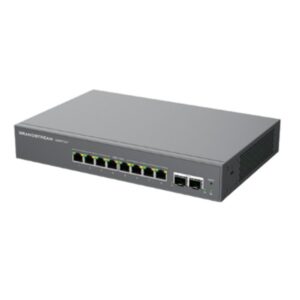
FortiSwitch 448E-FPoE in Dubai, UAE
Designed for dense business access networks, this 1RU Fortinet switch combines forty-eight Gigabit Ethernet PoE+ access ports, four 10 Gigabit SFP+ uplinks, and a high 772 W PoE budget. It is a strong fit for network teams that need to connect and power many phones, wireless access points, cameras, door controllers, workstations, printers, or other IP endpoints while keeping uplink capacity and segmentation options ready for an enterprise environment. FourTeck.com can assist with model validation, PoE planning, optics, rack considerations, Fortinet management choices, and quotation preparation for UAE projects.
Request QuoteCheck UAE Availability
Quick Product Information
Fortinet
FS-448E-FPOE
Managed Layer 2/3 PoE+ Ethernet switch
48 x GE RJ45, PoE+
4 x 10GE SFP+, compatible with 1GE SFP
772 W
1RU rack mount
Dense enterprise access networks and powered edge devices
Contact FourTeck.com for current options
Fortinet limited lifetime warranty terms apply; confirm channel coverage
SFP/SFP+ optics, patching, rack power, cabling and support options as required
Share port, PoE, uplink and deployment requirements for quote review
Fast Decision Summary for Network Buyers
This model is most useful when a project needs both a high copper port count and a large shared PoE budget. The decision should not be based on port count alone: buyers should calculate powered-device draw, understand uplink traffic, confirm rack power and cooling, and verify how the switch will be managed within the wider Fortinet or multi-vendor environment.
Enterprise floors, campuses, larger branches, hospitality, education, surveillance and converged IP networks.
Forty-eight powered access ports with 772 W available across the PoE design.
Endpoint count, wattage, SFP+ optics, uplink topology, redundancy and rack power.
1RU access-layer switching with 10GbE uplinks and VLAN-based segmentation.
Plan standalone or Fortinet-integrated management according to current software and topology requirements.
Configuration review, quotation preparation, accessory matching and UAE delivery coordination.
Product Overview
Fortinet positions the FS-448E-FPOE within its secure campus switching range. In practical terms, the product is built to serve as a high-density wired access switch where many endpoint connections must be concentrated into a single rack unit. Its forty-eight Gigabit copper interfaces can supply IEEE 802.3af/at power, while four 10 Gigabit SFP+ interfaces give the network designer a faster path toward aggregation, firewalls, distribution switches, servers, or other upstream infrastructure. The SFP+ interfaces can also accept 1 Gigabit SFP modules, providing useful flexibility where an existing fiber design has not yet moved fully to 10GbE.
The 772 W PoE budget is a central reason to evaluate this model. A standard forty-eight-port switch may offer enough data connectivity but still become unsuitable when access points, IP phones, cameras, door systems, intercoms, or other powered devices are deployed at scale. A larger shared PoE budget helps IT teams support denser powered-edge deployments without automatically introducing separate injectors or multiple lower-budget switches. The actual usable design still depends on each endpoint’s negotiated power draw, criticality, and the number of devices expected to operate simultaneously.
Performance is also aligned with enterprise access requirements. Fortinet lists 176 Gbps duplex switching capacity and 262 million packets per second, with support for 4,000 VLANs, a 32K MAC address table, and Layer 3 routing resources. These capabilities allow the platform to do more than basic unmanaged connectivity. It can participate in segmented business networks where voice, wireless, surveillance, user devices, building systems, and server traffic must be separated and controlled through defined network policies.
For UAE buyers, the model makes the most sense when the network design has already established a requirement for forty-eight 1GbE access ports, substantial PoE+, and 10GbE uplinks. A newer model should also be considered during lifecycle planning if the project requires multi-gigabit copper, higher-power IEEE 802.3bt, newer uplink speeds, or a longer standardization horizon. FourTeck.com can help procurement and technical teams compare the requested design with current FortiSwitch options before a purchase decision is finalized.
Key Business Benefits
◆ Dense Access Consolidation
Forty-eight Gigabit copper ports let an IT team concentrate a full office floor, department, camera zone, classroom block, or hospitality area into one 1RU access platform. This can simplify rack planning, labeling, patching, and switch management when the design genuinely calls for a high endpoint count.
◆ High PoE Capacity
The 772 W shared PoE budget gives buyers more headroom for powered edge devices than a lower-budget PoE model. That matters in wireless, voice, security, and building-system projects where many connected devices need both network access and power from the switching layer.
◆ Faster Uplink Planning
Four 10GE SFP+ interfaces give the access layer multiple choices for high-speed uplinks, link aggregation, resilient paths, or connections toward distribution infrastructure. Buyers can plan for copper access at 1GbE while avoiding a 1GbE-only bottleneck on the network’s upstream path.
◆ Segmentation for Mixed Devices
Support for thousands of VLANs and managed Layer 2/3 functions helps teams separate users, guest access, voice, cameras, access-control systems, wireless infrastructure, and other services. Stronger segmentation can make troubleshooting, policy design, and operational control more predictable.
◆ Fortinet Ecosystem Fit
The FortiSwitch family can be integrated with FortiGate using FortiLink where the selected topology and software versions support the design. This can reduce the number of separate interfaces used for day-to-day access control and network visibility in Fortinet-centered environments.
◆ Enterprise Rack Deployment
The 1RU chassis fits standard rack environments and is designed for structured network rooms rather than desktop placement. Its dedicated management and console connectivity also gives administrators clear out-of-band and local access paths for commissioning and troubleshooting.
These benefits are strongest when they match an actual network requirement. A project that only needs a few PoE ports may be better served by a smaller switch, while a site requiring multi-gigabit wireless access, 25GbE uplinks, or high-power 802.3bt endpoints may need a newer FortiSwitch generation. The right procurement decision should therefore balance current endpoint needs with the expected three-to-five-year network roadmap.
Product Highlights That Matter in a Real Deployment
Every copper access port supports IEEE 802.3af/at PoE, allowing the design to distribute power to compatible endpoints rather than reserving PoE for only a subset of ports.
The overall power pool is substantial, but buyers should still build a device-by-device wattage plan and keep operational reserve for growth and startup behavior.
SFP+ connectivity provides a practical path to aggregation switches, firewalls, servers, and fiber infrastructure; 1GE SFP compatibility helps with mixed-speed migrations.
The platform supports enterprise switching and routing resources, making it suitable for networks that need more control than a simple plug-and-play access layer.
A separate management interface and RJ-45 serial console support commissioning and troubleshooting workflows without consuming normal access ports.
The model appears in current FortiSwitchOS documentation, but buyers should still confirm the exact supported release, features, and lifecycle policy before standardizing a new large project.
The most important configuration questions are not only about switch specifications. Buyers should verify whether SFP/SFP+ transceivers are included or must be ordered separately, whether redundant power design requires additional components, which FortiGate and FortiSwitchOS release will be used, and whether endpoint power demand can remain comfortably inside the 772 W system limit.
Technical Specifications
| Specification | FortiSwitch 448E-FPoE |
|---|---|
| Brand / Model | Fortinet FS-448E-FPOE |
| Network Interfaces | 48 x GE RJ45 + 4 x 10GE SFP+ |
| SFP Compatibility | SFP+ ports are compatible with 1GE SFP |
| PoE Ports | 48 ports, IEEE 802.3af/at |
| PoE Power Budget | 772 W |
| Switching Capacity | 176 Gbps duplex |
| Forwarding Performance | 262 Mpps duplex |
| Network Latency | Less than 1 microsecond |
| MAC Address Storage | 32K |
| VLANs Supported | 4K |
| Link Aggregation Group Size | 8 ports per group; total groups up to number of ports |
| Packet Buffer | 4 MB |
| Memory / Flash | 1 GB DDR4 / 256 MB flash |
| ACL Scale | 1.5K |
| Spanning Tree Instances | 32 |
| Route Entries | IPv4 16K / IPv6 8K |
| Multicast Route Entries | 4K |
| Host Entries | IPv4 16K / IPv6 7K |
| Management Interfaces | 1 dedicated management port and 1 RJ-45 serial console port |
| Form Factor | 1RU rack mount |
| Dimensions | 44 x 410 x 440 mm (H x D x W) |
| Weight | 6.37 kg |
| Power Input | 100–240 V AC, 50/60 Hz |
| Power Design | Built-in AC; Fortinet datasheet lists redundant AC capability |
| Power Consumption | 921.4 W average / 923.6 W maximum under the vendor test definition for the FPoE model |
| Operating Temperature | 0°C to 50°C |
| Storage Temperature | -20°C to 70°C |
| Humidity | 10% to 90% non-condensing |
| Airflow / Noise | Side-to-back airflow / 50.7 dBA |
| Compliance | FCC, CE, RCM, VCCI, BSMI, UL, CB, RoHS2 |
| Warranty | Fortinet limited lifetime warranty; confirm applicable terms for the purchase channel and region |
For configuration selection, start with four numbers: total wired endpoints, powered endpoints, total expected PoE wattage, and required uplink bandwidth. Then add operational factors such as VLAN count, inter-switch links, firewall placement, uplink redundancy, cable types, rack depth, environmental cooling, and management model. A switch can be technically compatible yet still be a poor fit if its PoE budget, uplink design, or lifecycle horizon does not align with the project. FourTeck.com can review these factors with procurement and technical teams before the commercial quote is finalized.
Configuration and Buyer Guidance
A forty-eight-port full-PoE switch is usually purchased as part of a broader network design, not as an isolated box. Before asking for a quotation, identify what will connect to every port. Separate ordinary data endpoints from powered devices, then list the typical and maximum wattage of each PoE endpoint. Wireless access points can have very different power profiles from IP phones or cameras, and a future Wi-Fi refresh may increase draw even if the port count stays unchanged.
1. Count data and PoE endpoints
Record users, phones, access points, cameras, printers, controllers and spare ports. Leave room for realistic growth rather than filling every port on day one.
2. Calculate the power budget
Use endpoint power requirements to estimate aggregate draw. Plan reserve for device additions and avoid assuming all PoE+ endpoints consume the same wattage.
3. Design the uplinks
Confirm whether uplinks will be 1GbE or 10GbE, copper or fiber, single or aggregated, and which SFP/SFP+ optics match the distance and fiber type.
4. Confirm management
Decide whether the switch will operate standalone, be managed through a FortiGate/FortiLink design, or use another supported Fortinet management option. Check software compatibility.
5. Review the rack environment
Allow for 1RU space, cable managers, patch panels, suitable power circuits, side-to-back airflow, and the acoustic level expected from a high-PoE enterprise switch.
6. Check lifecycle and support
Confirm current software support, warranty terms, support services and replacement strategy, especially if the switch is being standardized across multiple sites.
For a more accurate FourTeck.com quote, share the model requested, quantity, delivery location, current firewall or core switch, number of PoE devices, approximate wattage, desired uplink speed, fiber type and distance, rack environment, software management preference, support expectations, and target deployment date. This helps reduce the risk of receiving a quotation that omits essential optics, power planning, or related infrastructure.
Ideal Business Use Cases
The FS-448E-FPOE is most attractive in environments where a large number of edge devices must be connected and many of them need network-delivered power. The following use cases illustrate where the port density, 10GbE uplinks, and 772 W PoE pool can offer practical value.
Enterprise Office Floors
One access switch can connect a high number of employee devices, desk phones, printers and wireless access points. VLANs can separate voice, corporate, guest and infrastructure traffic while 10GbE uplinks carry aggregated traffic upstream.
Wireless Access Point Deployments
PoE+ is useful for enterprise access points that fall within IEEE 802.3af/at requirements. The larger PoE budget can support dense AP rollouts, though buyers should verify each selected AP’s exact power and Ethernet speed requirement before finalizing the switch.
IP Surveillance Networks
Camera projects can consume many access ports quickly. Central PoE delivery simplifies cabling for compatible cameras and can work well with VLAN segmentation and fiber uplinks toward recording, storage or security-control infrastructure.
Education and Training Facilities
Classrooms, labs and common areas often combine wired computers, phones, access points, cameras and access-control systems. A forty-eight-port platform provides useful density for a communications room serving one building zone or floor.
Hospitality and Multi-Service Floors
Hotels and serviced facilities may need IP phones, room or corridor access points, cameras, back-office systems and building devices on the same switching platform. Proper VLAN design and PoE budgeting are essential because endpoint types and power requirements vary widely.
Branch or Campus Aggregated Access
Larger branches and campus zones can use the switch as a managed access layer feeding a higher-speed upstream path. The design should confirm whether the four 10GbE SFP+ interfaces provide enough capacity and resilience for projected traffic growth.
The model is less suitable when a project requires multi-gigabit copper to every access point, more than 30 W per device through newer 802.3bt power classes, or significantly faster uplinks. In those cases, current FortiSwitch models with multi-gigabit interfaces, 25GbE uplinks, or larger power budgets may be a better match. FourTeck.com can help compare the required endpoint and backbone design with related Fortinet options.
FortiSwitch 448E-FPoE PoE Capacity and Endpoint Planning
The 772 W power pool is the defining configuration advantage of the FPoE version. It allows the access layer to serve many powered endpoints without splitting the project across several low-budget switches simply because the power requirement is high. For a business buyer, however, the number “772 W” is only the starting point. The useful design question is how that power will be distributed across actual devices during normal operation, startup, firmware upgrades, failure scenarios, and future expansion.
A network with forty-eight desk phones may consume far less than the available budget, leaving substantial reserve for access points or cameras. A network with high-performance wireless access points and feature-rich PTZ cameras could consume far more per port. The right approach is to create a simple worksheet with device model, quantity, maximum PoE class, normal draw, criticality and switch-port assignment. This also allows the administrator to prioritize essential endpoints if power management policies are required.
Power planning must also consider the rack itself. A high-PoE switch can draw significant AC power when many endpoints are powered. Confirm the electrical circuit, PDU rating, UPS sizing, rack cooling, and the switch’s side-to-back airflow before installation. If the site requires higher-power 802.3bt endpoints, do not assume PoE+ is enough simply because the aggregate wattage is large. Per-port power standard and total budget are separate design constraints.
FortiSwitch 448E-FPoE 10GbE Uplinks and Traffic Design
Forty-eight Gigabit access ports can create a large amount of aggregate traffic, so upstream design deserves as much attention as the access side. The four 10GE SFP+ interfaces give the switch useful flexibility for connecting toward a distribution switch, FortiGate, server environment, or fiber backbone. Depending on the topology, the uplinks may be used individually, in aggregated groups, or as separate paths for resilience and network segmentation.
The vendor states that the SFP+ interfaces can also operate with 1GE SFP modules. This is valuable during staged upgrades because a site can retain an existing 1GbE fiber link while preparing for 10GbE optics and upstream equipment later. Buyers should still match the transceiver to the fiber medium, connector type, optical wavelength, distance, and supported Fortinet compatibility. A quotation that includes the switch but omits the required optics and patching can delay deployment even when the main hardware arrives on time.
The 176 Gbps switching capacity and 262 Mpps forwarding figure indicate that the platform is designed for serious access-layer throughput, but real application performance also depends on network architecture, oversubscription, routing decisions, security inspection elsewhere in the path, and the capacity of upstream devices. FourTeck.com can help buyers turn these variables into a clearer bill of materials by reviewing required uplink speed, optics, redundancy, and firewall or aggregation interfaces before quotation.
FortiSwitch 448E-FPoE Management, Segmentation and Operational Control
A managed switch earns its value through the control it provides after installation. The platform supports enterprise VLAN scale, link aggregation, spanning tree functions, ACL resources, IPv4 and IPv6 routing entries, and dedicated management access. These capabilities help administrators build a structured access layer instead of operating a flat network where every endpoint shares the same broadcast and security context.
In Fortinet-centered environments, FortiSwitch can be integrated with FortiGate through FortiLink where the topology and supported software versions align with the design. This can bring switching visibility and access control into the broader Fortinet operational model. Fortinet documentation also covers standalone FortiSwitch management and other management platforms. The right choice depends on the organization’s existing FortiGate deployment, administrator skill set, change-control process, monitoring requirements, and software lifecycle.
For buyers replacing an older switch, configuration migration should be treated as a project rather than a simple hardware swap. Port numbering, VLAN assignments, spanning-tree roles, LACP groups, PoE priorities, transceiver compatibility and monitoring settings should all be mapped before cutover. This is particularly important in surveillance, hospitality, education and multi-service networks where a single switch outage can affect phones, Wi-Fi, cameras and building systems at the same time.
Questions Network Buyers Ask Before Choosing This Switch
The answers below focus on fit, PoE sizing, uplinks, management, replacement planning and quotation details. They are intended to help IT teams and procurement reviewers identify the questions that should be settled before a forty-eight-port full-PoE switch is ordered for a live business network.
Is this switch suitable for a full office floor?
Yes, when the floor needs up to forty-eight Gigabit copper access connections and the endpoint mix fits within the 772 W PoE budget. It is particularly relevant when phones, access points, cameras and user devices share one communications room. Confirm spare-port needs, uplink bandwidth, cable runs and future wireless speed requirements before standardizing the model.
How do I know whether 772 W of PoE is enough?
Add the maximum expected power draw of every connected PoE device, then leave practical reserve for device changes and growth. Do not divide 772 W equally by forty-eight and assume every endpoint behaves the same way. The device power standard, class, startup behavior and criticality matter, especially with access points and advanced cameras.
Can I use the switch for modern Wi-Fi access points?
It can power compatible IEEE 802.3af/at access points and connect them at Gigabit Ethernet speed. The important check is whether the selected access point requires multi-gigabit Ethernet or higher-power 802.3bt to reach its intended performance. If it does, a newer multi-gigabit FortiSwitch may be a better fit.
What should I order for the 10GbE uplinks?
The switch provides SFP+ slots, so transceivers and fiber or direct-attach cabling should be selected for the actual distance and upstream interface. Confirm whether the link is 1GbE or 10GbE, single-mode or multimode, the connector type, required reach and Fortinet compatibility. These accessories are often project-specific rather than automatically bundled.
Can it be managed through an existing FortiGate?
FortiSwitch supports Fortinet-integrated management through FortiLink in supported designs. Before purchase, confirm the exact FortiGate model, FortiOS version, FortiSwitchOS release, topology and feature requirements. Current compatibility matters because available features and supported release combinations can change over the product lifecycle.
What should I check when replacing an older 48-port switch?
Map old and new port assignments, VLANs, trunks, LACP groups, spanning-tree roles, management IP settings and PoE requirements. Also compare uplink type, rack depth, airflow and power input. A direct port-count match does not guarantee a smooth replacement if optics, power or software management differ from the existing design.
Should I choose the FPoE model instead of the PoE model?
Choose based on total powered-device demand, not the model suffix alone. The FPoE version has a 772 W budget, while the 448E-POE version is listed with 421 W. If the network has many powered endpoints or higher aggregate draw, the larger budget can provide valuable headroom. If not, compare lifecycle and cost with current alternatives.
What rack and electrical details should be prepared?
Reserve 1RU rack space, confirm the 410 mm chassis depth plus cable clearance, provide suitable AC power, check PDU and UPS capacity, and respect side-to-back airflow. High-PoE deployments can increase power and cooling demand significantly, so the network rack should be treated as part of the system design rather than an afterthought.
What should I send FourTeck.com for an accurate quote?
Share the requested quantity, delivery location, endpoint count, number and type of PoE devices, approximate wattage, uplink speed, fiber type and distance, existing FortiGate or core switch, management preference, support expectations and deployment date. With those details, the quote can include more of the optics, accessories and compatibility items the project actually needs.
Business Requirements to Match Before You Buy
For businesses that need many powered ports
A suitable option when a rack must feed dozens of PoE+ endpoints from a single 1RU switch. Buyers should still calculate the total power load and reserve instead of treating the 772 W figure as unlimited.
For offices standardizing on 10GbE uplinks
Four SFP+ interfaces provide a practical path from 1GbE access to faster aggregation. Projects should match transceivers, fiber type, distance and upstream ports before ordering.
For networks that need segmentation
The managed platform supports large VLAN scale and Layer 2/3 functions, making it appropriate where voice, wireless, cameras, users and infrastructure must be separated into controlled network zones.
For a switch replacement project
Buyers replacing an older platform should confirm port mapping, optics, power delivery, rack depth, software support and configuration migration. Matching forty-eight ports alone is not enough.
For Fortinet-managed access networks
The model fits Fortinet environments where FortiLink or other supported FortiSwitch management methods are planned. Confirm the exact FortiGate, firmware and topology compatibility for the project.
For procurement teams building a complete BOM
Include optics, patch leads, rack accessories, power considerations, support services and any related firewall or distribution hardware. A complete bill of materials reduces deployment delays caused by missing small components.
What Buyers Should Check Before Purchase
Enterprise switch purchases often fail for small reasons: an uplink optic is missing, the PoE calculation is based on average rather than peak draw, the rack airflow is wrong, the new software release does not align with the firewall, or an old configuration cannot be moved directly. Before requesting a final quote, buyers should review the complete access-layer requirement instead of evaluating only the switch model and commercial price.
Configuration Fit
Confirm forty-eight 1GbE access ports are appropriate for the project and identify how many must supply PoE. If new Wi-Fi access points require multi-gigabit copper or 802.3bt power, compare newer models before committing.
Compatibility Check
Verify SFP/SFP+ modules, fiber type, upstream switch or firewall ports, FortiGate/FortiSwitch software releases, VLAN design and any LACP or spanning-tree requirements already present in the network.
Power and Rack Readiness
Check the electrical circuit, PDU, UPS, cooling and side-to-back airflow. Allow physical depth and cable-management clearance around the 440 mm wide, 410 mm deep chassis.
Lifecycle and Warranty
Review current Fortinet lifecycle, firmware support and limited lifetime warranty terms for the intended purchase channel. A long-term standardization project should consider successor models as well as the immediate technical fit.
Deployment Preparation
Prepare port maps, VLANs, management IPs, access policies, uplink configuration, PoE priorities, firmware plan, monitoring settings and a rollback method before change day.
Quote Preparation
Tell FourTeck.com the quantity, destination, endpoint mix, PoE load, uplink media, existing Fortinet equipment, support preference and deployment timeline so the commercial offer can be built around the actual project.
Long-term cost should also be considered. The purchase price is only one element; optics, rack power, UPS capacity, support coverage, replacement strategy, implementation time and future wireless upgrades can materially affect the total project cost. A switch that perfectly fits today’s 1GbE PoE+ requirement may be less attractive if the organization intends to deploy multi-gigabit Wi-Fi or higher-power endpoints across the same site soon. FourTeck.com can help frame these trade-offs before the buyer finalizes a model purely from a specification sheet.
UAE Availability and Service Support
FourTeck.com supports business inquiries for Fortinet switching projects in Dubai and across the UAE. Assistance can include model selection, PoE and uplink review, accessory matching, quotation preparation, delivery coordination and warranty guidance. The objective is to help buyers request a complete and technically sensible configuration rather than simply ordering a part number without checking the surrounding network requirements.
Availability can vary with supplier status, requested quantity, support options, project timing and product lifecycle. For this reason, FourTeck.com confirms current options during the quotation process rather than presenting an unverified stock claim. If a requested model is not the best fit for a new deployment, the team can also discuss current FortiSwitch alternatives that meet similar port-density, PoE or uplink requirements.
For the most useful response, include the desired quantity, planned delivery date, destination, whether the switch is a replacement or new build, FortiGate model if applicable, endpoint count, PoE devices, expected wattage and uplink requirements. This gives the sales and technical review process enough context to identify missing optics, cabling, support or migration considerations.
Dubai, Abu Dhabi, Sharjah and Ajman Coverage
Businesses in Dubai, Abu Dhabi, Sharjah, Ajman and other UAE locations can contact FourTeck.com for availability guidance, project quotations, configuration review and delivery coordination. The same technical details remain important regardless of city: port count, PoE load, optics, upstream connections, rack conditions, management platform, software compatibility and support expectations. For multi-site rollouts, buyers should also share whether each branch will use the same switch configuration or whether site sizes differ, because a standardized model can simplify operations but may not be the most cost-effective choice for every location.
GCC and Africa Availability
FourTeck.com also supports business technology inquiries across selected GCC and Africa markets through its regional inquiry channels. Organizations in Saudi Arabia, Qatar, Oman, Kuwait and Bahrain can request guidance for Fortinet switching requirements, while buyers in Kenya, Uganda and other Africa-region markets can use the relevant FourTeck regional platforms for local inquiry coordination.
Regional availability, delivery routes, warranty handling, currency, lead time and support options may differ by country and by supplier status. Buyers should therefore provide the destination country, order quantity, project schedule and technical configuration before assuming that an offer prepared for one market can be used unchanged in another. Larger projects may also require documentation, staged deliveries or standardized bills of materials.
Regional resources include FourTeck Africa, FourTeck Kenya, FourTeck Uganda and FourTeck Kuwait. Use the appropriate inquiry route to confirm current supply and commercial terms for the destination market.
Other Fortinet Options Buyers May Consider
A sensible switch shortlist should compare the requested model with both nearby models in the same family and newer platforms where requirements have changed. The products and resources below can help buyers decide whether forty-eight 1GbE PoE+ ports with 10GbE uplinks remain the right design for the project.
FortiSwitch UAE Range
Useful for comparing current FortiSwitch access, PoE and uplink options by general business requirement.
FortiSwitch Dubai Guide
A broader buying guide for 24-port, 48-port, PoE, full-PoE and multi-gigabit Fortinet switching requirements.
FortiSwitch FS-110G-FPOE
A newer compact FortiSwitch model worth considering for smaller high-performance access deployments with different port-density needs.
FortiGate 40F
Relevant for smaller Fortinet branch designs where the switching layer is being planned together with a FortiGate firewall.
For a dense enterprise access project, buyers may also want to compare other 48-port FortiSwitch models with newer uplink speeds, multi-gigabit copper or higher-power PoE standards. FourTeck.com can help identify a suitable alternative based on endpoint count, wireless generation, power draw, backbone speed and desired lifecycle horizon rather than comparing model numbers in isolation.
Why Business Buyers Contact FourTeck.com
Business technology procurement becomes easier when technical and commercial questions are reviewed together. FourTeck.com helps buyers turn a product request into a more complete requirement by checking the surrounding items that can affect deployment. For a high-PoE enterprise switch, this means looking beyond the chassis to PoE demand, optics, rack conditions, upstream interfaces, management, support and delivery needs.
Assistance with current model availability, quantities and suitable alternatives when the requested product needs a lifecycle review.
Review of port density, PoE load, uplinks, optics and related network requirements before quotation.
Business proposals aligned with quantity, destination, accessories, support expectations and project timing.
Coordination based on the confirmed order, supplier status and delivery location rather than unverified timing claims.
Help understanding manufacturer warranty terms, support coverage and channel considerations before purchase.
Support for multi-switch, multi-site and phased rollouts where a consistent bill of materials and delivery plan are important.
FourTeck.com does not need to position every inquiry around the same model. If a project would benefit from multi-gigabit access, a different PoE standard, a smaller port count or newer uplink architecture, that can be discussed during model review. This buyer-first approach helps reduce the chance of selecting a switch that looks correct on paper but creates unnecessary limitations after installation.
Frequently Asked Questions
What is the FS-448E-FPOE used for?
It is a managed enterprise access switch for networks that need up to forty-eight Gigabit copper connections, PoE+ power for compatible endpoints, and 10GbE SFP+ uplinks. Typical uses include office access, Wi-Fi infrastructure, IP telephony, surveillance, education, hospitality and larger branch networks where many edge devices connect through one rack-mounted switch.
How much PoE power does the switch provide?
Fortinet lists a 772 W PoE power budget across forty-eight IEEE 802.3af/at capable ports. The practical number of powered devices depends on each endpoint’s actual power requirement. Buyers should create an aggregate wattage plan with reserve for growth and confirm that every device is compatible with the PoE standard supported by the switch.
Does it have 10 Gigabit uplinks?
Yes. The model provides four 10GE SFP+ interfaces, and Fortinet states that these ports are compatible with 1GE SFP modules. The correct optical module or cable depends on the required speed, fiber type, distance, connector and upstream equipment, so transceiver selection should be confirmed as part of the bill of materials.
Can FourTeck.com help with configuration planning?
Yes. FourTeck.com can help review port count, PoE demand, uplink speed, optics, rack conditions, Fortinet management choices, support requirements and related equipment before a quote is prepared. Sharing the existing FortiGate or core-switch model, endpoint list and network topology makes the review more useful and reduces the risk of missing accessories.
Is the switch available for UAE business orders?
FourTeck.com can support UAE inquiries and quotation requests for this model. Current availability depends on supplier status, quantity, support options and product lifecycle, so the site does not assume ready stock without confirmation. Send the required quantity and delivery location to receive current availability guidance and a commercial response.
What warranty applies?
Fortinet’s datasheet states a limited lifetime warranty for the model family. The exact coverage, eligibility, support process and regional handling can depend on the purchase channel and Fortinet’s current warranty policy. Buyers should confirm these details in the quotation and keep serial numbers, proof of purchase and support information documented after deployment.
Can it support VLANs and Layer 3 networking?
Yes. Fortinet lists support for 4,000 VLANs along with Layer 3 routing resources and managed switching functions. The exact feature behavior can depend on the FortiSwitchOS release and management mode, so administrators should verify required protocols and software support in current Fortinet documentation before designing advanced routing or segmentation around the switch.
What accessories are commonly required?
Common project items include SFP or SFP+ transceivers, fiber patch leads or direct-attach cables, copper patch leads, rack cable management, suitable PDUs or UPS capacity, labeling and any support services required by the organization. The exact list depends on whether the switch connects to a firewall, distribution layer, server environment or existing fiber backbone.
How do I request a business quote?
Use the FourTeck.com contact page and share the model, quantity, destination, required date, endpoint count, PoE devices, approximate wattage, uplink media, existing Fortinet equipment and support expectations. If the project is a replacement, include the current switch model and any migration concerns so the quotation can account for compatibility and accessory needs.
Need Help Finalizing the Right Fortinet Switch?
FourTeck.com can help you review port density, PoE demand, uplinks, optics, rack requirements, management compatibility, warranty guidance and current UAE availability before you request a final business proposal.