

Hanwha HCO-7020RA Dubai
The Hanwha HCO-7020RA is a 4MP analogue HD infrared bullet camera for surveillance projects that use AHD recording over coaxial infrastructure. It combines 2560 × 1440 QHD imaging, a 4.0 mm fixed lens, automatic Day & Night switching, DWDR, motion detection and a rugged outdoor-ready housing. For Dubai projects, it is particularly relevant where an existing coaxial layout is being retained and the buyer wants clearer image detail without moving immediately to an all-IP camera architecture.
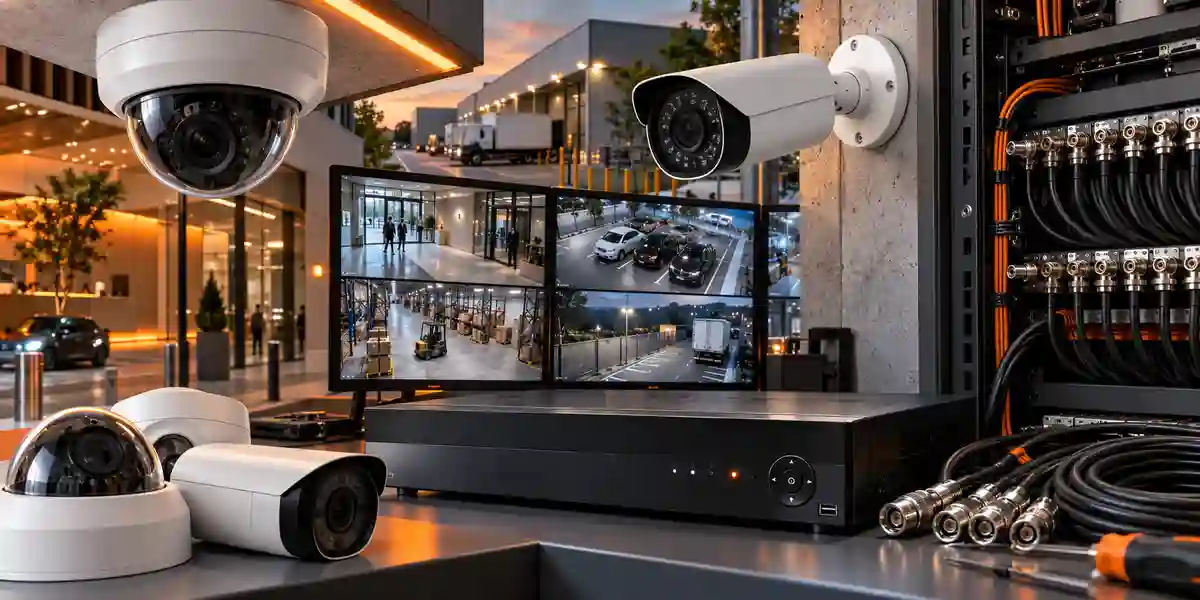
Quick product summary
2560 × 1440 QHD, up to 30 fps NTSC / 25 fps PAL
4.0 mm fixed, F2.0, 78° horizontal field of view
IR viewable distance up to 25 m with 0 lux when IR LEDs are on
IP66 and IK10, operating range -30°C to +55°C
BNC AHD with installation CVBS; up to 500 m on specified 5C2V coax
12 VDC, maximum 5 W consumption
Product overview and buyer fit
The HCO-7020RA belongs to Hanwha Vision’s HD+ analogue camera family. Its practical value is straightforward: it gives projects an upgrade path to 4MP QHD resolution while continuing to use an analogue HD signal path rather than requiring an Ethernet connection at every camera location. That makes the camera relevant to refurbishments, phased CCTV upgrades, legacy coaxial systems and sites where cable replacement would add disruption or cost. The 4.0 mm fixed lens provides a moderate field of view suited to corridors, outdoor approaches, loading points, building perimeters, shop fronts and other positions where the installer can choose the camera location carefully rather than relying on optical zoom.
Buyers should treat the model as one component of a complete CCTV design. The camera itself does not determine recording retention, remote viewing, analytics depth or mobile access. Those functions depend on the connected DVR, storage, network path and system configuration. The HCO-7020RA uses AHD over BNC and therefore needs a compatible recorder input and suitable power provision. Hanwha specifies transmission up to 500 m using 5C2V coaxial cable; actual project performance still depends on cable type, termination quality, signal condition, grounding, power design and the capabilities of the connected recorder.
Key features and business benefits
4MP QHD detail
The 2560 × 1440 image gives more useful visual detail than conventional 1080p analogue CCTV, supporting clearer review of entrances, stock areas, walkways and operational zones when the scene, lighting and installation angle are appropriate.
Existing-coax migration
AHD transmission can help a project reuse compatible coaxial infrastructure. This can be useful in occupied premises where recabling every camera point would be inconvenient, although the existing cable should be tested before reuse.
25 m infrared view
Built-in IR supports nighttime monitoring up to the stated 25 m viewing distance. Real scene performance varies with reflectivity, camera aiming, weather, obstructions and ambient lighting.
IP66 and IK10 housing
The environmental and impact ratings make the bullet housing suitable for demanding exposed positions when installed correctly with protected connections and appropriate mounting practice.
DWDR and backlight tools
BLC, HLC and DWDR settings help the installer manage challenging contrast, headlights and bright backgrounds. Correct positioning remains important because no exposure feature can compensate for a fundamentally poor camera angle.
Coaxial control
ACP coaxial communication helps simplify on-screen configuration through compatible equipment, reducing the need to access every installed camera for routine menu adjustment.
Verified technical specifications
| Specification | Hanwha HCO-7020RA |
|---|---|
| Imaging device | 1/3-inch CMOS |
| Resolution | 2560 × 1440 |
| Maximum frame rate | 30 fps NTSC / 25 fps PAL |
| Minimum illumination | 0.27 lux colour at F2.0; 0.027 lux B/W; 0 lux with IR LED on |
| Lens | 4.0 mm fixed, F2.0 |
| Field of view | Horizontal 78°, vertical 41°, diagonal 88° |
| Minimum object distance | 0.5 m |
| Video output | BNC AHD; CVBS installation output |
| Transmission distance | Up to 500 m with 5C2V coaxial cable |
| Day & Night | Auto ICR |
| Backlight | BLC, HLC, DWDR |
| Digital noise reduction | 2D DNR |
| Motion detection | 4 zones |
| Privacy masking | 2 zones |
| IR viewing length | 25 m |
| Operating temperature | -30°C to +55°C; startup above -10°C |
| Power | 12 VDC, max. 5 W |
| Protection | IP66, IK10 |
| Dimensions | Ø70 × 246 mm |
| Weight | 670 g |
Specifications should be checked against the current Hanwha Vision datasheet at procurement stage because regional availability and product status can change.
Compatibility, configuration and deployment guidance
The first compatibility question is the recorder. The HCO-7020RA outputs AHD over BNC, so the selected DVR or hybrid recorder needs to accept the camera’s 4MP analogue HD signal and required frame rate. Do not assume that every older analogue DVR can display or record 2560 × 1440. Confirm the input standard, supported resolution, channel capability and firmware before purchasing. The camera also provides a CVBS output for installation, but that lower-resolution service output should not be confused with the main QHD AHD stream.
The second consideration is coax condition. Hanwha specifies a maximum transmission distance of 500 m using 5C2V cable. Existing cable routes should be inspected for damaged shielding, poor joints, corrosion, excessive adapters or electromagnetic interference. For long runs, power planning is just as important as video transmission: the camera requires 12 VDC, and voltage drop over long power cable routes can cause instability. The camera’s maximum consumption is 5 W, but the power supply should be sized with suitable margin and installation conditions in mind.
The fixed 4 mm lens means the viewing angle is chosen mainly through mounting position. Before installation, map the scene and decide whether the objective is general observation, person recognition, door coverage, vehicle approach monitoring or a tighter target area. A fixed-lens camera can be very reliable once positioned correctly, but it does not provide the flexibility of a varifocal lens. The IP66 and IK10 ratings support exposed deployment, yet connectors and junction points still need weather-protected installation. Where local approval or surveillance regulation applies, the complete project design should be checked against the applicable authority requirements before commissioning.
Ideal customers and use cases
Sites retaining serviceable coax while improving image resolution and night monitoring.
Fixed outdoor viewpoints covering doors, bays, yards and movement routes within the lens angle.
Entrances, service areas, stock zones and perimeter positions where rugged bullet housing is preferred.
Projects that plan to preserve analogue infrastructure now while evaluating longer-term migration to IP cameras.
What to confirm before ordering
- Your recorder supports 4MP AHD input at the required frame rate.
- The existing or new coaxial cable type and length are suitable.
- 12 VDC power is available at the camera with acceptable voltage drop.
- A 4.0 mm fixed lens and approximately 78° horizontal view match the scene.
- The 25 m IR range is appropriate for the nighttime target area.
- Mounting height, sun direction, reflections and nearby surfaces will not compromise the view.
- Outdoor cable terminations will be protected from water and contamination.
- Recording retention, storage capacity and remote access are sized separately at the DVR level.
- Current model availability and any recommended Hanwha successor are confirmed before procurement.
- Applicable Dubai or local project approval requirements are checked for the intended site.
HCO-7020RA versus alternative camera choices
The HCO-7020RA is best understood as a fixed-lens 4MP analogue HD bullet camera, not as a direct substitute for every modern network camera. Choose it when retaining coaxial infrastructure is valuable, the fixed 4 mm field of view suits the scene and the connected DVR supports the required AHD signal. A network camera may be the better choice when the project needs PoE, edge analytics, direct IP addressing, higher-resolution streaming, advanced event metadata or a VMS-led architecture. A varifocal analogue camera can be preferable when installers need to fine-tune the field of view after mounting. A dome-style model may suit indoor public areas where a lower-profile enclosure is preferred.
Some current reseller listings identify HCO-7020RA as discontinued and point to alternate models, while Hanwha Vision continues to host official support information and datasheets. Because lifecycle and regional supply can change, FourTeck should confirm current orderability and the most appropriate replacement rather than presenting an unverified substitute as automatically equivalent. Compare resolution, lens angle, IR distance, housing rating, recorder compatibility and mounting requirements before approving a replacement.
Hanwha HCO-7020RA Dubai
Dubai buyers considering the Hanwha HCO-7020RA often start with a simple price or availability request, but the better purchase decision begins with the existing CCTV infrastructure. Many commercial properties in Dubai have previous-generation coaxial camera cabling already in place. If that cable is electrically sound and correctly terminated, a 4MP AHD model can provide a practical image-quality upgrade without replacing every camera run with network cable. The HCO-7020RA’s 4.0 mm fixed lens is useful for defined scenes such as warehouse approaches, loading-bay doors, stock entrances, perimeter pathways, service corridors and external doors. The approximately 78° horizontal field of view is broad enough for general coverage while still allowing a more focused view than a very wide 2.8 mm lens.
Dubai sites also create specific installation challenges. Strong daylight, deep shade, reflective glass, headlights, dust and outdoor heat can all affect CCTV performance. The camera includes BLC, HLC and DWDR exposure tools, while its IP66 and IK10 ratings support exposed mounting when installation is performed correctly. Those ratings do not remove the need for weather-protected cable joints, suitable junction boxes, correct sealing and a safe power supply. The specified operating range reaches +55°C, so external mounting locations should still be reviewed for direct solar heating, enclosure conditions and surrounding surfaces that may increase equipment temperature.
For a Dubai upgrade, ask FourTeck to check the DVR model, available AHD resolution, recording channels, storage retention, cabling condition and 12 VDC power before treating the camera as a drop-in replacement. A legacy recorder may accept analogue video but not 4MP AHD. If the existing recorder is being replaced too, the project can be designed around the required camera count, storage days and remote access rather than choosing hardware independently. Buyers should also confirm whether the current procurement path still includes this model or whether a newer Hanwha option better suits the project. For wider surveillance planning, use FourTeck’s Dubai CCTV installation guidance or contact FourTeck UAE for project discussion without assuming stock, delivery time or authorization status.
Hanwha HCO-7020RA UAE
Across the UAE, the HCO-7020RA can fit organizations that operate mixed-generation surveillance estates. A company may have newer IP cameras at a headquarters while branches, warehouses or service locations still use coaxial CCTV. In that situation, a 4MP AHD camera can be part of a staged modernization plan, provided the installed DVR infrastructure supports the signal. This is different from assuming analogue is always the lower-spec choice: AHD lets compatible coax systems carry higher-resolution video, and the HCO-7020RA is specified for 2560 × 1440 QHD capture at up to 30 fps in NTSC or 25 fps in PAL.
Multi-emirate procurement also benefits from standardization. Before rolling out the same camera across Abu Dhabi, Sharjah, Ajman, Ras Al Khaimah, Fujairah, Umm Al Quwain or Al Ain sites, confirm that each location has compatible recorder channels, comparable cable condition and a suitable 12 VDC power design. A camera that works well on one branch may not behave identically on another if the old coax has poor joints, excessive distance or interference. Hanwha lists up to 500 m transmission on 5C2V coax, but that specification should be treated as a design limit under suitable conditions, not a guarantee for unknown legacy cabling.
The 25 m infrared range supports night monitoring where the target area lies within the effective IR zone. For long yards, vehicle lanes or wide outdoor compounds, a different lens or longer-range camera may be more suitable. Likewise, a 4.0 mm fixed lens is convenient where the installer knows the scene dimensions, but a varifocal camera may reduce risk on projects where the final mounting distance remains uncertain. UAE buyers should specify the actual purpose of each camera—general observation, entrance identification, cash-point coverage, vehicle approach or perimeter view—before final model selection. FourTeck can help with broader UAE procurement through FourTeck’s main regional site and FourTeck UAE. For sites requiring wider IT integration around CCTV, networking, servers or support, FourTeck IT Services UAE can also be relevant to the surrounding infrastructure discussion.
Hanwha HCO-7020RA Kenya
Kenya buyers evaluating the Hanwha HCO-7020RA may be upgrading an established CCTV installation in an office, school, retail outlet, warehouse, apartment property or industrial site where coaxial cable is already routed through walls, ceilings and outdoor ducts. Reusing serviceable coax can reduce disruption, but the practical question is whether the complete analogue path can support 4MP AHD. The camera sends its main signal over BNC and needs a DVR or hybrid recorder that explicitly supports the required resolution. An older recorder designed for standard-definition or 1080p analogue video should not be assumed compatible simply because the connector is the same.
For perimeter and compound monitoring, the fixed 4 mm lens gives an approximately 78° horizontal view and the built-in infrared system is specified for up to 25 m. That combination can suit gates, parking approaches, loading areas and building-edge positions when the installer has measured the scene. If the target area is substantially wider or farther away, a different focal length or camera family may deliver better evidence. Kenya projects should also budget for the supporting elements around the camera: regulated 12 VDC power, suitable power distribution, surge protection where appropriate, verified coax, connectors, weather-protected joints and a recorder with enough storage for the required retention period.
Power quality and service access are especially important for sites where outages or long cable runs can affect system stability. The HCO-7020RA’s maximum 5 W draw is modest, but voltage drop can still become significant if the power conductor is undersized or the run is long. For business buyers, planning recorder and camera power on UPS backup may help maintain recording through short interruptions, depending on the site requirement. The camera itself does not provide network remote viewing; that capability comes from the recorder and network configuration. Kenya customers should therefore ask for a complete compatibility check rather than purchasing the camera in isolation. Use FourTeck Kenya for regional project enquiries and confirm current availability, alternatives and logistics before ordering. If the project covers several African locations, FourTeck Africa provides an additional regional route for requirements that span multiple countries.
Hanwha HCO-7020RA Kuwait
Kuwait surveillance projects often place a premium on robust outdoor equipment, predictable maintenance and compatibility with installed infrastructure. The Hanwha HCO-7020RA combines an aluminium bullet housing with IP66 weather protection and IK10 impact resistance, making it suitable for exposed CCTV positions when mounted and sealed correctly. The operating specification reaches +55°C; nevertheless, the installer should evaluate direct sunlight, reflected heat, enclosed mounting spaces and cable-junction protection rather than relying only on the headline temperature rating. CCTV reliability depends on the full installation, not just the camera enclosure.
AHD over coax can be useful in Kuwait properties that already have structured analogue camera runs. Hanwha specifies up to 500 m video transmission using 5C2V cable, but existing cable should be tested before a long-distance reuse decision. Ageing coax, poorly crimped BNC connectors, water ingress and multiple joins can introduce signal problems that are not visible from a simple continuity test. For long camera runs, confirm that the 12 VDC supply reaches the camera at the correct voltage under load. The unit consumes up to 5 W, and correct conductor sizing or local power distribution may be needed to prevent low-voltage symptoms.
The 4 mm fixed lens and 25 m IR range should also be matched to the scene. For entrances, delivery doors, narrow yards and external building lines, the field of view may be appropriate. For expansive parking areas or large industrial yards, buyers should compare a varifocal or longer-range model before specifying quantities. Recorder compatibility remains central: the connected DVR must support 4MP AHD input and the desired recording frame rate. Storage should be calculated using the final channel count, retention days and recorder settings rather than using a generic disk size. Kuwait customers can route enquiries through FourTeck Kuwait. For organizations operating across both the Gulf and Africa, FourTeck’s regional technology site can help coordinate broader product and infrastructure discussions while current HCO-7020RA availability is verified.
Hanwha HCO-7020RA Ghana
In Ghana, the Hanwha HCO-7020RA is most relevant to buyers who want to improve a coax-based surveillance system without immediately moving every camera position to IP. Retail businesses, warehouses, schools, offices, hospitality properties and light industrial locations may already have usable coaxial routes that are expensive or disruptive to replace. A 4MP AHD camera can therefore be a practical modernization component, provided the recorder is compatible and the cabling is verified. The HCO-7020RA records a 2560 × 1440 scene through a compatible DVR, using a fixed 4.0 mm lens with approximately 78° horizontal coverage.
Outdoor Ghana installations should be planned around rain exposure, heat, dust, lightning risk, power quality and maintenance access. The camera has IP66 and IK10 ratings, but those ratings apply to the camera housing and do not automatically protect an exposed BNC connector, power joint or poorly sealed junction box. A professional installation should secure cable entries, provide service loops where needed, use appropriate enclosures and position the camera so water does not collect around connections. Where power conditions are unstable, consider surge protection and UPS-backed recorder or camera power as part of the system design. The camera’s 12 VDC requirement and maximum 5 W load are straightforward, yet voltage drop should still be checked over long runs.
The built-in IR is specified for up to 25 m, making the camera useful for many entrances, corridors, fenced approaches and service areas after dark. Night performance can be reduced when nearby walls, roof edges or reflective surfaces bounce infrared light into the lens, so final aiming should be tested after sunset rather than judged only during daytime installation. Buyers should also decide whether 4MP analogue fits the project roadmap. If future requirements include PoE switching, advanced AI events, direct camera networking or centralized VMS integration, an IP camera may be the better long-term option. Ghana organizations can contact FourTeck Ghana for product and project enquiries, or FourTeck Africa when the CCTV requirement forms part of a multi-country rollout.
Hanwha HCO-7020RA Uganda
Uganda buyers may consider the Hanwha HCO-7020RA for office compounds, schools, clinics, retail sites, warehouses, hotels and industrial properties where existing coaxial CCTV infrastructure is still serviceable. Instead of judging the camera only by its 4MP resolution, start by checking the complete signal path. The HCO-7020RA uses AHD over BNC, and a compatible DVR must support the camera’s QHD 2560 × 1440 output. Reusing coax can be economical, but poor cable condition or ageing connectors can erase the advantage of better camera resolution through unstable video or intermittent signal loss.
The fixed 4 mm lens produces a moderate field of view that works best when installers know the target distance before mounting. That can suit gates, corridors, loading points, perimeter routes and entrances. For a broad courtyard or a distant vehicle gate, a different lens may produce better identification. The built-in infrared is specified for 25 m, and the camera switches automatically between day and night using an ICR mechanism. Night image quality should be checked after installation because vegetation, nearby walls, dust, reflective surfaces and mounting height can change the effective IR scene.
Uganda projects should also account for power resilience. A 12 VDC camera with a maximum 5 W consumption is easy to power locally, but the surrounding CCTV system may include a DVR, monitor, router and storage drives that all need stable power. UPS design can be important where the business expects recording during short outages. When cameras are located outdoors or on detached buildings, surge and grounding practices should be reviewed according to the site. The HCO-7020RA is rated IP66 and IK10, but installers still need to protect power and video terminations. Customers can use FourTeck Uganda for local enquiry routing and FourTeck Africa for broader regional requirements. Before ordering, confirm whether this exact model remains the preferred choice or whether a current Hanwha replacement better matches the required recorder, lens and lifecycle expectations.
Hanwha HCO-7020RA Nigeria
Nigeria businesses planning CCTV upgrades often need to balance image quality, installation disruption, power resilience and long-term support. The Hanwha HCO-7020RA is a useful candidate where a site already has coaxial camera routes and wants a 4MP analogue HD image through a compatible DVR. The camera uses a 1/3-inch CMOS sensor, records at 2560 × 1440 and includes a 4.0 mm fixed lens. Its main advantage is not that it replaces an IP system, but that it can extend the useful life of suitable coax infrastructure when the project does not require every camera to become a network endpoint.
For Nigerian offices, warehouses, retail chains and estates, recorder compatibility should be documented before hardware is shipped. The DVR needs to accept 4MP AHD at the required channels and frame rates. Storage must then be calculated from the actual number of cameras and desired retention period. Remote viewing depends on the recorder and network connection, so organizations should plan secure credentials, user permissions and internet access separately. The camera includes motion detection functions, but buyers who require richer AI analytics, metadata search or direct camera-side event processing should compare modern network-camera options rather than assuming those capabilities are built into this analogue model.
Outdoor reliability needs a system approach. IP66 and IK10 ratings help protect the camera housing, while correct junction boxes, sealed cable entries, surge protection and stable 12 VDC power help protect the installation around it. The camera can consume up to 5 W and supports IR viewing up to 25 m. For nighttime perimeter scenes, installers should test the angle after dark to reduce IR reflection from nearby surfaces. The stated transmission distance reaches 500 m on 5C2V coax, but unknown or mixed legacy cabling should be inspected and tested first. Organizations can send procurement and project enquiries through FourTeck Nigeria, while FourTeck Africa can support discussions spanning more than one African market. Request current model-status confirmation before treating reseller availability or replacement claims as universal.
Hanwha HCO-7020RA Seychelles
Seychelles projects bring a different set of CCTV planning priorities, particularly around coastal air, humidity, rain exposure, remote-site serviceability and the cost of revisiting an installation. The Hanwha HCO-7020RA provides IP66 environmental protection and an aluminium housing, but project designers should still consider the complete mounting environment. Salt-laden air, exposed fasteners, cable glands and junction points can deteriorate if unsuitable installation materials are used. Camera placement should also allow safe future maintenance rather than requiring difficult access for simple cleaning or connector inspection.
For hotels, guest properties, offices, warehouses and commercial compounds that already use coaxial surveillance, a 4MP AHD camera may avoid unnecessary cable replacement. The HCO-7020RA supports QHD 2560 × 1440 output through BNC and a fixed 4.0 mm lens. Its approximately 78° horizontal field of view can work for entrances, walkways, service zones and building perimeters where the viewing geometry is known in advance. The 25 m IR capability supports many nighttime scenes, but humid air, rain, insects, nearby walls and reflective surfaces can affect practical night imagery. An installer should therefore validate the final scene after dark.
Reliable power and recording are just as important as camera selection. The unit requires 12 VDC and draws up to 5 W, while the recorder, storage and network equipment may require separate UPS sizing. If the project uses long coax runs, test cable quality and calculate the associated power route rather than assuming video-distance and power-distance limits are identical. Hanwha specifies video transmission up to 500 m on 5C2V coax under suitable conditions, but mixed cable types and legacy joints may reduce practical performance. Seychelles buyers should also confirm the lifecycle status of this exact model before procurement because some reseller channels describe it as discontinued, while official Hanwha support material remains available. For regional sourcing and project discussion, use FourTeck Africa and share the site type, existing recorder model, camera quantity, lens objective, cabling condition and required retention period so that the recommendation can be based on the actual surveillance design.
Related Hanwha and CCTV planning options
A direct model match is not always the best answer for every camera position. A project may combine bullet cameras for outdoor perimeter lines, dome cameras for indoor public areas, varifocal cameras for uncertain viewing distances and IP cameras where analytics or PoE are important. FourTeck’s current site index did not expose seven verified individual Hanwha product URLs for this model family during research, so this page does not invent product links. Instead, use the verified resources below to evaluate the surrounding CCTV system and request the correct current Hanwha model or compatible alternative.
CCTV installation planning
Camera placement, recorder sizing, storage and cabling guidance for Dubai projects.
CCTV and access control
Plan surveillance together with door access, recorder selection and business-security infrastructure.
FourTeck UAE
Use the UAE site for regional security and technology project discussions.
FourTeck Africa
A regional route for cross-border CCTV and infrastructure requirements in African markets.
Regional FourTeck resources
Why contact FourTeck
FourTeck can help turn a model enquiry into a system-level check by reviewing the intended scene, recorder compatibility, coaxial infrastructure, power, storage, remote access and deployment scope. This matters for the HCO-7020RA because buying a camera without checking the DVR and cable path can result in a unit that cannot operate at its intended 4MP resolution. Share the existing recorder model, number of channels, site type, approximate camera distances and whether the project is a new installation or upgrade. FourTeck can then discuss the configuration and current procurement route without making unsupported assumptions about stock, delivery dates or warranty status.
Hanwha HCO-7020RA FAQs
What resolution does the Hanwha HCO-7020RA support?
The HCO-7020RA supports 2560 × 1440 QHD resolution. Hanwha specifies up to 30 frames per second in NTSC and 25 frames per second in PAL. The connected DVR must support the camera’s 4MP AHD signal; an older recorder with the same BNC connector may still be limited to a lower analogue resolution.
Is the HCO-7020RA an IP camera?
No. It is an analogue HD bullet camera using AHD over a BNC connection. It does not connect directly to an Ethernet network like a PoE IP camera. Remote viewing, storage and network access are normally handled by the compatible DVR or hybrid recorder used with the camera.
How far can the HCO-7020RA see at night?
Hanwha specifies an infrared viewable length of 25 m. Practical performance depends on the scene, ambient light, weather, mounting height, reflective surfaces and target contrast. Installers should test the final camera after dark because IR reflection from nearby walls or roof edges can reduce useful visibility.
What lens does the HCO-7020RA use?
It has a fixed 4.0 mm F2.0 lens. Hanwha lists an approximately 78° horizontal, 41° vertical and 88° diagonal field of view. Because the lens is fixed, the installer should confirm the target distance and required scene width before mounting rather than depending on zoom adjustment later.
Can I reuse existing coaxial CCTV cable?
Possibly. Hanwha specifies video transmission up to 500 m using 5C2V coaxial cable, but actual reuse depends on cable type, condition, connector quality, joints, grounding and interference. Existing cabling should be inspected and tested before procurement, especially on long runs or older installations.
What power supply is required?
The camera requires 12 VDC and has a maximum power consumption of 5 W. The installer should allow for voltage drop, cable length and power-supply capacity. The camera’s video transmission distance does not mean 12 VDC power can automatically be sent the same distance without electrical calculation.
Is the HCO-7020RA suitable outdoors?
The camera is specified with IP66 weather protection and IK10 impact resistance, and its operating range is -30°C to +55°C with startup above -10°C. Outdoor suitability still depends on proper mounting, weather-protected connectors, power design and exposure to direct solar heat or harsh environmental conditions.
Does it support wide dynamic range?
The camera includes DWDR along with BLC and HLC controls. These settings can help with scenes that contain strong backlight or bright highlights such as entrances and vehicle headlights. They should be configured to match the actual scene and cannot fully compensate for a badly chosen camera position.
Is the Hanwha HCO-7020RA discontinued?
Some reseller pages currently describe the model as discontinued, while Hanwha Vision continues to provide an official support page and current downloadable documentation. Because lifecycle and regional availability can differ, confirm current procurement status and the recommended replacement for your market before ordering.
What should I send FourTeck for a quotation?
Share the site country, camera quantity, existing DVR model, cable type if known, approximate cable distances, indoor or outdoor locations, required viewing areas, night-view expectation and recording retention. If the project is an upgrade, note whether the existing coax and power infrastructure will be reused. This information helps identify compatibility issues before procurement.
Need help specifying the HCO-7020RA?
Send FourTeck your recorder model, camera quantity, site location, cabling details and target views. The team can help review compatibility, identify any configuration gaps and discuss current product or replacement options for your Dubai, UAE, GCC or Africa project.
Reviews
There are no reviews yet.