

Hanwha LNO-6072R Dubai
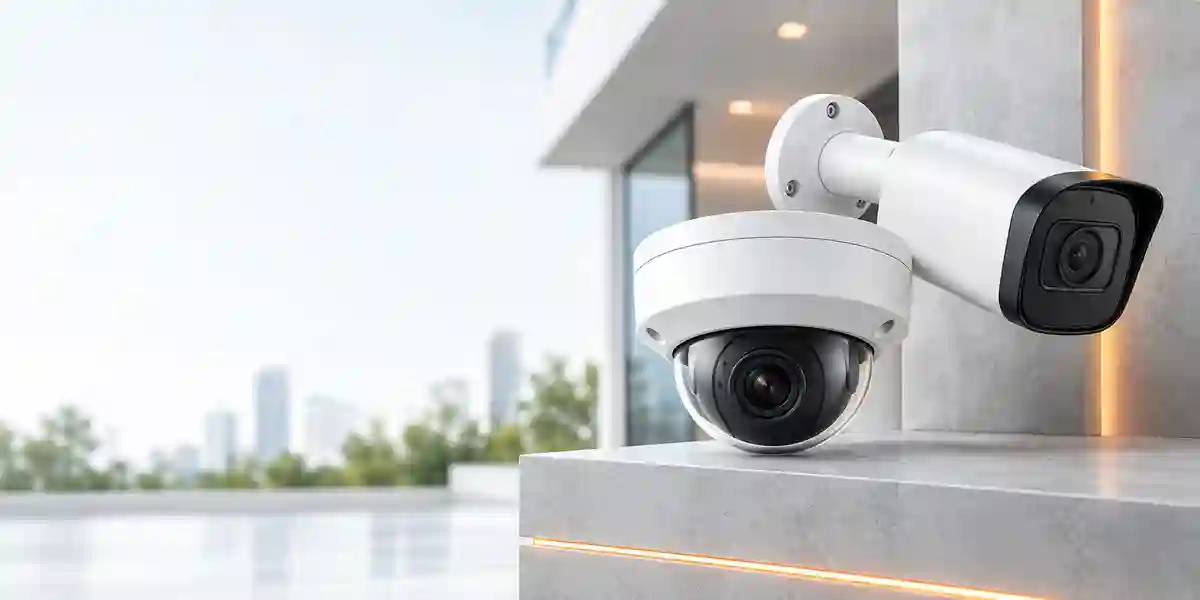
The Hanwha LNO-6072R is a 2MP outdoor network bullet camera for buyers who need dependable Full HD surveillance, adjustable framing and built-in infrared illumination without moving into a complex analytics platform. Its 3.2–10mm manual varifocal lens allows installers to tune the viewing angle after mounting, while 30m IR, 120dB wide dynamic range, PoE, IP66 environmental protection and IK10 impact resistance make it suitable for many commercial perimeter and exterior monitoring positions.
Quick product summary
2MP maximum resolution with up to 30fps operation when WDR is off, suited to general monitoring where Full HD detail is appropriate.
A 3.2–10mm, 3.1× manual varifocal lens provides approximately 109° to 33° horizontal viewing angle for wider or tighter framing.
Integrated 850nm infrared illumination is rated for a viewable distance up to 30m, depending on scene conditions and reflectivity.
IP66 environmental protection and IK10 impact resistance support installation in exposed or accessible outdoor positions.
Overview and buyer-fit guidance
The LNO-6072R is best understood as a practical fixed bullet camera with adjustable optical framing. It is not a PTZ camera and its 3.2–10mm lens is manually adjusted during installation rather than remotely zoomed for day-to-day operation. That distinction matters in Dubai projects where a buyer may need to cover a gate, service lane, loading bay, external corridor, entrance approach or site boundary with a camera that can be aimed and framed precisely during commissioning.
Its 2MP sensor records up to 1920×1080. For many routine security positions, Full HD remains useful where the objective is to observe movement, identify known persons at suitable distances, verify incidents and maintain manageable storage and bandwidth. Where the project brief demands higher pixel density across wide scenes, long-distance identification, licence-plate capture or advanced AI classification, a higher-resolution or application-specific Hanwha model may be a better fit. Camera selection should therefore begin with the required field of view and identification distance rather than megapixel count alone.
The camera supports H.265, H.264 and MJPEG compression, multiple streaming, WiseStream II, ONVIF Profiles S, G and T, RTSP and Hanwha SUNAPI. This gives integrators multiple paths for connection to compatible recording and video-management environments. Compatibility should still be checked against the exact NVR, VMS version, recording profile, storage policy and cybersecurity requirements used on the project.
Key features and practical business benefits
Adjustable scene framing
The 3.2–10mm lens lets the installer choose between a broad scene and a tighter target area. This is valuable where mounting points are fixed but the final coverage must be tuned to a doorway, driveway, loading area or fenced section.
Balanced difficult-light performance
120dB WDR is designed to help retain usable detail in scenes containing both bright and dark areas, such as entrances facing daylight or vehicle approaches with strong contrast.
Simplified cabling with PoE
IEEE 802.3af Class 3 PoE allows data and power to share a network cable from a compatible PoE switch or injector, reducing the need for a separate local power supply at the camera position.
Edge recording support
A microSD/SDHC/SDXC slot supports media up to 32GB. Edge storage may be used as part of a resilient recording design, but retention depends on bitrate, resolution, frame rate, events and overwrite policy.
Basic video analytics
Motion detection and tampering events can support operational awareness and event-driven recording. Projects requiring object classification or richer AI search should evaluate newer analytics-focused camera families.
Corridor-friendly orientation
Hallway View at 90° or 270° can use image pixels more efficiently in narrow vertical scenes such as passages, service corridors or certain entrance approaches.
Verified technical specifications
| Specification | Hanwha LNO-6072R |
|---|---|
| Image sensor | 1/2.8-inch CMOS |
| Maximum resolution | 1920 × 1080 (2MP) |
| Lens | 3.2–10mm, 3.1× manual varifocal, DC auto iris |
| Horizontal field of view | Approximately 109° wide to 33° tele |
| IR illumination | Up to 30m, 850nm IR |
| Wide dynamic range | 120dB |
| Compression | H.265, H.264, MJPEG |
| Network | RJ-45 10/100BASE-T; ONVIF S/G/T; RTSP; HTTPS; SUNAPI |
| Edge storage | microSD/SDHC/SDXC, maximum 32GB, one slot |
| Power | PoE IEEE 802.3af Class 3; max 6.4W |
| Environmental | IP66; IK10; operating -30°C to +55°C, 0–90% RH non-condensing |
| Dimensions / weight | Approx. Ø78 × 262mm; 420g |
Compatibility, configuration and deployment guidance
The LNO-6072R uses standard IP networking and supports ONVIF Profiles S, G and T. In practical terms, that can simplify integration with compatible recorders and VMS platforms, but ONVIF support should not be treated as a guarantee that every function will be exposed identically in every third-party recorder. Before ordering, confirm live-view profiles, codec support, event handling, edge-storage retrieval, time synchronisation, user authentication and firmware compatibility with the intended system.
For cabling, the camera uses 10/100 Ethernet and PoE. Cable category, total run length, surge protection, outdoor pathway, switch power budget and grounding should be reviewed as part of the installation design. Dubai exterior camera positions can be subject to heat, airborne dust, glare and harsh backlighting, so housing orientation, shade, mounting hardware, connector protection and cleaning access are as important as the camera specification.
The camera’s manual varifocal lens should be commissioned with the real target in view. A wide setting can cover more area but spreads the available pixels across that area; a tighter setting places more pixels on the target but reduces scene width. For facial identification, gate monitoring or detailed loading-bay views, the final lens setting should be validated using the actual distance and target size rather than estimated from a catalogue alone.
What to confirm before ordering
- Required identification distance and scene width at each camera location.
- Whether 2MP resolution is sufficient for the project’s pixel-density objective.
- NVR or VMS model, software version and ONVIF/codec compatibility.
- PoE switch capacity, network topology and expected aggregate recording bandwidth.
- Required recording retention and whether 32GB edge storage is adequate for the intended role.
- Mounting surface, conduit route, weather sealing, surge protection and service access.
- Whether local project regulations or approval requirements apply to the intended site.
- Whether the project needs advanced AI analytics, audio, licence-plate recognition or higher resolution.
Alternatives and related-model guidance
The LNO-6072R is appropriate when the brief calls for a conventional 2MP bullet camera with IR, PoE and adjustable lens framing. If the project needs a vandal-resistant dome form factor, compare an L-series dome or vandal dome with matching resolution and environmental requirements. If wider scenes must retain more detail, consider Hanwha Q-series, X-series or P-series cameras with higher resolution. If analytics-driven search, object classification or operational intelligence is important, compare current Hanwha AI camera families. For very large external spaces, PTZ cameras may complement fixed cameras rather than replace them.
A practical starting point for conventional fixed-camera deployments where core surveillance functions and value are prioritised.
Worth evaluating when the project calls for expanded resolution choices, newer feature sets or different form factors.
Consider when richer analytics, higher-end imaging or more demanding enterprise surveillance workflows are required.
Hanwha LNO-6072R Dubai
For Dubai projects, the Hanwha LNO-6072R fits a common requirement: a fixed outdoor network camera that can be aimed at a clearly defined zone and then left to provide continuous surveillance through an NVR or VMS. Commercial compounds, offices, retail service areas, warehouses, workshops, residential-community support areas and small industrial sites often have entrances, boundary lines and delivery zones that do not require a PTZ but do benefit from a bullet camera with adjustable lens framing. The 3.2–10mm lens gives installers more flexibility than a fixed-lens camera when the exact mounting point is dictated by the building or existing conduit.
Dubai buyers frequently need to compare more than the camera specification. The physical scene may include strong sunlight, shaded entrances, reflective vehicles and nighttime lighting, so WDR, IR behaviour and final aiming should be reviewed together. The LNO-6072R’s 120dB WDR can help in contrast-heavy scenes, while its up-to-30m infrared illumination supports darkness monitoring. Real performance still depends on mounting height, target distance, surrounding surfaces and competing light sources. An installation that points directly toward bright lamps or highly reflective walls may need a different angle or adjusted settings.
Network planning also matters. PoE simplifies camera-side power, but the switch still needs enough budget for every connected device, and the recording system needs adequate storage for the chosen frame rate, codec and retention period. When the LNO-6072R is deployed alongside higher-resolution cameras, storage calculations should be made camera by camera rather than by using one average assumption. Buyers should also confirm whether the project requires specific SIRA-related approvals or other regulatory steps. Publicly available documentation has referenced this model in a Dubai SIRA context, but project compliance depends on the exact site, approved system design and current requirements.
FourTeck can help Dubai buyers assess whether the LNO-6072R matches the intended scene, recorder and network architecture. For broader UAE security infrastructure and technology assistance, visit FourTeck UAE or use the FourTeck contact route to discuss configuration requirements.
Hanwha LNO-6072R UAE
Across the UAE, the same camera can be considered for multi-emirate rollouts where a consistent, conventional 2MP bullet-camera standard is useful across branches, storage areas, service yards and business facilities. A key advantage of standardising a model such as the LNO-6072R is operational familiarity: installers can work with the same lens range, IR capability, PoE requirement and recording profiles across repeated sites. However, standardisation should follow a site survey, because not every branch or facility will have the same viewing distance, lighting or risk profile.
The 3.2–10mm lens is particularly useful where one organisation has several similar locations but different camera-to-target distances. A broader setting may suit a compact entrance, while the tele end can narrow the scene at a longer corridor or driveway. The camera’s DORI figures published by Hanwha show that detection, observation, recognition and identification distances vary materially with lens position, reinforcing the need to design each view around a defined surveillance objective rather than selecting a camera by megapixel count alone.
For UAE deployments, network consistency can simplify operations. The LNO-6072R supports PoE, H.265/H.264, multiple streams, ONVIF profiles and standard IP protocols. These capabilities make it possible to separate high-quality recording streams from lower-bandwidth viewing streams where supported by the VMS. In branch networks, buyers should check VLAN design, firewall rules, NTP, password policy, firmware management and remote access practices. Camera traffic should be treated as managed infrastructure rather than as isolated devices on an open LAN.
Environmental exposure can vary significantly across the Emirates, from coastal humidity to dusty industrial environments and high ambient heat. The camera is rated IP66 and specified for operation from -30°C to +55°C, but site engineering still needs to account for direct solar gain, enclosure position, cabling, connectors and maintenance access. For multi-site UAE procurement, use FourTeck UAE to review the broader requirement and coordinate product selection around each site’s actual coverage objective.
Hanwha LNO-6072R Kenya
In Kenya, the Hanwha LNO-6072R can suit organisations looking for a straightforward IP bullet camera for entrances, perimeter sections, parking approaches, warehouses, schools, offices and mixed-use properties. Buyers often need to balance camera capability against network and storage costs, especially where multiple cameras are distributed across a compound. A 2MP camera can be efficient when the viewing objective is clearly defined and the field of view is not excessively wide. The 3.2–10mm lens helps installers concentrate available pixels on the area that matters instead of accepting the framing of a fixed lens.
For sites with unreliable local power or long camera runs, PoE design deserves careful attention. The LNO-6072R uses IEEE 802.3af Class 3 PoE, so a compatible PoE switch can power the camera through Ethernet. The switch and upstream UPS should be sized for the total camera load, network equipment and desired backup duration. Outdoor cabling should be protected from water ingress and electrical transients, with suitable pathway and surge protection selected for the site.
Night surveillance should be assessed using the actual environment. The camera’s IR system is rated up to 30m, but an open yard, dark boundary and reflective corridor produce very different results. Nearby walls can cause strong IR reflections, while distant unlit areas may need supplementary lighting or a camera with greater sensitivity or longer IR range. WDR can help at doorways and entrances where bright exterior light contrasts with shaded areas, although final image tuning remains part of commissioning.
Kenyan buyers should also confirm recorder integration and support requirements before purchase. ONVIF S/G/T support can assist interoperability, but specific features should be tested against the intended NVR or VMS. For assistance with camera selection and broader network considerations, visit FourTeck Kenya. Where a project requires newer AI functions, higher resolution or another form factor, compare alternative Hanwha families rather than forcing one model into every viewing position.
Hanwha LNO-6072R Kuwait
For Kuwait surveillance projects, the Hanwha LNO-6072R offers a conventional fixed bullet-camera option for exterior and semi-exterior locations where a defined zone needs 1080p video, IR coverage and adjustable lens framing. Typical examples include building approaches, gates, service passages, warehouse exteriors and parking access lanes. Its 3.2–10mm manual varifocal lens can be useful where the mounting location is known but the final scene width needs to be adjusted during installation.
High-temperature environments make mounting and network design especially important. Hanwha specifies an operating range up to +55°C, but a camera mounted in direct solar exposure can experience higher enclosure temperatures than the reported ambient air temperature. Installers should consider shade, orientation, heat accumulation, cable quality and connector sealing. Periodic cleaning is also relevant in dusty locations because contamination on the front window can reduce image contrast and create IR flare at night.
The LNO-6072R’s 120dB WDR is useful when a camera faces a scene with strong contrast, such as a shaded entrance looking toward a bright road. Its IR system can illuminate up to 30m under suitable conditions, while the camera’s day/night ICR function switches imaging mode as light levels change. These features help extend usability over a full day, but they do not replace scene design. If the target is beyond the useful pixel density or IR range, a different lens, additional lighting or another camera model may be necessary.
From an infrastructure perspective, PoE reduces the need for separate local power, while H.265/H.264 and multiple streams provide flexibility in recording and remote viewing. Confirm NVR compatibility, storage capacity and network segmentation before deployment. Kuwait buyers can review broader project requirements through FourTeck Kuwait. For installations requiring more advanced analytics or higher-resolution evidence, compare newer Hanwha Q, X, P or AI-oriented cameras before finalising the bill of materials.
Hanwha LNO-6072R Ghana
In Ghana, the LNO-6072R can be considered for businesses and institutions that want a network-based bullet camera with simple PoE connectivity and adjustable optical framing. Warehouses, offices, retail compounds, educational facilities, small industrial locations and managed residential properties can all contain camera positions where a fixed 2MP view is enough when designed around a specific objective. The 3.2–10mm lens is useful for refining the frame during commissioning, especially when a broad fixed lens would otherwise capture too much irrelevant space.
Network and power reliability should be planned as part of the CCTV system. Because the camera can draw power from an IEEE 802.3af PoE source, a centralised PoE switch connected to a UPS can help keep multiple cameras and the recorder online during short power interruptions, depending on the chosen backup capacity. Where cameras are distributed between buildings, designers should consider copper distance limits, fibre uplinks, surge exposure and secure network segmentation.
Outdoor image performance is influenced by rain, humidity, dust, backlighting and nighttime scene structure. The LNO-6072R has IP66 protection and IK10 impact resistance, but connectors and mounting hardware still need appropriate weatherproof installation. Its 30m IR rating is a useful reference for darkness, yet the actual image will depend on objects and surfaces within the scene. A narrow courtyard with reflective walls behaves differently from an open perimeter with limited reflectivity.
Buyers should verify the intended NVR or VMS before procurement. ONVIF S/G/T and common IP protocols support integration options, but a complete system design should also confirm recording settings, user permissions, time synchronisation, firmware management and retention. For Ghana-specific sales assistance and broader technology requirements, visit FourTeck Ghana. If the security objective requires facial detail across wider scenes or AI event classification, a higher-resolution Hanwha model may provide a better technical fit.
Hanwha LNO-6072R Uganda
For Uganda, the Hanwha LNO-6072R offers a straightforward network-camera option for organisations moving from basic analogue CCTV or expanding an existing IP surveillance system. The camera provides Full HD resolution, adjustable 3.2–10mm framing, infrared support, PoE and common network integration standards. These features make it suitable for defined viewing zones such as entrances, shopfront approaches, service yards, office perimeters and warehouse access points when the scene has been measured and the expected identification distance is realistic.
A key design question is whether 2MP gives enough detail for the intended use. For general observation and incident verification, it may be appropriate. For wide compounds where people or vehicles occupy only a small part of the frame, a higher-resolution camera can provide more usable detail. The LNO-6072R’s varifocal lens can improve pixel placement by narrowing the view, but every reduction in field width is a coverage trade-off. Camera quantity and lens setting should therefore be designed together.
The camera’s up-to-30m IR capability can support night monitoring, while 120dB WDR assists scenes with high contrast. During installation, avoid aiming the IR directly at nearby reflective objects where possible, and ensure the camera is mounted rigidly enough to prevent vibration. IP66 and IK10 ratings provide useful protection, but outdoor junctions, cable entries and network equipment must also be installed for the environment.
PoE can simplify maintenance by centralising power at the network switch. For larger Ugandan sites, UPS-backed PoE, segmented camera networks and secure remote access may be more important than adding features at the camera itself. Confirm recorder support for the desired H.265/H.264 stream and event functions. Buyers can use FourTeck Uganda to discuss CCTV requirements, recorder compatibility and related networking needs before selecting quantities and mounting positions.
Hanwha LNO-6072R Nigeria
In Nigeria, the Hanwha LNO-6072R can be deployed where a business needs a weather-resistant fixed IP bullet camera for a specific entrance, perimeter segment, loading zone or external passage. The model combines 2MP resolution with a 3.2–10mm manual varifocal lens, allowing the installer to trade scene width for tighter target framing. This is useful in commercial security designs because a camera mounted at a practical building point does not always align perfectly with a fixed focal length.
For larger sites, the camera should be treated as part of the network and power system rather than as a stand-alone appliance. PoE reduces local power hardware, but a project may still need managed switches, UPS capacity, surge protection, fibre uplinks and secure VLANs. H.265 can reduce bandwidth and storage compared with less efficient encoding in many scenarios, but actual storage depends on scene activity, bitrate, frame rate and retention policy. Capacity planning should use the final recording profile selected in the NVR or VMS.
Night image quality deserves field verification. The built-in IR illumination is rated for up to 30m, yet open roads, dark boundary lines and reflective surfaces can all change perceived range and exposure. 120dB WDR helps with strong contrast, making the model useful for entrances and driveways where daylight and shade coexist. If the intended target is a vehicle plate at speed or a face at long range, use a camera designed specifically for that objective rather than relying on general-purpose surveillance alone.
ONVIF S/G/T, RTSP and standard network protocols give integrators several compatibility options. Before purchase, confirm the exact recorder, required events, cybersecurity policies and firmware process. Nigerian organisations can visit FourTeck Nigeria for assistance with product selection and broader infrastructure planning. For analytics-heavy applications, compare current Hanwha AI-capable models and avoid assuming the LNO-6072R provides advanced object classification.
Hanwha LNO-6072R Seychelles
For Seychelles projects, camera selection often needs to account for coastal exposure, humidity, network resilience and remote-site maintenance. The Hanwha LNO-6072R provides an IP66-rated, IK10-resistant fixed bullet form factor with a 3.2–10mm manual varifocal lens. It can therefore suit defined exterior views around hospitality properties, offices, stores, service facilities, gated compounds and operational areas where 2MP resolution is sufficient for the target distance.
The coastal environment increases the importance of installation quality. Although the camera has environmental protection, brackets, fixings, connectors, glands and nearby junction boxes must also be selected and maintained for the local conditions. Salt exposure and moisture can affect supporting infrastructure long before the camera electronics themselves fail if unsuitable materials are used. Designers should also consider cable pathways, surge protection and ease of replacement where access is difficult.
At night, the built-in IR system provides a manufacturer-rated viewable distance up to 30m. For open areas with little reflected light, supplementary lighting or another camera may be required. In hospitality and public-facing environments, camera placement should also consider privacy, guest circulation and the difference between general situational awareness and identification-quality images. The 3.2–10mm lens helps tune a defined view, but it does not increase the underlying 2MP resolution.
For island or multi-building deployments, PoE and central recording can simplify administration if the network is designed with suitable uplinks and backup power. ONVIF and standard IP protocols support integration choices, but the exact NVR or VMS should be checked before procurement. Seychelles buyers can use FourTeck Africa to discuss camera selection, networking and regional project requirements. If a project calls for advanced analytics, broader pixel coverage or specialised licence-plate capture, compare alternative Hanwha models before finalising the system.
Ideal customers and use cases
Entrances, dispatch doors, loading approaches and defined perimeter sections where adjustable framing is valuable.
External doors, service corridors, back-of-house areas and controlled approaches needing continuous IP video.
Delivery points, parking approaches and exterior zones where Full HD observation and IR are appropriate.
Defined external routes and entrances, subject to the site’s privacy, safeguarding and regulatory policies.
Regional FourTeck resources
For projects spanning multiple markets, use the regional FourTeck sites to discuss local procurement and technical requirements: FourTeck international, FourTeck UAE, FourTeck Kenya, FourTeck Kuwait, FourTeck Ghana, FourTeck Uganda, FourTeck Nigeria and FourTeck Africa.
Why contact FourTeck
A camera quote is most useful when it is tied to the intended scene, recorder and network. FourTeck can help buyers organise the information needed for product selection, including camera quantity, mounting locations, field of view, target distance, recorder compatibility, PoE requirements, storage expectations and regional project context. This avoids treating the camera as an isolated line item and helps identify situations where a different resolution, form factor or analytics capability would be more suitable.
Hanwha LNO-6072R FAQs
What resolution does the Hanwha LNO-6072R provide?
The LNO-6072R provides a maximum resolution of 1920×1080, commonly described as 2MP or Full HD. It can operate at up to 30fps in H.265/H.264 when WDR is off. Whether 2MP is enough depends on the scene width, camera-to-target distance and the level of identification detail required.
Does the LNO-6072R have a zoom lens?
It has a 3.2–10mm, 3.1× manual varifocal lens. The installer can adjust the focal length during setup to obtain a wider or tighter view. It should not be confused with a motorised zoom lens intended for remote day-to-day zoom control.
How far can the infrared night vision reach?
Hanwha specifies an IR viewable length up to 30m using 850nm infrared LEDs. Practical range depends on scene reflectivity, mounting angle, weather, ambient lighting and objects close to the camera, so final night performance should be checked on site.
Is the Hanwha LNO-6072R suitable for outdoor use?
Yes. The camera is specified with IP66 environmental protection and IK10 impact resistance. Outdoor installation still requires correctly sealed connectors, appropriate mounting hardware, suitable cabling and consideration of heat, dust, moisture, salt exposure and service access.
Does it support PoE?
Yes. It supports IEEE 802.3af Class 3 Power over Ethernet, with maximum power consumption specified at 6.4W. A compatible PoE switch or injector can therefore deliver both network connectivity and power through the Ethernet cable.
Can it record to a microSD card?
The camera includes one microSD/SDHC/SDXC slot supporting up to 32GB. Edge storage can support event or local recording strategies, but the available retention time depends on bitrate, resolution, frame rate, scene activity and overwrite settings.
Will it work with a third-party NVR?
The LNO-6072R supports ONVIF Profiles S, G and T as well as RTSP and common IP protocols, which can help third-party integration. Buyers should still confirm the exact NVR model and firmware because feature support can differ between platforms.
Does the LNO-6072R have AI analytics?
Its listed analytics include motion detection and tampering. Buyers who need modern object classification, attribute search, people or vehicle analytics, or more advanced AI-assisted operations should compare current Hanwha AI camera families.
What does 120dB WDR help with?
Wide Dynamic Range helps a camera handle scenes containing both bright and dark areas, such as an indoor entrance looking toward daylight. It can improve usable detail across high-contrast areas, although placement and exposure settings still matter.
What should Dubai buyers confirm before purchasing?
Confirm the target distance, required scene width, recorder compatibility, PoE capacity, recording retention, mounting environment and any current project-specific approval requirements. If the objective involves long-range identification, plate capture or advanced AI, verify whether another camera family is more appropriate.
Discuss your Hanwha LNO-6072R configuration
Share the camera quantity, target distances, NVR or VMS model, mounting environment and required recording retention. FourTeck can help assess whether the LNO-6072R fits the intended views or whether another Hanwha camera type should be considered.
Reviews
There are no reviews yet.