

Hanwha LNV-6071R Dubai
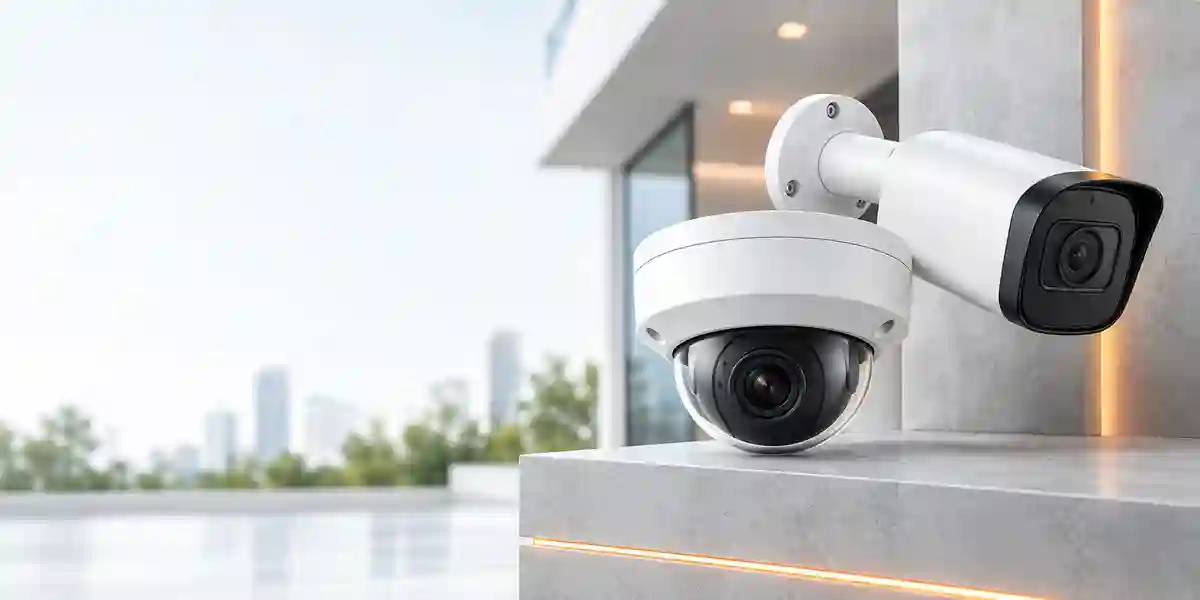
The Hanwha LNV-6071R is a 2 megapixel vandal-resistant network IR dome camera for buyers who need a flexible varifocal view, infrared monitoring, wide dynamic range and a durable outdoor-rated housing. Its 3.2–10 mm lens lets installers balance wide scene coverage against a tighter telephoto view, while PoE can simplify power and network cabling.
Quick Product Summary
Product Overview and Buyer Fit
The LNV-6071R sits in the practical end of Hanwha’s network-camera range: it is designed around Full HD video, a manually adjustable varifocal lens and a rugged dome enclosure rather than headline resolution or advanced AI analytics. That makes the camera most relevant where scene composition matters more than ultra-high pixel count. An installer can use the wider end of the 3.2–10 mm lens for corridors, entrances, shop floors and general indoor areas, then narrow the view where a gate, doorway, loading point or specific zone needs tighter coverage.
For Dubai projects, the IP66 and IK10 ratings are especially useful selection criteria because they address exposure and physical robustness. These ratings do not replace correct installation: cable entries, junction boxes, mounting surfaces, weather sealing, sun exposure and cleaning access still need to be planned. The camera also supports day/night switching with an infrared-cut filter, 120 dB wide dynamic range, motion detection, tampering detection, privacy masks and hallway view. Buyers should compare those capabilities with the actual scene, storage policy and recorder platform before ordering.
Key Features and Business Benefits
Adjustable varifocal coverage
The 3.2–10 mm lens provides a useful range from broad scene coverage to a narrower view. This gives installers more flexibility than a fixed-lens camera when the exact framing must be adjusted on site.
30 m infrared illumination
Integrated IR supports zero-light black-and-white viewing within the stated 30 m viewable length. Real scene performance depends on surfaces, angle, weather and reflective objects.
120 dB WDR
Wide dynamic range can help retain useful detail when bright and dark areas appear in the same scene, such as entrances, glass-fronted spaces or loading areas with strong backlight.
PoE installation
IEEE 802.3af PoE allows compatible switching infrastructure to carry both network data and power over one Ethernet run, simplifying camera-side power planning.
IP66 and IK10 housing
The environmental and impact ratings make the dome suitable for demanding commercial positions when installed correctly and within the manufacturer’s environmental limits.
Multiple streams and edge storage
Up to three streaming profiles and microSD/SDHC support up to 32 GB can help separate recording, live view and bandwidth needs, depending on the chosen system design.
Verified Technical Specifications
| Specification | Hanwha LNV-6071R |
|---|---|
| Imaging sensor | 1/2.9-inch 2.19 MP CMOS |
| Maximum resolution | 1920 × 1080 |
| Lens | 3.2–10 mm, 3.1× varifocal, F1.6–F2.9, manual focus |
| Horizontal field of view | 101.6° wide to 31.3° tele |
| IR viewable length | 30 m |
| WDR | 120 dB |
| Video codecs | H.264, MJPEG |
| Frame rate | H.264 up to 30 fps at all supported resolutions |
| Streaming | Multiple streaming, up to three profiles |
| Edge storage | microSD/SDHC, up to 32 GB |
| Network | RJ-45 10/100BASE-T, IPv4/IPv6 |
| Interoperability | ONVIF Profile S/G, SUNAPI |
| Power | PoE IEEE 802.3af Class 3, 6.5 W |
| Operating temperature | -30°C to +55°C, less than 90% RH; startup above -20°C |
| Protection | IP66, IK10 |
| Dimensions / weight | Ø137.8 × 106.1 mm / 515 g |
Compatibility, Configuration and Deployment Guidance
The LNV-6071R is a network camera and should be treated as part of a complete IP surveillance design. Confirm that the selected NVR or video management system can accept the camera using Hanwha integration, ONVIF Profile S/G or the required stream method. Recorder compatibility should be checked before purchase, particularly when the recorder is from another brand or runs older firmware. The camera’s stated PoE requirement is IEEE 802.3af Class 3, so the switch must provide adequate per-port power and total PoE budget for the entire camera count.
Network planning should include camera VLAN design where appropriate, static or reserved IP addressing, secure administrator credentials, firmware review, bandwidth calculations and remote-access policy. The camera supports HTTPS authentication, IP filtering, user access logging and 802.1X options according to the published datasheet. These capabilities need correct configuration; they should not be treated as automatic protection.
The varifocal lens is adjusted manually. Installation therefore needs enough time for framing and focus at the final mounting position. Confirm viewing distance, target width, mounting height and lighting before fixing the camera permanently. For Dubai exterior locations, check shade, direct sun exposure, dust accumulation, rain path, cable entry sealing and the condition of the mounting substrate. Where the installation is part of a regulated CCTV system, project owners should also confirm current local authority and building requirements with their qualified installer or consultant.
Ideal Customers and Use Cases
- Office entrances, corridors and shared circulation areas that need Full HD coverage.
- Retail premises requiring an impact-resistant dome with adjustable scene framing.
- Warehouses and logistics facilities covering doors, dispatch points, aisles and internal loading zones.
- Schools, clinics and commercial buildings where a dome form factor is preferred.
- Covered exterior or exposed positions where IP66 and IK10 ratings are relevant.
- Retrofit projects that can use H.264 network video, PoE and ONVIF integration.
What to Confirm Before Ordering
- Current model availability and lifecycle status.
- Required camera quantity and exact mounting locations.
- Whether 2MP resolution meets identification and evidence requirements for each scene.
- Whether the 3.2–10 mm field of view covers the intended target area.
- NVR or VMS compatibility, supported codec and stream settings.
- PoE switch budget, port count, uplink capacity and network segmentation.
- Required retention period and recorder storage capacity.
- Mounting accessories, junction boxes and weather sealing for the site.
- Any regulatory, privacy or authority requirements that apply to the project.
Comparison and Alternative Guidance
The LNV-6071R should be compared by requirement rather than by model number alone. Its strengths are a practical 2MP image, adjustable 3.2–10 mm optics, 30 m IR, 120 dB WDR, PoE and a rugged dome body. A current fixed-lens model may be simpler where the scene is known and cost is the main constraint. A higher-resolution 4MP, 5MP or 4K camera may be more appropriate where more pixels across a wide scene are necessary. A modern AI camera may be preferred when object classification, people or vehicle filtering, metadata search or advanced analytics are central to the project.
Before replacing an existing LNV-6071R, check the present viewing angle, mounting pattern, cable route, NVR channels, PoE capacity and storage. A technically newer camera is not automatically a drop-in replacement if its lens, housing, mount, codec or recorder requirements differ. FourTeck can help compare the original requirement with a currently available alternative rather than relying on superficial resolution comparisons.
Hanwha LNV-6071R Dubai
Dubai buyers looking for the Hanwha LNV-6071R usually need more than a model-only quotation. Commercial sites across Business Bay, Deira, Jebel Ali, Al Quoz, Dubai Investment Park, Dubai Marina and other districts can have very different camera conditions: bright glass entrances, covered corridors, warehouse loading zones, dusty exterior walls, retail ceilings or mixed indoor-outdoor transitions. The LNV-6071R is relevant when a 2MP vandal dome with adjustable optics meets the scene requirement. Its 3.2–10 mm lens gives an installer room to tune the horizontal field of view from about 101.6 degrees at wide angle to about 31.3 degrees at tele, helping one model cover several types of viewing distance.
In Dubai, buyers should discuss camera placement and recording design before focusing only on unit price. The 30 m infrared specification can be useful for darker corridors, entrances and perimeter positions, but IR performance changes with scene geometry, reflective surfaces and environmental conditions. The 120 dB WDR feature is particularly relevant where doors or windows create strong backlight. For exposed locations, IP66 and IK10 ratings add useful protection, while good mounting, sealed cable entry and planned maintenance remain essential.
The camera uses PoE, so a Dubai project can integrate it with suitable structured cabling and a correctly sized PoE switch. Buyers should confirm the switch power budget, NVR compatibility, recording days and remote-viewing requirements as part of the same discussion. Where a project must comply with local authority or property-management requirements, those obligations need to be validated for the actual site and use case. FourTeck can help customers review whether the LNV-6071R remains the right model for a replacement or expansion, or whether a newer Hanwha camera better matches the required resolution and analytics.
Hanwha LNV-6071R UAE
UAE procurement often covers more than one emirate, so a camera decision can involve standardisation across Dubai, Abu Dhabi, Sharjah, Ajman, Ras Al Khaimah, Fujairah or Umm Al Quwain. The Hanwha LNV-6071R offers a consistent combination of 2MP video, varifocal optics, IR illumination, WDR, PoE and vandal-resistant housing that can suit repeatable surveillance layouts when the same technical requirement exists across several branches. Multi-site buyers should document scene type, mounting height, network design, recorder platform and retention policy before standardising on one camera model.
For a UAE office rollout, the camera can suit entrances, corridors and shared spaces where a dome appearance is preferred. For warehouses and industrial locations, the 3.2–10 mm lens can be useful at loading doors, internal routes and controlled access points. For retail or hospitality projects, the 120 dB WDR may help where strong daylight enters through shopfronts or lobby glazing. The IP66 and IK10 ratings make the housing relevant to more demanding positions, but temperature, dust, direct sun, cleaning schedules and cable protection still need project-specific assessment.
UAE buyers replacing an older Hanwha installation should verify recorder firmware and integration before assuming compatibility. ONVIF Profile S/G and SUNAPI are listed for the camera, but real interoperability depends on the recorder or VMS implementation. Storage also needs deliberate sizing: the microSD/SDHC slot supports up to 32 GB according to the manufacturer datasheet, which is useful for limited edge recording or events but should not be treated as a substitute for central retention where longer evidence storage is required. FourTeck can support UAE enquiries with requirement review, product comparison and project planning through FourTeck UAE and the main FourTeck contact route.
Hanwha LNV-6071R Kenya
Kenya buyers evaluating the Hanwha LNV-6071R may be planning CCTV for offices, schools, hotels, warehouses, compounds, retail stores, clinics or branch operations. In these projects, the useful question is whether the camera’s 2MP resolution and adjustable 3.2–10 mm lens provide enough scene detail at the intended mounting distance. A varifocal lens can be valuable where the installer needs to fine-tune framing after the camera is mounted, especially at entrances, reception points, store aisles, loading areas or corridor junctions.
Power and network design deserve equal attention. The LNV-6071R uses IEEE 802.3af PoE, which can simplify deployments when a suitable PoE switch and structured Ethernet cabling are available. Sites with unstable utility power should consider how the switch, recorder and core network will be protected and backed up, because a PoE camera depends on those upstream devices. Bandwidth and storage calculations should use the intended frame rate, scene complexity and recording policy rather than generic camera-count estimates.
Kenyan organisations with multiple locations can also benefit from consistent naming, IP addressing, user roles and recorder configuration. If the LNV-6071R is being sourced for an existing system, buyers should confirm current availability and whether a current Hanwha alternative would provide a better long-term fit. The published IP66 and IK10 ratings are relevant for tough mounting positions, while good cable protection and weatherproof installation remain necessary. For Kenya enquiries, customers can use FourTeck Kenya to discuss CCTV, networking and business infrastructure requirements alongside the camera selection.
Hanwha LNV-6071R Kuwait
Kuwait CCTV buyers often need to plan for strong sunlight, dust, temperature variation and demanding commercial operating hours. The Hanwha LNV-6071R has a published operating range of -30°C to +55°C and an IP66 enclosure, but site suitability should still be judged by the exact mounting position, direct solar exposure, ventilation, shelter and maintenance plan. An outdoor rating is not a substitute for correct placement or environmental assessment, especially on walls and facades exposed to sustained sun.
For offices, shops, warehouses, hospitality locations and institutional sites, the camera’s 3.2–10 mm varifocal lens provides useful installation flexibility. A wide setting can cover a larger room or entrance area, while the tele end can focus more tightly on a controlled point. The built-in IR is specified for a 30 m viewable length, and 120 dB WDR can help in contrast-heavy scenes such as doorways and glass-fronted areas. Buyers should still review nighttime reflections and backlighting during commissioning rather than relying only on specification-sheet values.
Kuwait projects should also confirm the NVR or VMS platform, network switch, PoE budget and required retention period. The camera supports H.264 and MJPEG according to the manufacturer datasheet, so compatibility with current recording platforms must be verified rather than assumed. If the requirement is for a new deployment rather than a like-for-like replacement, a newer Hanwha model may offer higher resolution, newer compression or analytics and could be a better lifecycle choice. For procurement and project guidance in Kuwait, customers can use FourTeck Kuwait and share site type, camera count, lens requirement and recorder details.
Hanwha LNV-6071R Ghana
Ghana businesses searching for the Hanwha LNV-6071R may be upgrading security at offices, retail outlets, warehouses, schools, hotels, clinics or operational compounds. The camera is most suitable when Full HD resolution is enough for the intended target and when the adjustable 3.2–10 mm lens adds value. Instead of choosing only by megapixel count, project owners should identify what must be seen: general movement, an entrance, a cashier position, a doorway, an equipment area or a loading point. That target determines whether the camera’s field of view and pixel density are appropriate.
The LNV-6071R supports PoE, which can simplify installations by combining power and data over the Ethernet connection. For Ghana projects, the design should also consider UPS protection for the switch and recorder, surge conditions, network uptime and secure remote access. The camera’s edge slot supports microSD/SDHC up to 32 GB according to the published specification, but central recording should be sized separately where footage must be retained for longer periods.
IP66 and IK10 ratings help when the camera is installed in more exposed or impact-prone areas, while correct cable entry, junction hardware and cleaning access remain important. Buyers with existing Hanwha recorders should provide the recorder model and firmware details so compatibility can be checked. If the LNV-6071R is difficult to source, the best alternative should be selected by matching lens range, scene width, WDR, IR requirement, housing protection and recorder integration rather than simply choosing the closest model number. Ghana customers can discuss CCTV and connected infrastructure through FourTeck Ghana.
Hanwha LNV-6071R Uganda
Uganda organisations considering the Hanwha LNV-6071R can use it as a practical reference point for a 2MP network dome deployment. The camera’s combination of 3.2–10 mm varifocal optics, infrared illumination, WDR and PoE suits business locations where one camera needs adaptable framing. Typical examples include office corridors, reception entrances, shop interiors, school buildings, warehouse access points and monitored doorways. The final decision should be based on viewing distance and required evidence detail rather than on the camera category alone.
For sites in Kampala, Entebbe and other business areas, network and power resilience should be included in the CCTV design. A PoE camera depends on the switch, cabling and recorder infrastructure, so UPS support and appropriate surge protection may matter as much as camera specifications. Secure configuration is also important: camera passwords, user permissions, remote access and firmware management should form part of the handover process. Where several cameras share a switch, the total PoE budget and uplink capacity need to be calculated.
The LNV-6071R is rated IP66 and IK10, supporting deployment in tougher environments when correctly installed. Its 30 m IR specification can help in low-light positions, but physical layout, reflective walls and environmental conditions affect real results. Existing users looking for a replacement should confirm whether the exact model is currently available and whether a current Hanwha alternative is better suited for long-term support. Uganda buyers can use FourTeck Uganda to discuss CCTV, structured networking and related infrastructure, supplying details such as camera count, site type and intended recording duration.
Hanwha LNV-6071R Nigeria
Nigeria buyers may encounter the Hanwha LNV-6071R when expanding an existing surveillance system, replacing a damaged camera or reviewing a specification created around Hanwha’s L Series. In each case, confirming the actual surveillance objective is more useful than buying by model name alone. The camera delivers up to 1920 × 1080 resolution and uses a 3.2–10 mm varifocal lens, making it adaptable to different framing requirements. A site engineer can choose a wider view for general area coverage or a narrower field for entrances and defined operational zones.
Commercial projects in Lagos, Abuja, Port Harcourt and other locations should consider the complete IP CCTV path: camera, cable, PoE switch, network, recorder, storage and remote access. The LNV-6071R draws power via IEEE 802.3af PoE, so reliable switching and power backup can be critical to keeping surveillance online. Recording capacity should be calculated from camera count, frame rate, bitrate and retention days. The camera’s microSD/SDHC support can provide limited edge storage but does not remove the need for properly sized central recording where required.
The IP66 enclosure and IK10 impact rating add durability for suitable mounting locations. For darker areas, 30 m IR and day/night switching can support monitoring, while 120 dB WDR can improve difficult contrast scenes. Buyers should confirm model availability, recorder compatibility and accessories before placing an order, and consider a newer Hanwha model if the project needs AI classification, higher resolution or newer compression. Nigeria customers can use FourTeck Nigeria for regional technology enquiries and can share existing NVR details when requesting a compatible camera recommendation.
Hanwha LNV-6071R Seychelles
Seychelles surveillance projects can involve hospitality properties, offices, retail spaces, storage facilities, compounds and coastal commercial environments where equipment selection needs careful environmental review. The Hanwha LNV-6071R carries IP66 weather protection and an IK10 impact rating, but coastal exposure introduces considerations beyond an ingress rating. Salt-laden air, mounting hardware, cable entry, corrosion risk, cleaning frequency and enclosure placement should all be assessed by the installer, particularly at locations close to the sea.
The camera provides 2MP Full HD video and a 3.2–10 mm varifocal lens. This can suit areas where the final field of view needs adjustment after physical installation. In hotels and commercial premises, the wider lens setting may be useful for entrances, corridors or shared areas, while a narrower setting can concentrate on controlled access points or operational zones. The 120 dB WDR feature can be relevant for scenes with bright tropical daylight outside and darker interiors inside the same frame. Integrated IR is specified to 30 m for low-light viewing, subject to the scene and environmental conditions.
For island deployments, procurement planning should include spares strategy, compatible mounting accessories, PoE switching, recorder capacity and remote-support requirements. If the exact LNV-6071R is not readily available, a current alternative should be compared using field of view, environmental rating, WDR, IR distance, codec compatibility and recorder support. FourTeck’s Africa technology resource can be used for Seychelles and wider regional enquiries. Buyers should provide the site type, mounting environment and existing recorder details so the recommended configuration reflects the actual project rather than a generic camera specification.
Related FourTeck Products and Infrastructure Resources
A network camera performs best when it is planned together with its switching, recording and installation environment. The following verified FourTeck pages can help buyers build that wider requirement. These are related solution and infrastructure pages; the FourTeck site search did not expose seven separately verifiable Hanwha product-detail URLs during content preparation, so unverified product URLs have not been invented.
CCTV Installation Dubai
Planning guidance for camera placement, NVR storage, PoE networking and commercial surveillance deployments. Best fit: new Dubai CCTV projects and upgrades.
CCTV and Access Control Systems UAE
Overview of CCTV, recording and access-control solution categories. Best fit: businesses combining video surveillance with broader physical security.
Network Switch Solutions Dubai
Managed and PoE switch guidance for IP cameras and connected infrastructure. Best fit: projects needing port, VLAN and PoE-budget planning.
Networking, Firewalls and Switches UAE
Network infrastructure context for VLAN separation, secure access and business connectivity. Best fit: surveillance systems sharing enterprise networks.
Regional FourTeck Resources
Why Contact FourTeck
FourTeck can help connect the camera choice with the surrounding CCTV, network and recording requirements. That includes discussing camera count, viewing distance, PoE switching, storage, structured cabling, compatible recording platforms and deployment needs. Availability, lead time, accessories and commercial terms should be confirmed at quotation stage rather than assumed from a web page.
Hanwha LNV-6071R FAQ
What resolution does the Hanwha LNV-6071R support?
The Hanwha LNV-6071R supports a maximum resolution of 1920 × 1080, commonly described as 2MP Full HD. The manufacturer datasheet lists H.264 video at up to 30 frames per second across the supported resolutions. Whether 2MP is sufficient depends on viewing distance, scene width and the level of detail required for the project.
Does the LNV-6071R have a varifocal lens?
Yes. It uses a 3.2–10 mm 3.1× varifocal lens with manual focus. The published horizontal field of view is about 101.6 degrees at the wide end and 31.3 degrees at tele. This gives installers flexibility to frame a broad area or tighten the view on a smaller target zone.
How far can the infrared illumination reach?
Hanwha specifies an IR viewable length of 30 metres for the LNV-6071R. Real usable distance depends on scene layout, surfaces, weather, angle and the amount of reflected infrared light. Installers should test the final night scene rather than treating the maximum stated distance as guaranteed identification range.
Is the Hanwha LNV-6071R weatherproof and vandal resistant?
The published ratings are IP66 for ingress protection and IK10 for impact resistance. These ratings make the dome suitable for demanding positions when correctly installed. Mounting quality, cable sealing, junction hardware, direct sun, dust and environmental exposure still need to be considered for the actual site.
Does the camera support PoE?
Yes. The LNV-6071R supports IEEE 802.3af PoE Class 3 and has a published maximum power consumption of 6.5 W. The PoE switch must have enough per-port capacity and total power budget for all connected devices, with suitable uplink bandwidth for the video traffic.
Can the LNV-6071R record to a memory card?
Yes. The manufacturer datasheet lists a microSD/SDHC slot supporting up to 32 GB. Edge storage can help with event recording or limited local retention, but central recorder storage should be sized separately when the project requires longer retention, multiple cameras or managed evidence handling.
Does the camera support ONVIF?
Yes. The LNV-6071R datasheet lists ONVIF Profile S/G and SUNAPI. ONVIF can support interoperability with third-party recording platforms, but actual features vary by recorder and firmware. Buyers should verify the intended NVR or VMS combination before procurement, particularly for older systems.
What analytics are built into the LNV-6071R?
The published analytics are motion detection and tampering detection. This model should not be selected on the assumption that it provides current-generation AI object classification. If people/vehicle classification, metadata search or advanced analytics are required, compare a newer Hanwha AI-capable camera.
Is the Hanwha LNV-6071R suitable for Dubai outdoor use?
Its IP66 rating and published operating range up to +55°C make it relevant to many outdoor or semi-exposed applications, but final suitability depends on direct solar load, enclosure position, dust, humidity, mounting surface and maintenance conditions. A qualified installer should assess the actual location before deployment.
What should I provide when requesting a quote?
Share the required quantity, site location, indoor or outdoor mounting positions, approximate viewing distances, existing NVR or VMS model, desired recording days and whether PoE switching already exists. This information helps determine whether the LNV-6071R is appropriate or whether another Hanwha model better fits the requirement.
Need Help Specifying the Hanwha LNV-6071R?
Send FourTeck your camera count, mounting environment, viewing distances, recorder model and required retention period. The team can help review the configuration, check current availability and discuss an appropriate Hanwha option for your Dubai or regional project.
Reviews
There are no reviews yet.