

Hanwha QND-6012R1 Dubai
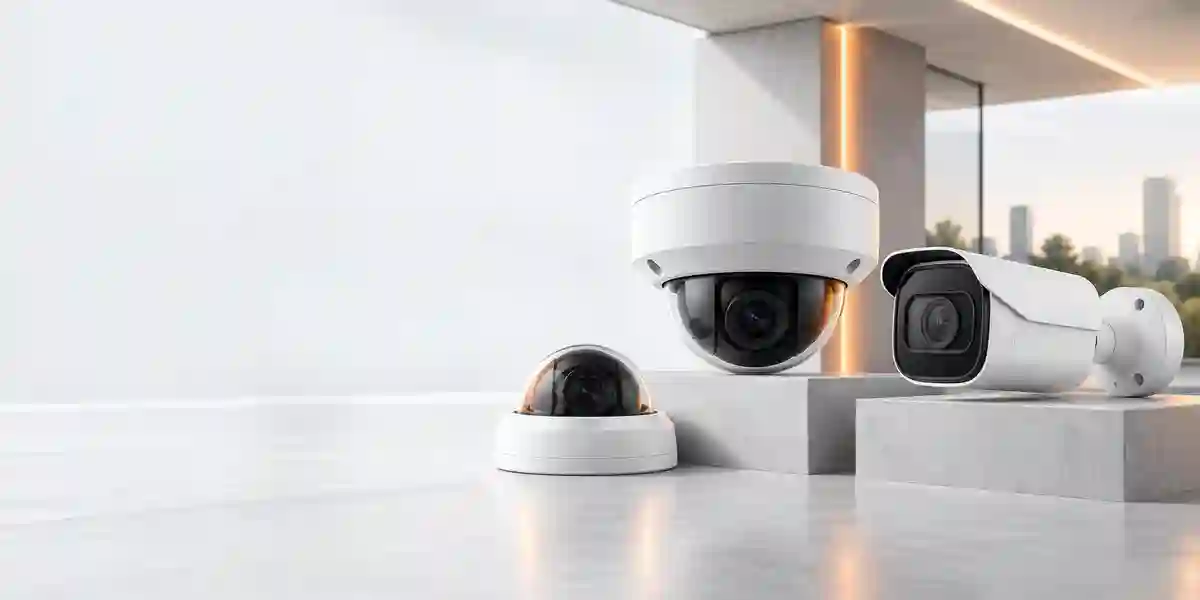
The Hanwha QND-6012R1 is a 2MP indoor IR dome camera designed for reliable IP video surveillance where a wide fixed field of view, efficient H.265 compression, infrared night coverage and straightforward PoE deployment are required. Its 2.8mm lens provides broad scene coverage, while 120dB WDR helps balance bright and dark areas such as entrances, reception zones, corridors and mixed-light interiors.
Quick product summary
Up to 2MP / 1920 × 1080 at 30fps with H.265, H.264 and MJPEG streaming.
2.8mm fixed lens with approximately 114° horizontal field of view for broad indoor scenes.
Integrated 850nm IR illumination with a stated viewable range of up to 20m.
10/100 Ethernet, PoE IEEE 802.3af Class 3 or 12VDC, plus ONVIF S/G/T support.
Product overview and buyer-fit guidance
The QND-6012R1 is best considered when the project calls for a compact indoor dome with a wide fixed scene rather than a zoom-capable camera. A 2.8mm lens is useful for reception areas, entrance lobbies, office corridors, retail spaces, meeting areas, indoor loading passages and similar zones where the priority is broad situational awareness. Because the lens is fixed, the installation team should confirm camera height, target distance and scene width before ordering. If a tighter field of view or flexible adjustment is required, a 4mm or varifocal Q-series model may be more appropriate.
The camera supports 120dB wide dynamic range, backlight compensation, digital noise reduction and day/night operation. These functions are valuable where indoor lighting changes during the day or where cameras face glass doors, bright windows or illuminated entrances. The built-in IR helps maintain visibility when ambient light drops, but exact identification performance still depends on subject distance, angle, movement, reflectivity and scene conditions.
For storage efficiency, H.265 and WiseStream II can help reduce bandwidth and recording load compared with less efficient encoding choices. The camera can stream multiple profiles and supports local microSD/SDHC/SDXC storage up to 128GB, which can be useful for edge recording or event continuity. For business deployments, recorder and retention design should still be calculated from the required camera count, resolution, frame rate, bitrate, recording mode and number of retained days.
Key features and business benefits
Wide fixed coverage
The 2.8mm lens provides a broad viewing angle, making one camera suitable for many indoor overview positions where a narrow telephoto view is not required.
Balanced difficult lighting
120dB WDR can help produce more usable images in scenes containing both bright and shaded regions, especially doors, windows and reception entrances.
Night visibility
Integrated IR provides night coverage to a stated distance of 20m, reducing the need for a separate illuminator in many indoor environments.
Efficient IP deployment
PoE enables network data and camera power over the same Ethernet cable, simplifying suitable structured-cabling installations.
Event awareness
Motion, tampering, defocus, intrusion, enter/exit and line-crossing/direction events can support focused monitoring workflows.
Interoperability
ONVIF profiles S, G and T plus Hanwha SUNAPI/Open Platform capabilities help with integration into compatible network video environments.
Verified technical specifications
| Specification | Hanwha QND-6012R1 |
|---|---|
| Imaging sensor | 1/2.8-inch CMOS |
| Maximum resolution | 1920 × 1080 (2MP) |
| Maximum frame rate | 30fps / 25fps for H.265/H.264 |
| Lens | 2.8mm fixed, F2.0 |
| Field of view | H 114° / V 62° / D 135° |
| Minimum illumination | 0.03 lux colour; 0 lux B/W with IR LED on |
| IR distance | 20m |
| WDR | 120dB |
| Compression | H.265, H.264, MJPEG; WiseStream II |
| Streaming | Up to 3 profiles |
| Edge storage | microSD/SDHC/SDXC, max. 128GB × 1 slot |
| Ethernet | RJ-45, 10/100BASE-T |
| ONVIF | Profiles S, G, T |
| Power | PoE IEEE 802.3af Class 3 or 12VDC |
| Typical / max power | PoE: 6.0W typical / 7.4W max; 12VDC: 5.1W typical / 6.4W max |
| Operating temperature | -10°C to +55°C |
| Audio | No-audio model |
| Dimensions / weight | Approx. Ø110 × 86mm; 255g |
Compatibility, configuration and deployment guidance
Before deployment, confirm that the selected NVR or VMS supports the required H.265/H.264 profiles, ONVIF capabilities and camera feature set. ONVIF can simplify basic interoperability, but feature depth can differ across recorder manufacturers. For the broadest management functionality, verify the exact recorder/VMS integration and firmware combination before a large rollout.
The camera can be powered by PoE or 12VDC. For PoE projects, calculate total switch power budget with headroom, not only the number of available Ethernet ports. Network design should also account for total bitrate, uplink capacity, VLAN/security policy and remote access. For local recording, select a compatible microSD card sized for the desired event-retention purpose and surveillance workload.
This model is identified by Hanwha as a no-audio model. Buyers who require microphone or speaker functions should not assume those capabilities are present. Likewise, a fixed 2.8mm lens cannot be optically zoomed after installation, so camera position and target scene should be validated before final mounting.
Ideal customers and use cases
- Office entrances, receptions, corridors and shared internal spaces.
- Retail stores requiring broad overview coverage of customer or staff areas.
- Indoor warehouse aisles, dispatch points and controlled operational zones.
- Clinics, schools and institutions that need compact network dome coverage in appropriate public or operational areas.
- Hospitality and commercial interiors where a discreet dome form factor is preferred.
- Branch networks standardising on PoE IP cameras and central NVR/VMS recording.
- Projects requiring edge-storage capability, Hallway View and basic intelligent video events.
What to confirm before ordering
- Is a 2.8mm wide fixed lens suitable for the target distance and scene width?
- Is the camera location indoor and within the stated operating-temperature/environmental requirements?
- Does the NVR/VMS support the required codec, ONVIF profile and analytics workflow?
- How many recording days are required and what storage capacity is needed?
- Is the PoE switch power budget sufficient for all connected cameras with headroom?
- Is audio required? This specific model is a no-audio version.
- Will microSD edge recording be used, and what recording mode is expected?
- Are brackets, junction boxes, conduit or ceiling-mount accessories required for the site?
- Do local project rules require specific approvals, retention periods or cybersecurity controls?
- Is a fixed-lens camera the right choice, or would a varifocal model provide better commissioning flexibility?
Related-model guidance
Within the Hanwha Q dome family, the QND-6012R1 is the wide 2.8mm fixed-lens option. The QND-6022R1 uses a 4mm fixed lens for a narrower view, while QND-6072R1 and QND-6082R1 variants provide varifocal choices for projects that need adjustable framing. Selection should be driven by target distance, scene width and identification needs rather than model number alone.
For a wider security project, Fourteck can also assist with NVR sizing, PoE switching, surveillance storage, UPS protection, structured cabling and CCTV installation planning through CCTV installation support in Dubai and the UAE and CCTV and access-control project guidance.
Hanwha QND-6012R1 Dubai
Dubai buyers researching the Hanwha QND-6012R1 typically need more than a model specification. The practical questions are whether the 2.8mm lens is wide enough for the intended room, whether the 20m IR range is suitable for the monitored distance, how the camera will connect to an existing NVR or VMS, and whether PoE infrastructure is already available. For offices, retail stores, clinics, showrooms, hospitality interiors and commercial buildings, the camera is a good fit where a broad indoor overview is required and no optical zoom is needed. The 114° horizontal field of view can reduce blind areas in smaller or medium-sized indoor spaces, but camera height and scene geometry still matter.
Dubai interiors can have challenging mixed lighting, including strong sunlight through glass façades, shaded reception zones and bright entrance doors. The QND-6012R1’s 120dB WDR is therefore an important design feature, especially when a camera faces a high-contrast entrance. At night or after business hours, the integrated infrared system provides a stated 20m viewable range. Actual usable detail depends on the installation angle, reflective surfaces, moving subjects and the distance from the camera, so project design should treat the IR specification as a planning reference rather than a guaranteed identification distance.
For Dubai network deployments, PoE is often preferred because it keeps power and data on one structured cable. The camera’s maximum PoE consumption is 7.4W, so switch design should include total camera load and spare power capacity. H.265 and WiseStream II can help lower bandwidth and storage demand, but retention should be calculated according to recording hours, frame rate, bitrate, number of cameras and required days. Buyers should also confirm whether edge storage is needed and whether a 128GB microSD allocation is adequate for the selected event or failover strategy.
Fourteck can assist Dubai customers with product selection, camera-count planning, recorder sizing, network checks and installation scope. Contact Fourteck UAE or use the Fourteck contact route to discuss the exact site, expected viewing distance, recording period and integration requirements before ordering.
Hanwha QND-6012R1 UAE
Across the UAE, the Hanwha QND-6012R1 can suit standardised indoor surveillance for multi-emirate offices, retail branches, service centres, education facilities and business premises. A national or multi-site project benefits from using consistent camera models, firmware practices, recorder platforms and naming conventions, because this simplifies support and reduces configuration variation. The QND-6012R1 supports up to three streaming profiles, allowing a deployment to use one stream for high-quality recording and another for remote or lower-bandwidth viewing when the VMS/NVR supports that design.
UAE procurement teams should distinguish camera hardware capability from complete system performance. The camera provides 2MP video, a 2.8mm fixed lens, 20m IR, H.265/H.264/MJPEG, PoE/12VDC and local microSD support, but retention, remote access and operator experience depend on the recorder, network, storage and security configuration. For branch rollouts in Abu Dhabi, Sharjah, Ajman, Ras Al Khaimah or other Emirates, assess WAN connectivity and user-access requirements separately from the local camera LAN.
Cybersecurity also matters in network video systems. The QND-6012R1 supports encrypted firmware, HTTPS/WSS/SRTP options, IEEE 802.1X methods, IP-based access control and credential protection features. These controls should be paired with current firmware, strong passwords, restricted administrator accounts, network segmentation and controlled remote access. Procurement teams should avoid assuming that enabling every feature is automatic; the security baseline should be defined as part of commissioning.
For UAE-wide projects, Fourteck can coordinate model selection and CCTV infrastructure planning through Fourteck and Fourteck UAE. Share the number of locations, estimated camera count, required retention days, existing NVR/VMS platform and whether deployment is new-build or retrofit. This allows the system design to be matched to the operational requirement instead of treating the camera as an isolated purchase.
Hanwha QND-6012R1 Kenya
Kenya organisations considering the Hanwha QND-6012R1 often need dependable indoor surveillance for offices, retail outlets, schools, healthcare environments, warehouses and branch operations. The key design advantage of this model is its wide 2.8mm lens combined with a compact dome form factor. In a reception, shop floor or corridor intersection, the broad view can capture a large scene without requiring motorised lens adjustment. Where the target is farther away—such as a narrow gate, long aisle or distant counter—a narrower or varifocal camera should be considered instead.
Bandwidth and storage planning can be especially important for Kenyan multi-site deployments where cameras feed local recorders but management teams access video remotely. H.265 compression and WiseStream II are useful tools, but remote viewing should be configured with a suitable secondary stream so day-to-day monitoring does not consume unnecessary WAN capacity. The camera’s support for three profiles gives integrators flexibility when the chosen NVR or VMS can use them effectively.
Power continuity should also be part of the design. The QND-6012R1 can be supplied by PoE or 12VDC; in most structured IP CCTV systems, PoE simplifies cabling. A UPS for the PoE switch and NVR can help maintain recording through short utility interruptions, while longer resilience requirements need a more detailed backup-power plan. Edge storage on microSD, up to the camera’s supported limit, may complement but should not be treated automatically as a substitute for central recording.
For Kenya procurement and project guidance, use Fourteck Kenya. Buyers should provide site type, city, camera quantity, viewing distances, storage target and the existing or proposed NVR platform. This information helps confirm whether the QND-6012R1 is the right camera or whether another Q-series lens option better matches the required scene.
Hanwha QND-6012R1 Kuwait
Kuwait buyers evaluating the Hanwha QND-6012R1 should position it primarily as an indoor IP dome for wide-area monitoring. The camera’s stated operating range reaches +55°C, but indoor equipment should still be kept away from direct heat sources and installed in the environment for which the model is intended. For exterior or semi-exposed positions, verify environmental and enclosure requirements before specifying this indoor dome solely on the basis of temperature capability.
Commercial offices, shops, hospitality interiors, service desks and building corridors can benefit from the 2.8mm fixed view. A fixed lens makes commissioning simple when the intended framing is known, but it also means the installer cannot optically tighten the image later. Before final quantities are purchased, a sample placement or camera-layout drawing can help confirm that key entrances, counters and passageways fall within the useful scene.
Kuwait projects may also need a clear decision about local recording versus central storage. The camera has one microSD/SDHC/SDXC slot with support up to 128GB, while the main recording system is normally designed around an NVR or VMS. For larger sites, retention calculations should consider peak bitrate, 24/7 versus event recording, frame rate, number of cameras and redundancy. The camera’s H.265 support can reduce storage demand, but exact savings vary with image complexity and configuration.
Fourteck can support Kuwait enquiries through Fourteck Kuwait. Share the building type, camera count, network topology, recorder brand/model and retention objective. This enables compatibility and configuration discussion before purchase and reduces the risk of selecting a fixed-lens camera for a scene that actually needs optical flexibility.
Hanwha QND-6012R1 Ghana
For Ghana, the Hanwha QND-6012R1 is relevant to organisations planning IP surveillance in offices, retail branches, schools, clinics, hotels and administrative facilities. Its combination of 2MP resolution, a broad 2.8mm lens, 20m IR and PoE makes it straightforward for many indoor zones. Procurement teams should first define whether the requirement is general scene awareness, recognition at a particular distance or identification of people at a controlled point. A wide lens provides more scene coverage, but a person farther from the camera occupies fewer pixels, so lens choice must follow the security objective.
The camera also provides basic analytics including motion, tampering, defocus and virtual area/line events. These functions can help operators focus attention, but event accuracy depends on camera position, scene activity and rules configuration. They should be tested in the real environment rather than treated as a replacement for considered camera placement and operator procedures.
For branch businesses in Ghana, remote administration should be designed carefully. The QND-6012R1 supports secure communication and access-control features, but the wider network still needs strong passwords, restricted user roles, firewall policy, firmware management and sensible remote-access architecture. Central viewing across several branches may also require WAN bandwidth planning and lower-bandwidth sub-streams.
Ghana customers can use Fourteck Ghana for regional enquiries. When requesting assistance, provide the city, camera count, approximate distances, NVR/VMS preference and required recording duration. Fourteck can then help determine whether the QND-6012R1 fits the target areas and what complementary switching, storage and power equipment should be included in the CCTV design.
Hanwha QND-6012R1 Uganda
Uganda organisations looking for a professional indoor network dome can consider the Hanwha QND-6012R1 for offices, education sites, healthcare facilities, retail spaces and branch operations. It records up to 1920 × 1080 at 30fps with H.265/H.264 and offers a wide 2.8mm lens. That combination is suitable for overview monitoring, but project teams should map each camera to a specific monitoring objective. Entrances and transaction points may require more pixels on target than a wide overview scene provides, which can mean choosing a different lens or adding a second camera.
PoE can simplify deployments by allowing compatible network switches to power cameras over Ethernet. For Uganda sites where power quality or outages are a concern, the NVR and PoE switch should be included in the UPS strategy. Network cabinets should have suitable ventilation, cable management and surge/power protection appropriate to the site. The camera’s local microSD capability can add edge recording, but storage policy should be planned together with the central recorder.
The QND-6012R1 also supports Hallway View at 90°/270°. This can be useful in tall, narrow scenes such as corridors where a conventional landscape image wastes pixels on walls. The VMS/NVR and operator display workflow should be checked to ensure rotated streams are handled as expected. LDC support can also help address distortion from the wide lens.
For product and project enquiries in Uganda, visit Fourteck Uganda. A useful quote request should include intended locations, camera quantities, building plans if available, recorder requirements and the number of recording days. This allows the solution to be designed around operational outcomes instead of relying on a model-only purchase.
Hanwha QND-6012R1 Nigeria
Nigeria buyers specifying the Hanwha QND-6012R1 may be planning CCTV for corporate offices, retail outlets, education facilities, healthcare sites, warehouses or distributed branch networks. The model’s key strengths are its wide fixed lens, 2MP 30fps video, 20m IR, 120dB WDR and network flexibility. These features are most useful when the camera is installed in an indoor position with a clearly defined overview requirement and suitable network infrastructure.
For larger Nigerian deployments, storage can become a major component of project cost and reliability. H.265 and WiseStream II can reduce bitrate, but planners should still calculate storage using the intended resolution, frame rate, scene activity and retention period. Recording at maximum quality on every camera may be unnecessary, while overly aggressive compression can reduce forensic detail. A sensible system design balances clarity, bandwidth and retention.
The camera supports several security mechanisms, including HTTPS, secure WebSocket, SRTP, encrypted firmware and IEEE 802.1X methods. In practice, effective security depends on configuration discipline. Multi-site customers should establish password standards, change-control processes, firmware maintenance, time synchronisation and access logging across the camera estate. Remote access should be controlled through the network design rather than exposed unnecessarily.
Nigeria enquiries can be directed to Fourteck Nigeria. Provide details such as city, project size, target areas, existing network and recorder platform, and whether the project is a new installation or an upgrade. This helps determine camera count, lens suitability, storage and PoE requirements before procurement.
Hanwha QND-6012R1 Seychelles
In Seychelles, the Hanwha QND-6012R1 can be considered for indoor surveillance in hospitality, offices, retail, administration buildings and other commercial interiors. Island projects can place extra importance on careful specification because replacing incorrectly selected equipment may involve longer logistics cycles. Confirming lens coverage, recorder compatibility, PoE design and accessory requirements before ordering can therefore be particularly valuable.
The 2.8mm lens is designed for a broad scene. In hotel receptions, office floors or indoor public areas, that can provide useful situational awareness. However, when the security objective is to capture a narrower doorway or identify subjects at a greater distance, a different focal length may be better. Buyers should use floor plans, approximate mounting heights and target distances to validate camera selection before finalising quantities.
Environmental placement should also be considered carefully. The QND-6012R1 is positioned as an indoor dome. Coastal humidity, salt exposure or semi-outdoor locations may require an outdoor-rated camera or suitable protection even if the nominal temperature range appears adequate. For indoor air-conditioned areas, verify that condensation and mounting conditions are controlled. Network hardware and storage devices should likewise be installed in suitable cabinets with reliable power protection.
Seychelles customers can use Fourteck Africa for regional product and project enquiries. Share the project location, site type, camera count, NVR requirements, recording duration and expected installation environment. This helps Fourteck recommend a complete design rather than treating the QND-6012R1 as a standalone camera purchase.
Related Fourteck security resources
Dubai CCTV installation
Planning support for camera placement, recording, networking and installation.
CCTV & access control
Broader security-system guidance covering cameras, recorders and access infrastructure.
Fourteck UAE
UAE technology and project support for CCTV, networking and business infrastructure.
Regional project support
Routes for Kenya, Uganda, Ghana, Nigeria, Kuwait and wider African requirements.
Product-link note: only currently verifiable Fourteck CCTV/security pages are linked here; no unverified Hanwha product URLs have been invented.
Why contact Fourteck
A CCTV camera is one component of a complete surveillance system. Fourteck can help customers review camera placement, lens choice, recorder capacity, storage retention, PoE switching, structured cabling, remote-access requirements and installation scope. This is particularly useful when a project must combine several camera types or support multiple branches. Availability, pricing, warranty route and delivery terms should be confirmed at quotation stage for the specific country and project.
Hanwha QND-6012R1 FAQ
What resolution does the QND-6012R1 support?
The Hanwha QND-6012R1 supports a maximum resolution of 1920 × 1080, commonly referred to as 2MP or Full HD, at up to 30fps/25fps for H.265/H.264 depending on the system frequency. Lower resolutions are also available for secondary streams or bandwidth-controlled viewing.
Is the lens adjustable?
No. The QND-6012R1 uses a 2.8mm fixed lens. It provides a wide field of view, but it does not provide optical zoom. If the project needs adjustable framing, consider a varifocal Q-series model and confirm the required lens range before ordering.
How far does the infrared illumination reach?
Hanwha specifies an IR viewable length of 20m. Actual usable detail at night depends on installation height, subject distance, scene reflectivity, ambient light and movement. The 20m figure should be used as a design reference, not a guaranteed identification distance.
Does the QND-6012R1 support PoE?
Yes. It supports IEEE 802.3af PoE Class 3 as well as 12VDC input. For multi-camera projects, check the total PoE switch budget and include reasonable power headroom rather than calculating only by available port count.
Does this camera record audio?
No. The QND-6012R1 is specified by Hanwha as a no-audio model. If audio is required, select a camera that explicitly supports the necessary microphone or audio input/output capability and confirm local rules governing audio recording.
Can it record to a memory card?
Yes. It has one microSD/SDHC/SDXC slot supporting cards up to 128GB. Edge storage can be used for selected recording strategies, but for larger business systems it is normally planned alongside an NVR or VMS rather than automatically replacing central storage.
Which video codecs are supported?
The camera supports H.265, H.264 and MJPEG. It also supports WiseStream II. Codec selection affects bandwidth and storage, so configure recording based on the target image quality, retention period and compatibility of the selected recorder or video management system.
What analytics are available?
Available event functions include motion detection, tampering, defocus detection, virtual-area intrusion/enter/exit and virtual-line crossing/direction functions. Performance depends on scene setup and configuration, so important rules should be tested after installation.
Does it work with third-party NVRs?
The QND-6012R1 supports ONVIF profiles S, G and T, which can assist interoperability. However, exact feature support varies between recorder and VMS platforms. Confirm the required live view, recording, event and configuration features with the specific NVR/VMS before a large purchase.
Is the QND-6012R1 suitable for outdoor use?
This model is presented by Hanwha as an indoor dome camera. For outdoor or exposed areas, choose a camera with the required environmental and ingress-protection ratings rather than relying only on the operating-temperature range.
Need help specifying the Hanwha QND-6012R1?
Share your site type, number of cameras, viewing distances, recorder platform, retention requirement and country. Fourteck can help you review camera selection, storage, PoE, networking and installation requirements before quotation.
Reviews
There are no reviews yet.