

Hanwha QND-6012RG Dubai
The Hanwha QND-6012RG is a 2MP infrared indoor dome camera built for wide-area indoor monitoring where dependable 1080p video, low-light visibility, efficient network streaming and straightforward PoE installation are more important than optical zoom. Its 2.8mm fixed lens provides a broad viewing angle, infrared illumination reaches up to 20 metres, and 120dB WDR helps retain useful detail when a scene contains bright and dark areas at the same time.
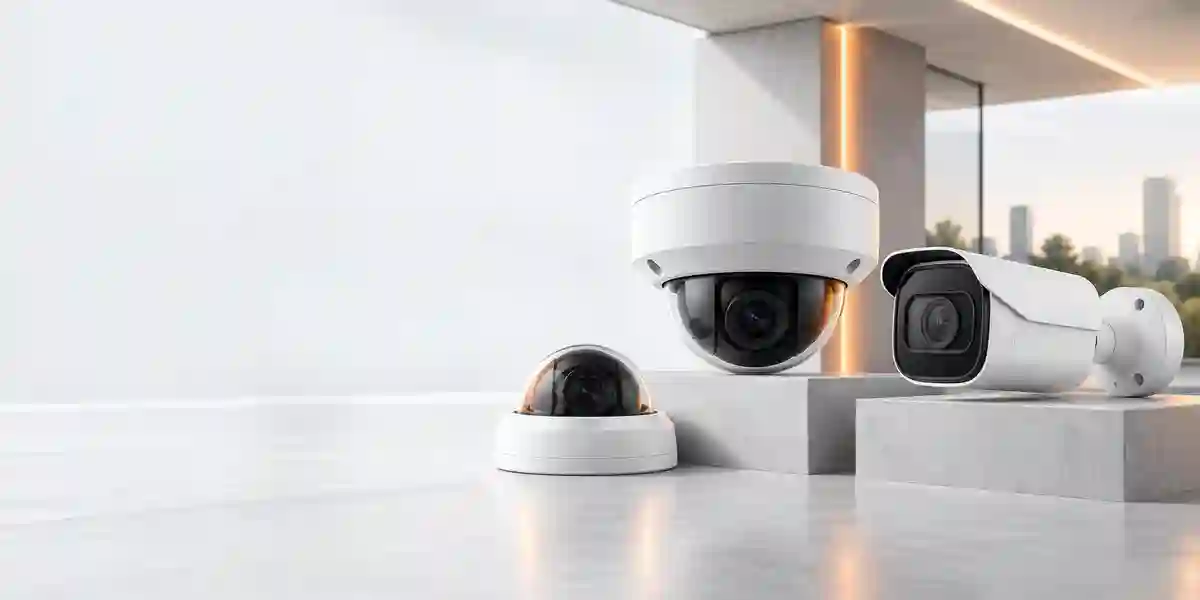
Quick product summary
Indoor entrances, corridors, reception areas, retail floors, office circulation areas and general business surveillance.
2MP CMOS imaging with Full HD 1920×1080 output and up to 30fps at supported settings.
Integrated IR illumination for night visibility up to 20m under suitable installation conditions.
PoE simplifies deployment by carrying power and data over compatible Ethernet infrastructure.
Product overview and buyer-fit guidance
The Hanwha QND-6012RG is positioned for indoor IP surveillance projects that need a compact dome form factor and a broad fixed view. The 2.8mm lens is particularly useful where the installer wants to cover a doorway, lobby, corridor junction, reception area, stock room entrance or general indoor zone without relying on optical zoom. Because the lens is fixed, the camera is easiest to specify when the required field of view is known before installation. For sites where the framing may need to be adjusted remotely after mounting, a varifocal model may be a better choice.
The camera uses H.265 and H.264 compression and supports multiple-stream network video. Hanwha’s WiseStream II technology is intended to improve bandwidth and storage efficiency when correctly configured. This matters for multi-camera projects because storage size is influenced by resolution, frame rate, scene activity, codec, bitrate settings and retention period. Buyers should therefore size the NVR and storage as part of the complete CCTV design rather than choosing a camera in isolation.
The QND-6012RG is an indoor dome. That distinction matters in Dubai and other markets where cameras may be exposed to rain, wash-down, direct weather or harsh external conditions. Outdoor requirements should be matched to a suitable weather-rated camera instead of assuming an indoor dome can be used outside. For installations with high vandal risk, also confirm whether the selected housing and mounting arrangement meet the required impact resistance.
Key features and business benefits
2MP Full HD detail
Up to 1920×1080 resolution gives a practical balance of image detail, network bandwidth and storage for everyday indoor surveillance.
Wide 2.8mm fixed lens
The wide field of view suits entrances, rooms, corridors and general-purpose coverage where close telephoto framing is not required.
20m IR illumination
Integrated infrared helps maintain usable monochrome video when ambient light falls, subject to scene reflectivity and installation conditions.
120dB WDR
Wide Dynamic Range can improve scenes with strong backlight, such as indoor entrances facing bright glass doors or windows.
Corridor view
90°/270° rotated viewing can make better use of pixels in vertical scenes such as hallways and narrow aisles when configured correctly.
PoE installation
Power over Ethernet can reduce separate power cabling, provided the network switch or injector has a compatible PoE standard and sufficient power budget.
Verified technical specifications
| Specification | Hanwha QND-6012RG |
|---|---|
| Camera type | 2MP indoor IR network dome |
| Image sensor | 1/2.8-inch 2MP CMOS |
| Maximum resolution | 1920 × 1080 |
| Lens | 2.8mm fixed focal |
| Approx. field of view | H 113.74° / V 61.5° / D 134.45° |
| IR range | Up to 20m |
| Wide Dynamic Range | 120dB |
| Video compression | H.265 / H.264 / MJPEG |
| Frame rate | Up to 30fps at supported resolutions/settings |
| Corridor view | Supported (90° / 270° rotation) |
| Power | PoE and 12V DC support reported for this model family; confirm final supply configuration before ordering |
| Certification note | RG variant is identified by Hanwha material as TTA-certified; confirm whether this certification is relevant to your project jurisdiction. |
Compatibility, configuration and deployment guidance
For a reliable deployment, confirm the complete video path: camera, PoE switch, VLAN design, NVR or VMS, storage capacity, client viewing software, time synchronisation and remote-access policy. The QND-6012RG is a network camera, so the network must be designed for continuous video traffic rather than treated like a small group of ordinary office endpoints. Managed switching is useful where CCTV traffic should be separated from business users through VLANs and where administrators need port monitoring or troubleshooting visibility.
Recorder compatibility should be confirmed before ordering. Native Hanwha recorders may provide the most complete access to supported camera functions, while third-party VMS and NAS platforms can vary in feature coverage. ONVIF-style interoperability can simplify basic streaming integration, but events, analytics, edge recording and camera-specific controls may not always map identically between platforms. If a customer is keeping an existing NVR, share its exact model and firmware version when requesting a quotation.
Mounting height and angle strongly affect the usefulness of a fixed 2.8mm lens. Wide-angle coverage captures more scene width but provides fewer pixels on distant subjects than a narrower lens. For identification-critical locations such as a controlled doorway, cash handling point or security desk, the camera should be positioned so the subject occupies enough of the frame. The installer should also avoid pointing the dome directly at strong reflective surfaces that can reduce IR performance at night.
Ideal customers and use cases
- Corporate offices needing discreet indoor dome coverage at entrances, lift lobbies and corridors.
- Retail stores monitoring checkout approaches, aisles, stock-room entrances and customer circulation areas.
- Clinics and healthcare facilities requiring indoor common-area monitoring while respecting privacy obligations.
- Schools and training centres covering reception zones, hallways and shared indoor spaces.
- Hotels and serviced facilities monitoring lobby circulation, back-office corridors and staff-only access approaches.
- Warehouses using indoor domes for office blocks, internal doors and enclosed operational zones while using suitable outdoor-rated models for exposed loading areas.
What to confirm before ordering
- Indoor mounting location and required field of view.
- Whether 2.8mm fixed framing is suitable or a varifocal lens is needed.
- Required recording days and storage capacity.
- NVR or VMS model and expected camera compatibility.
- PoE switch capacity, port availability and power budget.
- Low-light conditions and expected IR viewing distance.
- Required mounting accessories, back box or ceiling/wall adaptation.
- Project-specific regulatory or approval requirements in the installation jurisdiction.
- Quantity, project schedule and current product availability.
Comparison and related-model guidance
Choose the QND-6012RG when a wide 2.8mm fixed lens and straightforward indoor dome coverage match the scene. If the installation needs a narrower view, a different fixed-lens model can provide more focused framing. If the installer needs remote zoom and framing flexibility, a motorised varifocal dome such as a QND-6082-series option may be a better technical fit. If the camera will be outdoors or in an exposed loading area, consider an outdoor-rated QNV or QNO family instead. For higher-resolution forensic detail or advanced AI-based object classification, move to a newer higher-resolution Hanwha range rather than assuming a 2MP fixed-lens camera can meet every identification requirement.
FourTeck’s CCTV and access control systems guide and Dubai CCTV installation guidance can help buyers plan the camera together with storage, network switching and deployment requirements. A compatible PoE network can also be planned using the network switch solutions page. These are supporting resources rather than substitutes for confirming the exact camera model and project design.
Hanwha QND-6012RG Dubai
Dubai buyers searching for the Hanwha QND-6012RG usually need more than a model number. Commercial CCTV projects in offices, retail stores, clinics, education sites, hotels, warehouses and mixed-use buildings require the camera to match the site layout, recording platform and local project documentation. The QND-6012RG is best considered an indoor wide-angle dome for general scene coverage rather than a long-distance identification camera. Its 2.8mm fixed lens captures a broad view, so it can work well over an entrance lobby, reception approach, indoor corridor junction, small retail floor or room where the camera can be mounted close enough to the area of interest.
In Dubai, strong daylight entering through glass doors and windows can create difficult backlit scenes. The camera’s 120dB WDR is useful in these situations because it is designed to retain more information across bright and dark portions of the image. Even with WDR, placement matters. A camera installed directly against extreme glare, reflective glass or a bright exterior background may need careful exposure settings and angle adjustment. During night operation, integrated IR can provide visibility up to 20m, but the practical result depends on wall colour, ceiling height, reflective surfaces, subject clothing and scene geometry.
For new Dubai deployments, PoE is usually the cleanest way to power a network dome because one Ethernet run can carry video and power from a compatible switch. The switch should be sized for both the number of cameras and the total PoE load. Storage should also be calculated using the chosen codec, frame rate, recording schedule and retention period. Buyers replacing an existing camera should send the NVR model, switch model and mounting photos so compatibility and accessory requirements can be checked before purchase.
Regulatory requirements can vary by site type and project. Do not assume that a product certification from another jurisdiction automatically satisfies Dubai project requirements. Where SIRA or another authority requirement applies, the exact current model and approval status should be verified for the project before procurement. FourTeck can support product-selection and project-planning enquiries through FourTeck UAE and the FourTeck contact route.
Hanwha QND-6012RG UAE
Across the UAE, organisations often standardise CCTV equipment across multiple branches in Dubai, Abu Dhabi, Sharjah, Ajman, Ras Al Khaimah, Fujairah and other locations. The QND-6012RG can be considered where the requirement is consistent indoor 2MP dome coverage with a wide fixed field of view. Standardisation can simplify spare planning, recorder profiles, installer familiarity and documentation, but the camera still needs to be matched to each scene. A reception area in Abu Dhabi, a retail branch in Sharjah and a warehouse office in Jebel Ali may all need different positioning even when the same model is used.
For multi-emirate procurement, define the technical baseline before requesting a quotation. Useful information includes the number of cameras, mounting environment, required recording days, existing NVR or VMS, preferred network topology and whether remote monitoring is centralised. This lets suppliers determine whether a fixed 2.8mm dome is appropriate everywhere or whether some locations require varifocal, outdoor, higher-resolution or analytics-focused cameras. Mixing models intentionally is often better than forcing one model into every scene.
The QND-6012RG supports H.265/H.264 video and is suited to IP-based recording environments. A managed PoE switching design can keep camera traffic organised and make troubleshooting easier, especially for multi-floor offices and distributed sites. If footage retention is an important compliance or operational requirement, storage should be engineered rather than estimated casually. Camera bitrate, motion level, continuous versus event recording and redundancy all affect disk capacity.
UAE buyers should also confirm the required approvals, warranty path, product origin and logistics terms for the exact project rather than relying on generic online claims. FourTeck can assist with specification review and quote preparation through FourTeck UAE technology support. Customers planning a broader surveillance network can review FourTeck’s main technology platform for CCTV, networking, servers and infrastructure context.
Hanwha QND-6012RG Kenya
Kenya buyers evaluating the Hanwha QND-6012RG commonly include corporate offices, schools, healthcare facilities, hospitality businesses, retail outlets and organisations upgrading from analogue CCTV to IP video. For these projects, the camera’s 2MP resolution, wide 2.8mm lens and PoE support can make it a practical choice for general indoor surveillance. A key procurement question is whether the site already has suitable Ethernet cabling and PoE switching. Where network infrastructure is limited, the full project cost should include switches, uplinks, cabinets, UPS protection, storage and configuration rather than only the cameras.
Power reliability and network resilience are important considerations for Kenyan installations. PoE centralises camera power at the network cabinet, which can simplify backup-power planning because a UPS protecting the switch and recorder can keep multiple cameras running through brief outages. The UPS capacity must be designed for the actual load and desired runtime. For remote branches, secure remote access and monitoring should be planned carefully so cameras are not exposed directly to the public internet with weak credentials.
The QND-6012RG is intended for indoor use. Kenyan projects that include gates, external walls, parking areas, outdoor school grounds or open loading areas should use weather-rated models for those positions. Indoor domes can still serve entrances, reception spaces, corridors and internal operational areas. Where facial identification is a priority, camera placement and subject distance should be reviewed because wide-angle coverage spreads the available pixels across a larger scene.
Procurement teams should provide the NVR or VMS model, expected camera quantity and footage-retention target when requesting a quote. This allows compatibility and storage requirements to be assessed together. FourTeck supports Kenya enquiries through FourTeck Kenya, where customers can discuss network-camera projects, model selection and regional supply planning without assuming fixed stock or delivery timelines.
Hanwha QND-6012RG Kuwait
For Kuwait surveillance projects, the Hanwha QND-6012RG is most relevant to indoor commercial environments that need a compact 2MP dome with wide-angle coverage. Offices, clinics, retail stores, educational facilities, hospitality sites and indoor logistics areas can use a camera of this type for entrances, passageways and general monitoring. Because Kuwait projects may combine air-conditioned indoor spaces with extremely hot outdoor conditions, it is important to separate indoor camera requirements from external perimeter coverage and use appropriately rated models outside.
The 2.8mm lens gives a broad scene, so the model is useful when the target area is relatively close. If a site needs to monitor a narrow corridor from one end or identify details at greater distance, compare the expected pixels-on-target with a narrower fixed lens or varifocal option. For corridors, the camera supports rotated corridor-view presentation, which can allocate more of the image to the long vertical scene instead of wasting pixels on side walls.
Kuwait buyers often need the camera to fit an existing recorder, and that compatibility question should be handled before shipment. Basic video streaming may work across standards-based platforms, but advanced functions and event integration can vary. Send the recorder make, model, firmware and current camera list when asking for assistance. If the project is new, choose the NVR and storage at the same time as the cameras and calculate retention using realistic bitrates rather than a generic hard-drive estimate.
Network resilience, UPS capacity and secure remote access should be included in the project scope. PoE can simplify the wiring, but the switch must supply enough power and have suitable uplink bandwidth. Organisations in Kuwait can use FourTeck Kuwait to discuss model suitability, quantities, related network equipment and quotation requirements. Current stock, shipment terms and project-specific warranty arrangements should be confirmed at quotation stage.
Hanwha QND-6012RG Ghana
Ghana organisations considering the Hanwha QND-6012RG may be upgrading branch offices, schools, hospitals, retail sites, hotels, banks, warehouses or administrative facilities to IP surveillance. The camera is designed for indoor use and provides a wide 2.8mm view with 2MP Full HD video. It can be effective for general visibility across entrances and circulation areas, but it should not automatically be selected for distant perimeter coverage or outdoor exposure. Those scenes call for purpose-built outdoor models and lens choices.
When planning a Ghana deployment, the camera network deserves the same attention as the camera specification. PoE switching can simplify power distribution, while managed switches allow VLAN separation and easier diagnostics. In locations where mains instability is a concern, central UPS protection for the NVR, network switch and core equipment can improve continuity. The actual backup runtime should be calculated from load and battery capacity, especially if the system must continue recording during outages.
Storage is another procurement point that can be missed when buyers focus only on camera quantity. H.265 can reduce storage demand compared with less efficient compression under appropriate settings, but actual consumption varies with motion, noise, frame rate and bitrate. A busy retail floor may generate different storage requirements from a quiet office corridor even with the same camera. Define the retention period first, then size disks with a safety margin and consider whether redundant recording is required.
For projects using an existing third-party VMS or NVR, compatibility should be confirmed against the exact model and software version. Remote access should use secure credentials, encrypted services where supported and sensible firewall rules instead of exposing camera web interfaces directly. Buyers in Accra and other Ghana locations can contact FourTeck Ghana for product-selection and quotation support. Share the site type, camera count, recorder details and required retention period for a more accurate recommendation.
Hanwha QND-6012RG Uganda
Uganda buyers looking at the Hanwha QND-6012RG may need an indoor CCTV camera for offices, schools, clinics, hotels, retail stores, financial service locations and operational buildings. Its 2MP sensor and 2.8mm fixed lens support broad indoor coverage, while integrated IR helps at night or in low-light spaces. The camera’s strengths are simplicity, wide-angle coverage and network deployment rather than optical zoom. Buyers should therefore compare the proposed mounting point with the area that needs to be recognised, not only the area that needs to be seen.
For Kampala offices or branch networks, PoE can reduce local power-adapter clutter and centralise camera power in the rack. This design also makes UPS protection easier because a protected PoE switch can feed multiple cameras. The switch should have enough total PoE budget and at least one suitable uplink for the expected aggregate video traffic. Where several buildings are linked, fibre or properly engineered wireless backhaul may be needed depending on distance and site conditions.
The QND-6012RG’s 120dB WDR can help when indoor cameras face entrances with bright daylight behind the subject. Configuration still matters: installers should test exposure, IR behaviour and focus after mounting rather than relying solely on factory defaults. If the camera will cover a long corridor, corridor view can improve use of the image area. For external gates, open compounds and rain-exposed positions, a weather-rated alternative should be selected.
Uganda procurement teams should also specify whether an existing NVR will be retained. Compatibility, available licences, supported resolution, camera count and storage capacity can determine whether a simple camera replacement is possible. FourTeck supports regional enquiries through FourTeck Uganda. Customers can submit quantity, site location, NVR details and required accessories for configuration review and quotation without relying on unverified assumptions about local stock or delivery dates.
Hanwha QND-6012RG Nigeria
Nigeria CCTV projects range from compact office systems to multi-branch retail, education, healthcare, hospitality and logistics deployments. The Hanwha QND-6012RG fits the indoor portion of these systems where a 2MP wide-angle dome is appropriate. It can cover reception areas, corridors, indoor access points, cashier approaches and administrative spaces. The fixed 2.8mm lens makes planning important because framing is determined primarily by mounting position rather than by motorised zoom.
For Lagos, Abuja and other urban deployments, network and power design can be as important as the camera itself. PoE allows power and data to share the Ethernet cable, but a CCTV switch should be selected with enough PoE capacity and uplink performance. Where power interruptions are a known risk, backup-power design should cover the NVR, switches, router or firewall and any essential viewing workstation. Recording continuity is only as strong as the weakest component in that path.
Security hardening should be part of deployment. Change default credentials, use strong unique passwords, keep firmware under a controlled maintenance process, restrict management access to trusted networks, and avoid direct public exposure of camera interfaces. If remote mobile or desktop viewing is required, use the approved recorder or VMS method and appropriate network security controls. These steps matter especially for multi-site systems where cameras become part of a wider enterprise network.
The camera’s integrated IR covers up to 20m under suitable conditions, while WDR assists challenging entrances and mixed-light scenes. Outdoor compounds and perimeter fencing should use outdoor-rated cameras instead. Buyers can submit project details through FourTeck Nigeria for model comparison, NVR planning and quotation support. Include camera quantity, retention days, desired remote-viewing method and any existing recorder information to reduce compatibility risk.
Hanwha QND-6012RG Seychelles
Seychelles surveillance projects often need equipment selected with careful attention to indoor versus outdoor conditions, site connectivity and long-term maintenance access. The Hanwha QND-6012RG is an indoor dome and is best used inside offices, hotels, retail spaces, administrative facilities, reception areas, corridors and other enclosed locations. Coastal exposure, humidity, salt air and weather can be demanding, so external cameras should be selected from models specifically rated for outdoor environmental conditions and installed with suitable accessories and cable protection.
For indoor hotel or commercial monitoring, the QND-6012RG’s 2.8mm fixed lens offers broad coverage, which can reduce blind areas in compact spaces. Integrated IR supports low-light operation up to 20m, and WDR can help where indoor spaces look toward bright exterior openings. The installer should still test the real scene because glass reflections, polished surfaces and nearby walls can affect night IR performance. A small change in mounting angle can materially improve image quality.
Island deployments may also place greater emphasis on remote administration and spare planning. Where technical visits are less convenient, standardising models, documenting IP addresses, backing up recorder settings and keeping suitable spare accessories can reduce service delays. Secure remote access should be designed through the NVR, VMS or protected network rather than by exposing individual cameras to the internet. UPS protection is also worth considering for the PoE switch, recorder and network gateway.
When requesting a Seychelles quotation, provide the camera quantity, site type, recorder preference, storage-retention target and whether equipment must integrate with an existing network. This helps determine whether the QND-6012RG is appropriate or whether other Hanwha models should be mixed into the design. Regional enquiries can be routed through FourTeck Africa for product assistance and project planning. Availability, freight, taxes and warranty route should be confirmed specifically for the required shipment.
Related Hanwha and FourTeck resources
For camera-family selection, FourTeck can help compare Q-Series fixed domes with varifocal domes, outdoor vandal domes, bullet cameras and higher-resolution Hanwha options according to scene distance, environmental rating and analytics requirements. Verified individual Hanwha product-page URLs on the FourTeck site were not available during preparation of this page, so no guessed product URLs are inserted here. The following verified FourTeck resources are included instead for CCTV system planning and regional assistance.
Brand and system planning guidance.CCTV Installation Dubai
Deployment, storage and site-planning guidance.Network Switch Solutions
PoE and managed switching for camera networks.FourTeck UAE
Dubai and UAE technology project enquiries.FourTeck Kenya
Kenya product and project assistance.FourTeck Kuwait
Kuwait security and IT enquiries.FourTeck Ghana
Ghana regional assistance.FourTeck Uganda
Uganda surveillance project enquiries.FourTeck Nigeria
Nigeria CCTV and networking assistance.FourTeck Africa
Regional support route including Seychelles enquiries.
Why contact FourTeck?
A camera model should be selected as part of a working surveillance system. FourTeck can review the requested model together with scene coverage, compatible recording, PoE switching, storage, mounting accessories and regional procurement needs. This helps customers avoid ordering a fixed-lens camera for a scene that needs optical flexibility, using an indoor unit outdoors, under-sizing storage or overlooking network capacity. Share the project location, quantity, existing recorder details and intended mounting areas so the configuration can be reviewed before quotation.
Hanwha QND-6012RG FAQ
What resolution does the QND-6012RG provide?
It is a 2MP network camera with a maximum Full HD resolution of 1920×1080. This resolution is suitable for many indoor monitoring tasks, but identification performance still depends on camera distance, lens field of view, mounting angle and lighting.
Is the QND-6012RG suitable for outdoor use?
It is positioned as an indoor dome camera. For rain-exposed walls, parking areas, gates, loading bays or other external locations, select a Hanwha model with the required environmental and impact ratings instead.
How far can its infrared illumination reach?
Hanwha material lists an IR viewing distance of up to 20 metres. Real results vary with scene reflectivity, camera angle, nearby walls, ambient light and subject position, so night performance should be tested after installation.
What lens does it use?
The camera uses a 2.8mm fixed-focus lens with a wide field of view. It is appropriate for broad indoor coverage, but it does not provide motorised optical zoom. A varifocal model is better where framing must be adjusted remotely.
Does it support PoE?
Yes, PoE is reported for this model family and allows power and network data over compatible Ethernet infrastructure. Confirm the switch standard, available port capacity and total PoE budget during system design.
Can it be used in a corridor?
Yes. Hanwha documentation identifies corridor-view support with 90°/270° rotation. This can make more efficient use of the frame in long narrow scenes such as hallways, subject to recorder and viewing-platform support.
Does the camera support H.265?
Yes. H.265, H.264 and MJPEG support are associated with this platform. H.265 can help reduce bandwidth and storage demand, but the actual benefit depends on bitrate, scene motion, resolution, frame rate and recorder configuration.
Will it work with my existing NVR?
Compatibility depends on the NVR or VMS model, firmware and supported integration method. Basic streaming compatibility does not guarantee every event or camera function. Share the exact recorder model before ordering so compatibility can be checked.
Is QND-6012RG SIRA approved in Dubai?
Do not assume approval from the model name or from certifications used in another market. If a Dubai project requires SIRA-listed equipment, verify the exact current model against the applicable SIRA documentation before procurement.
How do I request a quote?
Send FourTeck the project location, required quantity, intended indoor mounting areas, existing NVR or VMS details, target recording period and any accessory requirements. Current price and availability can then be confirmed for the actual requirement.
Need help specifying the Hanwha QND-6012RG?
Share your camera quantity, site type, recorder platform, required recording days and installation location. FourTeck can help assess whether this fixed 2.8mm indoor dome fits the project or whether another Hanwha model is more suitable.
Reviews
There are no reviews yet.