

Hanwha QND-8080RG Dubai
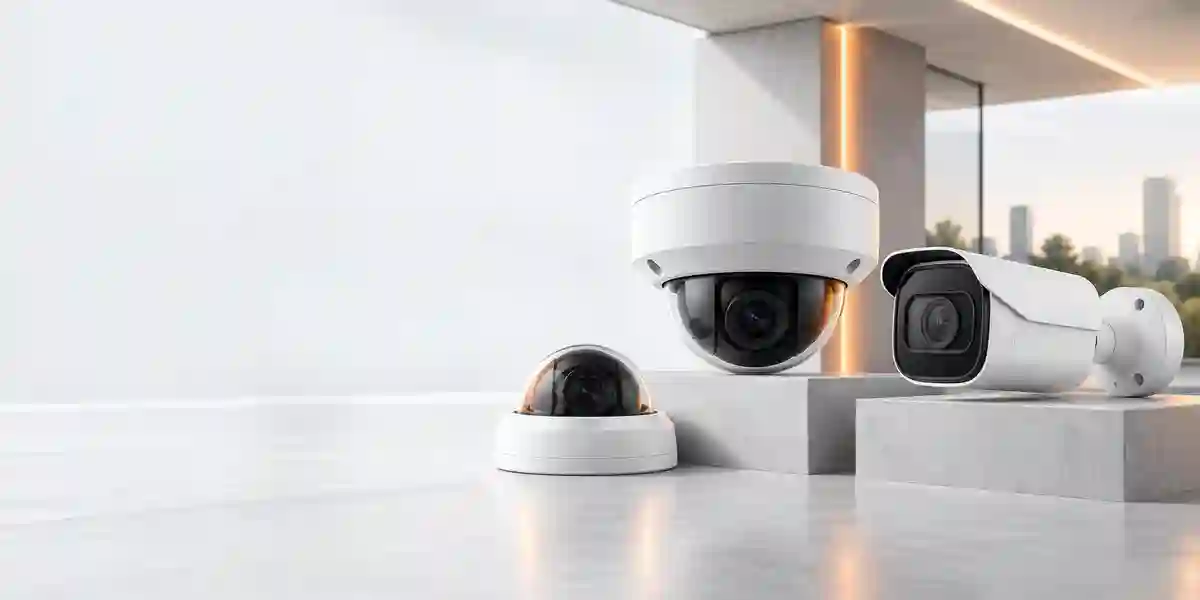
The Hanwha QND-8080RG is a 5MP network IR dome camera for indoor security applications that need adjustable coverage rather than a fixed viewing angle. Its 3.2–10mm motorized varifocal lens helps installers tune the scene after mounting, while 20m infrared illumination, 120dB WDR and H.265/H.264 compression support practical surveillance in corridors, receptions, retail areas, office floors and other commercial spaces.
Quick Product Summary
For buyers comparing indoor Hanwha dome cameras, the QND-8080RG is especially relevant when a fixed lens may not provide enough flexibility. The motorized 3.1x varifocal lens allows the field of view to be adjusted to suit the intended coverage zone. The camera supports 5MP video at up to 30 frames per second, making it suitable for business environments where detail and smooth motion are important. Infrared illumination supports low-light monitoring, and wide dynamic range helps with scenes that contain both bright and dark areas.
Indoor network IR dome
5MP, up to 2592 × 1944
3.2–10mm motorized varifocal
Infrared illumination up to 20m
Product Overview and Buyer-Fit Guidance
The Hanwha QND-8080RG belongs to Hanwha Vision’s Q Series network camera family. It is designed for indoor dome-camera applications and uses a 1/2.8-inch CMOS sensor with a maximum 5MP resolution. The distinguishing feature compared with fixed-lens alternatives in the same family is its 3.2–10mm motorized varifocal lens. This gives designers and installers more room to set a wider scene or narrow the view toward a doorway, counter, passage, reception point or other defined zone.
The camera supports day/night operation with infrared illumination, 120dB WDR and Hanwha’s WiseStream technology for bandwidth-efficient video delivery. It can use H.265, H.264 and MJPEG compression, and it supports multiple streaming. A microSD/SDHC/SDXC slot allows local edge recording where that function is required. PoE simplifies installation by carrying power and network traffic on a single Ethernet cable when a compatible PoE switch or injector is used.
Before choosing this model, buyers should confirm that the installation point is appropriate for an indoor dome camera, that the intended field of view can be achieved within the lens range, and that the selected NVR or video-management platform supports the required resolution, codec, frame rate and ONVIF profile. Outdoor, exposed, high-vandalism or long-range applications may need a different housing or camera family.
Key Features and Business Benefits
5MP Video Detail
A maximum resolution of 2592 × 1944 provides more image detail than conventional 1080p surveillance, helping operators review faces, objects and activity within the designed scene.
Motorized Varifocal Lens
The 3.2–10mm lens gives installers flexibility to adjust framing after physical mounting, useful when exact distances and viewpoints differ from the original plan.
Infrared Night Monitoring
Integrated IR illumination supports viewing in low-light and dark indoor areas, with a published viewable distance up to 20 metres under suitable conditions.
120dB WDR
Wide dynamic range helps retain useful detail when bright windows, doorways or lighting differences create high-contrast scenes.
Efficient Compression
H.265 and H.264 support helps network and storage planning, while WiseStream can reduce unnecessary bitrate depending on scene and configuration.
PoE Installation
Power over Ethernet can reduce separate power cabling at the camera point when used with suitable PoE network infrastructure.
Verified Technical Specifications
| Specification | Hanwha QND-8080RG |
|---|---|
| Imaging sensor | 1/2.8-inch CMOS |
| Maximum resolution | 5MP, 2592 × 1944 |
| Maximum frame rate | Up to 30fps |
| Lens | 3.2–10mm motorized varifocal, 3.1x |
| Minimum illumination | 0.15 lux colour; 0 lux with IR LED on |
| IR viewable length | Up to 20m |
| Wide dynamic range | 120dB |
| Compression | H.265, H.264, MJPEG |
| Edge storage | microSD / SDHC / SDXC support |
| Network interoperability | ONVIF Profile S/G/T, SUNAPI, Hanwha Vision Open Platform |
| Power | PoE |
| Viewing functions | Day/Night, Hallway View, WDR, motion/tamper/defocus detection |
Final performance depends on scene conditions, firmware, recorder settings, network design and selected configuration. Confirm the current regional datasheet before tender or procurement approval.
Compatibility, Configuration and Deployment Guidance
The QND-8080RG is an IP camera, so the project should be designed as part of the network rather than treated as a standalone analogue device. Confirm the PoE budget of the switch, available Ethernet ports, VLAN design where used, NVR channel capacity, supported codecs and storage requirement. When integrating with a third-party NVR or VMS, ONVIF support improves interoperability, but buyers should still check whether all desired functions are available through that platform rather than assuming every feature will be exposed.
Storage design should consider camera count, resolution, frame rate, compression, scene activity, recording schedule and the number of retention days required. Edge storage can provide a useful local recording layer, but it should not automatically be treated as a replacement for a central recorder where continuous business recording or centralized evidence management is required.
For installation, verify ceiling type, mounting strength, cable route, camera height, expected viewing angle, lighting direction and service access. The motorized lens provides framing flexibility, but proper placement remains essential. For entrances with strong exterior light, WDR should be configured and tested on site. For corridor deployments, Hallway View may provide a more useful portrait-oriented image when supported by the recorder and monitoring layout.
Ideal Customers and Use Cases
The Hanwha QND-8080RG can fit corporate offices, retail stores, clinics, schools, hotels, reception areas, corridors, stock rooms, finance areas, server-room entrances and other indoor commercial locations. Its main value is the combination of 5MP image detail and an adjustable motorized lens in a compact dome format. It can be particularly useful where the installer does not want to commit to a fixed focal length before the final scene has been physically verified.
For multi-camera projects, the QND-8080RG can form part of a mixed Hanwha architecture with fixed-lens domes for simple coverage, bullet cameras for more visible directional coverage, vandal-resistant models for exposed areas and PTZ or specialized cameras where active monitoring or long-range viewing is required. A site plan should determine the camera mix rather than using one model everywhere.
What to Confirm Before Ordering
- Confirm that the installation location is suitable for an indoor dome camera.
- Confirm that 3.2–10mm provides the required horizontal scene coverage and target detail.
- Check NVR or VMS support for 5MP recording, H.265/H.264 streams and required ONVIF functions.
- Calculate PoE switch capacity and uplink bandwidth for the full camera count.
- Define the required retention period and storage capacity.
- Confirm whether microSD edge storage is required and the supported card specification.
- Check mounting accessories and ceiling construction before installation.
- Confirm whether local regulations, privacy rules or project approvals affect camera placement or recording.
- Request current regional availability, lead time and commercial terms rather than relying on an old listing.
Comparison and Related-Model Guidance
Within the Q Series, buyers may compare the QND-8080RG with fixed-lens 5MP dome options when cost and simplicity are more important than adjustable framing. A fixed 2.8mm lens is typically chosen for a consistently wide scene, while the QND-8080RG offers a motorized 3.2–10mm range for installations where the exact field of view needs to be tuned. For outdoor or vandal-prone positions, buyers should compare QNV or QNO families that offer housings designed for more exposed environments. For higher analytics or advanced low-light requirements, newer AI-enabled or higher-tier Hanwha camera families may be more appropriate.
FourTeck can help review the required resolution, lens, night-view distance, environmental rating, recording platform and accessories before a model is finalized. For wider system planning, see CCTV installation planning in Dubai and CCTV and access control solutions in the UAE.
Hanwha QND-8080RG Dubai
Dubai buyers looking for the Hanwha QND-8080RG commonly need an indoor camera for offices, retail units, hospitality properties, business centres, clinics, schools, showrooms and warehouse administration areas. In these environments, camera choice is rarely only about megapixels. A practical design has to consider ceiling height, doorway position, reflective glass, strong exterior light, after-hours lighting, recorder location and the ability of the network to provide stable PoE to every camera. The QND-8080RG is useful where a dome format is preferred but a fixed 2.8mm lens would be too restrictive. Its motorized 3.2–10mm lens allows the installer to refine the view during commissioning instead of relying entirely on pre-installation estimates.
For Dubai offices with glass façades or bright entrances, 120dB WDR is particularly relevant because the scene may include a dark interior and a strongly illuminated background. For reception desks, corridors, lift lobbies and internal access points, 5MP resolution can support detailed playback when the camera is positioned correctly. Infrared illumination up to 20 metres helps when indoor lights are reduced after working hours, although IR performance should always be verified against wall reflections, ceiling surfaces and the exact scene.
Procurement teams should ask for the exact QND-8080RG model code, verify recorder compatibility, confirm PoE capacity and calculate recording storage before ordering. They should also distinguish the RG variant from similarly named QND-8080R models used in other markets. FourTeck can help evaluate the complete requirement rather than treating the camera as an isolated purchase. Share the site type, camera count, preferred recorder, target retention period and whether new cabling is required. For Dubai security planning, use the FourTeck technology portal, FourTeck UAE resources and Dubai IT services guidance to coordinate camera, network and installation requirements.
Hanwha QND-8080RG UAE
UAE-wide procurement often involves more than one emirate, branch or facility, so standardization becomes important. A business may want the same camera family in Dubai, Abu Dhabi, Sharjah, Ajman or other locations to simplify recorder settings, spare planning, user training and maintenance. The Hanwha QND-8080RG can be considered for indoor 5MP dome coverage where adjustable focal length is useful and the network can support PoE camera deployment. Before standardizing it across multiple sites, the project team should confirm that each location has similar lighting, mounting conditions and required viewing distances.
For a UAE multi-site rollout, a structured bill of materials should include cameras, compatible mounting hardware, PoE switches, NVR or VMS capacity, storage, UPS protection and patching. If some positions are outdoor, semi-outdoor or vandal-prone, those points should use appropriately rated Hanwha models rather than forcing the indoor dome into every location. The result is a more maintainable system and reduces the chance of replacing cameras later because the housing or lens was unsuitable.
Customers also ask whether a camera can be added to an existing recorder. The answer depends on the recorder model, firmware, channel licensing, supported resolution, ONVIF implementation and available throughput. An ONVIF-compatible camera may connect successfully but still expose fewer analytics or configuration controls through a third-party recorder. For critical projects, test compatibility before bulk procurement. UAE buyers should also agree on recording retention, user permissions and remote-access policy before handover. FourTeck can assist with product selection, network readiness and integrated surveillance planning through FourTeck UAE and the broader FourTeck regional platform. Ask for current commercial and availability information based on the required quantity rather than assuming stock or delivery timing from a web listing.
Hanwha QND-8080RG Kenya
Kenya buyers considering the Hanwha QND-8080RG may be planning CCTV for Nairobi offices, retail operations, schools, healthcare facilities, hospitality properties, branch networks or indoor areas within logistics and industrial sites. In many such projects, the key question is not simply whether the camera provides 5MP resolution, but whether the overall network and recording design can sustain the required number of streams reliably. A 5MP H.265 camera can be bandwidth efficient, but actual bitrate depends on scene movement, image settings, compression and frame rate. Storage should therefore be calculated from the intended configuration rather than using a generic hard-drive estimate.
The motorized 3.2–10mm lens is useful where an installer may need to adjust the framing after the camera is mounted. For example, a wider angle can cover an office reception or corridor junction, while a narrower setting can concentrate pixels on a doorway or counter. Infrared illumination supports night viewing in darker indoor areas, but reflective surfaces and short walls can affect IR results. Camera placement should be tested under both daytime and after-hours conditions.
Kenya procurement teams should also consider spare strategy and interoperability. If the site already uses a particular NVR or VMS, verify the QND-8080RG with that platform before a large order. If a new system is being built, plan PoE switches, UPS, secure network segmentation, recording storage and remote access at the same time as the camera count. Outdoor points should use suitable weather-rated models. Buyers can use FourTeck Kenya for regional assistance and FourTeck Africa for broader project coordination. Share the city, site type, required camera quantity, existing recorder details and retention target so the configuration can be reviewed before purchase.
Hanwha QND-8080RG Kuwait
Kuwait organizations evaluating the Hanwha QND-8080RG may need indoor surveillance for corporate offices, retail stores, clinics, educational facilities, hotels, warehouses, financial areas or branch operations. Indoor commercial environments can still present demanding lighting, especially around glazed entrances, brightly lit shopfronts and transition zones between daylight and interior illumination. The camera’s 120dB WDR is useful for these scenes, while its 5MP resolution supports detailed playback when camera height and lens framing are appropriate.
The 3.2–10mm motorized varifocal lens helps project teams adapt one camera model to several indoor viewpoints without relying on a single fixed field of view. This flexibility does not remove the need for a site plan: the camera should still be placed at a height and angle that provide usable facial or activity detail for the intended purpose. For long corridors, Hallway View may improve the use of available pixels when the recorder and display workflow support portrait-oriented video.
Kuwait buyers should check network and recorder architecture early. Each camera requires a stable Ethernet path and PoE supply, and the total number of 5MP streams affects switch uplinks and recorder throughput. Storage capacity should be based on retention policy and configured bitrate. If the organization uses a third-party VMS, test ONVIF functions and any required event integration before finalizing the order. Camera firmware and credential policy should also be included in the handover process. For regional enquiry support, use FourTeck Kuwait. For cross-border or multi-country deployments, FourTeck can help coordinate product and infrastructure discussions. Ask for current availability and commercial terms against the exact project quantity and model code.
Hanwha QND-8080RG Ghana
Ghana businesses searching for the Hanwha QND-8080RG often need a dependable IP camera for indoor areas such as offices, bank branches, educational facilities, retail stores, clinics, hotels, reception zones and controlled warehouse spaces. The model’s 5MP sensor provides detailed video, while the motorized varifocal lens lets installers refine the scene from 3.2mm to 10mm. That makes it easier to adapt the camera to different room depths or to focus coverage on entrances, counters and internal passageways.
For Accra and other commercial locations, the surveillance network should be planned with the same care as any business IT system. PoE switches need enough power budget for all connected cameras, uplinks need enough capacity, and the NVR must support the required recording resolution and total incoming throughput. Where internet connectivity is variable, local recording remains important for reliable evidence retention. Remote viewing should be designed securely rather than exposing cameras directly to the public internet.
Power continuity can also be an important part of a practical CCTV design. Where continuous recording is required, the NVR, network switches and key cameras should be included in the UPS plan according to the customer’s operating requirements. Edge storage can add resilience but should be sized and configured correctly. In dark interior zones, the camera’s IR illumination can support visibility, but a night test should confirm that walls, glass or nearby surfaces do not cause excessive reflection.
Ghana buyers can request regional assistance through FourTeck Ghana and wider project support through FourTeck Africa. Share the facility type, camera count, whether the installation is new or an upgrade, existing recorder details and desired storage days. This gives the project team the information needed to check compatibility and recommend a suitable architecture without making assumptions about stock, delivery or warranty terms.
Hanwha QND-8080RG Uganda
Uganda customers may consider the Hanwha QND-8080RG for indoor CCTV projects in offices, schools, clinics, hotels, retail branches, administrative areas, financial offices and other business facilities. The camera combines 5MP video with a motorized 3.2–10mm lens, allowing installers to adjust the field of view after mounting. This can be valuable when floor plans provide only approximate camera positions or when the final mounting height changes during construction.
A successful deployment should begin with scene objectives. A camera used to observe general movement needs a different lens position from one intended to capture clearer detail at a doorway. The QND-8080RG can support both wider and narrower indoor views within its lens range, but the correct position should be determined by distance, target size and lighting. Infrared illumination supports darker scenes up to the published range, while 120dB WDR helps where bright exterior light enters the image through doors or windows.
For Kampala and regional business sites, network reliability and power planning should be included in the CCTV scope. Use appropriate Cat6 cabling, PoE switches with adequate capacity, surge and UPS planning where required, and an NVR sized for 5MP streams. Organizations with more than one branch should consider a consistent naming, addressing, password and user-permission standard so that remote administration remains manageable. When using third-party recorders, test ONVIF connectivity and required functions before bulk purchase.
FourTeck can assist with Uganda enquiries through FourTeck Uganda and can coordinate broader requirements through FourTeck Africa. Buyers should provide the project location, number of cameras, recorder preference, recording-retention target and whether installation services are required. Current availability and commercial terms should be confirmed for the exact requested quantity.
Hanwha QND-8080RG Nigeria
Nigeria surveillance projects can range from a small office system to multi-floor commercial buildings, retail chains, healthcare facilities, educational campuses and industrial administration areas. The Hanwha QND-8080RG is a 5MP indoor IR dome camera that can suit positions where a discreet ceiling-mounted format and adjustable field of view are required. Its 3.2–10mm motorized lens makes it easier to refine coverage during commissioning, which can reduce the risk of choosing a fixed focal length that is too wide or too narrow for the actual scene.
For Lagos, Abuja and other business centres, system resilience is often as important as camera specifications. The camera should connect through properly designed PoE switching, and the recorder, switches and network equipment should be included in power-protection planning according to the customer’s requirements. Storage calculations should use expected bitrate, camera count and retention days. A business that needs 30 days of continuous 5MP recording requires a very different storage design from a site using event-based recording for shorter retention.
Security teams should also decide who can view live video, export footage and change settings. User accounts should be separated by role, default credentials changed, and remote access configured through a secure method. If the camera is being added to an existing third-party NVR, verify 5MP support, codec support and ONVIF interoperability. Outdoor or high-vandalism areas should use alternative Hanwha models with suitable environmental and impact protection rather than the indoor dome.
Nigeria customers can use FourTeck Nigeria for local-market enquiries and FourTeck Africa for regional coordination. Provide the site type, quantity, city, recording platform and installation scope when requesting a quote. This helps verify the right camera mix and infrastructure without relying on unsupported assumptions about current stock or lead time.
Hanwha QND-8080RG Seychelles
Seychelles businesses considering the Hanwha QND-8080RG may need indoor surveillance for hotels, resorts, offices, retail premises, healthcare facilities, schools, administration buildings or controlled service areas. Because many properties combine open architecture with strong daylight, indoor cameras may face high-contrast scenes even when they are not installed outdoors. The QND-8080RG’s 120dB WDR can help manage entrances, windows and transitional spaces where the background is significantly brighter than the subject.
The 5MP resolution is useful where operators need more detail than standard Full HD, while the motorized 3.2–10mm lens allows the installer to adjust how much of the scene is visible. In a hotel lobby, a wider view may be appropriate; at a staff access door, a narrower view may provide more useful detail. Infrared illumination supports darker indoor spaces after closing hours, but reflective surfaces should be checked during commissioning because polished finishes and glass can affect IR image quality.
For island deployments, buyers should plan spares, recorder capacity and network infrastructure carefully, especially when procurement cycles or logistics differ from mainland markets. Confirm the exact model and required quantity before ordering, and avoid assuming that a similar QND variant has identical lens or certification characteristics. If cameras are installed in areas exposed to salt air, moisture or weather, select an appropriately rated model rather than treating an indoor dome as an outdoor device.
FourTeck can support Seychelles enquiries through FourTeck Africa and the central FourTeck platform. Share the property type, indoor and outdoor camera counts, proposed NVR or VMS, storage-retention requirement and whether the project needs network switches or installation accessories. The final bill of materials should be confirmed against current availability and the physical conditions at each camera point.
Related FourTeck Security and Infrastructure Resources
A camera project is usually connected to switching, cabling, storage, power and access-control decisions. These FourTeck resources can help buyers plan the wider environment:
CCTV Installation Dubai
Planning guidance for camera selection, recorder sizing, cabling, installation and storage.
CCTV & Access Control
Security-system planning for organizations combining video surveillance with controlled entry.
Network Switch Planning
Guidance for PoE switching, uplinks, VLANs and CCTV network capacity.
Business Networking
Infrastructure planning for secure, scalable IP networks that can carry surveillance traffic.
Relevant regional contact routes include FourTeck UAE, FourTeck Kenya, FourTeck Kuwait, FourTeck Ghana, FourTeck Uganda, FourTeck Nigeria and FourTeck Africa.
Why Contact FourTeck
FourTeck can help buyers evaluate the camera as part of a complete CCTV requirement, including product selection, PoE network design, recorder sizing, storage planning, installation scope and regional procurement coordination. The aim is to match the model to the real scene and infrastructure rather than choose equipment from specifications alone. For a useful proposal, share the site type, city or country, number of cameras, existing recorder or VMS, required recording days and whether the project includes cabling, switches, UPS or installation.
Hanwha QND-8080RG FAQs
What resolution does the QND-8080RG provide?
The Hanwha QND-8080RG supports a maximum 5MP resolution of 2592 × 1944 at up to 30 frames per second, depending on the configured codec and video profile. This resolution can provide more detail than 1080p when the camera is correctly positioned and the lens is adjusted for the target scene.
Is the lens fixed or adjustable?
It uses a 3.2–10mm motorized varifocal lens with approximately 3.1x optical adjustment. This allows the field of view to be changed during commissioning so the installer can move between a wider scene and a more concentrated view without physically replacing the lens.
Does the QND-8080RG have night vision?
Yes. The camera has integrated infrared illumination with a published viewing distance up to 20 metres. Actual night performance depends on the scene, surfaces, mounting angle and ambient conditions, so installers should test the image after final positioning.
Does it support PoE?
Yes. The QND-8080RG supports Power over Ethernet, allowing network data and electrical power to share one Ethernet cable when connected to a compatible PoE switch or injector. The project should still confirm total PoE budget for all cameras.
Can it connect to a third-party NVR?
The camera supports ONVIF profiles, which can assist interoperability with third-party recorders and VMS platforms. However, ONVIF does not guarantee that every advanced camera feature will be available. Verify resolution, codec, live view, recording and event functions with the exact recorder model before bulk deployment.
Does the camera have WDR?
Yes. The published wide dynamic range is 120dB. WDR is useful for high-contrast scenes such as entrances with bright daylight outside and a darker interior, but the feature should be configured and visually tested for the actual installation location.
Can it record to a microSD card?
The QND-8080RG supports microSD/SDHC/SDXC edge storage. Edge recording can be useful for local redundancy or event storage, but card capacity, endurance and recording settings should be selected for the required workload. Central NVR or VMS recording may still be needed for business retention policies.
Is the QND-8080RG suitable for outdoor installation?
This model is best treated as an indoor dome camera. For outdoor, exposed or vandal-prone positions, select a Hanwha model with the appropriate IP weather rating and IK impact rating. Camera housing suitability should be confirmed for every mounting position.
What should I check before buying in Dubai?
Confirm the exact QND-8080RG model code, lens coverage, indoor mounting location, NVR or VMS compatibility, PoE capacity, storage-retention requirement and accessories. Ask FourTeck for current project availability and commercial terms based on quantity rather than assuming stock or delivery time.
What is the difference between QND-8080RG and fixed-lens Q Series domes?
The main practical difference is the motorized 3.2–10mm varifocal lens. Fixed-lens models offer a predetermined field of view and can be simpler for standardized wide-angle positions. The QND-8080RG gives installers more freedom to tune framing where distances or target areas vary.
Need Help With the Hanwha QND-8080RG?
Share your project location, camera quantity, site type, existing NVR or VMS and required recording retention. FourTeck can help review model suitability, compatibility, PoE infrastructure, storage and installation scope before procurement.
Reviews
There are no reviews yet.