

Hanwha QNO-8020R Dubai
The Hanwha Vision QNO-8020R is a 5MP network IR bullet camera for customers who need clear fixed-view surveillance with outdoor-ready protection, integrated infrared illumination and efficient IP-based deployment. Its 4mm fixed lens, up to 30fps H.265/H.264 video, 120dB wide dynamic range, 25m IR range, PoE connectivity and IP66/IK10 housing make it suitable for entrances, perimeter lines, loading areas, corridors, building exteriors and other defined monitoring points.
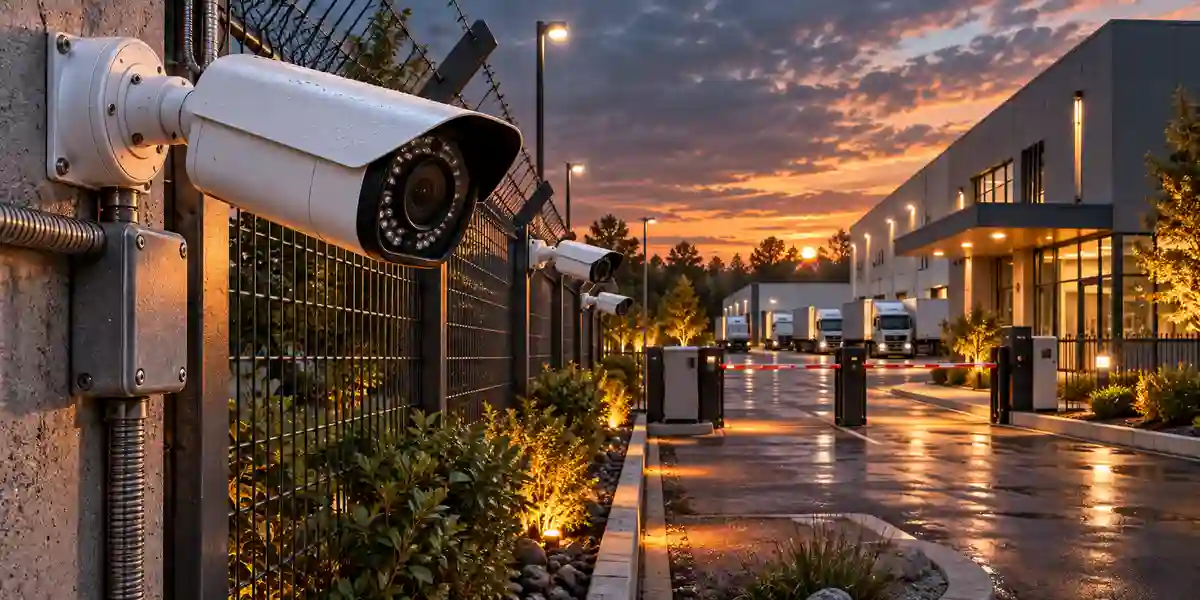
Quick product summary
5MP, up to 2592 × 1944
4mm fixed focal length
Integrated IR up to 25m
IP66 and IK10
Product overview and buyer fit
The QNO-8020R sits in Hanwha Vision’s Q-series network camera range and is designed around a straightforward fixed-view surveillance requirement. Buyers should consider it when the target scene is known in advance and does not require optical zoom. The 4mm lens offers a practical field of view for entrances, corridors, loading lanes, gate approaches, external walls, parking transitions and similar areas where a fixed angle can be planned during installation. Because it is a network camera, video travels over Ethernet rather than traditional coaxial CCTV wiring, making it a natural fit for PoE network architectures and NVR-based recording systems.
A 5MP sensor provides more detail than standard 1080p while still keeping the camera in a broadly manageable bandwidth and storage class compared with higher-resolution devices. H.265 and H.264 compression support enables system designers to balance compatibility, storage and network load. The camera’s built-in IR helps maintain usable monochrome imagery in darkness, while 120dB wide dynamic range is useful where a scene contains both bright and shaded areas. IP66 ingress protection supports exposed installations, and IK10 protection adds resistance against impact in accessible locations.
The camera should be selected as part of a complete surveillance design rather than in isolation. Before ordering, confirm field of view, mounting height, cable route, PoE budget, NVR or VMS compatibility, required retention period, available storage, cybersecurity policy, remote viewing method and any local compliance requirements. FourTeck can assist with requirement review and project planning without assuming that one model is suitable for every location.
Key features and business benefits
5MP image detail
Up to 2592 × 1944 resolution helps operators retain useful visual detail for routine monitoring, review and incident investigation.
4mm fixed lens
A fixed focal length simplifies deployment where the required viewing angle is predictable and optical zoom is unnecessary.
25m infrared
Integrated IR supports night monitoring of short-to-medium range scenes without depending entirely on visible lighting.
120dB WDR
Wide dynamic range helps manage contrast around doors, windows, shaded loading areas and bright exterior backgrounds.
PoE deployment
Power over Ethernet can carry power and data through the network cable, reducing the need for separate local power wiring.
IP66 and IK10
Weather and impact protection help the camera suit exposed perimeter, wall, entrance and semi-public mounting points.
Verified technical specifications
| Item | Specification |
|---|---|
| Imaging device | 1/2.8-inch 5MP CMOS |
| Maximum resolution | 2592 × 1944 |
| Maximum frame rate | H.265/H.264 up to 30fps at 60Hz / 25fps at 50Hz; MJPEG up to 15fps / 12fps |
| Lens | 4.0mm fixed |
| Viewing angle | Approx. H 79.8° / V 58.1° / D 105.9° |
| Minimum illumination | Color 0.15 lux; B/W 0 lux with IR LED on |
| IR range | Up to 25m |
| Wide dynamic range | 120dB |
| Power | PoE, typical 6.1W, maximum 7.5W |
| Environmental rating | IP66, IK10 |
| Operating temperature | -30°C to +55°C; startup above -20°C |
| Dimensions / weight | Approx. Ø70 × 246mm / 680g |
Compatibility, configuration and deployment guidance
Plan the QNO-8020R as one component of the IP surveillance system. A typical deployment requires structured Ethernet cabling, a PoE switch or suitable PoE network path, recording through a compatible NVR or video management platform, sufficient storage capacity and a secure method for administrator access. Confirm interoperability before purchase, especially in mixed-brand projects. Exact capabilities can also depend on firmware, recorder software and VMS versions.
For camera placement, avoid relying on resolution alone. The 4mm lens determines how much of the scene is captured and how large a person, vehicle or object appears within the image. A camera that covers too wide an area may not provide the subject detail expected at the point of interest. For identification-heavy locations such as gates, loading checks or entry doors, confirm distance and pixel density during design. For overview monitoring, make sure the scene does not contain obstructions or strong reflective surfaces that compromise IR night performance.
PoE budgeting matters when multiple cameras share the same switch. The QNO-8020R has a maximum PoE consumption of 7.5W, but the switch should be sized with headroom for all connected cameras, uplinks and future additions. Storage should be calculated from camera count, recording mode, resolution, frame rate, compression, scene activity and retention days rather than using a single generic disk recommendation.
Ideal customers and use cases
The QNO-8020R is most relevant for organizations that want a professional fixed bullet camera rather than a PTZ or motorized varifocal model. It can suit offices, warehouses, schools, clinics, retail facilities, hotels, industrial sites, logistics operations, compounds, parking interfaces and building perimeters. Common positions include entrance approaches, rear doors, loading zones, service lanes, external walls, fenced boundaries and access routes.
Its fixed lens helps simplify standardized rollouts where multiple positions have similar scene geometry. For a project containing mixed scene types, however, a combination of fixed, varifocal, dome and PTZ cameras may be more appropriate. FourTeck can help map camera type to surveillance objective rather than forcing one model into every position.
What to confirm before ordering
- Required viewing angle and target distance for every camera position.
- Indoor, sheltered or fully exposed mounting conditions.
- PoE switch port availability and total PoE power budget.
- NVR or VMS compatibility, licensing and channel capacity.
- Recording duration, frame rate and storage calculation.
- Night-scene conditions, reflections and available ambient lighting.
- Mounting surface, bracket or junction-box requirement.
- Network VLAN, addressing, password and firmware policy.
- Remote viewing, user-role and cybersecurity requirements.
- Quantity, project location and installation scope for quotation.
Related-model and alternative guidance
Within the same Hanwha Q-series family, the QNO-8010R uses a wider 2.8mm fixed lens, while the QNO-8030R uses a narrower 6mm fixed lens. The QNO-8080R provides a motorized varifocal lens for sites that need adjustable framing. Buyers who prefer dome form factors can also compare QND-series models, while vandal-resistant outdoor dome or turret-style options may suit locations where a bullet camera is too prominent. Choose by field of view, mounting position, environment, adjustment need and system design rather than model number alone.
Hanwha QNO-8020R Dubai
Dubai surveillance projects often combine demanding outdoor conditions with varied commercial environments, from warehouses and logistics facilities to offices, retail outlets, schools, hospitality properties and mixed-use buildings. For a Dubai buyer evaluating the Hanwha QNO-8020R, the first question should be whether its 4mm fixed lens matches the actual scene. In a loading bay or external walkway, that lens can provide a useful balanced field of view, but exact placement must still be checked against distance, camera height and the level of detail required. It is better to confirm the image objective before ordering than to select purely by megapixel rating.
The QNO-8020R’s IP66 and IK10 construction is relevant where the camera is exposed to dust, weather or accessible mounting positions. Dubai heat also makes operating-temperature limits important. The official specification lists operation up to +55°C, so project planners should consider real mounting conditions, direct solar exposure, enclosure effects and ventilation around adjacent equipment rather than treating ambient city temperature as the only factor. Network switches and recorders also require suitable environmental planning.
Dubai buyers frequently need price, availability and installation information. These can change by quantity, project scope and distribution channel, so FourTeck does not publish unverified stock or fixed pricing here. A useful quotation request should include camera count, site area, preferred recorder, retention days, cabling readiness, switch requirements and whether installation or only supply is needed. For projects in Business Bay, Jebel Ali, Dubai Investment Park, Al Quoz, Deira, Dubai Silicon Oasis and other commercial zones, the same engineering principle applies: define the surveillance objective first, then match camera, lens, network and storage design. Visit FourTeck technology solutions or use the contact route for a project-specific discussion.
Hanwha QNO-8020R UAE
Across the UAE, customers may need to standardize surveillance across more than one emirate, branch or facility type. The Hanwha QNO-8020R can fit into a repeatable camera design when the scenes are similar, such as perimeter walls, office entrances, warehouse doors or service corridors. Standardization can simplify maintenance, image settings and spare planning, but it should not override site-specific needs. A branch in Abu Dhabi, Sharjah, Ras Al Khaimah or Fujairah may have different distances, lighting, cabling and environmental exposure than a Dubai site.
For UAE-wide projects, network architecture becomes as important as camera selection. PoE switches should have adequate port count and power budget, recorder platforms should be sized for total channels, and storage should be calculated using target recording days rather than a rough disk estimate. If sites are centrally monitored, WAN capacity, VPN or secure remote access design and user permissions should be planned at the same time. H.265 can reduce bandwidth and storage compared with less efficient codecs in many scenarios, but compatibility with the chosen recording platform should still be checked.
The QNO-8020R offers useful specifications for general professional surveillance: 5MP resolution, 4mm fixed lens, up to 30fps, 25m IR and 120dB WDR. It is not the correct answer for every position. Sites needing adjustable zoom may be better served by a motorized varifocal model, while wide indoor areas may suit dome cameras. Multi-emirate procurement teams should provide a camera schedule, location list, retention requirement and preferred NVR/VMS platform when requesting a quote. FourTeck can assist with broader UAE technology enquiries through FourTeck UAE and CCTV project planning information.
Hanwha QNO-8020R Kenya
Kenya buyers considering the Hanwha QNO-8020R commonly need an IP camera that can be integrated into structured surveillance for offices, schools, retail premises, warehouses, logistics yards, hospitality sites and commercial compounds. In Nairobi and other business centres, projects often combine indoor cameras with outdoor perimeter and entrance coverage. The QNO-8020R is best considered for defined fixed-view locations where the 4mm lens provides the required scene width and where integrated IR can assist after dark.
For Kenyan projects, procurement should include the network and recording design rather than only the camera unit. Verify whether existing switches provide PoE, whether the network has enough capacity for multiple 5MP streams and whether recording storage has been calculated for the required retention period. In sites with unstable power, upstream network equipment and NVR systems may also need suitable power protection or backup planning. The camera itself uses PoE, but continuous surveillance depends on the availability of the complete network path and recorder.
Outdoor conditions vary by location, so check mounting exposure, rain protection, dust and physical accessibility. IP66 and IK10 ratings support demanding positions, but cable termination, junction boxes and mounting methods must be installed to the same standard. Night coverage should also be tested against actual scene distance; reflective walls, license plates or nearby objects can affect infrared image balance. When requesting pricing for Kenya, provide model, quantity, project city, recorder preference, installation scope and required accessories. FourTeck’s regional entry point for Kenya enquiries is FourTeck Kenya. Availability, delivery and warranty route should be confirmed during quotation rather than assumed from general product information.
Hanwha QNO-8020R Kuwait
Kuwait surveillance projects often need careful attention to outdoor exposure, site heat, dust and the reliability of network infrastructure. The Hanwha QNO-8020R has an official operating range up to +55°C and carries IP66 and IK10 ratings, which are useful specifications for exposed fixed-camera locations. Project design should still account for direct solar load, mounting surface temperature, cable routing and the operating environment of nearby PoE switches and recording equipment. A camera’s environmental rating does not replace good installation practice.
The 4mm fixed lens makes the QNO-8020R appropriate where the viewing direction is already known. It can be considered for building entrances, perimeter walls, service doors, loading zones, parking transitions and industrial approaches. A narrower target at longer distance may require a different focal length, while a broad overview may require a wider lens. For that reason, Kuwait buyers should provide scene distances and desired coverage when asking for a design recommendation. A floor plan, site sketch or existing camera schedule can make selection more accurate.
In larger Kuwait deployments, recording and PoE power are often the hidden sizing tasks. Multiply the camera count by expected bandwidth, confirm switch uplinks, define recording mode and calculate storage for required days. If central monitoring connects multiple branches, include WAN and access-security requirements. Buyers should also verify compatibility with existing NVR or VMS platforms, particularly when integrating into an older system. FourTeck supports Kuwait-focused enquiries through FourTeck Kuwait. Share quantity, delivery city, existing recorder, storage target and installation requirement for a relevant quotation. No stock, price or warranty claim should be assumed until confirmed for the requested order.
Hanwha QNO-8020R Ghana
For Ghana businesses, the Hanwha QNO-8020R can be evaluated as a fixed-lens 5MP IP camera for entrances, perimeter coverage, compounds, warehouses, retail facilities, schools, offices and operational sites. Its value comes from combining 5MP resolution with a 4mm fixed lens, integrated 25m IR, 120dB WDR, PoE and an IP66/IK10 housing. These specifications are particularly relevant where buyers want an outdoor-ready network camera without the added complexity or cost of motorized zoom.
The correct camera count and placement depends on the site. A warehouse in Accra may need cameras on loading bays, dispatch doors, storage aisles and the external boundary, while a retail site may prioritize entrances, tills and stock access. Do not use the same mounting height or lens assumption everywhere. The best results come from mapping each camera to a purpose: overview, recognition, identification, process monitoring or perimeter awareness. The QNO-8020R’s 4mm lens suits many balanced overview positions, but another focal length may be more suitable where subjects are farther away or where a particularly wide scene is required.
Ghana projects should also plan power resilience, network switching and recording capacity. Because the camera uses PoE, any outage affecting the PoE switch also affects the camera unless the network equipment has appropriate backup power. Recording retention should be calculated from actual project settings. Buyers requesting a quotation should include site city, camera quantity, installation scope, NVR/VMS requirement, preferred retention period and whether switches, racks, UPS and cabling are needed. Regional enquiries can be routed through FourTeck Ghana. Product availability, logistics and warranty terms should be confirmed specifically for the order before procurement.
Hanwha QNO-8020R Uganda
Uganda organizations looking for a professional IP surveillance camera may consider the Hanwha QNO-8020R for fixed outdoor and semi-outdoor positions. Typical buyers include offices, schools, clinics, warehouses, hotels, retail properties, compounds and commercial facilities that need dependable network video rather than consumer Wi-Fi cameras. The 5MP sensor supports detailed monitoring, while the 4mm lens is suited to scenes where installers can define the required viewing direction before commissioning.
In Kampala and other locations, buyers should assess the complete infrastructure around the camera. A PoE camera depends on structured cabling, switch capacity and stable upstream power. Where power interruptions are a concern, consider backup power for switches, NVRs and network devices so that the surveillance system does not stop even though the cameras themselves draw relatively modest power. Network separation can also improve security and reliability. A dedicated CCTV VLAN, controlled administrator access and planned firmware management are sensible design measures for business networks.
Night monitoring deserves practical testing. The QNO-8020R has integrated IR specified up to 25m, but usable results depend on the scene. Nearby reflective surfaces can overexpose foreground objects, while large open areas may need supplementary lighting or a camera with different optics. For perimeter use, assess fence lines, vegetation, gate lighting and the distance at which a subject needs to be recognizable. Buyers should request a quote using the exact model, quantity, site location, required recorder channels and retention period. FourTeck’s Uganda regional route is FourTeck Uganda. Availability, pricing, delivery arrangements and warranty path should be verified during the quotation process rather than inferred from other markets.
Hanwha QNO-8020R Nigeria
Nigeria CCTV requirements can range from a few cameras at a professional office to multi-site surveillance across retail, logistics, education, hospitality, industrial and commercial operations. The Hanwha QNO-8020R is best viewed as a building block for structured IP surveillance where a 5MP fixed-view bullet camera is appropriate. Its 4mm lens, 25m integrated infrared illumination, 120dB WDR, PoE support, IP66 ingress protection and IK10 impact resistance make it suitable for many defined indoor/outdoor positions.
For projects in Lagos, Abuja, Port Harcourt and other business locations, buyers should treat power, bandwidth and recording as core system requirements. A high camera count can create significant storage demand, so define whether recording is continuous, event-based or scheduled, and confirm how many days of footage must be retained. A PoE switch must provide enough total power and reliable uplink bandwidth. Where remote viewing is required, internet connectivity and secure access also need to be planned instead of simply exposing devices to the public internet.
A fixed 4mm lens should be confirmed against the target. For a doorway or service lane it may be appropriate; for a distant gate it may show too much background and too little subject detail. Conversely, a narrow lens may miss activity close to a wall. A basic site plan with distances helps prevent these mistakes. Nigeria procurement teams should include camera quantity, recorder requirement, expected storage duration, switch requirements, installation city and whether structured cabling is already available. Enquiries can be sent through FourTeck Nigeria. Stock, price, delivery and warranty details should be confirmed per quotation because they may vary by project and supply route.
Hanwha QNO-8020R Seychelles
Seychelles buyers may need surveillance for hospitality properties, offices, retail locations, warehouses, utility buildings and other sites where exposure to weather and coastal conditions can influence equipment planning. The Hanwha QNO-8020R brings IP66 weather protection and IK10 impact resistance in a fixed bullet format, but coastal deployments still require careful attention to mounting hardware, cable protection, connectors and ongoing maintenance. Environmental resistance is a camera-level rating and should not be treated as a guarantee for every installation detail around it.
The QNO-8020R’s 5MP resolution and 4mm fixed lens can suit entrances, access routes, external walls and defined perimeter sections. For resort or hospitality use, placement should also respect guest privacy and avoid monitoring unnecessary private areas. Security cameras should be positioned around legitimate operational and safety objectives such as entrances, parking access, service corridors, loading areas and restricted zones. Where aesthetics are important, a dome camera may sometimes be preferred even when the technical requirement is similar.
Seychelles projects may involve equipment procurement across borders, so it is useful to finalize the system design before shipping. Confirm camera quantities, PoE switch ports, NVR channels, storage disks, mounting accessories and spare requirements together so that missing components do not delay commissioning. The 25m IR specification should also be evaluated against actual night scenes and local lighting. Buyers can use FourTeck Africa for regional enquiries and provide island or project location, quantities, recorder preferences and installation requirements. Availability, freight, lead time and warranty route should be confirmed for the specific quotation rather than assumed from another country’s supply channel.
Related FourTeck resources
A seven-product same-site FourTeck link set is not included because seven verified QNO-8020R-related product-page URLs on the main FourTeck site were not available during research. No product URLs have been guessed.
Why contact FourTeck
FourTeck can help turn a model enquiry into a practical system requirement by reviewing camera quantity, viewing objectives, PoE networking, recording, storage, cabling and deployment scope. This is especially useful when the buyer needs more than a single camera and wants the surrounding infrastructure sized correctly. Contact FourTeck to discuss your configuration, obtain a quotation and confirm current availability for your market.
Hanwha QNO-8020R FAQ
What resolution does the Hanwha QNO-8020R support?
The QNO-8020R uses a 5MP CMOS sensor and supports a maximum resolution of 2592 × 1944. The useful recording setting should be selected together with frame rate, compression and storage requirements. Higher resolution can provide more scene detail, but it also affects bandwidth and storage, so projects should size the NVR and disk capacity accordingly.
What lens does the QNO-8020R use?
It uses a 4mm fixed lens. Because the focal length is fixed, the installer should confirm the field of view before final mounting. If a project needs optical adjustment after installation, consider a motorized varifocal model instead. The right choice depends on target distance and required subject detail.
How far does the infrared night vision reach?
Hanwha specifies infrared illumination up to 25 metres. Actual usable night imagery depends on scene reflectivity, mounting height, weather, nearby surfaces and target size. A 25m IR rating should therefore be treated as a design reference, not a guarantee that every subject at 25m will provide identification-level detail.
Is the QNO-8020R suitable for outdoor use?
Yes. The camera carries an IP66 ingress-protection rating and IK10 impact rating. These specifications support exposed surveillance positions, but outdoor installation still requires suitable cabling, connectors, junction boxes and mounting practices. Direct heat, cable entry and surrounding equipment should also be considered during site design.
Does the QNO-8020R support PoE?
Yes. The QNO-8020R supports Power over Ethernet, allowing data and power to use the network connection. Official product portfolio information lists typical PoE consumption around 6.1W and maximum consumption of 7.5W. Size the PoE switch for the total camera load plus reasonable headroom.
Does it support H.265 and H.264?
Yes. The QNO-8020R supports H.265 and H.264 video compression, with up to 30fps depending on video standard and configuration. Compression should be selected based on recorder compatibility, storage planning and viewing requirements. Mixed or older recording systems should be checked before deployment.
What is 120dB WDR useful for?
Wide dynamic range helps the camera handle scenes that contain both bright and dark areas, such as an indoor corridor facing a sunlit entrance or a shaded loading bay with a bright exterior background. WDR does not eliminate every lighting problem, so camera angle and local lighting still matter.
Can I use the QNO-8020R with an existing NVR?
Possibly, but compatibility should be verified before ordering. Check the NVR or VMS supported-device list, firmware level, codec support, maximum resolution, channel capacity and any license requirements. Mixed-brand integration may expose only a subset of camera features, so testing is recommended for existing systems.
How much storage do I need?
Storage depends on camera count, resolution, frame rate, compression, recording schedule, scene activity and retention days. There is no single correct disk size for every QNO-8020R project. Provide those inputs when asking FourTeck to help size an NVR and storage plan.
How can I request Hanwha QNO-8020R Dubai pricing?
Send FourTeck the exact model, required quantity, Dubai project location, NVR or VMS preference, storage period and whether you need supply only or installation. Pricing and availability can change, so the quotation process is the appropriate place to confirm current commercial terms.
Discuss your Hanwha QNO-8020R requirement
Share your camera quantity, site type, viewing distances, recording requirement, storage days, existing network and installation scope. FourTeck can review the requirement and help you move toward an appropriate quotation and deployment plan.
Reviews
There are no reviews yet.