

Quick product summary
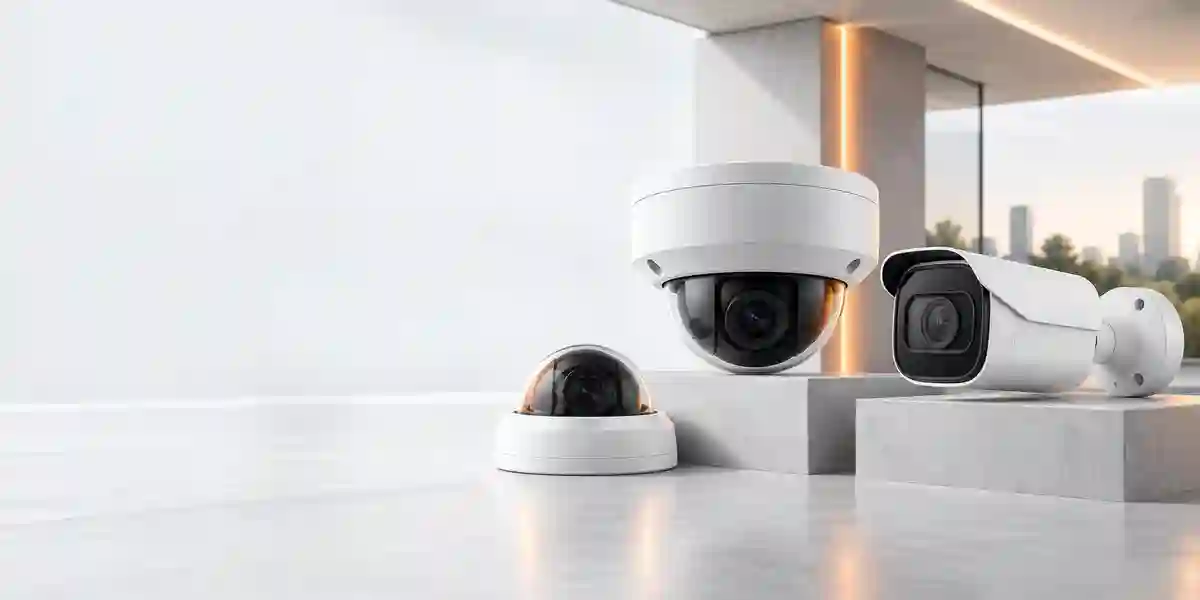
Hanwha Vision specifies the QNV-6012R1 as a 2MP IR vandal dome camera with a 1/2.8-inch CMOS sensor, 1920×1080 maximum resolution, 2.8mm fixed focal lens, maximum 30fps for H.265/H.264 video, and 20m IR illumination. The camera supports Day & Night with ICR, 120dB wide dynamic range, H.265/H.264/MJPEG, multiple streaming, motion and tamper-related analytics, hallway view, lens distortion correction and removable edge storage. Its housing is rated IP66 against dust and water ingress and IK10 against impact. The model can be powered by PoE or 12VDC and is specified as a no-audio model.
Overview and buyer-fit guidance
The QNV-6012R1 is best understood as a wide-angle, fixed-lens dome for locations where the camera should monitor a broad area rather than optically zoom toward a distant target. Its approximately 114-degree horizontal field of view is useful for entrances, lobbies, internal circulation spaces, retail floors, loading-area approaches and selected outdoor positions. Because the lens is fixed, the physical camera position and target scene should be planned before installation. Buyers who need a tighter view, longer identification distance or remote optical zoom should compare a different lens or varifocal model instead of assuming the QNV-6012R1 will cover every surveillance distance.
For Dubai projects, the environmental rating is relevant but should not replace a proper site survey. IP66 helps with dust and water exposure, while IK10 improves resistance to physical impact. Outdoor UAE installations can still require careful consideration of direct sun, heat loading, mounting surface, cable routing, junction-box weather sealing and PoE-switch placement. Hanwha lists an operating range of -30°C to +55°C with startup above -20°C for this family, so the actual mounting position and local thermal conditions should be checked against the current manufacturer datasheet before final approval.
Key features and business benefits
2MP image detail
Up to 1920×1080 output provides a familiar Full HD format for general security monitoring without the storage and bandwidth requirements associated with much higher-resolution cameras.
Wide 2.8mm lens
The fixed 2.8mm lens gives a broad scene view, making the model attractive for doorways, rooms, corridors, shop floors and near-field outdoor coverage when the placement has been planned correctly.
20m infrared
Integrated 850nm IR illumination supports black-and-white monitoring in darkness, reducing reliance on continuous visible lighting for suitable short-range scenes.
120dB WDR
Wide dynamic range helps balance challenging scenes such as entrances where bright exterior light and darker interior areas appear in the same image.
IP66 and IK10
Weather and impact ratings support placement in exposed or publicly accessible areas where a standard indoor camera enclosure would be less suitable.
PoE and edge storage
Power over Ethernet can simplify cabling, while microSD/SDHC/SDXC storage up to 128GB can support edge recording strategies subject to system design and card selection.
Verified technical specifications
| Specification | Hanwha QNV-6012R1 |
|---|---|
| Camera type | 2MP IR vandal-resistant network dome |
| Imaging device | 1/2.8-inch CMOS |
| Maximum resolution | 1920 × 1080 |
| Maximum frame rate | 30fps / 25fps with H.265 or H.264 at 60Hz / 50Hz |
| Lens | 2.8mm fixed, F2.0 |
| Field of view | Approx. 114° horizontal / 62° vertical / 135° diagonal |
| Minimum illumination | 0.03 lux color; 0 lux with IR LED on |
| IR distance | 20m |
| Wide dynamic range | 120dB |
| Compression | H.265, H.264, MJPEG |
| Edge storage | microSD/SDHC/SDXC, up to 128GB |
| Network interoperability | ONVIF Profile S/G/T, SUNAPI and Wisenet Open Platform listed for the family |
| Protection | IP66, IK10 |
| Power | PoE or 12VDC |
| Audio | No-audio model |
Compatibility, configuration and deployment guidance
Before purchasing the QNV-6012R1, confirm the recorder or video-management platform, required stream profiles, retention target, network topology, PoE budget, VLAN or cybersecurity policy, camera mounting position and required event behavior. ONVIF support is useful for interoperability, but every third-party VMS or NVR should still be checked for the exact functions required. Basic video streaming may work while advanced events, device management, health monitoring or edge-recording functions vary by integration.
The camera supports fixed mechanical adjustment rather than optical zoom. Commissioning therefore involves selecting the mounting point, physically setting pan/tilt/rotation, then validating the final image in day and night conditions. Hallway view can be useful for portrait-oriented corridors. Lens distortion correction can help manage wide-angle geometry. If the surveillance objective is face identification at a specific distance, number-plate capture, long-range perimeter observation or detailed cash-desk coverage, a site-specific pixel-density calculation is recommended rather than selecting the camera from resolution alone.
Ideal customers and use cases
The QNV-6012R1 suits organisations that need a durable Full HD dome with wide coverage, IR and flexible network deployment. Typical applications can include office entrances, retail shops, schools, clinics, hospitality back-of-house areas, building corridors, controlled parking approaches, light industrial sites and multi-camera commercial properties. It can also fit existing 2MP projects where bandwidth efficiency and established H.265/H.264 workflows are important. The model is less suitable when a buyer needs built-in audio, remote optical zoom, very long-range IR or significantly higher pixel density.
What to confirm before ordering
- Required scene width and identification distance for the 2.8mm fixed lens.
- Exact mounting surface, height, viewing angle and any required Hanwha mounting accessory.
- NVR or VMS compatibility, including event and edge-storage functions.
- PoE switch budget, cable distance and network design.
- Indoor, sheltered or exposed outdoor conditions at the mounting point.
- Night-time lighting, reflection risks and the suitability of a 20m IR specification.
- Retention period and whether microSD storage is needed in addition to central recording.
- Whether the project requires audio; QNV-6012R1 is specified as a no-audio model.
- Local project, cybersecurity, privacy and authority requirements.
- Current model lifecycle, accessories and final manufacturer specification at the time of purchase.
Comparison and related-model guidance
Within the same family, lens selection is a key difference. Hanwha lists the QNV-6022R1 with a 4mm fixed lens and 25m IR, while the QNV-6032R1 uses a 6mm fixed lens and 30m IR. Those models provide progressively narrower framing and can be more appropriate when the target area is farther away. The QNV-6012R1 remains the wide-angle option in that group. For buyers comparing against varifocal or AI-focused cameras, consider whether remote zoom, higher frame rate, deeper object analytics, greater IR reach or higher resolution justify moving to another product class. FourTeck can help translate the surveillance objective into the required camera category before a final bill of materials is prepared.
Hanwha QNV-6012R1 Dubai
Dubai buyers commonly approach fixed dome selection from the practical questions of coverage, installation environment, recorder compatibility and project approval rather than from megapixels alone. The Hanwha QNV-6012R1 is well suited to that evaluation because its strengths are clearly defined: Full HD 2MP video, a broad 2.8mm view, integrated IR, 120dB WDR, rugged IP66/IK10 construction and PoE. In office buildings, retail premises, hospitality properties, education sites and mixed-use developments, a wide-angle dome can cover a doorway, corridor junction, reception approach or near-field external scene with a relatively discreet form factor. The important step is confirming that the required subject will occupy enough pixels at the chosen distance. A wide lens sees more of the scene, but a distant face becomes smaller within that scene.
Dubai conditions also make installation design important. IP66 addresses dust and water ingress, yet direct solar load, shaded versus exposed mounting, enclosure temperature, cable gland sealing and mounting hardware all affect long-term deployment. A camera installed below an entrance canopy has different exposure from one fixed to an external wall or pole. The 20m IR specification should likewise be treated as a maximum illumination guideline, not a guarantee that every subject at 20m will deliver identification-quality detail. Reflective walls, glass, glossy surfaces and very open spaces can influence night imaging.
For system integration, buyers should confirm the selected NVR or VMS, expected recording frame rate, storage retention and PoE-switch capacity. H.265 can reduce bandwidth and storage demand compared with less efficient coding, but actual consumption depends on scene motion, quality settings, frame rate, GOP configuration and recording policy. Where projects require corridor monitoring, hallway view can improve use of the 16:9 sensor area. If the specification calls for audio, optical zoom or long-range identification, another model should be considered. For Dubai enquiries, use FourTeck product assistance or FourTeck UAE resources to discuss the intended scene and system architecture before ordering.
Hanwha QNV-6012R1 UAE
UAE surveillance projects often span more than one emirate or more than one site type, so camera standardisation can become as important as an individual camera specification. The QNV-6012R1 can make sense as a standard wide-angle dome for common locations where 2MP resolution is adequate and a fixed 2.8mm lens provides the required coverage. A facilities team may consider it for offices, branches, reception areas, internal circulation routes, service entrances or selected external positions. Because the housing is IP66 and IK10 rated, the product gives project designers more placement flexibility than a basic indoor-only dome, although the actual environmental conditions still need to be checked for every site.
For multi-emirate deployments, consistency in firmware, recorder compatibility, network addressing, user roles and cybersecurity practice can reduce maintenance complexity. The QNV-6012R1 supports common IP-video standards and multiple compression formats, but standardisation should be validated with the exact central VMS or NVR. The same applies to edge storage. A 128GB microSD limit may be useful for short local recording or resilience strategies, yet it is not a substitute for calculating the central retention requirement. Network architects should account for camera count, selected bit rates, uplink capacity, PoE loading and whether streams traverse WAN links between sites.
The UAE also presents varied physical environments: shaded interior spaces, climate-controlled malls, partially exposed car parks, coastal sites and high-temperature outdoor walls are not equivalent. The camera’s manufacturer environmental specification should be compared with the expected enclosure temperature and mounting condition, particularly where direct solar radiation can raise device temperature above ambient conditions. Buyers should also confirm whether project documentation requires a particular certification, mounting accessory or security baseline. For broader UAE procurement, FourTeck UAE can be used as the regional route, while FourTeck sales assistance can help with camera, NVR, storage and PoE planning. The final selection should be driven by scene requirements rather than assuming one fixed-lens camera is suitable for every branch or perimeter point.
Hanwha QNV-6012R1 Kenya
Kenya buyers considering the Hanwha QNV-6012R1 are likely to compare practical concerns such as wide-area coverage, night performance, network infrastructure, recorder compatibility and protection against dust, weather and tampering. The camera’s 2MP resolution and 2.8mm fixed lens make it most suitable where a broad view is more valuable than long-range magnification. Business entrances, branch offices, schools, clinics, retail floors, warehouses, reception areas and near-field outdoor positions are examples where the camera may fit after a proper survey. The IK10 rating is particularly relevant to publicly accessible areas, while IP66 helps when a camera is exposed to dust and rain.
Infrastructure planning can be a deciding factor. PoE allows network data and power to share one Ethernet cable, which can simplify installation where compliant structured cabling and suitable switches are available. A project should still confirm cable distance, surge protection strategy, switch power budget and resilience requirements. For sites with unreliable WAN connectivity, local NVR recording or edge storage may help maintain evidence capture, but storage capacity must be sized against frame rate, bit rate, scene activity and retention targets. The QNV-6012R1 supports microSD/SDHC/SDXC media up to 128GB, so buyers should define the role of that storage within the wider recording architecture.
Night coverage should be assessed in the real scene. Hanwha specifies 20m IR, but an effective surveillance result depends on subject size, reflectance, ambient light, mounting height and camera angle. If a gate or perimeter target is farther away, a narrower lens or a camera with longer IR may be more appropriate. Likewise, the no-audio design matters for any project expecting a microphone or two-way audio. Kenyan organisations can use FourTeck Kenya resources to discuss the camera within a complete CCTV architecture. A useful procurement request should include the number of locations, approximate scene dimensions, recording days, network availability and required monitoring method so that the camera choice can be checked against the real operational need.
Hanwha QNV-6012R1 Kuwait
For Kuwait, the QNV-6012R1 should be evaluated not only as a 2MP security camera but as an outdoor-capable network device that may be installed in demanding heat and dust conditions. Its IP66 and IK10 ratings are useful for exposed or accessible locations, while the 2.8mm lens is designed for wide scene coverage. Commercial buildings, retail premises, education facilities, hospitality sites, warehouses and controlled exterior areas can all contain positions where this field of view is useful. However, exposed-sun installations need particular attention to the manufacturer temperature limits and to the difference between official ambient ratings and real surface temperatures around a camera enclosure.
Project teams should therefore identify whether a camera will be indoors, under shade, beneath a canopy, inside a parking structure or fully exposed. Mounting accessories, cable entries and junction points should maintain the intended environmental protection. Dust control is not simply a camera-rating issue: lens-window cleanliness and maintenance access also affect long-term image quality. For night monitoring, the built-in 20m IR can serve short-to-medium near-field scenes, but wide open areas may need additional lighting or a different camera specification. Testing at commissioning is important because IR reflection from nearby surfaces can reduce image usefulness.
Network design is equally important. The camera supports PoE and 12VDC, H.265/H.264/MJPEG and multiple stream profiles. That provides flexibility for central recording and lower-bandwidth secondary viewing streams. Still, the selected NVR or VMS should be confirmed for ONVIF and any advanced event functions required by the project. Where retention policies are strict, use a storage calculation instead of estimating from camera count alone. If the desired scene calls for a narrower viewpoint, the 4mm QNV-6022R1 or 6mm QNV-6032R1 family variants may be more appropriate. Kuwait organisations can use FourTeck Kuwait to discuss camera placement, recording and network requirements before a purchasing decision is finalised.
Hanwha QNV-6012R1 Ghana
Ghana organisations evaluating the Hanwha QNV-6012R1 can treat it as a durable wide-angle dome for general commercial monitoring rather than as a specialist long-range camera. Its 2MP resolution, 2.8mm fixed lens and approximately 114-degree horizontal view suit close and medium-width scenes where one camera needs to see a broad area. Common project discussions include office entrances, retail floors, school corridors, clinic reception areas, warehouse internal zones and protected external approaches. The IP66 and IK10 ratings add environmental and impact protection, while PoE can help simplify a structured IP-camera installation.
Reliable recording design should be considered at the same time as camera selection. Central NVR storage, backup power, network switching and remote access requirements can be more important to operational success than a single specification. The camera’s H.265 capability can improve storage efficiency, but real recording consumption varies with configuration and scene complexity. Edge storage up to 128GB can be used as part of a resilience plan, but projects needing many days of retention generally require correctly sized recorder storage. If sites are connected over limited-bandwidth links, a secondary lower-resolution stream may be useful for remote viewing while the primary stream records locally.
For night surveillance, built-in IR is specified to 20m. Buyers should map that distance against the actual target: a person near a doorway is a different requirement from reading details at the far end of a yard. Camera height, lens angle and available lighting will affect usable evidence. The 120dB WDR is helpful where strong exterior light and darker interiors meet, such as gates or entrances. Because this is a no-audio model, any requirement for microphone input should trigger a different product choice. Ghana buyers can use FourTeck Ghana for regional product discussions and can also consult FourTeck Africa resources when planning multi-country or standardised deployments. A site survey and documented scene objective remain the best way to confirm fit.
Hanwha QNV-6012R1 Uganda
Uganda buyers looking for a network dome that can serve both indoor commercial positions and selected outdoor locations may consider the QNV-6012R1 for its combination of Full HD imaging, fixed wide-angle coverage, IR and rugged housing. The 2.8mm lens is designed to see a broad scene, which may reduce the number of cameras needed for some near-field spaces, but it also means distant subjects occupy fewer pixels. Before ordering, project owners should define whether the goal is general observation, recognition or identification and then check the expected subject distance.
PoE deployment is attractive where structured cabling is available because it combines data and power over Ethernet. The wider system should still include suitable switches, power backup and surge or grounding practices appropriate to the site. Where electrical interruptions are a concern, the surveillance design should consider UPS capacity for switches and recording equipment, not only the camera itself. For distributed sites, local recording can reduce dependence on WAN connectivity. The camera accepts microSD/SDHC/SDXC storage up to 128GB, while central retention normally depends on an NVR or VMS server sized for the number of cameras and recording policy.
Environmental planning matters for external locations. IP66 and IK10 provide strong enclosure ratings, but installers should preserve those protections with correct mounting, sealed cable entries and suitable accessories. The 20m IR function supports darkness, while WDR helps with high-contrast entrances. Buyers should remember that neither rating nor IR range eliminates the need for testing after installation. For applications that require a more focused field of view or longer IR reach, other QNV variants should be reviewed. The QNV-6012R1 is also a no-audio model, so audio monitoring needs a different design. Regional enquiries can be directed through FourTeck Uganda. Providing approximate site dimensions, target distance, number of cameras, recorder preference and retention period will help make the product discussion more precise and reduce the risk of over- or under-specifying the surveillance system.
Hanwha QNV-6012R1 Nigeria
In Nigeria, commercial CCTV buyers often need to balance image quality, infrastructure, storage, power resilience and maintenance. The Hanwha QNV-6012R1 offers a clear role in that balance as a 2MP fixed wide-angle vandal dome with 20m IR, 120dB WDR, IP66/IK10 protection and PoE. It can suit entrances, reception areas, retail outlets, offices, education facilities, healthcare sites, warehouses and other locations where the target is relatively close and a broad scene is required. The fixed lens keeps the configuration straightforward, but it must be positioned correctly because there is no motorised optical zoom to compensate for an unsuitable mounting point.
Power and network design deserve early attention. PoE can centralise camera power at the network switch, making it easier to protect cameras through UPS-backed switching where the project requires continuity. Cable quality, segment length, surge protection and switch capacity should be documented. Recording architecture should also consider whether video stays on a local NVR, is managed centrally through a VMS, or is viewed across constrained WAN links. H.265 can reduce bandwidth requirements relative to less efficient encoding, but the project should use measured or calculated bit rates to size storage and connectivity.
The 20m IR rating supports night imaging, while 120dB WDR helps at entrances with strong backlighting. Yet a successful night scene depends on more than the headline IR distance. Dust on the dome, nearby reflective surfaces, excessive mounting height or a target beyond the useful pixel density can degrade results. Routine cleaning and image checks should be included in the maintenance plan. For locations needing audio, the QNV-6012R1 is not suitable because it is specified as a no-audio model. For narrower views or greater reach, compare other focal lengths or higher-specification cameras. Nigeria organisations can use FourTeck Nigeria for regional enquiries and contact FourTeck with the project scope, target distances, recording duration and network constraints for configuration assistance.
Hanwha QNV-6012R1 Seychelles
Seychelles deployments can introduce environmental considerations that go beyond basic indoor surveillance, particularly for hospitality, commercial and coastal properties. The QNV-6012R1 carries an IP66 weather rating and IK10 impact rating, making it more suitable for many protected outdoor and publicly accessible locations than an indoor-only dome. Its 2.8mm lens provides broad coverage for entrances, walkways, reception approaches, service areas and other near-field scenes. However, coastal exposure can involve humidity, airborne salt and maintenance challenges, so the precise mounting environment and suitable accessories should be reviewed before treating any general IP rating as a complete answer to long-term coastal durability.
The camera’s 20m infrared illumination can support night monitoring around building approaches and sheltered external spaces. Hotels and resorts should still check how IR behaves around glass, polished surfaces, white walls and landscaped areas because reflection can create glare or uneven exposure. In areas with existing architectural lighting, the camera’s day/night and WDR functions may already provide useful results without relying entirely on IR. A commissioning test during actual night conditions is the safest way to confirm the scene.
Network planning is also relevant for island properties or sites with constrained inter-building connectivity. PoE simplifies local camera cabling, while H.265 can help control storage and network demand. Central recording should be sized for the retention requirement, and edge storage up to 128GB can supplement but not automatically replace an NVR. Buyers should confirm VMS compatibility, remote-viewing requirements and cybersecurity policies before deployment. Because the QNV-6012R1 has a fixed lens and no audio, applications needing optical zoom, long-range detail or sound require another model. Seychelles buyers can use FourTeck Africa for regional product guidance and FourTeck for broader surveillance-system assistance. Sharing a simple site plan, target distances and recording goals helps determine whether this wide-angle 2MP dome is the right fit or only one element of a mixed-camera design.
Related Hanwha camera guidance
A complete camera schedule usually mixes models rather than forcing one camera into every location. The QNV-6012R1 is the wide-angle 2.8mm option in its fixed-lens family. The QNV-6022R1 moves to a 4mm lens and 25m IR, while the QNV-6032R1 uses a 6mm lens and 30m IR. For entrances where broad coverage is needed, the QNV-6012R1 can be attractive; for narrower or more distant scenes, the other focal lengths may fit better. When a project requires remote zoom, higher resolution, deeper AI analytics or specialised low-light performance, compare the appropriate Hanwha varifocal, X Series, P Series or AI-capable model. Verified same-site individual FourTeck product-page URLs were not available during page preparation, so no unverified product links are inserted here.
Regional FourTeck resources
Why contact FourTeck?
FourTeck can help buyers discuss the practical design questions around camera selection: field of view, mounting, PoE switching, recorder compatibility, storage, remote access and regional deployment requirements. This does not replace manufacturer documentation or a formal site survey. It gives procurement and IT teams a route to clarify configuration before committing to a bill of materials, particularly where different lens types or camera families may be needed across one project.
Frequently asked questions
What resolution does the Hanwha QNV-6012R1 provide?
The QNV-6012R1 provides a maximum resolution of 1920×1080, commonly described as 2MP or Full HD. Hanwha specifies up to 30fps/25fps for H.265 or H.264 depending on 60Hz/50Hz operation. Whether 2MP is sufficient depends on scene width and the detail required at the target distance.
What lens does the QNV-6012R1 use?
It uses a fixed 2.8mm F2.0 lens with an approximately 114-degree horizontal field of view. This is a wide-angle lens, so it is best for broad near-field coverage rather than optical zoom or long-distance identification. Placement should be validated against the required scene before installation.
How far can the infrared night vision reach?
Hanwha specifies an IR viewable length of 20m. That figure describes illumination capability, not guaranteed identification detail at 20m. Image usefulness depends on target size, mounting angle, ambient lighting, reflectance and required pixel density.
Is the QNV-6012R1 suitable for outdoor use?
The model is rated IP66 for dust and water ingress and IK10 for impact resistance, so it is designed for demanding locations including many outdoor positions. The exact site still needs to be checked for direct solar exposure, local temperature, mounting method, cable sealing and any coastal or industrial environmental factors.
Does the camera support PoE?
Yes. The QNV-6012R1 supports Power over Ethernet and 12VDC. PoE can simplify installation by carrying power and network traffic on one Ethernet cable, but the switch power budget, cable length, UPS strategy and network design should be checked for the full project.
Does it support local microSD recording?
Yes. Hanwha specifies microSD/SDHC/SDXC storage up to 128GB. Edge storage can support local recording or resilience strategies, but central retention requirements should normally be calculated separately on the NVR or VMS based on camera count, bit rate and recording schedule.
Does the QNV-6012R1 have a microphone?
No. Hanwha identifies the QNV-6012R1 as a no-audio model. If the project requires microphone input, two-way audio or audio analytics, select a different camera or a separate approved audio design that matches local legal and privacy requirements.
What video compression formats are supported?
The camera supports H.265, H.264 and MJPEG with multiple streaming. H.265 is typically useful when storage and bandwidth efficiency matter, while compatibility requirements may lead some systems to use H.264. Final settings should be matched to the selected recorder, viewing clients and retention policy.
Is the QNV-6012R1 compatible with third-party NVRs?
The product family supports ONVIF profiles for interoperability, but compatibility should be verified with the exact NVR or VMS and the specific functions required. Basic video may integrate even when advanced analytics, event metadata, edge-recording control or device management are limited.
How does QNV-6012R1 differ from QNV-6022R1 and QNV-6032R1?
The main practical distinction is lens and IR reach. QNV-6012R1 uses a 2.8mm lens with 20m IR, QNV-6022R1 uses 4mm with 25m IR, and QNV-6032R1 uses 6mm with 30m IR. Wider lenses cover more scene; longer focal lengths provide a narrower view suited to more distant targets.
Discuss your Hanwha QNV-6012R1 configuration
Share the camera count, scene dimensions, target distance, mounting environment, recorder platform and retention requirement. FourTeck can help you discuss whether the QNV-6012R1 or another lens or camera class better fits the project.
Reviews
There are no reviews yet.