

Hanwha QNV-C8013R Dubai
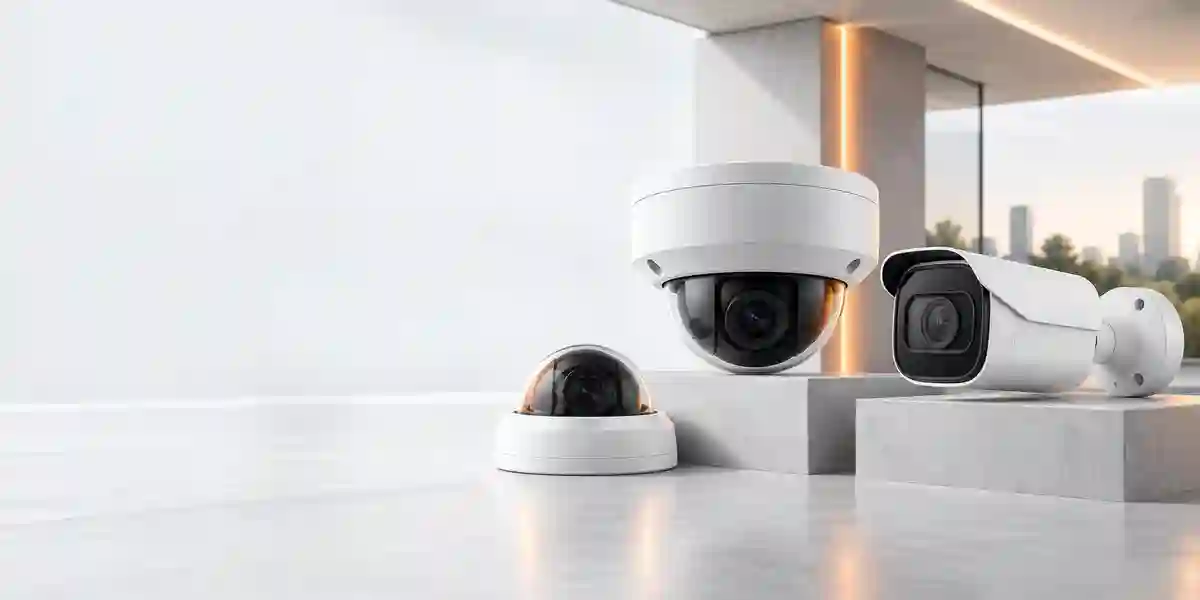
The Hanwha Vision QNV-C8013R is a 5MP network vandal dome built for projects that need wide-area coverage, AI-assisted video analytics, IR night visibility and a durable IP66/IK10 enclosure. Its 3.0 mm fixed lens delivers a 100° horizontal field of view, while 25 m IR, 120 dB WDR and PoE simplify common commercial surveillance deployments.
Quick product summary
QNV-C8013R is suited to entrances, corridors, retail areas, offices, parking access points, schools, hospitality spaces, warehouses and other locations where a compact vandal-resistant dome is preferred. The camera uses a 1/2.8-inch CMOS sensor and supports up to 2592 × 1944 resolution. H.265 and H.264 streams can run at up to 30 fps in 60 Hz environments, with MJPEG also supported. The 3.0 mm fixed F1.6 lens has a 100° horizontal, 73° vertical and 129° diagonal angle of view. Infrared illumination reaches up to 25 m, supporting monitoring after ambient light drops.
AI-assisted functions include object-oriented analytics, colour attribute information, BestShot and dynamic privacy masking. The camera also supports WiseNR II, WiseStream III, motion detection, virtual line and virtual area events. A hard-coated dome bubble, IP66 ingress protection and IK10 impact resistance make the model practical for exposed or public-facing positions where physical robustness matters.
Key features and business benefits
5MP detail
Up to 2592 × 1944 resolution provides more scene detail than standard 1080p cameras, useful where operators need a clearer overview of people, vehicles and activity.
AI-assisted analytics
AI-based event functions help reduce dependence on basic motion alone by supporting object-oriented detection and business-intelligence features that can improve event review workflows.
25 m infrared
Built-in 850 nm IR LEDs extend usable monitoring into low-light and dark scenes, supporting perimeter, doorway and general security coverage without relying only on visible lighting.
120 dB WDR
Wide dynamic range helps balance scenes that contain bright and dark areas, such as glazed entrances, loading bays, lobbies and parking access points.
IP66 and IK10
Weather and impact resistance support placement in sheltered outdoor locations and public-facing areas where a more rugged camera housing is required.
PoE deployment
IEEE 802.3af PoE allows network data and power to share one Ethernet cable, helping simplify cabling when used with a compatible PoE switch or injector.
Verified technical specifications
| Specification | Hanwha QNV-C8013R |
|---|---|
| Camera type | 5MP AI IR vandal dome network camera |
| Image sensor | 1/2.8-inch CMOS |
| Maximum resolution | 2592 × 1944 |
| Maximum frame rate | Up to 30 fps / 25 fps for H.265/H.264 |
| Lens | 3.0 mm fixed, F1.6, M12 |
| Field of view | H 100° / V 73° / D 129° |
| Minimum illumination | 0.05 lux colour; 0.005 lux B/W at stated conditions; 0 lux with IR on |
| IR distance | Up to 25 m |
| WDR | 120 dB |
| Video codecs | H.265, H.264, MJPEG |
| Edge storage | microSD/SDHC/SDXC, up to 256 GB standard; OnCloud edge recording supports compatible Hanwha-branded cards up to 1 TB |
| Alarm I/O | 1 input / 1 output with optional cable support |
| Audio | Selectable mic/line input and line output |
| Power | PoE IEEE 802.3af Class 3; max. 8.1 W, typical 4.0 W |
| Operating temperature | -30 °C to +55 °C |
| Protection | IP66, IK10 |
| Dimensions / weight | Ø120 × 97.5 mm / 579 g |
Compatibility, configuration and deployment guidance
Before specifying the QNV-C8013R, confirm the viewing distance and required pixel density for the task. Hanwha publishes DORI guidance of approximately 43.5 m for detection, 17.5 m for observation, 8.7 m for recognition and 4.3 m for identification under the EN 62676-4 reference method. These figures are planning references rather than guarantees because real image usability depends on mounting height, target movement, scene lighting, compression, angle, lens cleanliness and operator requirements.
The camera is powered by IEEE 802.3af PoE, so the switch port, PoE budget, cable category and cable length should be checked during system design. Recording can be provided by a compatible network video recorder, video management platform, NAS or supported edge-storage workflow. If analytics, MQTT events, audio, alarm I/O or cloud-connected recording are required, validate the exact software, firmware and accessory requirements before purchase.
For installation, choose a mounting position that protects the field of view from strong reflections and avoids placing IR illumination directly against nearby walls, soffits or glass. Confirm whether a compatible junction box, gang box, pendant accessory or other mounting hardware is required. Network security should include controlled device credentials, current approved firmware, restricted management access and a segmented surveillance network where appropriate.
What to confirm before ordering
- Required camera quantity and exact viewing areas.
- Whether a 3.0 mm fixed wide-angle lens suits the scene.
- Required identification distance versus overview coverage.
- PoE switch capacity, VLAN design and network bandwidth.
- NVR/VMS model, channel count, codec support and retention target.
- microSD requirements for edge recording or failover.
- Mounting surface, junction box and accessory requirements.
- Need for audio, alarm I/O, analytics or cloud integration.
- Site temperature, weather exposure and vandal-risk level.
- Local project standards, privacy requirements and acceptance criteria.
Ideal customers and use cases
The QNV-C8013R is a practical choice for organisations that want a vandal-resistant dome with a wide fixed view and modern AI-assisted event handling. It can fit office entrances, reception zones, schools, clinics, warehouses, hotels, retail stores, mixed-use buildings, controlled parking access, logistics facilities and public circulation areas. Its dome form factor is useful where a less directional appearance is preferred than a bullet camera, while IK10 protection is valuable in locations where accidental or deliberate impact is a consideration.
Because the lens is fixed rather than motorised varifocal, the model is best selected when the scene geometry is already understood. Projects requiring remote focal adjustment or a narrower long-distance view should compare a varifocal model. For perimeter lines, long approaches or distant vehicle capture, a bullet or varifocal camera may be more suitable. FourTeck can help map the camera type to the required surveillance objective rather than selecting solely by megapixel count.
Hanwha QNV-C8013R Dubai
Dubai buyers evaluating the Hanwha QNV-C8013R commonly need a camera that can cover commercial entrances, office floors, hospitality properties, retail spaces, building common areas and external sheltered positions without adding unnecessary installation complexity. The model’s combination of 5MP resolution, 100° horizontal field of view and 25 m infrared illumination makes it particularly relevant for medium-distance overview scenes where a broad field is more important than optical zoom. In a Dubai project, the design should begin with the actual surveillance objective: identify a person at an access point, observe activity across a lobby, monitor stock movement, review vehicle flow, or maintain a general evidential overview. That objective determines whether the fixed 3.0 mm lens is appropriate.
Heat, dust, reflections and mixed lighting are also important local considerations. The QNV-C8013R is specified to operate from -30 °C to +55 °C and carries IP66 weather protection, but installers should still avoid poor placement that exposes the dome directly to unwanted glare, heavy contamination or reflective surfaces close to its IR LEDs. In glazed office towers and shopfront environments, the 120 dB WDR capability can help manage scenes with bright exterior daylight behind people entering the premises. In darker corridors, parking access areas and service zones, integrated IR can extend monitoring after the visible light level drops.
Dubai network-camera projects should also confirm PoE availability, switch capacity, network segmentation, NVR/VMS compatibility, recording retention and cyber-security policy. The camera can support edge storage, but retention planning still needs a bitrate and motion profile appropriate to the site. Buyers searching for Hanwha QNV-C8013R price in Dubai should request a project quote instead of assuming a fixed online price, because the final requirement may include mounts, storage, switching, configuration and recording software. For multi-camera deployments, FourTeck can assist with product selection, network design discussion and configuration planning through the FourTeck Dubai and regional technology site.
Hanwha QNV-C8013R UAE
For UAE-wide deployments, the Hanwha QNV-C8013R can be considered for standardised surveillance across offices, retail branches, warehouses, educational facilities, clinics and commercial properties in multiple emirates. A key advantage of standardising on one camera family is operational consistency: installers can use common mounting practices, operators can work with familiar image settings, and IT teams can maintain a repeatable firmware and device-management process. The QNV-C8013R supports H.265 and H.264, PoE and modern event functions, making it suitable for IP surveillance environments where bandwidth, storage and analytic events need to be planned together.
UAE procurement teams should compare the camera’s wide fixed lens against site drawings before committing to volume quantities. A 100° horizontal field is effective for broad spaces, but it will not provide the same distant subject size as a narrower varifocal lens. For branch rollouts, a useful approach is to define repeatable camera roles such as entrance overview, cashier or reception observation, corridor coverage, loading-zone monitoring and external doorway coverage. Each role can then be matched to an expected mounting height and recognition distance before final approval.
Infrastructure is equally important. Confirm PoE budgets, structured cabling, UPS coverage, network addressing, NVR/VMS channels, retention duration and user permissions. Edge storage can support local recording workflows, while central NVR or VMS recording may be preferred for multi-site operations. If cloud-connected services or advanced analytics are required, confirm platform support and licensing at the design stage. Buyers across Abu Dhabi, Sharjah, Ajman, Ras Al Khaimah, Fujairah and Umm Al Quwain can use FourTeck UAE to discuss project requirements. FourTeck does not publish a fixed price or stock promise here; availability, accessories and commercial terms should be confirmed for the selected project configuration.
Hanwha QNV-C8013R Kenya
Kenyan organisations considering the Hanwha QNV-C8013R often need reliable IP surveillance for offices, schools, hotels, healthcare sites, warehouses, retail facilities and mixed indoor/outdoor commercial areas. The camera’s 5MP resolution and wide 3.0 mm fixed lens suit overview positions where operators want to see activity across entrances, corridors, reception zones or storage areas. Its built-in IR is rated for up to 25 m, supporting monitoring during low-light periods, while IP66 and IK10 ratings provide a stronger fit for exposed or public-facing installations than a basic indoor dome.
In Kenya, project planners should pay special attention to network and power continuity. PoE simplifies field cabling, but reliable operation still depends on a correctly sized switch, quality structured cabling and appropriate power backup where outages may affect surveillance continuity. If the site uses centralised recording, confirm the NVR or VMS channel capacity and retention plan. If edge recording is needed, select compatible microSD media and define how footage will be retrieved and monitored. AI-based events can help make review more efficient, but they should be configured for the actual scene instead of enabled indiscriminately.
For Nairobi offices, logistics locations, education campuses and retail environments, camera placement should reflect the expected task. A broad fixed view is useful for scene awareness; however, distant identification may require a different lens or camera type. Outdoor placement should consider rain exposure, dust, backlighting and physical reach. Buyers searching for Hanwha QNV-C8013R Kenya pricing should also account for mounting accessories, PoE switching, storage, installation and software requirements rather than comparing the camera body alone. For guidance on project configuration and regional procurement, visit FourTeck Kenya and discuss the required camera quantity, target areas, recording duration and integration environment before ordering.
Hanwha QNV-C8013R Kuwait
The Hanwha QNV-C8013R is relevant to Kuwait CCTV projects that require a compact network dome for commercial interiors, building entrances, retail units, warehouses, hospitality sites and sheltered external positions. Its 5MP sensor, 100° horizontal field of view and 25 m infrared capability make it useful for broad monitoring where a fixed lens is acceptable. The model also includes 120 dB WDR, which can be valuable in lobbies and doorways affected by strong contrast between indoor lighting and bright outdoor conditions.
Environmental design matters in Kuwait. Although the camera is rated for operation up to +55 °C and has IP66 protection, installers should consider direct solar loading, enclosure placement, dust accumulation and the effect of dirty dome surfaces on nighttime IR images. A weather rating does not remove the need for sensible mounting. In exposed areas, position the camera to reduce unnecessary heat and contamination and schedule lens/dome inspection as part of maintenance. The IK10 rating can support locations where impact resistance is desirable, including public access points and service zones.
From an IT perspective, PoE enables a single network cable to carry power and data, but the switch must provide sufficient IEEE 802.3af capacity for the full camera count. Recording design should consider H.265 settings, frame rate, image quality, motion patterns and the required number of retention days. For multi-site organisations, consistent network naming, firmware management and access-control policies can simplify long-term operation. Kuwait buyers should also verify whether the QNV-C8013R’s fixed lens suits every proposed location; gates and long approaches may need narrower or varifocal optics. For assistance with project scoping and commercial enquiries, use FourTeck Kuwait. Pricing, availability and final accessories should be confirmed against the specific bill of materials.
Hanwha QNV-C8013R Ghana
In Ghana, the Hanwha QNV-C8013R can suit businesses and institutions seeking a 5MP IP vandal dome for reception areas, branch offices, educational sites, hospitality properties, retail stores, distribution facilities and controlled external positions. Its fixed 3.0 mm lens provides a wide scene view, so the camera is most effective when the objective is area awareness and medium-distance observation rather than long-range optical detail. Built-in 25 m IR supports nighttime scenes, while IP66 and IK10 protection make the housing suitable for demanding public-facing areas.
A strong CCTV design in Ghana should consider connectivity and power resilience from the start. The QNV-C8013R uses PoE, which can simplify installation, but all cameras depend on the upstream switch, UPS and recorder environment. For sites where power quality or outages are a concern, design backup power for the surveillance network rather than protecting only the recorder. Bandwidth and storage should be calculated from the selected codec, frame rate, scene activity and retention requirement. H.265 can improve storage efficiency, while edge microSD can be used as part of a local recording or resilience strategy depending on the chosen system architecture.
The camera’s AI-assisted analytics can help identify object-based events and support faster review, but results depend on positioning and scene conditions. Avoid mounting angles that place people too small in the image if recognition is important. WDR can help at entrances affected by daylight, and IR can support darker service areas, but supplemental lighting may still improve evidential image quality. Buyers comparing Hanwha QNV-C8013R Ghana offers should ask for a complete system proposal including mounts, switching, storage and installation requirements. For regional assistance and procurement discussions, visit FourTeck Ghana and provide site drawings or camera-location details where available.
Hanwha QNV-C8013R Uganda
Ugandan buyers considering the Hanwha QNV-C8013R may be planning surveillance for offices, banks and service branches, education sites, warehouses, hotels, retail spaces, healthcare facilities or residential-commercial developments. The camera offers a useful balance of 5MP resolution, wide fixed coverage and vandal resistance. A 3.0 mm lens with a 100° horizontal field is well suited to entrances and room-scale overview positions, while up to 25 m IR extends monitoring into low-light and dark periods.
For Kampala and other urban deployments, structured network planning is essential. The camera’s PoE interface reduces the need for separate local power wiring, but the full camera network should be designed with adequate switch ports, PoE headroom, uplink bandwidth, UPS capacity and recorder storage. If cameras are distributed across multiple buildings, fibre uplinks or managed network segmentation may be appropriate. Recording retention must be sized from actual project requirements instead of relying on a generic days-of-storage estimate, because bitrates change with resolution, frame rate, compression settings and scene movement.
The QNV-C8013R’s AI-based features can support event detection and quicker investigation, but they work best when the camera is mounted at a suitable angle with enough target pixels. The DORI reference distances should be treated as planning guidance, not a promise that every face or vehicle will be identifiable at the stated range. In outdoor or semi-outdoor positions, consider rain direction, dust, insects and nearby reflective objects that may affect the dome or IR performance. For assistance selecting the QNV-C8013R, compatible recording, PoE and mounting components, organisations can contact FourTeck Uganda. Confirm final price, lead time and configuration for the actual project rather than relying on generic product-only quotations.
Hanwha QNV-C8013R Nigeria
For Nigeria, the Hanwha QNV-C8013R is suitable for projects that need a robust wide-angle IP dome with 5MP video, IR and AI-assisted analytics. Potential locations include corporate offices, retail stores, hotels, logistics buildings, educational sites, healthcare facilities, gated access areas and commercial common spaces. The camera is compact but physically robust, with IP66 weather resistance and IK10 impact protection. Its integrated IR is rated to 25 m, while 120 dB WDR helps in high-contrast entrances where bright external light can otherwise obscure subjects.
Power resilience is a major design consideration for many Nigerian surveillance deployments. Because the QNV-C8013R is PoE powered, backup power for the PoE switch can keep both network connectivity and the camera alive during short utility interruptions when paired with a correctly sized UPS or site power system. For larger installations, define the critical cameras that must stay online and calculate the backup load accordingly. Network segmentation, strong device credentials and controlled remote access should also form part of the commissioning checklist.
The 3.0 mm fixed lens should be confirmed against the site plan. It provides broad coverage but may not be the right choice for distant gates, long corridors or licence-plate-focused tasks. Those scenes may call for a narrower or varifocal camera. AI analytics can improve event workflows, but detection zones, object sizes and schedules should be tuned during commissioning to reduce nuisance events. Storage planning should account for frame rate, H.265 compression, motion levels and required retention. Nigerian organisations looking for Hanwha QNV-C8013R pricing can discuss a complete bill of materials through FourTeck Nigeria, including PoE switching, recording, storage and installation accessories as required.
Hanwha QNV-C8013R Seychelles
Seychelles projects evaluating the Hanwha QNV-C8013R may include resorts, offices, retail premises, education facilities, service buildings and other sites where indoor and sheltered outdoor surveillance is required. The camera combines a 5MP sensor, wide 3.0 mm fixed lens, 25 m infrared illumination, PoE and a vandal-resistant IP66/IK10 housing. These characteristics make it suitable for broad coverage around entrances, walkways, reception areas, service corridors and facility zones where a compact dome is preferred.
Coastal and island environments deserve careful installation planning. IP66 provides dust and water ingress protection to the certified level, but long-term reliability still benefits from appropriate mounting, weather shielding where practical, quality cable glands and scheduled cleaning. Salt-laden air, humidity and surface contamination can affect external equipment over time, so installers should treat environmental protection as a complete system issue rather than relying on the camera rating alone. The QNV-C8013R is specified for up to 100% RH condensing in its stated operating conditions, with humidity control supported by its air vent design, but site practice remains important.
For resort and hospitality deployments, the wide field of view can work well in circulation and service areas, while WDR helps where bright exterior light meets shaded interiors. Privacy masking and controlled user permissions may also be important in guest-facing environments. Confirm local privacy policy, recording retention and access governance before deployment. Network design should include PoE capacity, resilient uplinks and storage calculations suited to the number of cameras and retention days. Organisations in Seychelles can use FourTeck Africa to discuss regional project requirements, configuration and procurement. Final commercial terms, availability and logistics should be confirmed for each project.
Related Hanwha camera and surveillance categories
The exact model should be selected by scene, lens requirement and recording objective. For projects that need other form factors or capabilities, FourTeck can also assist with Hanwha dome, bullet, PTZ, AI and recording-system selection. The following image references from the FourTeck media library illustrate related Hanwha solution groups used across surveillance planning.
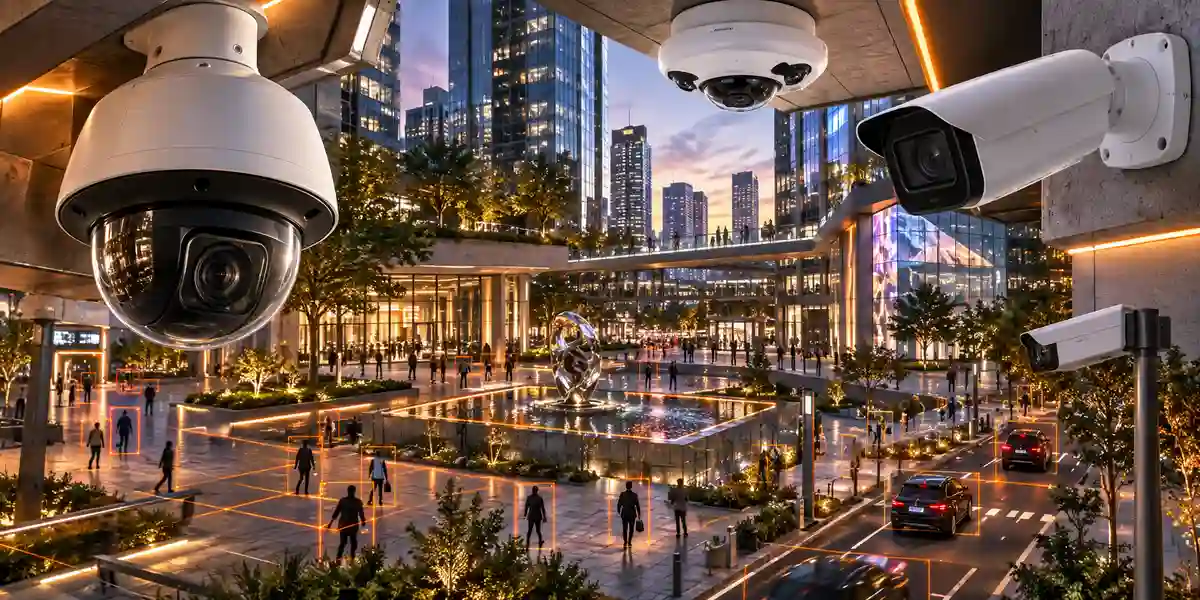
Hanwha AI cameras
Best fit where object classification, metadata and intelligent event handling are central to the surveillance workflow.
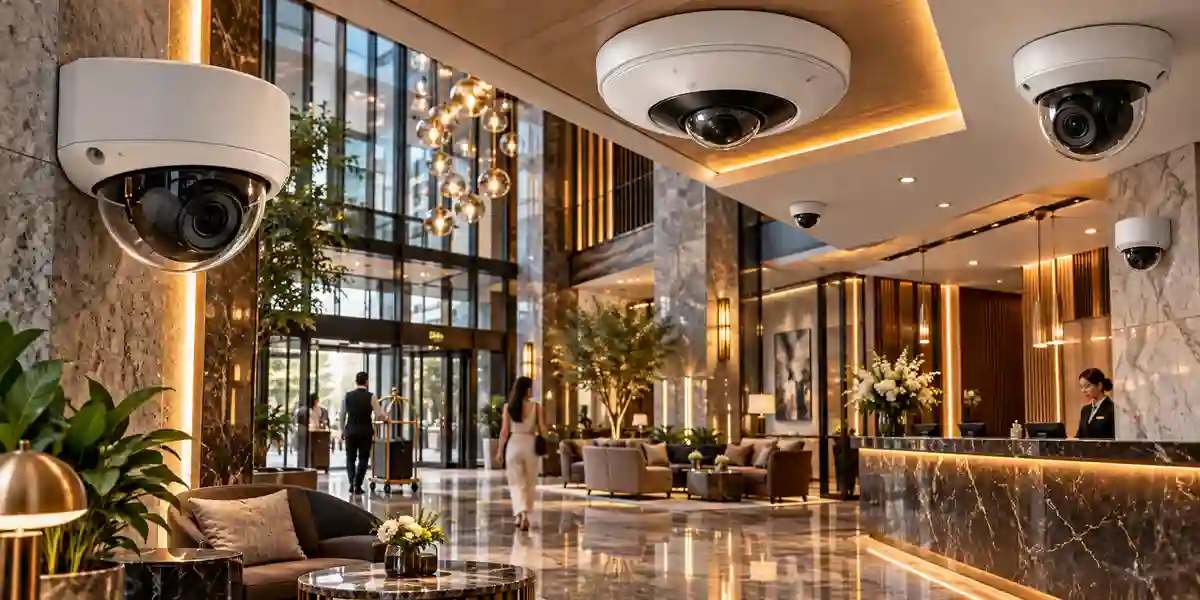
Hanwha dome cameras
Useful for discreet indoor and vandal-resistant positions where ceiling or wall mounting is preferred.
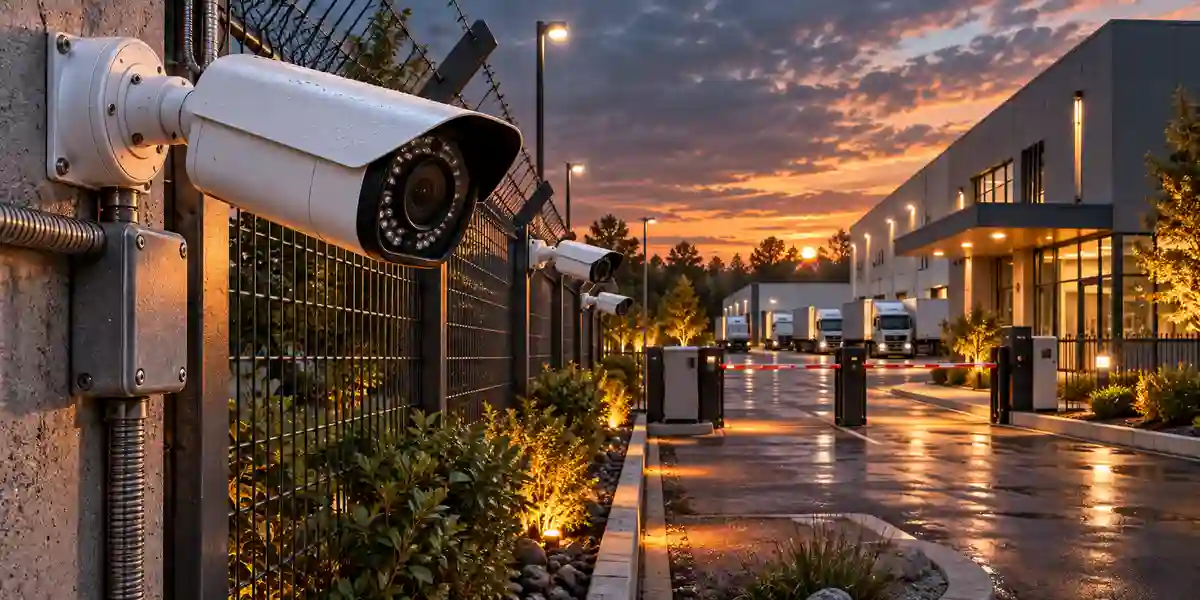
Hanwha bullet cameras
Often considered for perimeter and directional outdoor views where visible camera orientation is useful.
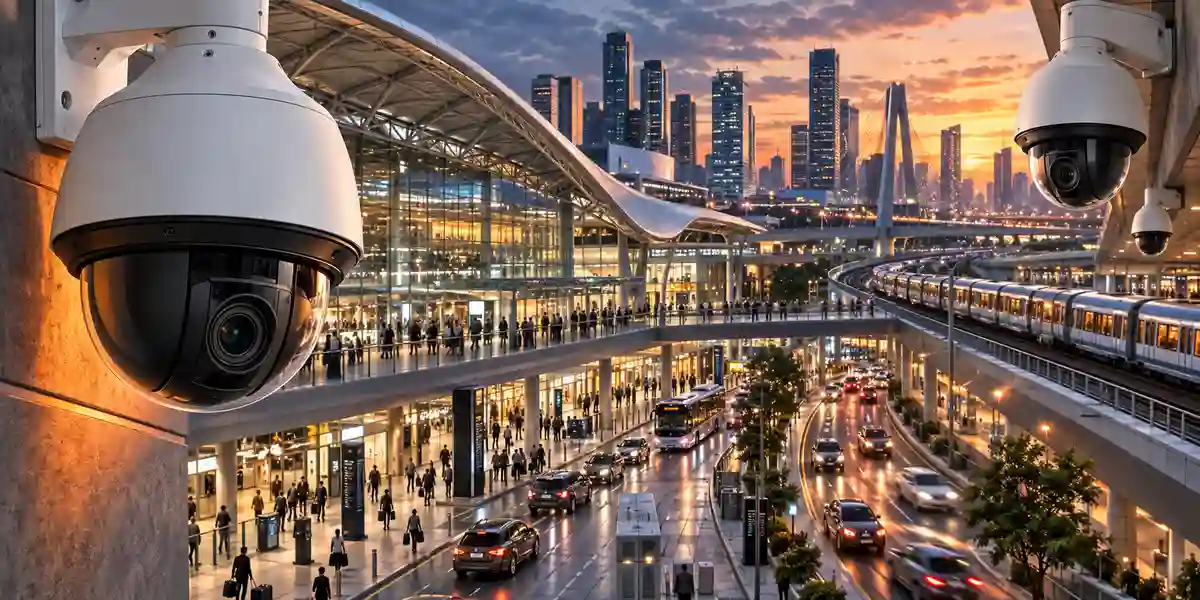
Hanwha PTZ cameras
Suitable for larger areas where operators require motorised pan, tilt and zoom rather than a fixed field of view.

Hanwha network cameras
A broader IP-camera range for different resolutions, housings, lenses and analytics requirements.
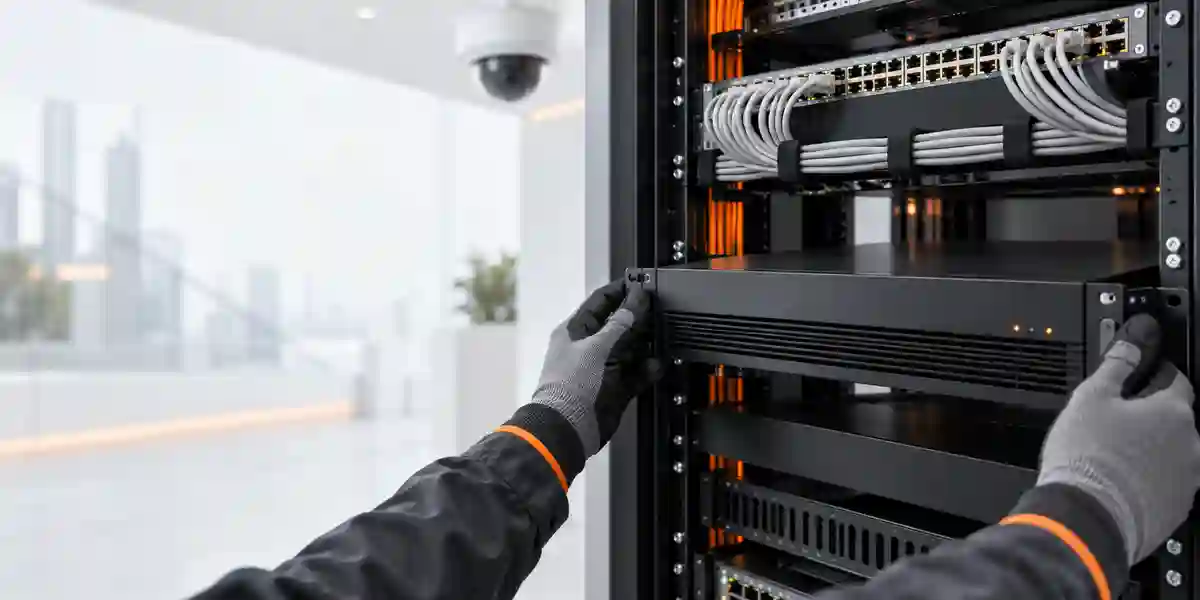
Hanwha NVR solutions
Recording platforms should be matched to camera count, storage retention, network capacity, playback needs and analytics integration.
Regional FourTeck resources
For broader technology and surveillance project discussions, use the regional route that matches the deployment: FourTeck, FourTeck UAE, FourTeck Kenya, FourTeck Kuwait, FourTeck Ghana, FourTeck Uganda, FourTeck Nigeria and FourTeck Africa. For infrastructure around the surveillance system, FourTeck IT Services UAE can be used as an additional project discussion route.
Why contact FourTeck for QNV-C8013R project assistance?
Camera selection is only one part of a working IP surveillance system. A useful procurement conversation should cover the required scene, viewing distance, lighting, camera count, mounting, PoE, network design, recording platform, retention time and user access. FourTeck can help customers discuss these requirements and prepare a project-specific configuration rather than treating the camera as an isolated component. Any price, stock position, logistics, warranty route or project lead time should be confirmed at quotation stage for the target country and selected bill of materials.
Frequently asked questions
What resolution does the Hanwha QNV-C8013R support?
The QNV-C8013R supports a maximum resolution of 2592 × 1944, commonly described as 5MP. It can stream H.265 or H.264 at up to 30 fps in 60 Hz environments or 25 fps in 50 Hz environments. Lower resolutions are also available when required for secondary streams, bandwidth management or specific viewing clients.
Does the QNV-C8013R have night vision?
Yes. The camera includes 850 nm infrared LEDs with a rated viewable length of up to 25 m. It also uses automatic day/night switching. Actual nighttime detail depends on mounting, scene reflectivity, nearby surfaces, weather, lens cleanliness and the size and speed of the subject.
Is the Hanwha QNV-C8013R suitable for outdoor use?
The camera carries an IP66 ingress-protection rating and IK10 impact rating, and Hanwha specifies an operating temperature from -30 °C to +55 °C. These ratings support many indoor and outdoor installations, but the mounting position, environmental exposure, cable protection and maintenance plan should still be assessed for the site.
What lens does the QNV-C8013R use?
It uses a 3.0 mm fixed focal F1.6 lens with a 100° horizontal, 73° vertical and 129° diagonal field of view. Because the lens is fixed, installers should verify the scene before ordering. Projects requiring remote focal adjustment or a much narrower view may need a varifocal model instead.
Does the QNV-C8013R support PoE?
Yes. It supports IEEE 802.3af Class 3 Power over Ethernet. Hanwha lists a maximum PoE consumption of 8.1 W and typical consumption of 4.0 W. The full PoE switch budget should be calculated for all connected cameras, with reasonable headroom for project reliability.
What AI functions are available?
Hanwha lists AI-based analytics and business-intelligence functions including object-oriented events, colour attributes, BestShot and dynamic privacy masking. Available event behaviour can vary by firmware and system integration, so confirm the exact workflow required with the selected NVR, VMS or cloud platform before deployment.
Can the camera record to a microSD card?
Yes. The QNV-C8013R includes one microSD/SDHC/SDXC slot. Hanwha specifies up to 256 GB for standard edge storage and notes support for up to 1 TB with certified Hanwha-branded microSD cards for OnCloud edge recording. Select storage based on the intended recording workflow and retention requirement.
How does 120 dB WDR help?
Wide Dynamic Range helps balance details in scenes containing both bright and dark areas. This is useful at building entrances, reception areas, loading bays and other locations where daylight may be visible behind a subject. WDR improves scene handling, but correct camera angle and exposure setup still matter.
What should I compare before choosing QNV-C8013R?
Compare field of view, target distance, required identification detail, lighting, vandal risk, weather exposure, NVR/VMS compatibility, PoE availability and storage retention. The QNV-C8013R is a wide fixed-lens dome; longer-distance or zoom-focused scenes may be better served by a varifocal, bullet or PTZ camera.
How can I get Hanwha QNV-C8013R pricing in Dubai?
Request a project quote with the required quantity and system details. A useful quotation should identify whether mounting accessories, PoE switching, recording, storage, software and installation are needed. FourTeck can discuss the configuration and provide commercial information based on the requested bill of materials and destination.
Discuss your Hanwha QNV-C8013R configuration
Share the camera quantity, site type, target viewing distances, recording duration and existing network or NVR environment. FourTeck can help you review whether the QNV-C8013R is the right fixed-lens vandal dome for the project and identify related infrastructure requirements.
Reviews
There are no reviews yet.