

Hanwha QNV-C8023R Dubai
The Hanwha Vision QNV-C8023R is a 5MP AI IR vandal dome network camera designed for fixed-view surveillance where reliable day/night imaging, weather resistance and impact protection matter. The 4mm fixed lens, 30m infrared range, 120dB WDR, H.265/H.264/MJPEG streaming and AI-based person/vehicle classification make it a practical choice for commercial CCTV projects in Dubai and wider regional deployments.
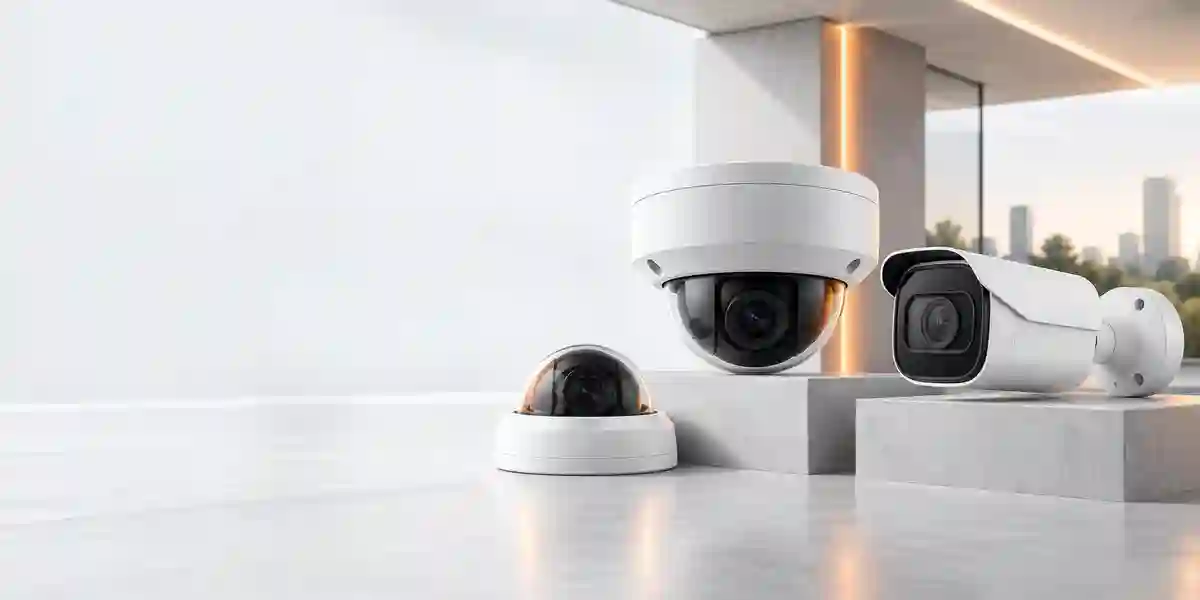
Quick Product Summary
Maximum 5MP, up to 2592 × 1944.
4mm fixed focal length, F1.6.
Built-in IR illumination up to 30m.
IP66 weather resistance and IK10 impact rating.
AI-based person and vehicle detection plus event rules.
PoE network power, maximum stated consumption 8.1W.
Product Overview and Buyer Fit
The QNV-C8023R sits in Hanwha Vision’s Q AI camera family and is intended for buyers who need a compact vandal-resistant dome rather than a visible bullet camera or a motorised zoom camera. It combines a 1/2.8-inch CMOS sensor with a fixed 4mm lens and an approximately 80° horizontal, 59° vertical and 102° diagonal field of view. That geometry is useful when the installer already knows the viewing area and does not require remote optical zoom. In practical terms, the model is a strong fit for entrance approaches, reception exteriors, building access points, loading areas, perimeter passages, parking approaches, stair landings, service corridors, school or campus circulation zones, retail exterior positions and other defined scenes where a fixed perspective is acceptable.
Its AI engine can classify people and vehicles, helping reduce irrelevant motion events compared with simple pixel-motion detection. Event rules can be built around virtual lines and virtual areas for use cases such as crossing, direction, loitering, intrusion, enter and exit monitoring. The camera also supports Color Attribute and BestShot functions, while dynamic privacy masking can follow detected subjects. These features can help operators review events more efficiently, but analytics performance still depends on correct camera height, angle, lighting, target size and scene design. For critical projects, analytics should be validated during commissioning rather than treated as a substitute for physical security controls.
For Dubai buyers, the IP66 and IK10 ratings are especially relevant for exposed commercial locations where dust, outdoor conditions or tampering are concerns. The hard-coated dome bubble adds practical durability, while integrated IR helps maintain useful monochrome imaging after dark. The QNV-C8023R also supports H.265, H.264 and MJPEG, along with Hanwha WiseStream III and WiseNR II technologies that use the AI engine to improve bandwidth and image handling. Storage calculations should still be based on actual scene activity, bitrate settings, frame rate, retention days and recording policy.
Key Features and Business Benefits
5MP Detail
Up to 2592 × 1944 resolution provides more image detail than standard 1080p, helping operators monitor defined areas with a useful balance between clarity, bandwidth and storage demand.
AI Object Classification
Person and vehicle classification supports more focused event handling. Vehicle categories include car, truck, bus, bicycle and motorcycle, helping project teams build more meaningful surveillance rules.
30m Infrared
Integrated infrared illumination supports night monitoring in scenes where ambient light is insufficient. Real-world usable distance depends on reflectivity, mounting height and scene geometry.
120dB WDR
Wide Dynamic Range helps handle scenes that include both bright and dark areas, such as doorways, covered entrances and access points exposed to strong outdoor light.
IP66 + IK10
Weather and impact protection make this vandal dome suitable for demanding installations where a standard indoor dome may not be appropriate.
PoE Deployment
Power over Ethernet allows data and power to use the network cable, simplifying many installations when the switch or PoE injector is correctly sized and standards-compatible.
Verified Technical Specifications
| Specification | QNV-C8023R |
|---|---|
| Camera type | 5MP AI IR vandal dome network camera |
| Sensor | 1/2.8-inch CMOS |
| Maximum resolution | 2592 × 1944 |
| Maximum frame rate | Up to 30fps at 5MP with H.265/H.264 |
| Lens | 4.0mm fixed focal, F1.6, M12 mount |
| Field of view | Approx. H 80° / V 59° / D 102° |
| Minimum illumination | Color 0.05 lux; B/W 0.005 lux at stated F1.6/1/30sec conditions; 0 lux with IR on |
| IR distance | Up to 30m |
| WDR | 120dB |
| Video compression | H.265, H.264, MJPEG; WiseStream III |
| AI analytics | Person/vehicle object detection, Color Attribute, BestShot and event analytics |
| Protection | IP66, IK10, hard-coated dome bubble |
| Power | PoE, maximum stated consumption 8.1W |
| Operating temperature | -30°C to +55°C |
Specifications are based on current Hanwha Vision product documentation and can change with firmware or regional variant. Confirm the final model suffix and project requirements before procurement.
Compatibility, Configuration and Deployment Guidance
The QNV-C8023R should be planned as part of the complete surveillance system, not as an isolated camera purchase. Before specifying the model, confirm that the required field of view is suitable for a 4mm fixed lens. A fixed lens is simple and stable, but it cannot provide remote optical zoom after installation. If the scene may change or precise framing is difficult to predict, a varifocal model may be more appropriate. For entrances or gates, also check the expected subject distance and whether identification-level detail is required rather than general observation.
For recording, verify support with the intended Hanwha NVR, compatible VMS or third-party platform. Hanwha recommends using officially compatible VMS versions or current Hanwha NVR versions where applicable. Confirm channel licensing, supported codec profiles, event metadata compatibility, storage retention and export requirements. AI metadata support may vary by recorder or VMS integration, so a system that can display video is not automatically guaranteed to expose every analytics feature.
PoE design should include switch power budget, cable length, cable quality, surge protection strategy and network topology. With a maximum stated PoE consumption of 8.1W, the individual camera load is modest, but larger projects can still exceed a switch’s total PoE budget when many endpoints are connected. VLAN design, cybersecurity, password policy, firmware maintenance and access control should be included in commissioning. Hanwha has published firmware security advisories for this camera family, which reinforces the importance of running supported firmware and maintaining a documented update process.
For outdoor mounting, assess direct sunlight, rain exposure, reflective surfaces, dust, night-time lighting and likely impact zones. IR performance can be reduced by nearby walls, canopies, reflective signs or dirty dome surfaces that bounce infrared light back into the lens. Correct mounting and regular cleaning can materially improve night image quality. Where local regulation or privacy policy requires it, use privacy masking and signage appropriately and avoid aiming cameras into areas that are not part of the legitimate security objective.
Ideal Customers and Use Cases
Entrances, perimeter doors, loading points, visitor approaches and service corridors where a discreet vandal-resistant dome is preferred.
Exterior entrances, delivery access, back-of-house circulation and defined customer approach areas where day/night coverage is important.
Walkways, gates, building approaches and common circulation points, subject to site policy and applicable privacy requirements.
Loading bays, dispatch doors, perimeter passages and vehicle approach zones where person/vehicle analytics can support event review.
Defined outdoor monitoring points that benefit from IP66 and IK10 protection, provided environmental limits and mounting conditions are respected.
Standardised fixed-view deployments where a consistent 5MP camera, PoE architecture and central management workflow are desired.
What to Confirm Before Ordering
- Is a 4mm fixed lens and approximately 80° horizontal view correct for the scene?
- What camera mounting height and subject distance will be used?
- Does the recorder or VMS support the required video streams, analytics metadata and licensing?
- How many days of retention are required, and what bitrate/frame-rate policy will be used?
- Is the PoE switch budget sufficient for all cameras and network devices?
- Will the site need surge protection, UPS backup or outdoor-rated network infrastructure?
- Are privacy masking, signage or local regulatory approvals relevant to the project?
- Has the project team confirmed the regional model suffix, accessories and mounting hardware?
- Has current firmware and cybersecurity policy been included in commissioning?
- Is a fixed dome the best format, or would a bullet, varifocal dome or PTZ provide a better result?
QNV-C8023R Compared with Related Camera Types
The QNV-C8023R is best understood as a rugged fixed-lens dome. If the project needs the same general 5MP AI platform but an indoor dome form factor, the related QND-C8023R may be considered where environmental protection requirements differ. If a more visible directional camera is preferred, the QNO-C8023R bullet format can suit perimeter and approach monitoring. Buyers should not select between dome and bullet styles only by appearance: mounting surface, aiming flexibility, exposure, vandal risk, maintenance access and night-time reflections can all affect performance.
Within broader Hanwha ranges, higher-tier X-series or P-series cameras may offer different imaging capabilities, lens options, analytics depth or specialised functions. Conversely, lower-resolution or simpler models may be adequate for non-critical observation points. The correct alternative depends on the operational objective. If the primary goal is merely to confirm movement at a doorway, 5MP may be more than necessary. If facial identification, long-distance detail or licence-plate capture is essential, the lens and camera type require more careful engineering than a general-purpose 4mm dome can provide.
Hanwha QNV-C8023R Dubai
Dubai security projects range from compact office installations to large hospitality, retail, logistics, education and industrial environments. For buyers specifically searching for the Hanwha QNV-C8023R Dubai, the key question is not simply whether the camera is available, but whether its fixed 4mm view and 5MP imaging profile match the planned scene. In busy commercial districts, building entrances may contain strong daylight outside and comparatively darker interior zones. The camera’s 120dB WDR can help in such mixed-light scenes, but mounting angle remains important. A camera placed too high or aimed too steeply may capture activity without producing the identification detail expected by the operator.
Dubai warehouses, distribution facilities and service yards may value the QNV-C8023R because of its IP66 environmental protection, IK10 impact rating and AI person/vehicle classification. Virtual line and area rules can support monitoring of loading bays, perimeter passages and vehicle movement zones. However, analytics should be planned around realistic object sizes and approach directions. Heat exposure, dust, reflective surfaces and outdoor lighting should also be considered. Although the documented operating range reaches +55°C, installers should avoid locations where enclosures or direct solar load create conditions outside specified limits.
For Dubai offices, hotels, schools and retail properties, the vandal dome form factor can provide a more discreet appearance than a bullet camera. Integrated 30m IR is useful after dark, while the hard-coated dome bubble supports durability. PoE can simplify structured cabling, but larger sites should verify switch power budgets, UPS capacity and network segmentation. Recording requirements should be translated into storage calculations based on camera count, frame rate, codec, bitrate and retention days rather than using a generic storage figure.
FourTeck can assist Dubai buyers with model selection, CCTV design discussion, compatibility checks, recorder and network planning, and quotation support. Current stock, price, lead time and any project-specific warranty terms should be confirmed at enquiry stage rather than assumed. For site-wide planning, review FourTeck’s CCTV installation guidance for Dubai and UAE projects or contact FourTeck sales with the floor plan, camera count, target coverage areas and retention requirement.
Hanwha QNV-C8023R UAE
UAE deployments often extend beyond a single Dubai site, with organisations standardising security equipment across Abu Dhabi, Sharjah, Ajman, Ras Al Khaimah, Fujairah, Umm Al Quwain and Al Ain. The Hanwha QNV-C8023R UAE can fit a multi-site standard where buyers want a rugged 5MP fixed dome, PoE connectivity, integrated infrared and AI-based classification. Standardisation can simplify maintenance and user training, but it should not override site-specific camera selection. A 4mm lens that works well at one entrance may be too narrow or too wide for another location.
For multi-emirate procurement, the technical schedule should define the exact model code, required accessories, mounting type, network standard, recorder platform, retention policy and commissioning procedure. This is especially important when equipment is purchased centrally but installed by different teams. The QNV-C8023R’s support for H.265, H.264 and MJPEG offers flexibility, while WiseStream III can help manage bandwidth; nevertheless, each site should be tested on the intended VMS or NVR before a large rollout.
UAE sites may vary greatly in environmental exposure. Coastal locations can face different conditions from indoor commercial premises, while warehouses and industrial facilities may have dust, vibration or high ambient temperatures. IP66 and IK10 ratings make the camera suitable for many demanding positions, but they do not eliminate the need for correct cable glands, junction boxes, surge protection and sealed installation practices. Network security should also be part of the design. Camera firmware should be maintained, default credentials avoided, access restricted and CCTV traffic segmented where appropriate.
Buyers planning projects across the Emirates can use FourTeck UAE technology resources and FourTeck’s main technology site to discuss camera, recorder, networking and installation requirements together. A complete quotation should be based on the number of cameras, recorder/VMS choice, storage days, PoE switching, mounting accessories and service scope. FourTeck can help prepare a practical configuration while keeping unverified stock, pricing and lead-time claims out of the planning stage until the project details are confirmed.
Hanwha QNV-C8023R Kenya
Kenyan organisations considering the Hanwha QNV-C8023R may include corporate offices, schools, logistics operators, retail groups, hospitality sites, warehouses and industrial facilities that need a durable outdoor dome with AI-assisted event detection. The model’s 5MP resolution, 30m IR and IP66/IK10 construction can suit defined perimeter and access-control scenes, but the first step should be confirming whether the fixed 4mm lens produces the right field of view at the intended camera position. Long driveways or wide compounds may require a different lens or camera format.
In Nairobi and other business centres, buyers frequently need surveillance systems that can be maintained without excessive complexity. PoE architecture can help by centralising power at the switch, but network design should account for cable distances, power budget and UPS backup. If cameras are spread across large compounds, fibre uplinks or distributed switching may be more reliable than excessively long copper runs. The QNV-C8023R can use H.265 to reduce storage demand compared with less efficient encoding, although actual retention still depends on bitrate, activity level and recording schedule.
For logistics and warehousing environments, AI person/vehicle classification and virtual area events can help operators locate relevant incidents faster. These features are useful for monitoring gates, dispatch zones and loading areas when camera placement is designed around the analytics. They should not be interpreted as guaranteed detection in every condition. Rain, glare, low target size, occlusion and unusual angles can affect performance. Commissioning tests should therefore include day and night scenes that match real operations.
Kenya buyers can use FourTeck Kenya for regional product and project enquiries. When requesting a quotation, provide site type, city, camera quantity, target viewing areas, required retention period, existing recorder/VMS details and whether installation support is required. FourTeck can then discuss a configuration instead of quoting a camera without the surrounding infrastructure. Current availability, shipping arrangements and commercial terms should be confirmed for the specific project.
Hanwha QNV-C8023R Kuwait
Kuwait customers evaluating the Hanwha QNV-C8023R typically need to balance image quality, environmental durability, storage requirements and maintenance practicality. The camera’s 5MP sensor and fixed 4mm lens are appropriate for many entrances, perimeter paths, loading points and building approaches where the field of view is known in advance. Its IP66 rating and operating specification support outdoor use, while IK10 impact protection is valuable in exposed public or service areas. Even so, direct sun, heat accumulation and dust should be considered carefully during mounting.
For commercial buildings and compounds, the 120dB WDR can help where bright exterior areas meet shaded entrances. IR illumination up to 30m assists at night, but nearby walls, reflective vehicles, glossy surfaces or dirty dome covers can create IR glare. Good installation practice therefore includes checking the night image after final aiming rather than assuming the nominal IR range will translate directly to every scene. Camera height should also be chosen according to whether the objective is general situational awareness or stronger identification detail.
Kuwait projects that include dozens of cameras should calculate PoE and storage centrally. The QNV-C8023R’s maximum stated PoE consumption is 8.1W, yet switch sizing should include all cameras, uplinks, access points and future expansion where applicable. Recording design should specify continuous versus event recording, frame rate, bitrate, codec and retention. AI event metadata may improve review efficiency, but confirm that the intended recorder or VMS exposes the functions required by operators.
For Kuwait procurement and project discussions, visit FourTeck Kuwait. Share the location type, required camera count, existing surveillance platform, target retention period and mounting conditions. FourTeck can help compare the QNV-C8023R with other fixed or varifocal models and coordinate the wider system discussion around switching, recording and installation. Pricing, stock, delivery and warranty conditions should be confirmed for the exact commercial proposal rather than assumed from another market.
Hanwha QNV-C8023R Ghana
The Hanwha QNV-C8023R can suit Ghanaian organisations that need a vandal-resistant network camera for offices, education, warehousing, hospitality, retail, financial services or industrial sites. Its 5MP resolution provides useful detail for defined monitoring zones, while 30m infrared and day/night switching support 24-hour operation. For Accra and other urban locations, the fixed dome format can be a good fit where buyers prefer a compact appearance and impact resistance. For wider compounds, the lens view should be checked carefully before standardising on the model.
A reliable Ghana CCTV design should include power stability and network resilience. Because the QNV-C8023R uses PoE, camera power can be centralised at a managed switch and backed by a UPS where required. That arrangement can simplify recovery during short power interruptions, but the switch, NVR, storage and upstream network must all be included in the backup calculation. Longer distances between buildings may need fibre connectivity or properly protected outdoor links rather than unsupported copper extensions.
AI person and vehicle classification can be valuable where operators otherwise receive large numbers of motion events caused by weather, foliage or changing light. Virtual line, intrusion and loitering functions can support security workflows around gates, loading areas and controlled paths. Their usefulness depends on configuration and scene design. Cameras should be aimed to present targets clearly and analytics zones should be tested with real movement patterns. Night testing is particularly important where external lighting is limited.
Ghana customers can direct regional enquiries to FourTeck Ghana. A useful request for quotation should include the number of cameras, site layout, expected coverage, recording retention, existing network equipment and whether the project needs installation or only supply. FourTeck can help determine whether this 4mm fixed-lens model is suitable or whether a varifocal, bullet or PTZ option would better match the scene. Current pricing, availability and shipping terms should be checked at quotation stage.
Hanwha QNV-C8023R Uganda
Uganda businesses and institutions looking at the Hanwha QNV-C8023R may be planning surveillance for offices, schools, hotels, warehouses, retail stores, compounds or transport-related facilities. The camera combines 5MP imaging, AI analytics, 30m IR and a vandal-resistant outdoor housing. For many Kampala-area commercial sites, this profile can work well at gates, building entrances, walkways and loading areas where a compact fixed dome is preferred. The 4mm focal length should still be tested against the actual width and distance of the target scene.
Network and power planning are significant for Ugandan deployments, particularly where sites rely on backup power or have distributed buildings. PoE simplifies endpoint cabling but moves power dependency to the network switch. If continuous surveillance during outages is required, the PoE switch, recorder, storage and core network need suitable UPS or generator support. Remote access should be implemented securely with strong credentials, network segmentation and controlled user permissions rather than exposing camera interfaces directly to the public internet.
For site security teams, person/vehicle classification can make event searches more useful than basic motion alone. A guard reviewing an incident may be able to focus on relevant objects and configured zones. However, AI analytics should complement—not replace—human procedures, lighting design, access control and physical barriers. Where the camera monitors a gate or driveway, the project team should verify whether general vehicle detection is sufficient or whether a specialised licence-plate camera is required for plate recognition.
Uganda enquiries can be handled through FourTeck Uganda. Provide the site location, number of cameras, desired retention days, viewing objectives, network topology and installation scope so the quotation can be sized around the whole system. FourTeck can also discuss alternatives if the fixed 4mm lens is not ideal. Project-specific stock, lead time, transport arrangements and commercial warranty terms should be confirmed during the formal sales process.
Hanwha QNV-C8023R Nigeria
Nigeria has a broad range of surveillance requirements across Lagos, Abuja, Port Harcourt and other commercial centres, from office blocks and retail facilities to logistics, hospitality and industrial environments. The Hanwha QNV-C8023R offers a practical fixed-dome profile for locations that need 5MP resolution, day/night imaging, 30m infrared, PoE and weather/impact protection. Its AI engine can classify people and vehicles and support event rules around lines and areas, which can reduce the time operators spend filtering irrelevant motion events.
For large Nigerian sites, recording architecture deserves as much attention as camera selection. A multi-camera 5MP system can create significant storage demand, particularly with continuous recording. H.265 and WiseStream III can help reduce bandwidth, but retention should be calculated from the selected quality profile and expected activity. Organisations should decide whether they need seven, fourteen, thirty or more days of footage and whether critical cameras require a different policy from general observation cameras.
Power resilience is another important planning factor. PoE enables centralised camera power, allowing the surveillance network to be supported by appropriately sized UPS or other backup systems. The recorder, core switches, router and display equipment should be included in the resilience plan. Outdoor links may need surge protection, and camera cables should be routed and terminated to reduce water ingress and physical damage. IP66 and IK10 describe the camera’s enclosure capabilities, not the quality of the installation around it.
Nigeria customers can use FourTeck Nigeria for regional enquiries. Share the camera quantity, site type, preferred recorder or VMS, retention requirement and whether the project is new or an expansion of an existing system. FourTeck can help check whether the QNV-C8023R integrates appropriately and whether a fixed lens is suitable for each position. Pricing, stock and logistics should be verified when the project scope is known rather than inferred from overseas listings.
Hanwha QNV-C8023R Seychelles
Seychelles surveillance projects often need careful attention to environmental exposure, network infrastructure and maintenance access. The Hanwha QNV-C8023R offers IP66 weather protection and IK10 impact resistance in a compact vandal dome, which may suit covered external entrances, commercial premises, hotels, offices, storage areas and selected perimeter positions. Its 5MP imaging and 30m IR can support day/night monitoring, but coastal conditions and salt-laden air mean installation hardware, junction boxes, cable protection and maintenance schedules deserve particular attention.
The 4mm fixed lens provides an approximately 80° horizontal view. For island properties with long approaches, wide beachfront boundaries or large parking areas, a single fixed-lens dome may not provide the required detail across the whole scene. Buyers should separate broad situational awareness from identification requirements and place cameras accordingly. Where a camera is intended to identify a person at a gate, the subject distance and pixel density matter more than simply choosing a higher megapixel value.
Network connectivity can also shape the system. PoE is efficient for local structured cabling, while remote or distributed buildings may need fibre or wireless backhaul designed for surveillance traffic. H.265 can reduce bandwidth and storage, but remote viewing should not be allowed to saturate business internet links. Recording locally on an NVR while using controlled remote access is often more predictable. Firmware maintenance, user permissions and network segmentation should form part of the cybersecurity plan.
For Seychelles enquiries, use FourTeck Africa as the regional contact route. Provide the property type, required camera positions, retention period and existing network/recorder details so the project can be assessed realistically. FourTeck can discuss the QNV-C8023R alongside other Hanwha camera formats when wider or longer-distance coverage is needed. Availability, shipping, pricing and warranty arrangements should be confirmed for the specific Seychelles project before purchase.
Related FourTeck Products and CCTV Resources
A camera project normally requires more than the camera itself. The following FourTeck resources can help buyers plan the surrounding infrastructure. Exact compatible recorder, switch, mounting and storage choices should be confirmed against the final bill of materials.
Planning guidance for camera placement, recorder sizing, networking and business surveillance deployments.
Business server options relevant to organisations considering centralised applications, CCTV storage or virtualised services.
Rack server planning for data rooms, storage-heavy applications and central infrastructure deployments.
Accelerated compute platforms for analytics and other demanding workloads where GPU processing is required.
Edge compute options for processing workloads closer to cameras, branches and operational systems.
FourTeck’s current searchable index did not expose seven verified Hanwha product-page URLs on the main site, so unverified product links have not been invented. Additional model links should be added when verified live product URLs are available.
Regional FourTeck Resources
For project discussions outside Dubai, use the appropriate regional FourTeck resource: FourTeck UAE for broader Emirates requirements, FourTeck Kenya, FourTeck Uganda, FourTeck Kuwait, FourTeck Ghana, FourTeck Nigeria, and FourTeck Africa for Seychelles and wider African project enquiries. Regional teams can discuss supply requirements, project scope and the surrounding network, recording and installation considerations without relying on generic stock or delivery assumptions.
Why Contact FourTeck?
A surveillance camera should be selected as part of a complete security design. FourTeck can help customers discuss camera placement, recorder compatibility, storage retention, PoE switching, network readiness, installation scope and regional procurement requirements. This is particularly useful when an organisation is comparing multiple Hanwha models or integrating a new camera into an existing CCTV platform. FourTeck does not need to assume fixed stock, price, authorisation status or warranty terms to provide useful planning support; those commercial details can be confirmed for the specific enquiry.
Frequently Asked Questions
What is the Hanwha QNV-C8023R?
The Hanwha Vision QNV-C8023R is a 5MP AI IR vandal dome network camera. It uses a 4mm fixed lens, supports up to 30fps at 5MP, includes 30m infrared illumination, and carries IP66 and IK10 ratings for weather and impact protection.
Does the QNV-C8023R support AI analytics?
Yes. The camera supports AI-based person and vehicle object detection, including vehicle categories such as car, truck, bus, bicycle and motorcycle. It also supports event functions including virtual line and virtual area rules. Analytics performance depends on scene design and should be tested during commissioning.
What lens does the QNV-C8023R use?
It uses a 4.0mm fixed focal lens with F1.6 aperture. The documented field of view is approximately 80° horizontal, 59° vertical and 102° diagonal. Because it is fixed rather than varifocal, the planned scene should be checked before installation.
How far can the infrared night vision reach?
Hanwha specifies an IR viewable length of up to 30 metres. Actual usable performance varies with scene reflectivity, mounting, ambient lighting, weather and nearby surfaces that may reflect infrared light back toward the dome.
Is the QNV-C8023R suitable for outdoor use in Dubai?
The camera is rated IP66 and IK10 and has a documented operating temperature range of -30°C to +55°C, making it suitable for many outdoor applications. Installation location, direct solar exposure, dust, sealing, cable protection and site conditions still need to be assessed.
Does it support PoE?
Yes. The QNV-C8023R supports Power over Ethernet, with a maximum stated power consumption of 8.1W. The project should confirm switch PoE budget, cable distance, UPS requirements and all other powered devices on the network.
Which video codecs are supported?
The camera supports H.265, H.264 and MJPEG, along with Hanwha WiseStream III. Codec choice affects bandwidth, storage and compatibility, so the recording platform and retention policy should be considered when configuring streams.
Can it be used with a third-party VMS?
It may be integrated with compatible video management systems, but compatibility should be confirmed for the exact VMS version and required functions. Video viewing support does not necessarily mean every AI event, metadata feature or configuration control is exposed.
Is QNV-C8023R a licence-plate recognition camera?
It is a general-purpose AI vandal dome, not a dedicated licence-plate recognition camera. While dynamic privacy masking can include license-plate subjects in supported functionality, projects requiring reliable plate capture or recognition should evaluate purpose-built LPR/ANPR models and scene requirements.
How much storage does one QNV-C8023R require?
There is no single correct storage figure. Capacity depends on bitrate, codec, frame rate, image complexity, recording schedule and retention days. FourTeck can help calculate storage once those settings and the total camera count are known.
What should I send FourTeck for a quotation?
Share the project city, camera quantity, floor plan or site layout if available, target coverage areas, recorder or VMS details, required retention period, installation scope and any existing network infrastructure. This allows a more accurate configuration discussion than requesting the camera alone.
Plan Your Hanwha QNV-C8023R Project
Need the Hanwha QNV-C8023R for a Dubai, UAE, GCC or African surveillance project? Share your camera count, site layout, recording requirement and existing CCTV platform. FourTeck can help you review the fixed-lens fit, network and PoE design, storage retention and compatible system components before a commercial quotation is prepared.
Reviews
There are no reviews yet.