

Hanwha XNV-8080R Dubai
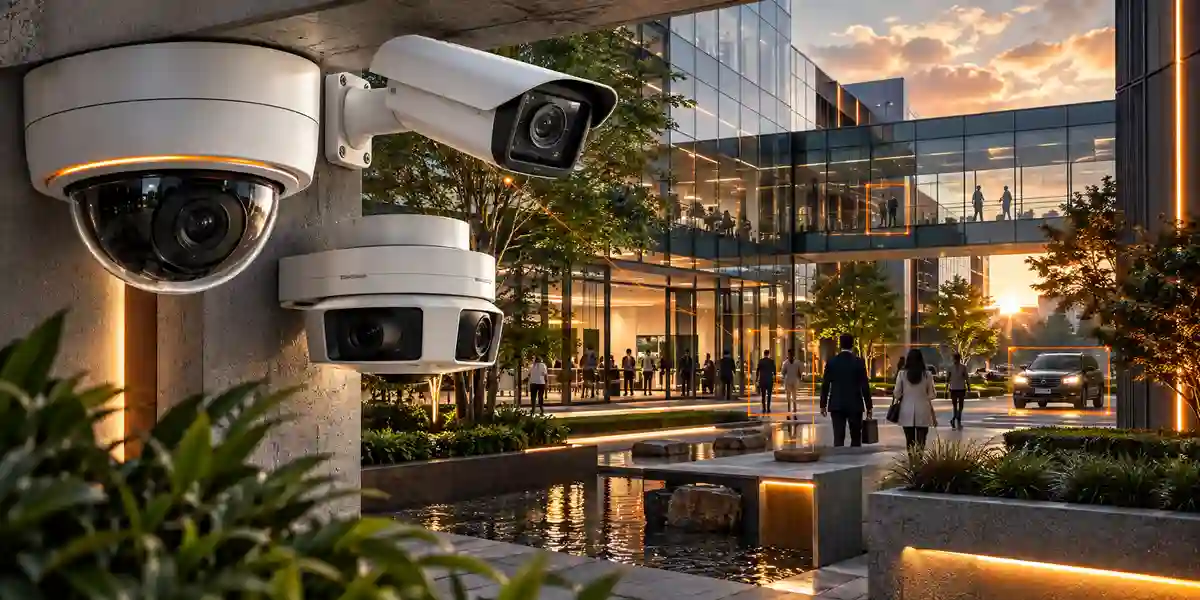
The Hanwha XNV-8080R is a 5-megapixel network vandal-resistant dome camera designed for professional surveillance where detailed video, flexible framing, low-light visibility and durable outdoor protection matter. Its 3.9–9.4 mm motorized varifocal lens, 50 m IR illumination, 120 dB WDR, H.265/H.264 compression, intelligent analytics and edge-storage options make it suitable for entrances, perimeter points, logistics areas, commercial buildings, industrial sites and other monitored locations in Dubai.
Quick product summary
Up to 2560 × 1920 resolution with H.265/H.264 video at up to 30 fps depending on system frequency and configured resolution.
3.9–9.4 mm lens with 2.4× optical zoom helps installers adjust the field of view for entrances, corridors, yards and focused monitoring areas.
Integrated infrared illumination supports monochrome monitoring after dark, with a manufacturer-listed IR viewable length of up to 50 metres.
IP66, IP67, IK10 and NEMA 4X environmental ratings support demanding indoor and outdoor deployments when mounting and cabling are correctly protected.
Product overview and buyer fit
The XNV-8080R belongs to Hanwha Vision’s professional X-series network-camera family and is intended for surveillance projects that need more flexibility than a fixed-lens entry-level dome. Its 1/1.8-inch CMOS sensor, 5MP maximum resolution, motorized varifocal optics and strong dynamic-range tools help installers tune coverage for real-world scenes where entrances, windows, shaded areas and bright outdoor zones may appear in the same frame. For Dubai buyers, that is particularly relevant in glass-fronted commercial buildings, loading bays, parking approaches, hotel entrances, retail facades and industrial locations where lighting can change significantly between day and night.
The camera should be selected as part of a complete CCTV design rather than as an isolated device. A successful deployment also depends on lens framing, mounting height, network bandwidth, PoE capacity, recording platform, storage duration, cybersecurity settings and the legal or project-specific requirements that apply to the premises. FourTeck can help buyers review those dependencies before quotation so the selected camera quantity, accessories and recording architecture match the actual site.
The model also includes intelligent video functions such as motion detection, defocus detection, tampering, fog detection, face detection, sound classification, virtual-area events, virtual-line events and digital auto tracking. These functions can help operators filter activity and generate events, but analytics should be commissioned for the real scene. Camera angle, object size, illumination, environmental movement and scene complexity can all influence practical results.
Key features and business benefits
Detailed 5MP video
Higher-than-1080p resolution can give security teams more detail for reviewing people, vehicles, entrances and operational activity, subject to lens angle and recording settings.
Flexible scene framing
The 3.9–9.4 mm motorized varifocal lens offers a horizontal field of view from approximately 92.1° to 38.7°, helping one model cover wider or more focused scenes.
Strong backlight handling
120 dB WDR, BLC, HLC and other image-processing options are useful where bright doorways, headlights or mixed indoor/outdoor lighting can challenge normal exposure.
Storage resilience
Two microSD/SDHC/SDXC slots support up to 256 GB per slot for a total listed edge-storage capacity of 512 GB, useful for local recording strategies and event buffering.
Efficient streaming
H.265, H.264, MJPEG and WiseStream II provide options for balancing image quality, bandwidth and storage according to the recorder and network design.
Open integration
ONVIF Profiles S, G and T plus SUNAPI and Hanwha Vision Open Platform support integration planning with compatible recording, management and application environments.
Verified technical specifications
| Specification | Hanwha XNV-8080R |
|---|---|
| Image sensor | 1/1.8-inch CMOS |
| Maximum resolution | 2560 × 1920 (5MP class) |
| Frame rate | Up to 30 fps / 25 fps in H.265/H.264 depending on 60/50 Hz system |
| Lens | 3.9–9.4 mm, 2.4× motorized varifocal, DC auto iris / P-iris |
| Horizontal field of view | Approx. 92.1°–38.7° |
| WDR | 120 dB |
| IR illumination | Up to 50 m listed viewable length |
| Compression | H.265, H.264, MJPEG; WiseStream II |
| Edge storage | 2 × microSD/SDHC/SDXC, up to 256 GB each, 512 GB total |
| Network | RJ-45 10/100BASE-T; IPv4/IPv6; HTTPS; SNMP; RTSP and other supported protocols |
| Interoperability | ONVIF S/G/T, SUNAPI, Hanwha Vision Open Platform |
| Power | PoE IEEE 802.3af Class 3, 12 VDC or 24 VAC |
| Operating temperature | -40°C to +55°C |
| Protection | IP66, IP67, IK10, NEMA 4X |
| Housing | Aluminum, ivory |
| Dimensions / weight | Ø160 × H118.5 mm; approx. 1010 g |
Compatibility, configuration and deployment guidance
Plan the XNV-8080R around the recording ecosystem first. The camera supports common network-video standards, but ONVIF support does not guarantee every advanced feature will appear in every third-party VMS or NVR. Confirm live view, recording, motion or analytic events, audio, edge-storage retrieval and camera management functions with the chosen platform. For Hanwha-centered installations, confirm the current supported recorder or VMS versions and any required licenses before procurement.
For network design, calculate bandwidth using the intended resolution, frame rate, codec, scene activity and retention target rather than relying on a generic per-camera estimate. Use managed switching where practical so camera traffic can be segmented, monitored and secured. The camera supports PoE, which simplifies cabling, but the switch must provide sufficient total PoE budget for the number of cameras connected. Outdoor and exposed installations should also use suitable surge protection, weatherproof termination practices and correctly rated enclosures or accessories.
The motorized lens makes final framing easier, but installers should still choose mounting height and viewing direction before fixing the camera. Wide views show more of a scene while reducing pixels on a distant subject; tighter views show less area but can improve usable detail at a target location. For identification-sensitive applications, the required pixel density should be designed for the actual distance and field width.
Where intelligent analytics are important, commission each rule individually. Virtual-line direction, intrusion areas, loitering and tamper events should be tested during normal daytime activity and after dark. Avoid relying on default thresholds. Moving vegetation, reflective surfaces, strong headlights and busy backgrounds can create avoidable false events when the scene is not tuned.
Ideal customers and use cases
- Corporate offices requiring entrance, reception, corridor or exterior monitoring.
- Warehouses and logistics facilities monitoring loading areas, gates, docks and operational zones.
- Hotels and hospitality sites needing discreet dome cameras with strong day/night capability.
- Retail businesses covering entrances, store floors, cash-adjacent areas and exterior approaches.
- Industrial facilities requiring rugged cameras for production, perimeter and plant-support areas.
- Education and campus environments where vandal resistance and flexible scene framing are useful.
- Multi-site organizations standardizing network-camera models across branches or facilities.
What to confirm before ordering
- Exact camera quantity and mounting locations.
- Required field of view and target identification distance.
- NVR/VMS brand, model and software version.
- Retention period, recording mode and storage capacity.
- Available PoE switch capacity and network segmentation plan.
- Need for audio, alarm I/O, edge storage or advanced analytics.
- Outdoor mounting accessories, junction boxes, conduit and surge protection.
- Applicable Dubai/UAE project approvals, SIRA requirements or consultant specifications.
- Commercial terms, warranty route, availability and delivery scope on the actual quotation.
Comparison and related-model guidance
Choose the XNV-8080R when the project needs 5MP resolution, motorized varifocal optics, integrated IR and strong environmental protection in a dome form factor. A fixed-lens model may be more economical where the viewing angle is known and will not need adjustment. A bullet camera may be easier to aim visibly across a perimeter or long approach. A PTZ camera is more appropriate where an operator needs remotely controlled pan, tilt and zoom over a large area. Multi-sensor cameras can reduce device count in wide-area applications, while newer AI-specific models may offer more advanced object-classification features. The correct choice depends on the required scene coverage, analytics, retention and platform compatibility rather than resolution alone.
Hanwha XNV-8080R Dubai
Dubai CCTV projects often combine strict site expectations with challenging environmental and operational conditions. Offices, hotels, warehouses, malls, logistics sites, schools, industrial facilities and mixed-use buildings all need surveillance, but the camera requirement at each site can be very different. The XNV-8080R is particularly relevant where buyers want a durable dome camera with adjustable optics instead of a fixed viewing angle. Its 3.9–9.4 mm lens gives installers room to tune the scene after the mounting point has been selected, while the 5MP image sensor supports detailed coverage for entrances, corridors, outdoor approaches and operational zones.
In Dubai, bright outdoor light and shaded interiors frequently exist in the same scene. Glass doors, lobby entrances, loading-bay openings and parking access points can produce severe contrast. The camera’s 120 dB WDR capability can help preserve useful detail across mixed exposure, but it should be commissioned for the actual location. Night performance also depends on the scene. The integrated IR is listed for up to 50 metres, yet walls, reflective surfaces, dust, weather, camera angle and target reflectivity influence practical illumination. A site survey or drawing review helps decide whether one dome is enough or whether additional coverage is needed.
For Dubai commercial deployments, buyers should also confirm recorder compatibility, required retention days, network segmentation and PoE budget. The XNV-8080R can use PoE, 12 VDC or 24 VAC, making it flexible for new and retrofit projects. Edge storage through dual microSD slots can complement centralized recording, but it should not automatically replace a properly designed NVR or VMS when longer retention or multi-camera management is required.
Dubai projects may also have regulatory or consultant requirements. Published SIRA camera lists have included the XNV-8080R, but buyers should verify the current applicable approval status and project-specific compliance before purchase or installation because regulatory lists and project rules can change. FourTeck can help organize the technical requirement, compare camera roles within the site and prepare a quotation based on quantity, accessories, recording platform and installation scope. For broader project guidance, see CCTV installation planning in Dubai and contact FourTeck with drawings or camera schedules where available.
Hanwha XNV-8080R UAE
UAE buyers often need to standardize surveillance across more than one emirate, branch or facility type. A camera selected for a Dubai office may later be expected to fit a warehouse in Sharjah, an outdoor commercial site in Abu Dhabi or a branch location in another emirate. The XNV-8080R can suit this kind of structured standardization because it combines high-resolution network video, adjustable varifocal framing, integrated IR, analytics and a rugged environmental housing in one model. Standardization can simplify spares, configuration templates, technician familiarity and VMS management, but it should only be adopted after the camera has been checked against each site’s viewing distances and environmental conditions.
Across the UAE, heat, dust, glare and outdoor exposure make enclosure rating and installation quality important. The XNV-8080R is rated for operation from -40°C to +55°C and carries IP66, IP67, IK10 and NEMA 4X ratings. Those specifications support demanding use, but the camera is only one part of the outdoor system. Cable glands, junction boxes, conduit, surge protection, mounting hardware and network cabinets must also be suited to the environment. Poor termination can undermine an otherwise well-specified camera.
UAE procurement teams should request a bill of materials that separates cameras, mounts, storage, PoE switching, network uplinks, licenses and installation. Retention requirements can have a much larger budget impact than the camera itself because 5MP recording across many streams creates significant storage demand. H.265 and WiseStream II can improve efficiency, but actual storage depends on frame rate, bitrate, scene movement and recording schedule. A sizing exercise should be completed before the recorder and disks are ordered.
For multi-emirate projects, define naming conventions, IP addressing, user roles, firmware policy and cybersecurity settings centrally. Consistent administration makes troubleshooting easier and reduces the chance of unmanaged cameras remaining on default or weak configurations. FourTeck can assist UAE businesses with camera selection, network design discussions, recording architecture and quotation support. Visit FourTeck UAE or contact FourTeck sales with the site count, approximate camera quantity and preferred VMS or NVR platform.
Hanwha XNV-8080R Kenya
Kenya surveillance projects frequently cover offices, warehouses, compounds, hospitality sites, schools, retail branches, logistics facilities and industrial operations that require dependable IP video over varying network conditions. The XNV-8080R can be a useful option where a project needs an outdoor-capable dome with adjustable optics rather than a fixed-angle camera. Its 5MP maximum resolution offers a practical level of detail for general security monitoring, while the 3.9–9.4 mm motorized lens lets the installer balance wide coverage against a tighter view at gates, entrances or focused operational areas.
For Kenyan buyers, network design should be considered early, particularly at multi-building campuses or locations where cameras are linked over fiber, wireless bridges or routed networks. The camera supports standard Ethernet and PoE, which can simplify local device connections, but each remote building still needs adequate switching, power backup and uplink capacity. Where power interruptions are a concern, plan UPS support for PoE switches, recording servers and network equipment rather than protecting the camera alone. Edge storage can add resilience for selected events, although centralized recording remains important for coordinated monitoring.
Outdoor projects in Nairobi, Mombasa and other locations may encounter different combinations of rain, dust, heat and humidity. The camera’s IP66/IP67 and NEMA 4X ratings help at the device level, while IK10 provides impact resistance. Installation accessories, cable entry and mounting surfaces should receive the same attention. In coastal or corrosive environments, project teams should review the complete mounting and enclosure arrangement rather than treating an environmental rating as a universal guarantee for every installation.
Organizations procuring for Kenya should also clarify the support and warranty route on the quoted supply channel, especially for project quantities or cross-border procurement. Share recorder requirements, desired storage days, camera count and installation environment before ordering. FourTeck’s regional channel at FourTeck Kenya can be used for Kenya-focused enquiries, while broader infrastructure requirements can be coordinated through FourTeck where surveillance depends on switching, structured cabling, firewalling or server resources.
Hanwha XNV-8080R Kuwait
Kuwait CCTV buyers often need cameras for commercial premises, warehouses, compounds, retail operations, hospitality sites, offices and industrial locations where heat, dust and strong sunlight can be important design factors. The XNV-8080R offers a rugged dome format with a broad operating-temperature specification, integrated IR and a varifocal lens, making it worth considering for both indoor and protected outdoor surveillance points. The camera should still be mounted in a way that avoids unnecessary direct solar load and gives technicians safe access for cleaning, service and adjustment.
The 120 dB WDR capability is useful in scenes with high contrast, such as doorways opening to bright exteriors, shaded loading zones or parking entrances. The motorized lens also helps fine-tune these scenes without replacing the camera simply to change the focal length. When choosing between a wide and narrow field of view, Kuwait project teams should determine whether the operational goal is general situational awareness, recognition at an entrance or more focused monitoring at a gate. That decision has a direct effect on usable image detail.
For larger installations, plan storage and network bandwidth carefully. Recording multiple 5MP streams at high frame rates can create substantial storage demand. H.265 and WiseStream II can reduce bandwidth compared with less efficient configurations, but final storage should be calculated from target bitrates and retention periods. Network switches should also be sized for PoE power as well as aggregate video throughput, particularly when many cameras converge on the same access switch.
Before a Kuwait order is finalized, confirm product availability, supply route, warranty handling, recorder compatibility and any project-specific regulatory or consultant requirements. FourTeck can assist with specification review and quotation planning without assuming a fixed stock position or delivery date. Buyers can use FourTeck Kuwait for regional enquiries and provide the camera schedule, building type, preferred recorder platform and installation scope so the technical and commercial request can be reviewed together.
Hanwha XNV-8080R Ghana
Ghana businesses increasingly rely on IP surveillance for offices, retail sites, logistics yards, schools, hospitality, industrial facilities and multi-branch operations. A camera such as the XNV-8080R fits projects where the buyer wants more flexibility than a fixed-lens dome and needs a device that can cover both indoor and outdoor monitoring points. Its motorized 3.9–9.4 mm lens can be adjusted after installation, which is useful when a drawing gives only an approximate camera position or when final framing must be refined during commissioning.
For Accra and other urban deployments, a common requirement is to balance usable image quality against network and storage capacity. The XNV-8080R can produce 5MP streams and supports H.265, H.264 and WiseStream II. That allows integrators to tune recording quality, frame rate and bitrate according to the project. Buyers should avoid selecting retention storage by camera count alone. A warehouse with constant motion can consume more storage than a quiet corridor even when the cameras use the same resolution. Retention targets, motion profile and recording schedules should therefore be included in the sizing calculation.
At sites where power stability matters, the CCTV system should include UPS planning for the network switch, recorder and key uplinks. Dual microSD slots can add useful edge-recording capability, but centralized recording and backup policy remain important for business-critical evidence. If cameras are spread between buildings, fiber uplinks or well-designed point-to-point connectivity may be required to avoid unstable video transport.
Outdoor installation should account for rain, humidity, dust and maintenance access. The camera itself carries IP66/IP67 and NEMA 4X ratings and an IK10 impact rating, but cable glands, brackets and junction points need equal attention. Ghana buyers can submit requirements through FourTeck Ghana. For a more useful quotation, include quantity, proposed mounting locations, existing NVR or VMS, storage target, network layout and whether installation or supply-only support is required.
Hanwha XNV-8080R Uganda
Uganda surveillance requirements range from small commercial sites to campuses, warehouses, hotels, NGOs, industrial facilities and distributed branch networks. The XNV-8080R can suit projects that need an IP dome camera with adjustable optics and strong environmental protection. Instead of committing to one fixed angle, installers can use the 3.9–9.4 mm motorized varifocal lens to tune the scene for a reception approach, building perimeter, driveway, loading bay or corridor. This flexibility can be particularly useful in retrofit work where the existing mounting location cannot easily be moved.
For Kampala and up-country projects, connectivity between cameras and the recording location should be planned around the site rather than assumed. A single building may use PoE switches and structured Ethernet, while a wider campus may require fiber links or routed networks. The XNV-8080R supports standard network protocols and ONVIF profiles, but compatibility with a specific recorder should be tested or confirmed before bulk procurement. Advanced camera analytics may not map identically into every third-party VMS, so buyers should define which event types must be visible or searchable at the recording platform.
Where power interruptions can affect surveillance, include UPS runtime and recovery behavior in the system design. Protect switches and recorders as well as cameras, and confirm whether edge storage will be used for event continuity. The model provides two microSD slots with a manufacturer-listed combined maximum of 512 GB, which can be useful as an additional resilience layer when configured correctly.
Procurement teams should also consider future maintenance. Standardizing a camera family can simplify firmware management and spares, but only if the selected lens range suits the different scenes across the site. FourTeck can help Uganda buyers review those points through FourTeck Uganda. Share floor plans, camera schedules, desired retention days and existing recorder information where available so the proposal can address the complete surveillance workflow rather than only the camera hardware.
Hanwha XNV-8080R Nigeria
Nigeria CCTV projects can range from office and retail installations to large compounds, logistics centers, hospitality facilities, industrial sites and multi-branch operations. The XNV-8080R is relevant when a project requires a professional 5MP dome with strong WDR, integrated IR, varifocal optics and rugged protection. Its aluminum housing and IP66/IP67/IK10/NEMA 4X ratings make it suitable for demanding deployment conditions when the overall installation is engineered correctly.
For Lagos, Abuja and other high-activity locations, camera positioning is often more important than simply choosing a higher resolution. Entrances, parking points and loading areas can have complex movement and changing illumination. The XNV-8080R’s 120 dB WDR helps with contrast, while the lens can be adjusted from a broad 92.1-degree horizontal view toward a narrower 38.7-degree view. This allows integrators to decide whether the operational priority is wide situational awareness or more concentrated detail at a specific zone.
Network and power resilience are critical considerations. PoE simplifies camera wiring, but each switch must have adequate per-port and total power budget. Large sites should segment surveillance traffic and provide enough uplink capacity to avoid congestion. UPS and generator integration should be reviewed so cameras, switches and recorders recover predictably after power events. Where network links between buildings are vulnerable, edge recording can provide a supplementary layer, although it should be part of a documented recording strategy rather than the only copy of important footage.
Nigeria procurement often involves questions about availability, commercial terms and warranty routes. These should be confirmed on the actual quote because they can change by quantity, supply channel and destination. FourTeck can support specification review and regional coordination through FourTeck Nigeria. Include the project city, quantity, recorder platform, retention requirement and whether mounting accessories, switching or installation services need to be included in the scope.
Hanwha XNV-8080R Seychelles
Seychelles surveillance projects have environmental considerations that differ from many inland deployments. Hotels, resorts, offices, warehouses, public-facing facilities and commercial sites may be exposed to high humidity, salt-laden air and coastal weather. The XNV-8080R carries IP66, IP67 and NEMA 4X environmental ratings and uses an aluminum housing, which makes it a candidate for protected outdoor monitoring, but coastal suitability should be assessed for the entire installation. Brackets, fasteners, junction boxes, conduit and cable terminations can become the weak point if they are not selected and maintained for the site conditions.
For resort and hospitality applications, the dome form can provide a relatively discreet appearance while still offering flexible framing. The 3.9–9.4 mm motorized lens can cover a broader lobby or entrance view or be narrowed toward a controlled access point. Where cameras face bright exterior light through doors or covered walkways, 120 dB WDR can help balance exposure. At night, the integrated IR is specified for up to 50 metres, though actual usable range depends on the scene and reflective surfaces. Avoid aiming IR directly toward nearby walls or objects that can cause excessive reflection.
Because island projects can involve longer logistics cycles for replacement hardware, system design should consider spares, surge protection, documented configuration backups and remote-management readiness. Recorder storage should be sized from retention requirements and realistic bitrates, and the network should have enough capacity for all simultaneous streams. If the project includes remote monitoring over internet links, WAN bandwidth and cybersecurity policy also need to be reviewed separately from the local camera network.
For Seychelles enquiries, FourTeck’s wider regional route at FourTeck Africa can be used to coordinate product and project discussions. Buyers should provide site type, island or delivery location, camera quantity, preferred recorder or VMS, mounting conditions and whether local installation is being handled by an existing contractor. These details help distinguish the camera supply from the complete surveillance project and reduce assumptions during quotation.
Related FourTeck products and security components
A complete security project can include access control, vehicle management, visitor workflows and related site devices alongside CCTV. The following verified FourTeck product pages may be useful when the wider project extends beyond video surveillance.
ZKTeco SpeedFace-V5L
Hybrid biometric access terminal for face, fingerprint and other configured credential workflows at controlled entrances.
ZKTeco SenseFace 3A
Compact multi-biometric access-control terminal with face, fingerprint, RFID and door-control integration options.
ZKTeco FaceKiosk-H13A
Large-format facial identification kiosk suited to visitor, identity and controlled-entry workflows where a bigger display is useful.
ZKTeco QR10L
Compact QR and barcode reader for visitor codes, tickets, memberships and other fixed scanning workflows.
ZKTeco VR30
79 GHz vehicle and pedestrian detection radar designed for parking-barrier safety and anti-collision presence detection.
ZKTeco VR10 Pro
Vehicle-management radar option for controlled lanes where barrier-zone detection and integration need to be reviewed.
ZKTeco Horus E2
Android multi-biometric terminal family for attendance and access-control requirements with variant-dependent credential options.
Regional FourTeck resources
Why contact FourTeck?
FourTeck can help organize the XNV-8080R requirement around the full surveillance system instead of treating the camera as a standalone purchase. That can include reviewing camera quantity, lens coverage, mounting environment, PoE switching, network layout, NVR or VMS compatibility, retention storage and related installation scope. Commercial details such as current availability, delivery coordination and applicable warranty handling should be confirmed on the final quotation for the exact quantity and destination.
Frequently asked questions
What resolution is the Hanwha XNV-8080R?
The XNV-8080R supports a maximum resolution of 2560 × 1920, commonly described as 5MP class. It also supports lower resolutions for alternative stream profiles. The best recording resolution should be chosen together with frame rate, bitrate and retention requirements because higher detail increases network and storage demand.
Does the XNV-8080R have a motorized lens?
Yes. Hanwha lists a 3.9–9.4 mm 2.4× motorized varifocal lens with simple-focus control. This allows installers to adjust the field of view more flexibly than with a fixed-lens camera and is useful when final framing must be confirmed after mounting.
How far can the infrared illuminate?
Hanwha lists an IR viewable length of up to 50 metres. Real-world results depend on camera angle, target reflectivity, nearby surfaces, weather and scene conditions. A 50-metre rating should therefore be treated as a product specification rather than a guarantee of identification detail at that distance.
Is the XNV-8080R suitable outdoors?
The camera carries IP66, IP67, IK10 and NEMA 4X ratings and is specified to operate from -40°C to +55°C. Outdoor reliability still depends on correct mounting, protected cable entries, compatible junction boxes, surge protection and installation practices suited to the site.
Does it support PoE?
Yes. The camera supports IEEE 802.3af Class 3 PoE, as well as 12 VDC and 24 VAC power options. When PoE is used, confirm the switch has enough total power budget for all connected cameras and enough uplink bandwidth for the intended streams.
Can it record to a microSD card?
Yes. The XNV-8080R provides two microSD/SDHC/SDXC slots with up to 256 GB per slot, for a listed maximum total of 512 GB. Edge storage can support event recording or resilience strategies, but centralized NVR/VMS recording is usually still required for managed multi-camera systems.
Which analytics are available?
Hanwha lists functions including motion detection, defocus detection, tampering, fog detection, face detection, audio detection, sound classification, virtual-area events such as intrusion and loitering, virtual-line events and digital auto tracking. Availability in a third-party VMS can vary, so integration should be confirmed.
Does the camera support ONVIF?
Yes. Hanwha lists ONVIF Profiles S, G and T, along with SUNAPI and its Open Platform. ONVIF improves interoperability, but buyers should still confirm the exact features required with the chosen recorder or video-management system before project deployment.
Is the Hanwha XNV-8080R SIRA approved in Dubai?
Published Dubai SIRA approved-camera lists have included the XNV-8080R. Because regulatory lists and project requirements can change, buyers should verify the current applicable approval status and any consultant or site-specific requirements before ordering or installing the camera.
How do I request a Dubai quotation?
Send FourTeck the required quantity, project location, mounting environment, preferred recorder or VMS, retention target and whether accessories, switching or installation should be included. This information makes it easier to prepare a relevant quotation and identify any compatibility or design questions before procurement.
Need help specifying the Hanwha XNV-8080R?
Share your Dubai site type, camera quantity, existing recorder platform and retention requirement. FourTeck can help review the camera role, network and storage dependencies, accessories and quotation scope before you commit to the project.
Reviews
There are no reviews yet.