

Hanwha XNV-L6080A Dubai
The XNV-L6080A is a 2MP H.265 vandal-resistant dome camera built for professional IP surveillance where flexible framing, smooth video, WDR and reliable outdoor protection matter. Its 3.2–10mm motorized varifocal lens supports easier scene adjustment, while PoE simplifies power and network deployment.
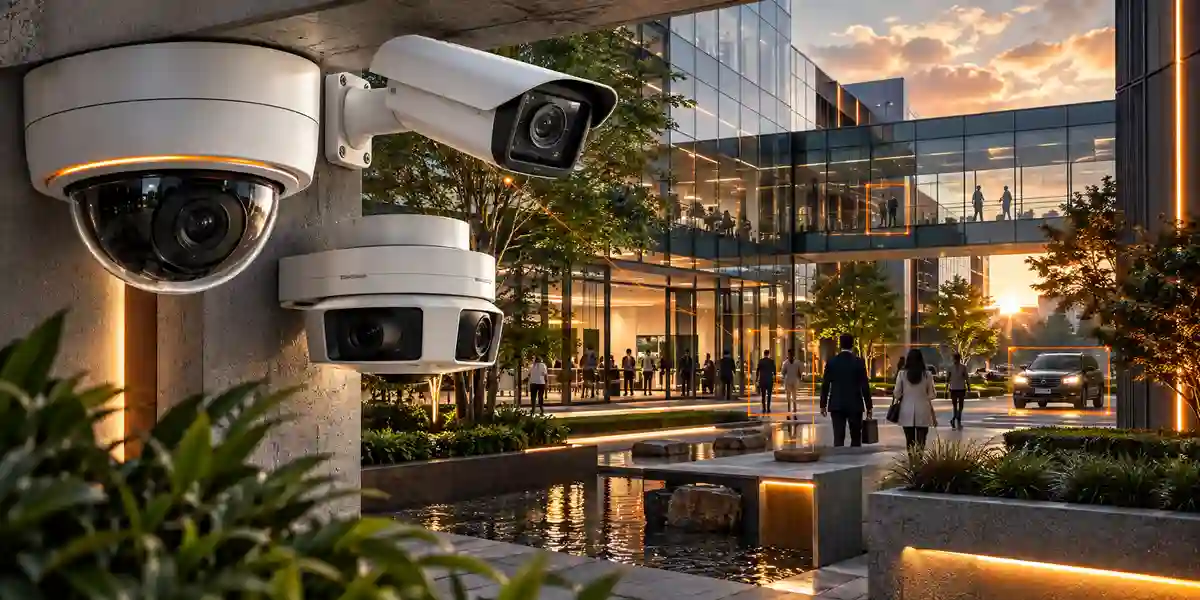
Camera type
2MP H.265 network dome camera for professional surveillance and evidence capture.
Lens flexibility
3.2–10mm motorized varifocal lens helps installers fine-tune framing after mounting.
Rugged deployment
IP66 weather protection and IK10 impact resistance suit exposed or high-risk locations.
Network efficiency
H.265, WiseStream II and PoE support simplify bandwidth and cabling planning.
Product overview and buyer fit
For Dubai offices, compounds, logistics entrances, education sites, hospitality properties, industrial facilities and commercial buildings, the XNV-L6080A fits projects that require a robust dome form factor with strong scene control rather than a fixed-lens camera. The motorized varifocal lens is especially useful when the camera must be mounted first and then adjusted to frame a doorway, vehicle lane, reception approach, perimeter route or other defined scene.
The camera records at up to 1920×1080 and supports up to 60fps, making it suitable where smoother motion representation is helpful. Its 120dB wide dynamic range is intended for scenes with bright and dark areas in the same frame, such as building entrances, glass façades, loading bays and shaded approach lanes. H.265, H.264 and MJPEG compatibility allow designers to balance recording quality, client compatibility and storage requirements.
The onboard ANPR capability can support vehicle identification workflows when the camera is installed and configured for a suitable lane and operating environment. ANPR performance depends on factors such as camera angle, distance, lane position, vehicle speed, plate format, illumination, firmware, application configuration and recording architecture. FourTeck can help customers confirm whether this model is appropriate for the intended lane before procurement.
Key features and business benefits
2MP Full HD imaging
Delivers up to 1920×1080 resolution for general-purpose surveillance, incident review and live monitoring without the storage load associated with much higher-resolution cameras.
3.2–10mm motorized lens
A 3.1x motorized varifocal lens gives installers flexibility to adjust horizontal coverage and target detail without physically replacing the lens.
Up to 60fps
Higher frame-rate capability can help with motion-heavy scenes where smoother playback and more temporal detail are valuable.
120dB WDR and defog
WDR helps manage difficult backlit scenes, while defog processing supports visibility in hazy or low-contrast conditions.
Edge storage
A microSD/SDHC/SDXC slot supports local recording up to the product’s supported 256GB capacity, useful for event buffering or selected edge-recording workflows.
PoE deployment
Power over Ethernet can reduce separate power cabling by carrying power and data over the network connection when used with a compatible PoE switch or injector.
Verified technical specifications
| Specification | XNV-L6080A |
|---|---|
| Maximum resolution | 2MP, 1920 × 1080 |
| Lens | 3.2–10mm motorized varifocal, 3.1x |
| Frame rate | Up to 60fps at supported resolutions |
| Codecs | H.265, H.264, MJPEG; multiple streaming |
| Wide dynamic range | 120dB WDR |
| Day/night | Day & Night with ICR |
| Analytics / events | ANPR engine with AI algorithm; tampering, defocus detection, motion detection and handover support |
| Storage | SD/SDHC/SDXC slot, up to 256GB |
| Streaming efficiency | WiseStream II; Hallway View |
| Protection | IP66, IK10 |
| Power | PoE support |
Compatibility, configuration and deployment guidance
Before ordering, confirm the recording platform, PoE budget, network bandwidth, storage duration, mounting position, field of view and any analytics requirement. The camera supports common IP-video compression formats, but feature availability can depend on firmware, recorder or VMS integration, licensing and the selected workflow. For ANPR projects, test the intended lane geometry and plate presentation rather than treating the camera as a general overview camera and expecting reliable plate capture from any angle.
For cybersecurity maintenance, current Hanwha Vision security material identifies the XNV-L6080A among models for which updated firmware is important. Project owners should include firmware review, credential policy, network segmentation and recorder/VMS maintenance in the deployment plan. Avoid exposing cameras directly to the public internet; use secure remote-access architecture appropriate to the site.
Ideal customers and use cases
- Commercial entrances requiring flexible framing and WDR.
- Residential compounds and controlled vehicle entry points.
- Warehouses, logistics yards and loading-bay approaches.
- Office buildings, schools, clinics and hospitality properties.
- Industrial premises requiring rugged IK10/IP66 dome cameras.
- Projects needing 2MP video with up to 60fps and H.265 efficiency.
- Suitable single-lane ANPR deployments after site-specific validation.
What to confirm before ordering
- Required scene width, identification distance and lens framing.
- Whether ANPR is required and the exact vehicle-lane conditions.
- PoE switch capacity, VLAN plan and available network bandwidth.
- NVR/VMS compatibility, recording profile and retention target.
- MicroSD use, size and edge-recording role if required.
- Mounting surface, junction-box or bracket requirements.
- Firmware baseline and cybersecurity maintenance policy.
- Project-specific approvals or regulatory requirements.
XNV-L6080A alternatives and related-model guidance
The XNV-L6080A is best considered when the requirement is a 2MP dome with a motorized lens, rugged housing and ANPR capability. If integrated infrared illumination is required, compare the XNV-L6080RA, which is the IR-equipped variant in the same product family. If a newer or higher-resolution camera is being considered, evaluate the XNV-6081-series or 5MP XNV-8081-series models according to scene detail, analytics, storage, and recorder capacity. For a bullet form factor or longer external mounting geometry, a Hanwha XNO-series camera may be more appropriate. FourTeck can compare field of view, night requirements, frame rate, analytics, recorder load and environmental exposure before a final model is selected.
Hanwha XNV-L6080A Dubai
Dubai surveillance projects often combine bright exterior light, shaded entrances, glass-fronted commercial spaces, controlled parking entrances and high-traffic operational areas. The Hanwha XNV-L6080A addresses this type of environment with a 2MP sensor, 120dB WDR and a motorized 3.2–10mm lens that can be adjusted around the actual viewing requirement. For a business entrance, for example, the goal may be to balance a broad approach view with enough detail around a doorway. For a vehicle lane, the goal may instead be to narrow the field of view and position the camera for number-plate capture. These are different design tasks, even if the same model is being considered.
Dubai buyers commonly compare camera price, availability, installation cost, storage retention, NVR compatibility, mobile viewing, plate recognition and suitability for outdoor heat or exposed mounting. The XNV-L6080A’s IP66 and IK10 ratings make it a candidate for demanding placements, but enclosure protection is only one part of a reliable installation. Cable routes, connectors, junction points, PoE budget, surge protection, network design and mounting exposure should all be reviewed. Where ANPR is needed, the installer should also confirm lane width, approach angle, vehicle speed and illumination instead of relying only on the camera’s general imaging specification.
For office towers, warehouses, compounds, schools, hospitality sites and mixed-use buildings, FourTeck can help define whether the XNV-L6080A should operate as an overview camera, a focused evidentiary camera or part of a vehicle-monitoring solution. The recording platform should be sized around frame rate, codec, recording schedule and retention requirements. High frame rates can improve motion representation but also affect bandwidth and storage, so they should be selected purposefully. H.265 and WiseStream II can help optimize efficiency, while still requiring sensible image-quality settings.
Customers requesting a quotation should share the site type, number of cameras, target viewing areas, existing NVR or VMS, network switch details and expected recording duration. For vehicle use, include lane layout, approximate camera distance and whether number-plate recognition is mandatory. FourTeck can then help confirm the model and configuration before procurement. For broader CCTV planning in Dubai, see FourTeck CCTV installation and security-system guidance or contact sales through the project enquiry route.
Hanwha XNV-L6080A UAE
Across the UAE, surveillance requirements vary considerably between offices in Abu Dhabi, logistics operations in Dubai, industrial facilities in Sharjah, branch locations in Ajman and larger multi-emirate organisations. The XNV-L6080A is relevant when a project needs a robust 2MP dome camera with flexible optical adjustment rather than a fixed field of view. Its motorized 3.2–10mm lens allows the installer to adapt the scene after mounting, which can reduce the risk of selecting a fixed lens that proves too wide or too narrow for the target area.
UAE procurement teams often need consistent camera standards across several sites while each location still has different lighting, mounting heights and recording requirements. The XNV-L6080A supports H.265, H.264 and MJPEG streams, up to 60fps, edge storage and PoE, giving designers options for recorder integration and bandwidth planning. However, the correct stream profile should be selected according to the evidence objective. A reception entrance, parking lane and warehouse aisle do not necessarily need identical frame rate, bitrate or lens settings.
For outdoor or semi-exposed use, IP66 and IK10 help protect against weather and impact, but installers should still pay attention to cable entry, connector protection, junction hardware and environmental exposure. Where the camera is used for ANPR, deployment should be treated as a specialised imaging task. Reliable plate capture depends on the relationship between the camera, lane, lighting and vehicle movement. Buyers should confirm whether onboard analytics alone meet the workflow or whether additional application, server or VMS components are required.
For multi-emirate projects, it is also important to standardise firmware, secure credentials and remote-access policy. Hanwha Vision continues to publish firmware and security information for supported models, so lifecycle maintenance should be part of the operational plan. FourTeck can assist with product selection, network planning, installation design and recorder sizing for UAE projects. Visit FourTeck UAE technology solutions or request product assistance with your site and recording requirements.
Hanwha XNV-L6080A Kenya
Kenyan organisations evaluating the Hanwha XNV-L6080A typically need a dependable IP camera for business premises, gated compounds, logistics facilities, schools, institutions, retail sites or controlled vehicle entrances. The model’s 2MP resolution is suitable for many general surveillance tasks, while its 3.2–10mm motorized lens gives the installer more flexibility than a fixed-lens dome. This is useful where exact mounting positions are constrained by building design and the final scene must be tuned after installation.
For Nairobi offices, warehouses and commercial compounds, network design is often as important as camera choice. A PoE camera depends on a stable switch, sensible cable distances, protected terminations and adequate power budget. If several cameras are being installed, the recorder and network should be sized according to bitrate, frame rate, recording schedule and retention. H.265 and WiseStream II can reduce storage and bandwidth demand compared with less efficient profiles, but image quality should not be lowered to the point that important evidence is lost.
Vehicle-monitoring buyers may be interested in the onboard ANPR capability. This should be designed around a specific lane rather than treated as a broad-area feature. Camera angle, lane width, plate size in the image, lighting and vehicle speed can materially affect results. Where an entrance has multiple lanes or complex traffic movement, a different design or additional cameras may be needed. Likewise, if night-time capture is essential, buyers should confirm the lighting strategy because this particular model is not the IR-designated XNV-L6080RA variant.
Kenyan customers should also confirm NVR or VMS compatibility, microSD requirements, mounting accessories, firmware and the support path before purchasing. For organisations standardising cameras across branches, consistent naming, VLANs, credentials and recording policies simplify ongoing maintenance. FourTeck supports regional product and project discussions through FourTeck Kenya and the wider FourTeck Africa route. Share the site type, camera quantity, viewing objective and existing recording platform for configuration guidance.
Hanwha XNV-L6080A Kuwait
In Kuwait, CCTV projects frequently need to address strong exterior brightness, shaded building approaches, parking areas, office entrances, industrial compounds and mixed indoor/outdoor deployment. The XNV-L6080A combines 2MP imaging with 120dB WDR and a 3.2–10mm motorized varifocal lens, making it useful where the field of view must be tuned to the actual scene rather than selected from a fixed-lens assumption.
A strong WDR specification is particularly relevant where doors, loading bays or vehicle approaches include very bright backgrounds and darker foreground subjects. The camera’s up-to-60fps capability can support smoother motion recording, but high frame rates should be applied where they add operational value because they can increase network and storage requirements. A correctly designed H.265 profile with WiseStream II can help balance image quality and retention, especially on multi-camera sites.
For outdoor or accessible positions, IP66 and IK10 provide useful environmental and impact protection. Nevertheless, the full installation should be engineered for the site, including protected cable entry, mounting hardware, PoE infrastructure and network segmentation. For ANPR use, buyers should provide the lane arrangement and expected vehicle movement before a final design is confirmed. Plate recognition is a scene-specific application and should not be judged only by the camera’s general resolution.
Kuwait organisations procuring for several branches should confirm recorder interoperability, firmware management, user permissions and remote viewing architecture. The camera supports edge storage up to the manufacturer-stated 256GB capacity, which can complement but does not automatically replace central recording. FourTeck can help compare this model with the IR-equipped XNV-L6080RA or other Hanwha dome and bullet cameras according to the project. Visit FourTeck Kuwait for regional project enquiries or use FourTeck sales assistance for a model and configuration review.
Hanwha XNV-L6080A Ghana
Ghanaian businesses, institutions, residential developments and logistics operators looking for a professional network dome camera can consider the XNV-L6080A where 2MP imaging, flexible focal length and rugged protection match the surveillance objective. The motorized 3.2–10mm lens helps an installer adapt coverage after the camera is physically mounted, which is valuable for entrances, gatehouses, loading areas and internal circulation zones where exact framing matters.
For Accra offices, retail properties and compound security, the recording design should be considered before the camera quantity is finalised. Camera frame rate, compression profile, recording schedule and retention period determine storage demand. The XNV-L6080A supports H.265, H.264 and MJPEG and includes WiseStream II, giving system designers several ways to integrate it with compatible recording infrastructure. PoE can simplify deployment, although switch power capacity, cable quality and surge protection remain important.
The camera’s 120dB WDR can help in entrances where exterior daylight and interior shade exist in the same scene. IP66 and IK10 also support deployment in demanding positions, but installers should still review water paths, mounting surface and connector protection. If number-plate recognition is part of the requirement, the site should be surveyed specifically for lane geometry and lighting. A dedicated ANPR view usually performs better than trying to make one very wide overview camera perform every role.
Buyers should ask whether the proposed NVR or VMS supports the required streams and events, whether local microSD recording is needed and how remote access will be secured. Where a project spans several locations, use consistent firmware, naming, credentials and network policies. FourTeck can support Ghana project discussions and product planning through FourTeck Ghana and FourTeck Africa. Provide the site type, target scenes and recorder details to receive more useful configuration guidance.
Hanwha XNV-L6080A Uganda
In Uganda, the XNV-L6080A is relevant to organisations that need a durable IP dome camera for office compounds, retail premises, schools, clinics, warehouses, hotels and controlled entry points. Its 2MP resolution can provide efficient general surveillance, while the motorized 3.2–10mm lens gives installers flexibility to frame a corridor, entrance, lane or operational area without being locked into a single fixed focal length.
For Kampala commercial sites and branch networks, the surveillance system should be planned as an integrated network service rather than only a list of cameras. PoE switch capacity, cabling, VLAN design, recorder throughput, storage and backup power all influence reliability. The XNV-L6080A’s H.265 support and WiseStream II can help manage bandwidth and storage, while up-to-60fps capability is available for scenes where motion detail is important. The practical frame rate should still be selected according to the evidence requirement and available storage.
Where the camera is installed outside or in an exposed accessible area, IP66 and IK10 are important attributes. Proper installation remains essential because water ingress or electrical issues often occur at connectors, junction points and cable routes rather than through the camera housing itself. For ANPR projects, buyers should identify the actual lane to be monitored and gather information about distance, traffic direction, vehicle speed and illumination. The camera’s ANPR capability should be engineered around those conditions.
Ugandan buyers should also confirm recorder compatibility, firmware policy and remote viewing security. If infrared illumination is essential, compare the XNV-L6080RA or other IR-enabled Hanwha models rather than assuming all L6080 variants provide the same night hardware. FourTeck can discuss regional procurement and project requirements via FourTeck Uganda and FourTeck Africa. Share your site layout and current NVR or VMS details for a more accurate model recommendation.
Hanwha XNV-L6080A Nigeria
Nigerian businesses often need surveillance systems that can scale from one building to multiple branches while remaining manageable over the network. The Hanwha XNV-L6080A offers a practical 2MP platform with H.265 video, a motorized 3.2–10mm lens, up to 60fps, WDR, edge storage and PoE. It can fit offices, compounds, warehouses, retail properties, hospitality facilities and controlled vehicle approaches where a rugged dome form factor is preferred.
For Lagos, Abuja, Port Harcourt and other major commercial centres, system design should account for network reliability, power continuity and storage architecture. PoE can simplify camera wiring, but the switch and power strategy should be designed around the full camera count. Where central recording is used, recorder throughput and disk capacity should be calculated from the chosen bitrate, recording schedule and retention period. The camera’s H.265 and WiseStream II capabilities can improve efficiency, but storage should still be calculated rather than assumed.
The 120dB WDR specification helps when a monitored scene includes difficult contrast, such as a shaded lobby looking toward a bright exterior or a gatehouse facing daylight. IP66 and IK10 provide environmental and impact resistance for exposed positions. If the project requires number-plate recognition, a dedicated lane survey is recommended. Plate size in the image, shutter behaviour, angle and lighting are often more important than simply choosing a camera that lists ANPR as a capability.
Organisations with multiple branches can gain operational value from standardising firmware, user roles, IP addressing, camera naming and recorder policies. Buyers should also confirm whether their chosen VMS exposes the events and analytics needed for daily operations. FourTeck supports product and project enquiries through FourTeck Nigeria and FourTeck Africa. A useful request should include quantity, installation environment, target scenes, current recorder brand and required retention so the proposed solution can be reviewed properly.
Hanwha XNV-L6080A Seychelles
Seychelles surveillance projects can include resorts, hospitality facilities, offices, retail premises, gated properties and infrastructure sites where a compact professional dome camera is preferred. The XNV-L6080A provides 2MP imaging, a 3.2–10mm motorized varifocal lens, H.265 compression, 120dB WDR, edge storage, PoE and IP66/IK10 protection. These features make it suitable for projects that need flexible framing and robust installation, while final suitability still depends on the exact site environment.
For coastal or humid locations, an IP rating should not be treated as the complete environmental design. Installers should consider mounting position, direct exposure, cable glands, connector sealing, corrosion risk and maintenance access. If the camera is installed under an eave or in a sheltered entrance, environmental stress may be lower than on a fully exposed façade. Procurement teams should therefore describe the mounting environment accurately when requesting a recommendation.
Hospitality sites may use the camera at staff entrances, service areas, loading zones, reception approaches or controlled vehicle gates. Each scene should be framed for a specific operational objective. Wide overview coverage can be useful for context, while identification or ANPR applications normally require a narrower and more controlled field of view. The XNV-L6080A’s motorized lens helps with this adjustment. Where night-time illumination is a primary requirement, compare an IR-equipped model rather than assuming the non-R variant provides integrated IR.
For island deployments, reliable network and power design are especially important because service visits may be less convenient than in dense urban environments. Include switch capacity, UPS strategy, recording redundancy, secure remote access and spare planning in the project scope. FourTeck supports Seychelles enquiries through FourTeck Africa and FourTeck sales assistance. Share the site type, camera quantity, mounting exposure and recording requirement so the configuration can be checked before supply.
Related FourTeck security and regional resources
FourTeck’s main website currently exposes verified CCTV project guidance and regional technology routes rather than seven separately indexed XNV-L6080A-related product pages. To avoid inventing product URLs, this page links only to verified resources available at publication time.
Project planning, camera selection, recording and installation considerations.FourTeck technology solutions
CCTV, networking, infrastructure and technology project support.FourTeck UAE
UAE-focused technology and security project enquiries.FourTeck Kenya
Kenya regional sales and project route.FourTeck Kuwait
Kuwait regional technology procurement enquiries.FourTeck Ghana
Ghana product and project enquiries.FourTeck Uganda
Uganda regional route for surveillance requirements.FourTeck Nigeria
Nigeria security and infrastructure enquiries.FourTeck Africa
Regional product and project support for African markets.
Why contact FourTeck?
A surveillance camera should be selected as part of a complete system. FourTeck can help review field of view, mounting, PoE switching, recorder capacity, storage retention, network architecture, remote access and project-specific installation requirements. This reduces the chance of buying a technically strong camera that is poorly matched to the intended scene or existing recording platform.
Frequently asked questions
What is the Hanwha XNV-L6080A?
The XNV-L6080A is a Hanwha Vision 2MP H.265 network dome camera with a 3.2–10mm motorized varifocal lens, up to 60fps, 120dB WDR, edge storage, PoE, IP66 and IK10 protection. It is intended for professional surveillance and can also support onboard ANPR workflows when deployed in a suitable lane configuration.
Does the XNV-L6080A have built-in infrared?
The XNV-L6080A is the non-IR dome variant. If integrated IR illumination is required, compare the XNV-L6080RA or another IR-equipped Hanwha model. The correct night solution depends on scene distance, ambient lighting, reflectivity and the evidence required.
Can it read vehicle number plates?
The model includes an ANPR engine, but successful plate recognition depends on correct lane design, camera angle, distance, plate size, vehicle speed, lighting and software configuration. Treat ANPR as a specialised deployment rather than a guaranteed result from any mounting position.
What lens does the XNV-L6080A use?
It uses a 3.2–10mm motorized varifocal lens with approximately 3.1x optical adjustment. This gives installers more flexibility to tune the field of view after mounting than a fixed-lens dome.
Is the XNV-L6080A suitable for outdoor use?
Its IP66 and IK10 ratings support outdoor and impact-resistant deployments. The complete installation should still protect cable entries, connectors and mounting hardware and should consider the site’s heat, moisture, dust and physical exposure.
Does it support PoE?
Yes. PoE support allows compatible network infrastructure to deliver data and power over Ethernet. Confirm switch power budget, port capacity, cable quality and network design for the full camera count.
How much edge storage does it support?
The product specification supports SD/SDHC/SDXC media up to 256GB. Edge storage can be used for selected local recording or buffering workflows, while the main retention strategy may still rely on a compatible NVR or VMS.
What is the advantage of 120dB WDR?
Wide dynamic range helps retain usable detail when bright and dark areas appear in the same scene, such as a shaded reception looking toward a sunny entrance. Actual results depend on camera position, exposure and scene conditions.
Will it work with my existing NVR?
Compatibility depends on the NVR or VMS model, firmware and required functions. Basic video interoperability may differ from analytics-event or configuration integration. Share the recorder model with FourTeck before ordering if integration with an existing system is required.
How do I request a Dubai quotation?
Provide the required quantity, site type, mounting area, target scene, current NVR or VMS, storage retention and whether ANPR is required. FourTeck can then review the configuration and quote based on the actual requirement rather than an assumed one-size-fits-all setup.
Discuss your Hanwha XNV-L6080A requirement
Send FourTeck your camera quantity, site location, target scenes, existing recorder and retention requirement. For ANPR, include the vehicle-lane details so the proposed design can be checked before procurement.
Reviews
There are no reviews yet.