
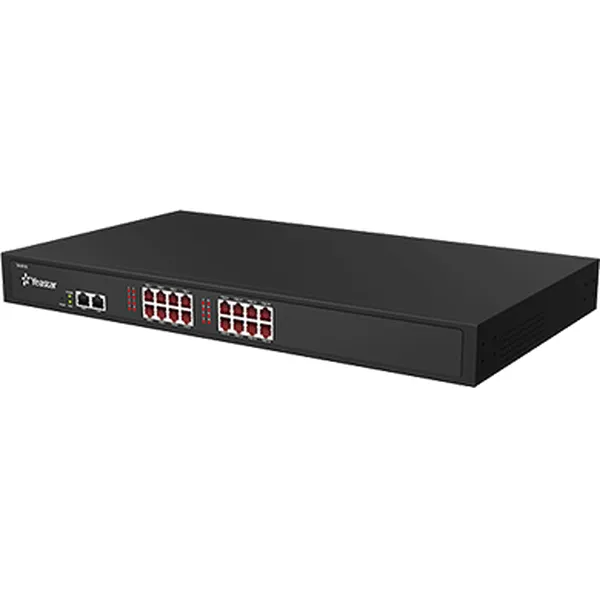
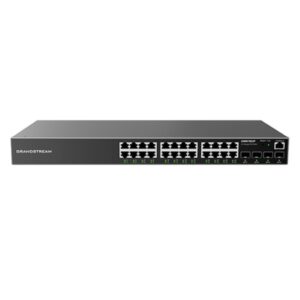
Yeastar TA1610 Analog VoIP Gateway in Dubai, UAE
The Yeastar TA1610 is built for organizations that want to preserve existing analog telephone lines while introducing SIP-based communications, IP PBX connectivity, and more flexible call routing. It gives businesses a controlled bridge between PSTN trunks or legacy PBX extension interfaces and a modern VoIP network, making it useful for gradual migration projects, hybrid telecom environments, branch connectivity, and office voice continuity planning.
✓ SIP / IAX2 Support
✓ UAE Quote Assistance
✓ Configuration Guidance
✓ PBX Compatibility Review
Quick Product Information
Yeastar
TA1610
Analog FXO VoIP Gateway
PSTN line integration with IP PBX
16 RJ11 FXO ports and 1 RJ21 port
SIP RFC3261 and IAX2
Web GUI, logs, provisioning options
Contact FourTeck.com for quotation
Buyer Snapshot and Decision Summary
Best Suited For
Businesses with multiple analog PSTN trunks that want to connect those lines to a SIP-based phone system without replacing the full telephony environment at once.
Main Benefit
It helps protect previous investment in analog lines while giving IT teams a path toward IP telephony, centralized call rules, and better voice network control.
Check Before Quote
Confirm how many PSTN lines are required, which PBX platform will be connected, and whether rack mounting, cabling, configuration, or remote setup support is needed.
FourTeck Support
FourTeck.com can assist with model review, related VoIP product matching, UAE availability guidance, warranty clarification, and quote preparation for procurement teams.
Product Overview
Many organizations still rely on analog trunk lines for inbound calls, backup calling, reception desks, fax connectivity, branch voice services, or legacy PBX integration. Replacing the entire telephony system in one step can be costly and operationally disruptive, especially when staff are already trained on existing call flows. The Yeastar TA1610 Analog VoIP Gateway Dubai option gives IT teams a practical migration layer. It is not simply a small adapter; it is a multi-port FXO gateway intended to connect a group of analog telephone lines to a VoIP environment so the business can modernize voice routing at a manageable pace.
In a typical deployment, the gateway sits between PSTN lines or PBX extension interfaces and an IP PBX, hosted PBX, SIP server, or compatible communications platform. Incoming calls can be received through analog trunks and routed into the IP phone system, while outbound calls may continue to use selected analog lines where required. This is valuable for offices that have active landline numbers, departments that need local breakout, or sites that must keep analog failover paths while moving users to IP phones.
For UAE buyers, the important question is not only whether the model name is correct. Procurement teams should confirm port requirements, voice platform compatibility, power environment, rack or desktop placement, caller ID behavior, call routing rules, and the expected level of configuration support. FourTeck.com helps customers review those details before quotation so the selected gateway supports the real calling environment rather than only matching a product code.
The TA1610 is especially relevant for businesses with a larger number of analog trunks than smaller 4-port or 8-port models can handle. A 16 FXO port design can support more demanding reception, branch, hospitality, healthcare, service desk, or project-site voice requirements. It also gives buyers a more centralized hardware point for call logging, web-based configuration, and ongoing telecom administration.
Key Business Benefits
A VoIP gateway is often purchased because a business has to connect two different generations of voice infrastructure. The value comes from reducing migration friction, keeping important numbers active, improving call routing flexibility, and allowing IT teams to manage voice connectivity in a more structured way. The points below explain how the TA1610 can support common business requirements.
◆ Protect Existing Line Investment
Companies with active analog numbers may not want to cancel those services immediately. The gateway allows those lines to continue serving the business while the phone system moves toward IP-based routing and extensions.
◆ Flexible Migration Planning
Instead of replacing every phone, trunk, and PBX component at once, IT teams can phase the project. This reduces downtime risk and gives the business time to test call flows before larger changes.
◆ Centralized Call Routing
When analog lines are brought into an IP PBX environment, businesses can create more consistent inbound and outbound call rules for departments, branches, reception desks, and support teams.
◆ Practical Voice Continuity
Some organizations keep analog lines for resilience or regulatory comfort. A gateway can help maintain those lines as part of a broader voice continuity plan when paired with suitable PBX rules.
◆ Easier Administration
Web-based configuration, logs, and diagnostic options help technical teams manage voice gateway settings more efficiently than dealing with scattered analog equipment.
◆ Compatibility-Focused Design
Support for widely used VoIP protocols, codecs, transport options, and PBX environments helps make the gateway suitable for mixed telephony infrastructures.
Product Highlights
The model supports a larger analog trunk requirement than compact gateway models, making it suitable for businesses that need to bring several PSTN lines into an IP voice system.
Protocol support gives integrators flexibility when connecting the gateway to SIP-based IP PBX platforms or environments that use IAX2.
Echo cancellation, jitter buffering, packet-loss handling, comfort noise generation, and voice activity detection support clearer conversations when the network is correctly configured.
The gateway includes networking options such as VLAN, DHCP, DDNS, static route, PPPoE, OpenVPN, and management through secure network protocols.
System logs, call logs, debug logs, LED status indication, packet capture support, and web access can help administrators investigate call routing or line behavior.
The larger TA model is designed for desktop or rack-mount use, which makes it easier to place inside telecom cabinets, server rooms, or structured IT racks.
Technical Specifications
Selecting the correct gateway should begin with line count, not only brand preference. A buyer with 4 or 8 analog trunks may choose a smaller model, while a business with more analog PSTN lines, multi-department call routing, or future expansion plans may benefit from a 16-port unit. The PBX platform should also be checked. SIP settings, caller ID method, DTMF handling, NAT traversal, VLAN tagging, and failover expectations can affect the final setup. FourTeck.com can help customers prepare the right information before the quote so that pricing, delivery, and configuration discussions are more accurate.
Configuration and Buyer Guidance
Before ordering an analog VoIP gateway, the buyer should map the voice environment. Count active PSTN lines, identify which lines must remain active, decide which lines will be used for inbound calls, and define whether outbound calls should prefer SIP trunks, analog trunks, or a combination of both. A gateway can be technically capable, but the project will only be successful when the call routing plan is clear.
Confirm active PSTN line count, spare ports required, and whether future line expansion is expected.
Share the IP PBX, hosted PBX, SIP server, or legacy PBX details so compatibility can be reviewed.
Document inbound routes, outbound dial rules, emergency calling needs, call fallback, and trunk grouping.
Check rack space, patch cables, RJ11 or RJ21 planning, power protection, network ports, and labeling requirements.
For better quote preparation, share the number of users, the existing phone system model, line provider details, expected deployment location, and whether installation support is required. This helps FourTeck.com guide the buyer toward the right gateway, related IP phones, PBX hardware, network switches, cabling, and support options.
Ideal Business Use Cases
PSTN Trunking for IP PBX
Organizations moving to SIP-based telephony can connect existing analog landlines to an IP PBX and route calls through the new system while keeping familiar public numbers active.
Legacy PBX Transition
Businesses with older PBX equipment can use a gateway as a transition layer when replacing every phone and trunk at once is not suitable for budget or operations.
Branch Office Voice Routing
Branches with local analog lines can be integrated into a broader IP voice environment, helping teams standardize call handling while preserving local breakout when needed.
Hotels and Service Locations
Hospitality, clinic, warehouse, and service desk environments often need a mixture of analog lines and IP communications. The gateway supports structured integration for these mixed setups.
Call Routing Projects
Telecom integrators can use the gateway where multiple PSTN trunks must be grouped, routed, monitored, or connected to a central communications system.
Voice Continuity Planning
Some companies keep analog lines as backup to IP trunking. With suitable design, a gateway can form part of a broader continuity and fallback plan.
The best use case is one where the organization has a clear reason to retain analog trunks: existing phone numbers, provider contracts, location-specific calling requirements, migration staging, or failover planning. If all lines are already SIP-based, a different PBX or SIP trunking solution may be more suitable. FourTeck.com can help review this before procurement.
Yeastar TA1610 Analog Line Integration
The strongest reason to choose this model is its ability to bring multiple analog PSTN lines into an IP voice environment from one device. For many companies, voice migration is not a clean break. Public numbers may remain tied to analog trunks, the business may rely on existing reception call flows, or the site may need analog service for specific operational reasons. A 16-port FXO gateway gives the IT or telecom team a central point for those lines instead of creating scattered single-line adapters or unmanaged workarounds.
This approach helps the business keep continuity while gaining IP PBX benefits such as extension routing, call groups, time-based rules, and better control of call paths. It is also useful when a head office or branch wants to maintain local calling options while connecting users to a broader enterprise voice environment. The final result depends on correct setup, but the core value is clear: keep analog lines usable while the company adopts modern telephony.
Yeastar TA1610 Management and Diagnostics
Telephony problems can be difficult to diagnose when teams have limited visibility. Busy tones, answer detection issues, caller ID mismatch, routing mistakes, echo, or failed outbound calls can have several causes. A web-managed gateway with logs and diagnostic features gives administrators better tools to review what is happening. Status LEDs can show system and port behavior at a glance, while logs and call records can help technical staff understand the sequence of events during testing or support calls.
The management layer is also important for distributed businesses. When gateway configuration is documented properly, replacement, firmware updates, route changes, and troubleshooting become easier to handle. Features such as web access, provisioning support, packet capture, backup and restore, and network protocol support reduce dependency on manual guesswork. FourTeck.com can help buyers think through management requirements before ordering, especially where the gateway will be installed at a remote branch or project site.
Yeastar TA1610 Voice Quality and Network Fit
Voice quality is not determined by a gateway alone. It also depends on cabling, PSTN line condition, network latency, jitter, codec selection, PBX settings, and QoS. However, the gateway includes functions that help support a cleaner calling experience when the rest of the environment is properly designed. Echo cancellation helps reduce the echo that can appear when analog and IP voice paths meet. Dynamic jitter buffering helps voice packets arrive in a more usable flow, while codec support allows integrators to choose suitable voice compression based on bandwidth and platform compatibility.
For business networks, VLAN tagging and QoS planning are worth checking. Voice traffic should be protected from congestion caused by large file transfers, surveillance traffic, guest Wi-Fi, or backup jobs. When the gateway is installed in a structured network with appropriate switching, cabling, IP addressing, firewall rules, and PBX configuration, it can become a reliable part of the communications path. Buyers should therefore include both telecom and network teams in the planning process.
What Buyers Should Check Before Purchase
A model name alone does not guarantee a successful voice project. Buyers should confirm the real line count, the type of analog service, PBX compatibility, expected call routing, caller ID format, DTMF requirement, fax usage, rack placement, power protection, and configuration support. The TA1610 is a strong fit when 16 analog FXO interfaces are needed, but the buying decision should still be guided by the actual call design. A business with fewer lines may prefer a smaller FXO model, while a larger site may require multiple gateways, SIP trunking changes, or a more advanced PBX design.
Warranty expectations should also be discussed before purchase. Gateway warranty handling can depend on supplier channel, country, serial number, and purchase terms. Firmware and regional model details may affect long-term support. If the project involves installation, the customer should clarify who will configure routes, test incoming and outgoing calls, label ports, document settings, and hand over admin access. These details prevent delays after the hardware arrives.
Configuration Fit
Confirm FXO port count, PBX platform, trunk groups, call direction, dial rules, and whether analog fallback is part of the requirement.
Compatibility Check
Review SIP settings, codecs, caller ID method, DTMF mode, fax behavior, VLAN requirements, firewall rules, and network addressing.
Availability and Warranty
Ask for current UAE availability, delivery estimate, warranty guidance, packaging details, and whether accessories are included or ordered separately.
Quote Preparation
Share line count, PBX model, deployment site, rack plan, network diagram, expected quantity, and installation support needs with FourTeck.com.
UAE Availability and Service Support
FourTeck.com supports Yeastar TA1610 Analog VoIP Gateway Dubai inquiries with product selection assistance, quote preparation, compatibility discussion, UAE delivery coordination, and warranty guidance. Availability can vary because telecom products may depend on supplier stock, firmware version, regional packaging, order quantity, and project timing. For this reason, FourTeck.com recommends confirming availability before planning installation dates or customer cutover schedules.
When contacting FourTeck.com, buyers can share the required quantity, number of analog trunks, PBX model, desired installation location, and any related products such as IP phones, network switches, UPS units, rack accessories, patch panels, or SIP trunking equipment. This allows the team to prepare a more accurate response for procurement, technical, and finance approval. Quote assistance can also include alternative model guidance when a different port count or gateway type is more suitable.
Dubai, Abu Dhabi, Sharjah, and Ajman Coverage
Businesses in Dubai, Abu Dhabi, Sharjah, Ajman, and other UAE locations can contact FourTeck.com for product availability, configuration guidance, and quotation assistance. The team can help buyers review suitable models, related accessories, procurement requirements, and delivery coordination based on the business need. This combined UAE support is useful for companies with head offices, branches, warehouses, retail sites, clinics, hospitality properties, and project offices that need consistent voice infrastructure planning.
For multi-site requirements, buyers should mention all delivery locations, site readiness, preferred installation timeline, and whether different branches use different PBX platforms or line providers. This avoids ordering the same gateway for every site without checking whether each location has the same technical requirement.
GCC and Africa Availability
FourTeck.com also supports business technology inquiries across selected GCC and Africa markets through regional inquiry channels. Customers in the UAE, Saudi Arabia, Qatar, Oman, Kuwait, Bahrain, Kenya, Uganda, and other Africa region markets can request assistance for Yeastar gateways, business communications products, networking accessories, and related IT infrastructure. Availability, delivery options, warranty handling, and configuration support may vary by country, supplier channel, and product type.
Regional buyers can start from FourTeck.com or use relevant platforms such as FourTeck Kenya, FourTeck Uganda, FourTeck Africa, and FourTeck Kuwait where applicable. For cross-border projects, provide destination country, quantity, preferred incoterm, and warranty expectations before quotation.
Other Options Buyers May Consider
The correct gateway depends on whether the buyer needs FXO ports for analog telephone lines, FXS ports for analog phones and fax machines, GSM gateways for mobile network access, or PRI/BRI gateways for ISDN environments. FourTeck.com can help customers compare these options before ordering, especially when the project includes an existing PBX or a phased migration to IP telephony.
Yeastar TA410 FXO Gateway
Best for smaller deployments that need fewer analog PSTN lines connected to an IP PBX.
Yeastar TA810 FXO Gateway
A mid-size FXO choice for businesses that need more capacity than 4 ports but less than 16 ports.
Yeastar TA2400 FXS Gateway
Suitable when the requirement is to connect analog phones or fax devices to an IP PBX instead of analog trunks.
Yeastar P-Series PBX
Useful for businesses planning a broader phone system upgrade with IP extensions and advanced communications features.
Business VoIP Phones
IP phones may be required when migrating users from analog handsets to a SIP-based calling environment.
Network Switches and UPS
Reliable switching and power protection support better voice uptime for gateways, PBX systems, and phones.
Why Buyers Choose FourTeck.com
FourTeck.com works with business buyers who need more than a product name. Telecom and networking purchases usually involve compatibility questions, deployment planning, warranty clarification, accessory matching, and internal approval. A gateway may be ordered by procurement, installed by IT, configured by a telecom engineer, and used daily by reception, sales, service, operations, or management teams. FourTeck.com helps connect these requirements by supporting practical product discussions before the order is finalized.
Assistance for SMB, enterprise, reseller, and project procurement requirements.
Help reviewing line count, PBX compatibility, voice routing, accessories, and related infrastructure.
Structured support for pricing requests, quantity requirements, delivery details, and approval documentation.
Guidance for UAE buyers and selected regional markets based on product availability and supply conditions.
The goal is to help buyers avoid common mistakes such as ordering the wrong port type, missing rack accessories, overlooking power protection, choosing a gateway that does not match the PBX, or assuming that every analog line behaves the same. This practical review can save time during installation and reduce the risk of post-purchase rework.
Frequently Asked Questions
What is the Yeastar TA1610 used for?
It is used to connect multiple analog PSTN telephone lines or PBX extension interfaces to a VoIP or IP PBX environment. This helps businesses keep existing analog lines while routing calls through a modern phone system.
How many analog lines does it support?
The TA1610 supports 16 FXO ports. Buyers should confirm the exact number of active PSTN lines, spare ports required, and future expansion plans before quotation.
Can FourTeck.com help with configuration planning?
Yes. FourTeck.com can help buyers review port count, PBX compatibility, expected call flow, network requirements, related accessories, and quote details before purchasing.
Is this gateway suitable for SIP PBX systems?
The gateway supports SIP and is commonly used to connect analog lines with SIP-based phone systems. The specific PBX platform, codec settings, DTMF mode, and network design should still be checked.
Does availability depend on configuration?
Availability may depend on supplier status, firmware version, regional packaging, quantity, and delivery requirements. FourTeck.com can confirm current UAE availability during quotation.
Can it be rack mounted?
The TA1610 is suitable for desktop or rack-mount deployment. Buyers should confirm rack space, ventilation, power access, and cable routing before installation.
What information should I share for a quote?
Share the required quantity, active analog line count, PBX model, deployment site, delivery location, installation timeline, and any related products needed for the voice project.
Are related Yeastar models available?
FourTeck.com can help review smaller FXO models, FXS gateways, PBX solutions, IP phones, and networking accessories depending on the customer requirement.
Can businesses request bulk supply?
Yes. Businesses, resellers, project consultants, and IT teams can request quotation support for single-unit, multi-unit, or project-based requirements. Availability and lead time are confirmed case by case.
Need Help Choosing the Right VoIP Gateway?
FourTeck.com can help you review product availability, analog line requirements, PBX compatibility, warranty guidance, delivery coordination, and related VoIP accessories for your business requirement.
Reviews
There are no reviews yet.