
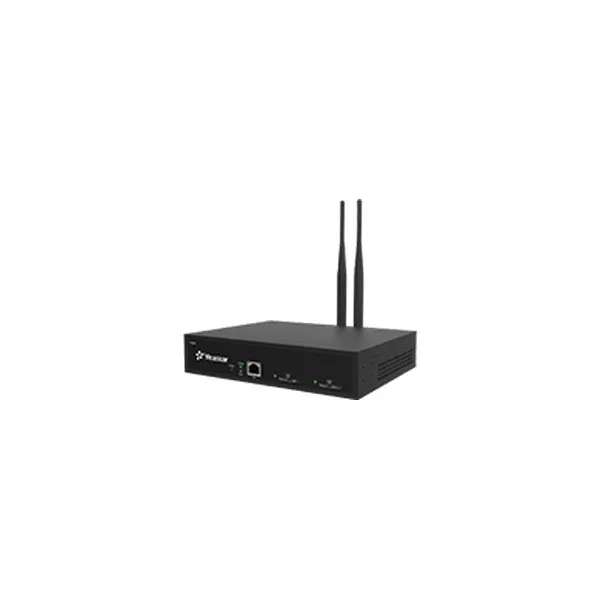
Yeastar TG200 GSM VoIP Gateway in Dubai, UAE
The Yeastar TG200 is built for organizations that need a controlled bridge between GSM mobile calling and a VoIP telephone environment. It helps businesses connect mobile trunks to an IP PBX, route calls between SIM-based networks and SIP systems, support branch communication, and improve calling flexibility without moving immediately to a larger multi-port gateway. FourTeck.com supports UAE buyers with product selection, configuration review, quote assistance, delivery coordination, and practical guidance before procurement.
✓ SIP / IAX2 Integration
✓ PBX Trunking Support
✓ UAE Quote Assistance
Check UAE Availability
Quick Product Information
Best Suited For
Businesses that need two cellular channels connected to an IP PBX for mobile trunking, fallback calling, or controlled routing.
Main Buyer Benefit
It allows GSM calls to be managed through a VoIP environment, helping teams centralize call handling and reduce disconnected communication workflows.
Check Before Quote
Confirm SIM network type, PBX compatibility, call volume, antenna placement, LAN access, and expected routing logic.
FourTeck Support
FourTeck.com can assist with sourcing guidance, related Yeastar options, configuration discussion, and quote preparation.
Product Overview
A GSM VoIP gateway is used when a business wants mobile network calling to work together with a VoIP phone system. Instead of keeping mobile SIM calling separate from the office communication platform, the gateway creates a controlled path between cellular channels and SIP-based calling. This can be useful for companies that operate service numbers, branch office lines, field staff communication workflows, temporary project offices, or environments where mobile trunks are part of the call strategy.
The Yeastar TG200 GSM VoIP Gateway Dubai page is intended for buyers who want a clear business explanation before requesting a quotation. The model is commonly considered when two GSM channels are enough for the requirement and when the buyer does not need the larger TG400, TG800, or TG1600 class. It supports GSM-to-VoIP and VoIP-to-GSM communication, allowing inbound calls from SIM channels to reach the IP PBX and outbound calls from the PBX to use mobile network routes where configured.
In practical terms, a business can use this gateway to connect mobile SIMs to an existing phone system, create mobile trunk routes for outbound calling, support fallback options for certain lines, or manage GSM calls through centralized extensions. The exact result depends on the PBX platform, network design, SIM provider rules, call routing policies, and the configuration applied by the technical team. Buyers should not select a gateway only by port count; they should also consider codec compatibility, SIP registration mode, network security, antenna location, SIM plan restrictions, and call reporting needs.
For UAE businesses, the TG200 can be relevant in offices where conventional telephony needs to be combined with flexible mobile calling. FourTeck.com helps customers understand whether the two-channel model is sufficient, whether a higher-port option is better, and what information should be collected before quotation. This approach helps reduce wrong purchases, unclear installation expectations, and compatibility surprises after the product reaches the site.
Key Business Benefits
✓ Mobile Trunk Integration
The gateway helps connect GSM mobile channels with a SIP-based communication platform. This gives businesses a structured way to route mobile calls through extensions, IVR rules, or PBX call paths rather than depending only on separate mobile handsets.
✓ Controlled Outbound Calling
When configured correctly, teams can route selected outbound calls through GSM trunks. This can support branch dialing plans, mobile-number presentation needs, or site-specific calling policies while keeping management inside the PBX environment.
✓ Better Call Handling
Inbound mobile calls can be directed to reception groups, agents, extensions, or voicemail rules depending on the PBX. This improves accountability because calls are no longer trapped on a single mobile device.
✓ Practical Small-Site Fit
The two-channel class is useful where call volume is modest or where a business wants a focused GSM integration instead of a large gateway. It can fit small offices, remote teams, and specific departmental use cases.
✓ Protocol Flexibility
Support for SIP and IAX2 gives technical teams options when integrating with compatible PBX systems. Transport support such as UDP, TCP, TLS, and SRTP can also help align deployment with network and security preferences.
✓ Clear Procurement Path
FourTeck.com helps buyers check model suitability, availability, accessories, antenna considerations, warranty guidance, and quote details before purchase. This is useful for procurement teams that need clarity before approval.
Product Highlights
The TG200 belongs to Yeastar’s TG Series, a family designed to connect GSM, 3G, or 4G mobile networks directly with an IP network, depending on the module version and selected model. For this model class, the major consideration is the two-port design. It is not intended to replace a high-density gateway. Instead, it gives businesses a manageable way to add limited mobile trunking to a VoIP deployment.
Useful for low-to-medium GSM integration needs where two SIM-based call paths are enough.
Supports communication from GSM to VoIP and from VoIP to GSM, subject to configuration and carrier rules.
Can be used with compatible IP PBX platforms for call routing, trunk selection, and centralized handling.
Final functionality depends on PBX settings, SIM provider limitations, network design, and selected gateway variant.
Buyers should confirm whether the deployment needs only GSM channels or whether 3G/4G model variations are required. They should also check whether the office network allows the gateway to communicate securely with the PBX, whether the SIM plan supports the required calling pattern, and whether external antenna placement is needed for reliable signal quality.
Technical Specifications
Choosing the correct configuration is not only about confirming that the model has two ports. Buyers should also identify the calling direction they need, the number of simultaneous calls, the SIM provider rules, the expected call duration, the IP PBX brand, the SIP registration method, the firewall rules, and the location where the antennas will be placed. A small gateway can perform very well in the correct use case, but it may not be suitable for high-volume call center routing or multi-branch mobile trunk consolidation. FourTeck.com can help procurement and technical teams prepare these details before requesting a formal quote.
Configuration and Buyer Guidance
Before buying a GSM VoIP gateway, businesses should define how the device will actually be used. Some buyers need inbound mobile calls to land on an IP PBX. Others need selected outbound calls to leave through GSM trunks. Some want a backup route for a branch office, while others want a dedicated SIM channel for a department. These scenarios require different routing rules, and the gateway should be planned accordingly.
Call Volume
Estimate simultaneous calls, peak periods, average call duration, and whether two channels are enough.
PBX Fit
Confirm SIP trunk settings, authentication method, dial plan requirements, codec priority, and extension routing.
SIM and Carrier
Check carrier coverage, SIM plan terms, call barring rules, international dialing needs, and compliance requirements.
Network Design
Plan IP address, firewall access, VLAN placement, QoS needs, and secure management access.
When contacting FourTeck.com, it is helpful to share your PBX brand, number of SIM channels required, expected calling pattern, whether you need inbound or outbound routing, site location, and any preferred accessories. This information allows the quotation discussion to move faster and helps the team suggest whether the TG200 or a higher-capacity Yeastar TG model is more suitable.
Ideal Business Use Cases
Branch Office Mobile Trunks
A branch office may need mobile calling paths without installing complex carrier circuits. A two-channel GSM gateway can provide controlled mobile trunk access for selected users or departments.
Inbound SIM Number Routing
Businesses that already receive calls on mobile numbers can route those calls to a PBX, reception group, or department instead of keeping the SIM inside one phone.
Temporary Project Sites
Project offices, site cabins, and temporary teams may need voice connectivity that can be deployed faster than fixed-line services, subject to network conditions and business policy.
Service Desk Call Control
A service team can centralize calls from mobile numbers into a structured phone system where calls can be distributed, forwarded, or monitored according to PBX capability.
Fallback Calling Path
Some organizations use mobile channels as an additional route for selected calls. This should be designed carefully to avoid confusion, uncontrolled cost, or policy issues.
PBX Modernization
Companies moving toward VoIP may still need to retain certain mobile numbers. A GSM gateway can help bridge older calling habits with a more centralized system.
The best use case is one where the organization has a clear call routing goal and a manageable number of GSM channels. If the call requirement is high, if there are many departments, or if multiple SIM trunks must be active at the same time, a larger gateway may be more appropriate. FourTeck.com can help compare options before quotation.
Yeastar TG200 Mobile Trunking Control
Mobile trunking is one of the main reasons buyers consider this gateway. Instead of depending on individual mobile phones for business calls, an organization can place SIM channels into a gateway and connect them to the IP PBX. This creates a more structured call flow. Calls can be routed to extensions, ring groups, or departments depending on PBX capability. Outbound calling can also be assigned to specific users or dial rules if the phone system supports that level of control.
The business value is not only technical. It can make communication easier to manage. A mobile number used for customer calls does not have to stay with one employee. The company can decide how calls are answered, who receives them, and what happens when a user is busy. This is especially useful for sales desks, maintenance teams, rental offices, site coordinators, and customer service teams that rely on mobile numbers for external communication.
However, mobile trunking must be planned carefully. SIM terms, carrier coverage, call forwarding restrictions, caller ID behavior, and telecom compliance may affect how the final setup works. Businesses should also decide whether call recording, call reporting, and queue handling are required, because those functions usually depend on the PBX rather than the gateway alone.
Yeastar TG200 SIP and PBX Integration
The gateway is most valuable when it works smoothly with the business phone system. SIP support allows integration with many VoIP environments, while IAX2 support may be useful in specific platforms and designs. The PBX administrator typically configures trunks, routes, authentication details, codecs, caller ID behavior, and call permissions. For a small business, this can turn mobile SIM channels into a shared calling resource. For a larger organization, it may become one part of a wider communication design.
A good integration plan includes LAN access, IP addressing, firewall rules, and secure management access. It also includes codec selection. For example, the codec chosen can affect bandwidth, call quality, and compatibility with the PBX or carrier path. DTMF handling is also important when callers interact with IVR menus, banking systems, support systems, or automated services. The TG Series supports common DTMF modes such as RFC2833, SIP Info, and in-band, giving integrators options when troubleshooting tone behavior.
FourTeck.com can help buyers prepare the right questions before sourcing. The buyer should provide the PBX brand, whether the system is cloud or on-premise, the preferred trunk mode, and the expected number of users who will access the gateway. This makes the purchase conversation more accurate and reduces the chance of ordering a device that does not fit the real communication plan.
Yeastar TG200 Deployment Planning and Reliability
A GSM gateway deployment is affected by more than the device itself. Signal quality, antenna placement, SIM plan stability, network power, and PBX routing all influence the user experience. A gateway placed in a server room with weak mobile signal may not deliver the expected call quality. A SIM plan with restrictions may not support the calling pattern. A firewall rule may prevent reliable SIP communication. These practical details should be checked before the order is approved.
Reliability also depends on how the gateway is monitored and maintained. Businesses should document the SIM numbers, carrier plans, IP address, administrator access, PBX route names, and failover behavior. They should keep firmware and configuration backups according to their internal IT policy. If the gateway is used for important customer communication, it should be connected to reliable power and placed in a network segment that supports stable voice traffic.
For small offices, a two-channel setup can be straightforward. For project deployments, it may require more planning, especially where multiple locations, multiple SIMs, or complex routing policies are involved. FourTeck.com helps customers discuss deployment needs, related accessories, and suitable alternatives if the requirement is bigger than the TG200 class.
What Buyers Should Check Before Purchase
Before requesting a quote, buyers should confirm the required call flow, the number of GSM channels, the PBX platform, SIM network compatibility, and the expected calling pattern. A gateway should not be selected only because the model name looks familiar or because the port count appears sufficient. The correct choice depends on how calls will move between the mobile network and the VoIP system. Businesses should also check whether the requirement is for inbound calls, outbound calls, or both. Some projects need simple SIM-to-extension routing; others require dial plans, caller ID handling, call limits, and separate trunk rules for departments.
Compatibility with the existing phone system is another important point. The buyer should confirm whether the PBX supports SIP trunk integration, which codecs are preferred, how DTMF should be handled, and whether TLS or SRTP is required. Network teams should review LAN placement, firewall access, static IP requirements, VLAN design, QoS, and secure administrator access. For mobile performance, the physical location of the gateway matters because weak signal can affect call stability. Antenna placement should be considered, especially in rack rooms, basements, warehouses, or buildings with heavy concrete structures.
Configuration Fit
Confirm whether two channels are enough, which call routes are needed, and whether the gateway must support only a department or the full office.
Compatibility Check
Review PBX model, SIP trunk settings, firewall policy, codec preference, DTMF behavior, and SIM provider limitations before approving the order.
Availability and Warranty
Ask for current availability, supplied version, warranty handling, included accessories, power adapter details, and any expected lead time.
Quote Preparation
Share call volume, site location, PBX brand, SIM quantity, routing goal, installation timeline, and whether related Yeastar products are being considered.
UAE Availability and Service Support
FourTeck.com supports product inquiries across Dubai and the UAE with assistance for model selection, configuration review, quotation requests, delivery coordination, and warranty guidance. Availability may vary based on the exact model version, supplier status, product movement, required quantity, and any accessories requested with the gateway. The team can help buyers understand whether the TG200 class matches their requirement or whether a higher-port gateway should be considered.
For a smoother quotation process, buyers should provide the intended PBX platform, number of SIM channels, cellular network preference, site location, and whether installation support is required. The more accurate the requirement, the easier it becomes to prepare a suitable sourcing and quote discussion. FourTeck.com does not need buyers to finalize every technical detail before contacting sales; however, sharing the basic communication goal helps avoid delays.
Dubai, Abu Dhabi, Sharjah, and Ajman Coverage
Businesses in Dubai, Abu Dhabi, Sharjah, Ajman, and other UAE locations can contact FourTeck.com for Yeastar gateway availability, configuration guidance, and quote assistance. The team can help buyers review suitable models, related options, and purchase requirements based on the communication environment. This combined UAE coverage approach helps keep the page useful without creating repeated city blocks or unclear buying messages.
Whether the gateway is required for a small office, a branch location, a service desk, or a temporary project site, FourTeck.com can support the inquiry with practical questions about PBX compatibility, SIM routing, carrier requirements, warranty expectations, and delivery coordination. Buyers can also ask about related Yeastar options if a larger number of channels is required.
GCC and Africa Availability
FourTeck.com also supports business technology inquiries across selected GCC and Africa markets through regional platforms and inquiry channels. Customers from Saudi Arabia, Qatar, Oman, Kuwait, Bahrain, Kenya, Uganda, and other Africa region locations can request product guidance, sourcing discussion, and configuration support where available. Delivery options, warranty handling, supplier access, and product availability may vary by country, product type, and order quantity.
Regional buyers can start from FourTeck.com or use relevant regional platforms such as FourTeck Kenya, FourTeck Uganda, FourTeck Africa, and FourTeck Kuwait for suitable inquiries. The best starting point is to share the destination country, required quantity, intended PBX platform, and whether the gateway will be used for a new deployment or an upgrade.
Related Models for Business Requirements
Some buyers begin with the TG200 but later discover they need more ports, a different gateway type, or a wider communication solution. FourTeck.com can help compare related products based on channel count, PBX design, existing infrastructure, and future expansion needs. The following options are useful starting points for discussion.
Yeastar TG400 GSM Gateway
A suitable discussion point when the business needs more than two mobile channels.
Yeastar TG800 GSM Gateway
A higher-density model class for larger call routing or multi-SIM requirements.
Yeastar IP PBX Solutions
Useful when the buyer is planning a complete business calling environment, not only a gateway.
Business VoIP Phones
IP phones, headsets, and related calling accessories may be needed with PBX projects.
Network Switches
A stable LAN, VLAN design, and QoS-ready switching can improve VoIP deployment quality.
Contact FourTeck.com
Ask for help matching a gateway, PBX, network switch, or accessory to your project.
Why Buyers Choose FourTeck.com
FourTeck.com works with business buyers who need more than a product name. Procurement teams often need configuration clarity, compatibility guidance, quote support, delivery coordination, and warranty direction before they can approve a purchase. Technical teams need to know whether the product fits the existing environment, while finance teams want a clear item and requirement before issuing approval. FourTeck.com helps connect these needs into a practical product inquiry process.
Assistance for SMB, enterprise, reseller, and project-based technology inquiries.
Help reviewing port count, compatibility, accessories, and deployment expectations.
Structured support for quotation requests without fake stock, price, or urgency claims.
Guidance on Yeastar gateways, PBX products, VoIP phones, and network infrastructure.
Frequently Asked Questions
What is the Yeastar TG200 used for?
It is used to connect GSM mobile calling with a VoIP or IP PBX environment. Businesses can use it for mobile trunking, inbound SIM number routing, selected outbound call routes, and branch communication workflows. Final use depends on the phone system, SIM plan, carrier rules, and configuration.
Is it suitable for a small office?
Yes, it can be suitable for a small office when two GSM channels are enough for the calling requirement. If the office expects heavy call volume or many simultaneous mobile routes, a larger TG Series model may be more appropriate. FourTeck.com can help review the requirement before quotation.
Can FourTeck.com help with configuration planning?
FourTeck.com can help buyers prepare the right configuration questions, including PBX compatibility, SIM channel needs, routing goals, network placement, and accessories. Actual deployment may depend on the customer environment, technical team, and selected support arrangement.
Does availability depend on configuration?
Yes. Availability may depend on product version, module type, supplier status, quantity, accessories, and current market movement. Buyers should contact FourTeck.com with the exact requirement so the team can check suitable options and provide quotation guidance.
What should I share before requesting a quote?
Share your PBX brand, number of SIM channels, expected call volume, required call direction, site location, network setup, and any accessories or installation expectations. This helps FourTeck.com guide you toward the right model and quotation details.
Can it work with any IP PBX?
It is designed for SIP and related VoIP integration, but final compatibility should be verified with the specific PBX platform, firmware, codec settings, authentication method, and network design. Buyers should not assume compatibility without reviewing technical requirements.
Is delivery support available in the UAE?
FourTeck.com can assist with delivery coordination for UAE product inquiries, subject to availability, supplier status, quantity, and order details. The team can provide guidance during the quotation process without making unverified stock or same-day delivery claims.
What related products may be needed?
Depending on the project, buyers may also need an IP PBX, VoIP phones, headsets, network switches, UPS protection, rack accessories, patch cables, or antenna-related accessories. FourTeck.com can help review related items during the inquiry stage.
How do I request a Dubai quote?
Use the FourTeck.com contact page and share the model name, required quantity, business location, PBX platform, and expected use case. The sales team can then assist with availability checking, quotation discussion, and suitable product guidance.
Can businesses request bulk supply?
Businesses, resellers, and project teams can request quantity-based quotations. Availability, lead time, warranty handling, and delivery planning may vary based on the required quantity and supplier conditions, so it is best to share complete project details at the beginning.
Need Help Choosing the Right Gateway?
FourTeck.com can help you review Yeastar gateway availability, configuration options, PBX compatibility, warranty guidance, and delivery requirements for your business location. Share your use case and request a quote today.
Reviews
There are no reviews yet.