
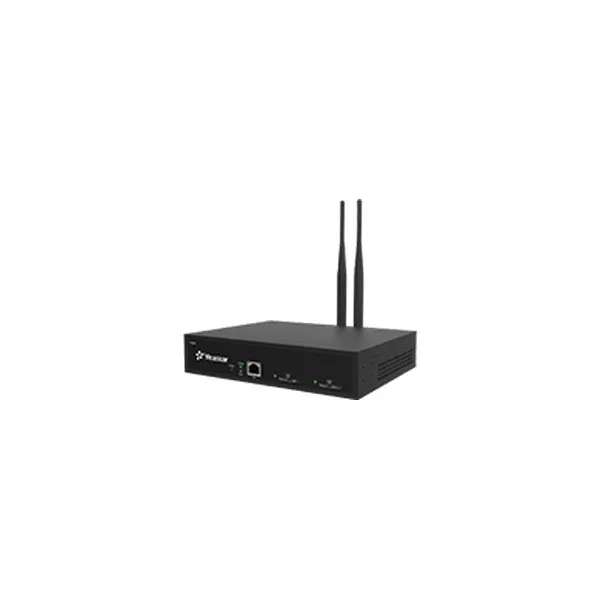
Yeastar TG200W GSM VoIP Gateway in Dubai, UAE
The Yeastar TG200W GSM VoIP Gateway helps businesses connect cellular voice channels to modern VoIP systems, allowing calls to move between GSM, 3G, 4G, SIP trunks, softswitch platforms, and IP PBX environments. It is a useful option for companies that want mobile trunking, backup voice continuity, controlled outbound routing, branch calling flexibility, or a compact gateway that can integrate mobile network access with their existing telephone system. FourTeck.com supports Dubai and UAE buyers with product selection, compatibility review, quote assistance, and deployment guidance before ordering.
✓ 2 Mobile Channels
✓ Web-Based Management
✓ Quote Assistance
Quick Product Information
Best Suited For
Businesses that need mobile network access inside an IP telephony environment without replacing their existing PBX.
Main Buyer Benefit
Two mobile channels can support controlled routing, backup calling, and cellular trunking for day-to-day voice needs.
Check Before Quote
Confirm cellular bands, SIM requirements, IP PBX compatibility, traffic volume, and installation environment before purchase.
FourTeck Support
FourTeck.com can help buyers review model suitability, accessories, regional supply, and warranty guidance.
Product Overview
The Yeastar TG200W GSM VoIP Gateway is designed for organizations that need a practical bridge between cellular voice networks and IP-based communication systems. In a traditional office setup, mobile calls, fixed-line calls, SIP trunks, and PBX extensions can sit in separate communication silos. A GSM VoIP gateway helps reduce that separation by allowing the business phone system to send and receive calls through cellular network channels where appropriate. This can be useful for offices that rely on mobile numbers, teams that need a backup when fixed lines are unavailable, or companies that want more routing flexibility for calls to mobile networks.
For many UAE businesses, communication reliability is not only a technical requirement; it is part of customer service, field coordination, appointment management, sales follow-up, logistics, and support response. A missed call can mean a delayed service request, a lost sales conversation, or an operational gap between office and field teams. By adding mobile trunks to an IP PBX environment, the gateway gives administrators another voice path that can be managed through routing rules, SIP integration, and web-based configuration.
The TG200 series supports two mobile channels, SIP and IAX2 protocols, common VoIP transports, multiple voice codecs, DTMF modes, echo cancellation, NAT traversal, and network features such as DHCP, VLAN, QoS, firewall, static routing, and OpenVPN support depending on configuration. These capabilities make it suitable for small and medium businesses that need a compact gateway rather than a high-density multi-SIM system. Buyers should verify the exact module type, cellular bands, operator compatibility, PBX platform, number of expected simultaneous calls, and any SMS or callback requirements before ordering.
FourTeck.com helps business buyers move from a model name to a practical purchase decision. Instead of choosing only by price or port count, buyers can share their PBX model, site location, call volume, required mobile network, and expected use case. FourTeck.com can then assist with availability review, suitable alternatives, accessory checks, warranty guidance, and quote preparation for Dubai and UAE projects.
Key Business Benefits
◆ Mobile Trunking Flexibility
The gateway enables businesses to add mobile network channels to a VoIP environment. This is useful when outbound mobile calling is frequent, when a branch needs an additional dial path, or when a company wants routing options beyond fixed-line services.
◆ Backup Communication Path
If a fixed voice line or SIP trunk is interrupted, a correctly configured cellular gateway can provide an alternate route for selected calls. This supports business continuity when voice availability is important for customer-facing teams.
◆ Controlled Call Routing
Administrators can plan inbound and outbound routing rules so calls use the appropriate path based on business need. This allows the gateway to fit into a broader PBX design instead of acting as a standalone calling device.
◆ PBX Compatibility Planning
Support for SIP and IAX2 makes the gateway relevant for many IP PBX and softswitch environments. Buyers should still confirm firmware, authentication method, codec policy, dial plan needs, and network access before deployment.
◆ Web-Based Management
A browser-based management interface helps IT teams configure network settings, routing, SIP parameters, and operational features without needing a dedicated console. This simplifies maintenance for small business environments.
◆ Compact Deployment
With two channels, the device is suitable for offices that need targeted GSM integration without the scale of larger gateway models. It can be considered for branch, reception, support, and backup calling requirements.
Product Highlights
This gateway is built around the practical requirement of connecting mobile networks with VoIP systems. The TG200 family offers two mobile channels, SIP and IAX2 protocol support, UDP, TCP, TLS, and SRTP transport options, and common voice codecs including G.711, G.726, G.729A, GSM, ADPCM, and Speex. It also supports DTMF handling through RFC2833, SIP Info, and in-band methods, which is useful when the PBX needs to pass IVR or extension commands reliably.
The gateway can be used for both termination and origination. In simple terms, VoIP users can place calls through mobile channels, while calls from cellular networks can be delivered into the VoIP environment. This two-way role makes it valuable in locations where teams handle both customer inbound calls and outbound mobile calls. It can also assist with SMS-related workflows depending on configuration and deployment policy.
Important buyer checks include the supported mobile band, operator compatibility, antenna positioning, SIM provisioning, network addressing, firewall rules, PBX route design, and power environment. Where module options vary, FourTeck.com recommends validating the exact part and country/operator fit before placing a project order.
Technical Specifications
Specification note: cellular bands, 3G/4G module support, power accessories, packaging, and firmware features may differ by selected version. Share your operator, PBX model, and deployment requirement with FourTeck.com before quotation.
Configuration and Buyer Guidance
Choosing the correct gateway is not only about the number of ports. Buyers should first identify how many simultaneous cellular calls are required. A two-channel model is suitable when the business needs a compact mobile gateway for selected routing tasks, backup lines, or limited concurrent calling. If a call center, logistics hub, or high-volume outbound team needs more channels, a larger TG model may be more appropriate.
The second decision is compatibility. Confirm the PBX or softswitch platform, SIP registration method, NAT environment, codec preference, firewall policy, and VLAN design. Some deployments need static IP addressing, VPN connectivity, or strict QoS planning so voice traffic stays stable. If the gateway will sit behind a firewall, the IT team should review port forwarding, SIP ALG settings, security rules, and remote access controls.
The third decision is cellular network fit. SIM card type, operator policy, signal quality, antenna placement, supported bands, and voice technology all matter. The device should be placed in a location with strong signal strength and safe power conditions. For project orders, buyers should also consider spare antennas, Ethernet cabling, rack shelf or mounting approach, UPS protection, and documentation for the PBX dial plan.
Call Volume
Estimate simultaneous inbound and outbound calls before selecting port count.
PBX Fit
Confirm SIP, codec, extension, route, and authentication requirements.
Network Design
Review VLAN, firewall, QoS, VPN, and NAT traversal needs.
Operator Support
Check cellular bands and operator compatibility before deployment.
Ideal Business Use Cases
Branch Office Calling
A branch office can use cellular channels to complement its IP PBX, especially where fixed voice lines are limited or where mobile calling is part of daily operations.
Landline Backup
The gateway can be configured as an alternate path for selected voice traffic, helping teams maintain a communication option when the primary fixed voice service is unavailable.
Service and Field Teams
Companies that coordinate technicians, drivers, or customer visits may need reliable mobile calling from the office PBX to reach staff and customers efficiently.
Retail and Reception
Retail counters, clinics, and front-office teams can use controlled mobile routing where customer follow-up and appointment confirmations rely heavily on mobile numbers.
SMB VoIP Integration
Small and medium businesses can integrate mobile lines into VoIP without moving to a large-scale gateway platform, keeping deployment focused and manageable.
SMS and Callback Workflows
Where supported by configuration and policy, SMS handling and callback functions may help businesses manage customer communication tasks more flexibly.
Yeastar TG200W GSM VoIP Gateway Mobile Trunking
Mobile trunking is one of the main reasons businesses consider a GSM VoIP gateway. Instead of treating mobile lines as separate handheld devices, the gateway connects cellular channels to the business telephony platform. This allows administrators to route calls through the PBX, apply dialing rules, and manage the communication path in a more structured way. For example, an office may decide that certain outbound mobile calls should use cellular trunks, while other calls continue through SIP trunks or fixed lines.
This approach can be useful for teams that frequently contact mobile users. It also creates a cleaner workflow because employees can call from extensions while the PBX handles routing. The exact result depends on SIM policy, operator terms, PBX configuration, and call volume. FourTeck.com recommends documenting call patterns before selecting any gateway so the final device matches actual usage rather than a rough assumption.
Yeastar TG200W GSM VoIP Gateway Continuity Planning
Voice continuity matters when a business receives sales inquiries, support requests, delivery updates, medical appointments, service calls, or operational approvals by phone. A gateway can support continuity planning by creating an additional route for selected calls. If the primary voice path is affected, the administrator may be able to redirect calls through cellular channels, depending on the PBX design and service availability.
Continuity planning should not be left until an outage happens. Buyers should ask how the gateway will behave during internet interruptions, SIP trunk issues, fixed-line failures, or power events. A UPS for the PBX, switch, router, and gateway may be important. Documentation should also include dial plan rules, failover triggers, contact numbers, and support escalation steps. This helps the gateway become part of a real continuity plan rather than a disconnected backup device.
Yeastar TG200W GSM VoIP Gateway Management and Integration
A gateway deployment usually involves more than powering on the device. The IT team must configure network access, SIP trunks, routing rules, codec settings, security controls, and access credentials. Web-based management helps simplify this process, but planning is still important. A poorly documented deployment can cause call failures, one-way audio, unreliable DTMF, registration issues, or inconsistent outbound routing.
Integration should begin with the PBX. Confirm whether the PBX will register to the gateway, whether the gateway will register to the PBX, what codecs are allowed, what number formats are required, and how inbound caller ID should be handled. Network teams should review firewall behavior, SIP ALG settings, VLAN segmentation, QoS marking, static IP assignment, and remote support access. When these details are clear, the gateway is easier to maintain and troubleshoot over time.
What Buyers Should Check Before Purchase
Before requesting a quote, buyers should confirm how the gateway will be used in the business phone system. The most common mistake is choosing only by model name while ignoring SIM policy, cellular signal quality, PBX route design, and concurrent call needs. A two-channel gateway is usually selected for focused requirements, such as a small office, backup trunking, reception calling, service coordination, or a branch location. If the business expects high outbound volume, multiple departments, or many simultaneous mobile calls, a higher-channel model may be required.
Compatibility is another important area. The gateway should align with the existing IP PBX, softswitch, SIP security settings, codec preference, DTMF requirement, and network addressing plan. Buyers should also check whether they need SMS support, callback, call forwarding, least-cost routing, or special number formats. Environmental details matter as well: the unit should be placed where the antennas receive good signal, the device has stable power, and the network cable connects to a reliable switch or router.
Configuration Fit
Confirm the number of channels, cellular module type, SIM cards, operator bands, and expected concurrent call requirement.
Compatibility Check
Review PBX platform, SIP registration, codec policy, DTMF mode, NAT traversal, VLAN, and firewall requirements.
Availability and Warranty
Availability and warranty terms may vary by supplier, module, and order quantity. Ask FourTeck.com for current guidance.
Quote Preparation
Share PBX model, mobile network operator, site location, call volume, and installation plan for accurate quotation support.
UAE Availability and Service Support
FourTeck.com supports product inquiries across Dubai and the UAE with assistance for availability checks, quote requests, configuration review, delivery coordination, and warranty guidance. Availability may vary based on selected model, cellular module, supplier status, order quantity, and current market movement. Buyers should avoid assuming that every TG series option has the same bands, accessories, or delivery timeline.
For the most accurate response, provide your required quantity, mobile operator, PBX model, business location, and expected deployment date. FourTeck.com can help review whether the requested gateway is suitable or whether a related Yeastar model would better match the call volume. This support is useful for IT managers, procurement teams, telecom installers, office administrators, and project consultants who need clear information before raising a purchase order.
Dubai, Abu Dhabi, Sharjah, and Ajman Coverage
Businesses in Dubai, Abu Dhabi, Sharjah, Ajman, and other UAE locations can contact FourTeck.com for product availability, configuration guidance, and quote assistance. The team can help buyers review suitable models, related VoIP gateway options, PBX compatibility, and accessory requirements based on the business environment. This combined UAE support approach is especially helpful for companies with multiple offices, retail branches, warehouses, service counters, or project sites that need consistent communication hardware planning.
GCC and Africa Availability
FourTeck.com also supports business technology inquiries across selected GCC and Africa markets through regional inquiry channels. Buyers from Saudi Arabia, Qatar, Oman, Kuwait, Bahrain, Kenya, Uganda, and the wider Africa region can request guidance for Yeastar gateway availability, configuration notes, warranty handling, and suitable alternatives. Product availability, delivery options, and service terms may vary by country and supplier status, so regional buyers should share their location, quantity, operator requirement, and expected timeline. Regional portals such as FourTeck Kenya, FourTeck Uganda, FourTeck Africa, and FourTeck Kuwait may be useful for regional inquiry routing.
Other Options Buyers May Consider
Yeastar TG400 GSM Gateway
Suitable when four mobile channels are required for higher call capacity than a two-channel gateway.
Yeastar TG800 GSM Gateway
Useful for larger teams, service desks, or operations requiring more mobile trunks.
Yeastar S-Series IP PBX
Consider a Yeastar PBX when building a complete office phone system around extensions, routing, and trunks.
Business IP Phones
Pair the gateway with compatible SIP phones for reception, sales, support, and branch users.
Why Buyers Choose FourTeck.com
FourTeck.com works with business buyers who need more than a simple product listing. VoIP gateways often require compatibility review, accessory planning, network details, and deployment understanding before purchase. A procurement team may know the model name, but the IT team still needs to verify whether the gateway suits the PBX, operator bands, routing policy, and site conditions. FourTeck.com helps bridge that gap with product sourcing support, pre-sales guidance, quote assistance, and regional inquiry coordination.
✓ Configuration Guidance
✓ Quote Assistance
✓ Warranty Guidance
✓ Related Product Matching
✓ Project Supply Coordination
Frequently Asked Questions
What is the Yeastar TG200W used for?
It is used to connect cellular voice channels with a VoIP phone system, IP PBX, or softswitch. This allows selected calls to move between mobile networks and SIP-based telephony systems for mobile trunking, backup calling, and controlled call routing.
Is it suitable for a small office?
Yes, it can be suitable for small offices that need two cellular channels for targeted voice routing or backup. Buyers should still confirm call volume, operator compatibility, PBX platform, and network design before choosing the final model.
Can FourTeck.com help with configuration selection?
FourTeck.com can help buyers review the required number of ports, cellular module options, PBX compatibility, accessories, and deployment notes before quotation. The final installation and configuration scope should be discussed based on project needs.
Does availability depend on configuration?
Yes. Availability may depend on the exact model, module, supported cellular band, quantity, supplier status, and delivery location. Buyers should request current availability from FourTeck.com rather than assuming that all versions are immediately available.
What information should I share before quotation?
Share the PBX model, required quantity, mobile operator, expected call volume, site location, network design, and whether you need SMS, callback, backup routing, or specific accessories. This helps prepare a more accurate quotation.
Can it work with different PBX platforms?
The TG series supports SIP and IAX2, making it relevant for many IP PBX and softswitch environments. However, actual integration should be confirmed against the PBX firmware, registration method, codec settings, and dial plan.
Is delivery support available in the UAE?
FourTeck.com can coordinate product inquiry and delivery guidance for UAE buyers based on current availability, quantity, and supplier conditions. Delivery terms should be confirmed during the quote process.
Should I choose TG200W or a larger model?
Choose a two-channel model for limited concurrent cellular calling or backup needs. Consider larger TG series models if multiple departments, call queues, or high outbound mobile traffic require more channels.
Does the gateway include installation?
Installation is not automatically assumed from the product listing. Buyers should discuss configuration, deployment, and support needs with FourTeck.com so the quotation can reflect the required scope where applicable.
Need Help Choosing the Right VoIP GSM Gateway?
FourTeck.com can help you review product availability, cellular module options, PBX compatibility, warranty guidance, and delivery requirements for your business location.
Reviews
There are no reviews yet.