
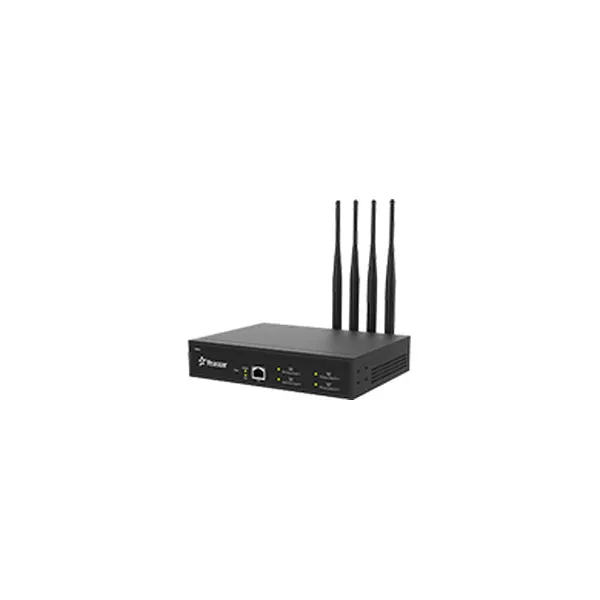
Yeastar TG400 GSM VoIP Gateway in Dubai, UAE
The Yeastar TG400 is a compact four-channel cellular gateway built to connect GSM, 3G, or 4G mobile networks with VoIP systems, IP PBX platforms, SIP trunks, and branch communication setups. It gives business buyers a practical way to route calls between mobile networks and IP telephony, reduce dependence on fixed lines where suitable, support SMS workflows, and add cellular calling flexibility to offices that already use VoIP infrastructure.
✓ SIP & IAX2 Support
✓ Web-Based Management
✓ Quote Assistance
✓ UAE Delivery Guidance
Quick Product Information
| Brand | Yeastar |
| Model | TG400 |
| Product Type | VoIP GSM / Cellular Gateway |
| Suitable For | SMBs, branch offices, service desks, call routing teams, remote sites, and businesses using IP PBX platforms |
| Main Use | Connecting cellular voice networks to VoIP systems for inbound and outbound calling, routing, fallback, and SMS-related functions |
| Channels | 4 ports / 4 cellular channels |
| Protocols | SIP and IAX2 |
| Availability | Contact FourTeck.com for current UAE availability and model confirmation |
| Support | Quote support, compatibility guidance, configuration review, and delivery coordination |
| Buyer Action | Contact FourTeck.com for product assistance |
Best suited for
Businesses that need SIM-based calling integrated with an IP-PBX, SIP server, or VoIP network.
Main buyer benefit
Adds cellular route flexibility for call termination, origination, backup, and mobile-focused communication workflows.
Check before quote
Confirm network type, supported operator bands, antenna placement, SIM policy, and PBX compatibility.
Deployment fit
Works well in offices, remote locations, service operations, and branches needing controlled cellular voice access.
Product Overview
Modern business calling rarely depends on one connection type. Many companies now use hosted PBX platforms, on-premise IP PBX systems, SIP trunks, softphones, desk phones, mobile numbers, and branch networks together. The challenge is not only making calls; the challenge is keeping communication controlled, traceable, flexible, and cost-aware across different routes. A GSM VoIP gateway helps bridge that gap by converting cellular network access into a form that can be managed inside a VoIP environment.
The TG400 gives organizations four cellular channels that can be used for inbound and outbound communication, depending on the selected model, network environment, and PBX design. Businesses can use it to connect mobile network trunks to a SIP-compatible phone system, route calls according to business rules, provide fallback in locations where fixed telephony is limited, or support teams that need mobile-network call paths for customers, field staff, drivers, technicians, sales teams, and service departments.
For UAE buyers, the important point is to choose the correct model and deployment plan rather than buying only by model name. Cellular gateways are affected by mobile network standards, operator support, SIM policies, signal quality, antenna location, firewall settings, PBX routing rules, and business calling requirements. FourTeck.com helps customers review these details before a quote so the final selection is closer to the intended business use. This is especially valuable when a company is migrating from analog or fixed lines to VoIP, expanding a branch office, or adding mobile routes to an existing PBX.
The product is also useful for IT teams that want a manageable device with web configuration, logs, routing rules, and support for common VoIP standards. It is not simply a SIM box; it is part of a communication architecture. When matched correctly with the right PBX, antenna planning, data network, and call policy, it can improve business continuity and reduce manual calling work.
Key Business Benefits
✓ Cellular-to-VoIP flexibility
The gateway helps businesses use mobile network channels from inside an IP telephony environment. This is useful for companies that want calls to move between GSM and VoIP without forcing users to manage separate mobile devices for every workflow.
✓ Better routing control
Call routing rules help IT teams plan how different numbers, departments, or destinations should use available cellular channels. This can support more predictable communication policies and reduce random calling practices.
✓ Useful branch connectivity
For branches and temporary sites where fixed telephony may not be practical, cellular trunks can provide an alternative route for voice traffic when the network environment supports it.
✓ Web-based administration
The web interface makes configuration more approachable for IT teams. Settings, routes, status checks, logs, and gateway behavior can be managed without relying on a complex command-line process.
✓ SMS and USSD functions
SMS sending, receiving, USSD, balance alarm, and API-related tools can support selected business workflows where messaging or account checks are part of the communication process.
✓ Deployment scalability
The TG Series includes multiple channel options, so businesses can discuss whether a four-channel gateway is enough or whether larger alternatives are needed for higher call volume.
Product Highlights
The gateway is built for businesses that want to place cellular communication under PBX control. Instead of treating mobile SIM calling as a separate and unmanaged activity, it allows the communication team to work with routing rules, trunks, and device administration. This can help companies align mobile calling with their wider phone system strategy.
A practical size for small and mid-sized business use where limited mobile routes are needed without moving to a large gateway.
SIP and IAX2 support makes the device suitable for many PBX and softswitch environments when configured correctly.
Inbound and outbound routing, trunk grouping, and call rules help teams align usage with business call flows.
Logs, CDR, status display, packet capture, backup/restore, network settings, and alerts support practical administration.
Buyers should confirm whether they need GSM, 3G, or 4G/LTE capability, which bands are supported in their selected version, and whether the mobile operator’s usage policy allows the intended business scenario. FourTeck.com can help prepare a clearer quote request by reviewing these inputs before procurement.
Technical Specifications
| Specification | Details |
|---|---|
| Brand | Yeastar |
| Model | TG400 |
| Gateway Type | VoIP GSM / 3G / 4G cellular gateway, depending on selected version and module |
| Number of Ports | 4 |
| Protocols | SIP, IAX2 |
| Transport | UDP, TCP, TLS, SRTP |
| Voice Codecs | G.711 a-law/u-law, G.726, G.729A, GSM, ADPCM, Speex; codec availability may depend on firmware/version |
| DTMF Modes | RFC2833, SIP Info, In-band |
| Echo Cancellation | ITU-T G.168 LEC |
| Calling Type | VoIP to cellular termination and cellular to VoIP origination |
| Network Features | DHCP, DDNS, firewall, OpenVPN, static IP, QoS, static route, VLAN, NAT traversal, STUN |
| Management | Web-based configuration, system logs, CDR, packet capture, backup and restore, firmware upgrade by HTTP/TFTP |
| SMS / USSD | SMS sending and receiving, bulk SMS tools, SMS center, USSD, balance alarm, API-related functions |
| Power Supply | AC 100-240V |
| Operating Range | 0°C to 40°C; humidity 10-90% non-condensing |
| Dimensions | 213 × 160 × 44 mm for TG200/TG400 class chassis as published by Yeastar TG Series information |
| Warranty | Warranty terms depend on supplier, region, and invoice; contact FourTeck.com for guidance |
When choosing the correct configuration, begin with the number of simultaneous cellular calls your team needs. A four-channel model is suitable for limited routes, small teams, branch communication, or controlled backup use. It may not be enough for high-volume outbound campaigns, large call centers, or many departments sharing cellular trunks at the same time. Buyers should also review signal quality at the installation point, whether antennas require extension, whether the gateway will sit in a rack or on a desk, and how it will connect to the existing LAN and PBX. If the company has strict security rules, TLS/SRTP, VLAN, firewall, and remote access settings should be discussed with the IT team before deployment.
Configuration and Buyer Guidance
Before requesting a quote, buyers should map the gateway to a real call flow. Ask how many calls should use cellular routes at the same time, which departments will use those routes, whether incoming mobile calls should ring a receptionist, queue, IVR, IP phone, or group, and whether outbound calls should be routed by prefix, department, trunk priority, or least-cost rules. This planning avoids buying a gateway that is either too small for the workload or unnecessarily large for the requirement.
Workload
How many simultaneous calls are required, and is the gateway for daily calling, backup, testing, or branch connectivity?
Compatibility
Which PBX, SIP server, firewall, VLAN, and IP phone environment will connect to the gateway?
Network
Which operator and mobile bands are needed, and is signal quality strong at the proposed installation area?
Accessories
Will the project require antennas, SIM planning, cabling, rack shelf, UPS protection, or PBX configuration support?
When contacting FourTeck.com, share the current PBX model, number of SIM channels needed, call volume estimate, office location, preferred network type, required accessories, and whether installation support is expected. These details help the sales team guide the quote more accurately.
Ideal Business Use Cases
Mobile trunking for office PBX
Businesses can connect cellular routes to a SIP-based phone system so users can make or receive selected calls through the PBX instead of individual mobile handsets.
Branch or temporary site calling
A branch office, warehouse, construction office, or remote service point may use cellular connectivity when fixed telephony is limited or not the preferred route.
Backup communication route
When planned correctly, cellular channels can provide an alternate calling path for key users or departments if primary telephony services are unavailable.
SMS-related workflows
Selected teams may need SMS sending, receiving, USSD checks, or API-based messaging functions for customer notifications, internal alerts, or operational follow-up.
Service and field teams
Companies coordinating drivers, technicians, field sales staff, or mobile customers can use controlled mobile routes from the central phone system.
PBX migration projects
During migration from legacy telephony to IP-based calling, a cellular gateway can help bridge old calling habits with a more manageable VoIP system design.
Yeastar TG400 GSM VoIP Gateway Cellular Trunking
Cellular trunking is one of the main reasons businesses evaluate this gateway. Instead of allowing every team member to use a personal or separate company mobile line independently, the gateway can present cellular channels to the IP PBX. The phone system can then apply routing rules, user permissions, destination plans, and trunk selection. This creates a more organized approach to mobile calling, especially for departments that frequently call mobile numbers.
The practical benefit is control. An administrator can decide which routes should use cellular channels, whether calls should fail over to another route, how incoming calls should be distributed, and how call records should be reviewed. For a small business, this may mean centralizing calls that were previously spread across several handsets. For a larger branch, it may mean adding a limited number of mobile trunks for a specific department or location.
However, cellular trunking must be planned carefully. Network signal strength, SIM usage policies, operator rules, antenna placement, and call volume can all affect the final user experience. A gateway is not a replacement for proper telecom planning, but it can be a valuable component when the business requirement is clear. FourTeck.com can help buyers prepare the right questions before purchasing.
Yeastar TG400 Routing, SMS, and Management Tools
A gateway used in business communication should be manageable, not just connected. The TG400 includes administration features that help IT teams configure routes, review call status, maintain system logs, use call detail records, back up configuration, restore settings, and update firmware through supported methods. These tools are helpful for day-to-day control and for troubleshooting during setup.
Routing features are important because different calls may need different behavior. Some outgoing calls may use a specific SIM channel, while others may follow a VoIP trunk. Incoming cellular calls may need to reach a receptionist, an extension, an IVR, or a hunt group. Without good routing design, the gateway may work technically but fail to match the business process. That is why the quote discussion should include call flow details, not just the model name.
SMS and USSD functions can also matter for selected users. Businesses may need to check SIM balance, send operational messages, receive notifications, or integrate basic SMS functions into a wider workflow. The actual use should be aligned with operator terms and business policy. FourTeck.com can guide buyers on what to confirm before committing to a configuration.
Yeastar TG400 Deployment Planning and Compatibility
Compatibility planning is one of the most important parts of a successful gateway deployment. The device must work with the PBX, SIP settings, firewall rules, LAN design, voice codecs, numbering plan, and the mobile operator environment. A small change, such as the wrong band support, weak signal, incorrect SIP registration method, blocked ports, or mismatched route rule, can create poor call quality or failed calls.
Buyers should identify the phone system platform before requesting a quote. Is it an on-premise PBX, a hosted system, a SIP server, a softswitch, or a hybrid setup? Does the IT team need peer mode, SIP registration, trunk grouping, VLAN separation, QoS, or secure transport? Will the gateway be installed near a network cabinet, inside a telecom room, or in a location where antenna reception is better? These questions affect both product choice and accessory planning.
A properly planned installation also considers power continuity. Since the gateway may be part of the company’s calling path, connecting it to suitable network power protection may be sensible for critical sites. FourTeck.com can help buyers consider related products such as UPS units, IP PBX systems, PoE switches, routers, firewalls, and structured cabling where the gateway is part of a wider project.
What Buyers Should Check Before Purchase
Business buyers often search for a gateway by model name, but the model name alone does not confirm whether the device will be correct for the intended environment. Before requesting a quote, review the mobile network requirement, number of simultaneous channels, call routing design, existing PBX platform, security settings, and installation location. A four-channel gateway is a strong fit for many small and mid-sized communication needs, but it should still be sized against real call volume.
Correct Model Selection
Confirm whether four cellular channels are enough or whether a larger TG Series model should be considered for higher traffic.
Operator and Band Support
Check the selected module, supported network bands, SIM policy, and reception quality before finalizing the order.
PBX Integration
Share your PBX model, SIP settings, routing requirements, and desired incoming/outgoing call behavior for better guidance.
Accessories and Environment
Confirm antenna needs, cabling, rack placement, UPS protection, firewall access, and LAN availability.
The best quote request includes the expected number of users, number of SIMs, call direction, office location, network provider, PBX type, and whether configuration support is required. FourTeck.com uses these details to support a more practical procurement conversation and to help reduce the chance of choosing a gateway that does not match the actual business requirement.
UAE Availability and Service Support
FourTeck.com supports product inquiries across Dubai and the UAE with assistance for product selection, configuration review, quote requests, delivery coordination, and warranty guidance. Availability may vary based on selected model, cellular module, supplier status, order quantity, and accessory requirements. For communication projects, it is especially important to confirm compatibility before ordering because gateway performance depends on both the device and the surrounding network environment.
Customers can contact FourTeck.com with their current phone system details, desired use case, number of SIM channels, operator preference, expected call volume, and delivery location. The team can help review whether the TG400 is suitable or whether a related TG Series gateway, IP PBX, switch, firewall, or UPS product should be considered as part of the complete setup. No visible price or stock claim is shown here because current availability and final quotation depend on market status and customer requirement.
Dubai, Abu Dhabi, Sharjah, and Ajman Coverage
Businesses in Dubai, Abu Dhabi, Sharjah, Ajman, and other UAE locations can contact FourTeck.com for gateway availability, configuration guidance, and quote assistance. The team can help buyers review suitable models, related options, delivery requirements, and project supply needs based on the communication environment. For multi-site organizations, it is helpful to mention whether the gateway will be deployed in one office or distributed across multiple branches, because SIM planning, routing design, and support expectations may differ by site.
GCC and Africa Availability
FourTeck.com also supports business technology inquiries across selected GCC and Africa markets through regional inquiry channels. Customers from Saudi Arabia, Qatar, Oman, Kuwait, Bahrain, Kenya, Uganda, and other Africa region locations can request product guidance, but availability, delivery options, cellular band support, warranty handling, and configuration support may vary by country, selected product version, and supplier status. For regional requirements, customers should provide country, delivery location, operator network, expected quantity, and required accessories before quotation.
Related Models and Solutions Buyers May Consider
Gateway projects often involve more than one device. Some customers need fewer channels, some require higher capacity, and others need a complete PBX, switching, firewall, or power protection setup. The following related options help buyers compare nearby requirements before deciding.
Yeastar TG200 Gateway
A smaller TG Series option for limited cellular channel requirements.
Yeastar P-Series PBX
Suitable for businesses building or upgrading a managed phone system.
Business Network Switches
Useful when deploying IP phones, gateways, PBX appliances, and LAN voice services.
Firewall and Router Solutions
Important for secure SIP traffic, remote access, VLANs, and network policy control.
UPS Power Protection
Recommended for communication devices that should remain online during power interruptions.
Why Buyers Choose FourTeck.com
FourTeck.com focuses on helping business buyers make practical IT and communication product decisions. For a gateway purchase, the right support is not only about sending a price; it is about understanding the PBX environment, channel requirement, operator dependency, installation location, accessory need, and warranty expectation. This guidance helps procurement teams and IT managers reduce the risk of ordering a device that does not match the call flow or network design.
Assistance for SMB, enterprise, reseller, and project procurement inquiries.
Support for channel sizing, compatibility checks, and deployment planning.
Help with preparing a clearer request based on product version, quantity, and delivery need.
Guidance on IP PBX systems, switches, firewalls, UPS units, and accessories where required.
Frequently Asked Questions
What is the Yeastar TG400 used for?
It is used to connect cellular network channels with VoIP or IP PBX systems. Businesses can use it for mobile trunking, inbound and outbound routing, cellular backup paths, branch calling, and selected SMS-related workflows. The exact use depends on the PBX design, operator support, and configuration.
Is it available in Dubai or the UAE?
FourTeck.com can assist with availability checks and quotation support for UAE buyers. Current availability may vary by supplier status, cellular module type, quantity, warranty terms, and accessory requirement. Contact the sales team with your deployment details for accurate guidance.
Can FourTeck.com help with configuration?
Yes. FourTeck.com can help buyers review channel needs, PBX compatibility, routing expectations, mobile network requirements, antenna planning, and related accessories before quotation. This support is useful when the gateway is part of a wider phone system or branch communication project.
How many channels does the TG400 provide?
The TG400 is listed in the TG Series as a four-port model. Buyers should still confirm the selected version, network type, and module support because cellular gateway options may vary by market and operator compatibility.
Does it support SIP?
Yes. The TG Series supports SIP and IAX2 protocols, making it suitable for many IP PBX and softswitch environments when configured correctly. Buyers should confirm PBX settings, firewall rules, codecs, and routing methods before deployment.
What should I share before requesting a quote?
Share your PBX model, number of required SIM channels, preferred operator, call direction, estimated call volume, delivery location, accessory needs, and whether configuration support is required. These details help FourTeck.com prepare a more useful response.
Is this suitable for high-volume call centers?
It depends on call volume. A four-channel gateway may suit smaller call flows or selected departments, but larger call centers may need more channels or a different architecture. FourTeck.com can help compare TG Series options based on expected simultaneous calls.
Do I need extra antennas or accessories?
Accessory needs depend on installation location, signal strength, cabinet placement, and network design. Some deployments may need antenna planning, Ethernet cabling, rack shelf, UPS protection, or PBX setup support. Confirm these requirements before purchase.
Can businesses request bulk supply?
Yes, businesses can request quotations for single units, project quantities, or multi-site requirements. Bulk or project inquiries should include quantity, delivery location, deployment schedule, and whether related PBX, networking, UPS, or configuration services are required.
Need Help Choosing the Right Gateway?
FourTeck.com can help you review product availability, cellular channel requirements, PBX compatibility, warranty guidance, accessory needs, and delivery requirements for your business location.
Reviews
There are no reviews yet.