
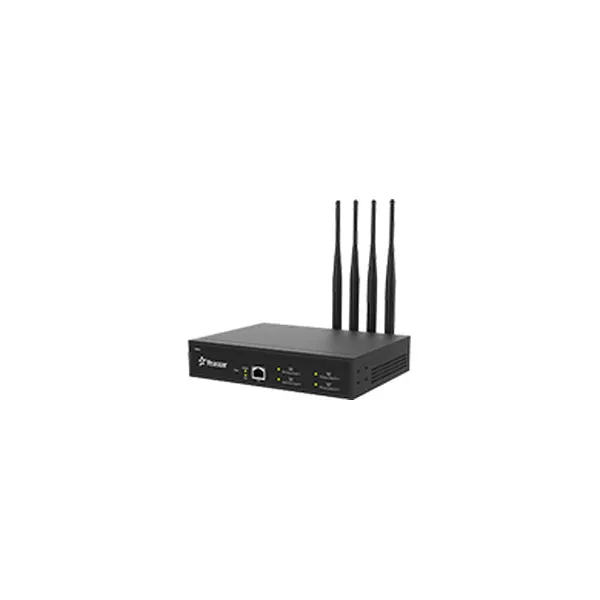
Yeastar TG400L LTE VoIP Gateway in Dubai, UAE
The Yeastar TG400L LTE VoIP Gateway helps businesses connect mobile LTE calling routes with IP-based telephone systems, SIP trunks, call routing platforms, and branch communication environments. It is designed for companies that need four mobile channels, controlled inbound and outbound call routing, LTE-to-VoIP bridging, and a dependable alternative when fixed-line options are not practical. FourTeck.com supports Dubai business buyers with product selection, compatibility review, quote assistance, and UAE delivery coordination guidance.
✓ SIP and IAX2 Support
✓ Web-Based Management
✓ UAE Quote Assistance
✓ PBX Compatibility Guidance
Quick Product Information
Buyer Snapshot and Decision Summary
Busy procurement teams usually evaluate this gateway for one of three reasons: they need mobile lines connected to an IP-PBX, they want a backup path when fixed voice services are limited, or they require a structured way to manage multiple SIM-based calling routes. Before requesting a quote, confirm the number of concurrent mobile channels, PBX brand, SIP settings, preferred operator, SIM plan type, and whether SMS/USSD functions are required. The TG400L is not simply a small networking box; it is part of the business voice path, so compatibility and routing design matter.
Product Overview
The Yeastar TG400L LTE VoIP Gateway is built for organizations that want to bridge mobile LTE networks and VoIP-based telephone systems without replacing their entire communications setup. In a typical business environment, an IP-PBX or SIP platform handles extensions, routing, voicemail, IVR, and internal calling. The gateway adds mobile network channels so the business can place or receive calls over SIM-based LTE lines, depending on the call plan and local operator compatibility. This makes it useful for companies that make many mobile calls, operate in locations where fixed voice connectivity is limited, need a fallback voice route, or want a dedicated mobile connection for specific teams.
For UAE buyers, the practical value is not only the hardware specification. The correct result depends on the selected module, supported LTE bands, mobile network operator, SIM policy, call volume, PBX configuration, and the way the gateway is integrated into the existing voice system. A retail shop may need reliable outbound mobile calling for customer confirmations. A logistics team may need controlled mobile routes for drivers and dispatch. A small office may need mobile trunks where traditional lines are slow to install. A branch site may need a secondary communication path for continuity.
FourTeck.com helps business buyers treat this product as part of a communication design rather than a simple box purchase. The team can help review required channels, preferred call flow, gateway placement, cabling, PBX integration, and whether related products such as Yeastar PBX systems, IP phones, network switches, or rack accessories should be quoted together. This approach is especially useful for procurement teams that need clear technical details before submitting a purchase request or asking finance for approval.
Key Business Benefits
◆ Four Mobile Channels
Four LTE channels help businesses route multiple mobile calls through an IP-based phone environment. This is useful where teams need more than one SIM path without handling separate handsets or disconnected calling records.
◆ VoIP and Mobile Bridge
The gateway links mobile network calling with VoIP systems so businesses can keep extension-based workflows while adding SIM-based routes for selected inbound and outbound calls.
◆ Fallback Communication Path
When fixed lines, SIP trunks, or primary internet services are unavailable, a properly designed LTE voice route may help maintain essential calling. Buyers should still plan redundancy carefully with their PBX and network design.
◆ Web-Based Administration
Web management helps IT teams configure routes, check status, review logs, adjust SIM-related settings, and manage gateway behavior from a browser-based interface.
◆ SMS and USSD Handling
SMS sending, receiving, and USSD functions may support operational tasks such as SIM balance checks, notification workflows, or simple campaign-style messaging where permitted by operator policy.
◆ Cost Control Planning
Mobile trunks can be matched to specific call patterns and SIM plans. The benefit depends on call volume, destination mix, operator terms, and the business routing policy, so planning before purchase is important.
Product Highlights
The gateway is designed for direct two-way communication between mobile networks and VoIP environments. It supports SIP and IAX2, common audio codecs used in business VoIP deployments, call routing features, incoming and outgoing route control, call status monitoring, and gateway administration through a web interface. The TG family is also known for functions such as SMS sending and receiving, USSD, PIN management, logs, packet capture, firmware upgrade options, IP blocklist, and network alert functions. Actual feature availability and behavior can depend on firmware version, regional module, network settings, and operator restrictions.
From a buyer perspective, the key highlight is deployment flexibility. The product can be used with a compatible IP-PBX, softswitch, or selected SIP environment where mobile trunking is required. Businesses can create routing rules for different call types, separate mobile routes for departments, use SIM-based lines where fixed telecom options are constrained, or add emergency voice continuity planning. The four-channel format sits between smaller two-port options and larger multi-port gateways, making it a practical mid-range choice for small and medium-sized operations.
Technical Specifications
Configuration and Buyer Guidance
Choosing the correct gateway configuration requires more than selecting the model number. Buyers should first decide whether the gateway will be used as a main calling route, a backup route, a department-specific mobile route, or a temporary site communication option. The number of active channels should match the number of simultaneous mobile calls expected during peak periods. A four-port gateway may be suitable when several team members need concurrent mobile calling but the project does not require the scale of an eight-port or sixteen-port gateway.
When contacting FourTeck.com, share the location, number of SIM cards, desired operator, PBX model, number of extensions, intended call flow, whether SMS is needed, and whether the gateway should be included with IP phones or PBX hardware. This helps the quotation process move faster and reduces the risk of choosing a product that does not match the actual business requirement.
Ideal Business Use Cases
Office Mobile Trunking
Companies that make regular mobile calls can route selected outbound traffic through SIM-based channels while keeping IP-PBX extension control and call routing policies.
Branch Voice Continuity
Branches with limited fixed-line availability can use LTE voice connectivity as part of a communication continuity plan, especially for essential calling paths.
Retail and Service Teams
Retailers, appointment desks, and service teams can use mobile routes for customer confirmations, delivery calls, or department numbers connected to the phone system.
Hospitality and Facility Operations
Hotels, facility managers, and site teams can route selected calls through mobile networks where they need controlled access from the PBX environment.
Temporary or Project Sites
Project offices and temporary sites can use LTE calling where fixed telecom installation is not practical within the required timeline.
SMS-Enabled Operations
Where permitted, SMS and USSD features may support simple operational messages, SIM balance checks, or system-linked messaging workflows.
Yeastar TG400L LTE Trunking Performance
The main performance benefit of this gateway is its ability to provide four mobile voice channels inside a structured VoIP environment. Instead of using individual mobile phones for business calls, the company can bring SIM-based channels into the PBX route plan. That means calls can be controlled through extensions, groups, IVR logic, or outbound rules depending on the PBX design. Performance should be evaluated by channel concurrency, operator signal quality, antenna placement, codec selection, and call route design rather than by hardware specification alone.
For a business with frequent mobile calls, correct trunk planning can improve call handling consistency. For a branch office, it can provide a practical route when fixed voice services are delayed. For a support desk, it can allow mobile numbers to be integrated into a more professional call flow. FourTeck.com can help buyers list these call scenarios before quoting so the selected gateway, SIM plan, PBX settings, and accessories are aligned with the intended deployment.
Yeastar TG400L PBX Integration and Routing Control
A gateway used for business calling must fit the existing voice environment. The TG400L can be used with compatible IP-PBX and SIP platforms to route calls between VoIP extensions and mobile networks. Buyers should confirm whether their PBX supports the needed trunk type, registration method, codec, DTMF mode, caller ID handling, and failover behavior. The route plan should also define which extensions can use mobile routes, whether specific numbers should be routed through a particular SIM, and how inbound mobile calls should reach reception, departments, IVR menus, or individual extensions.
Good routing design avoids confusion after installation. For example, management may want executive mobile routes separate from customer service calls. A logistics team may require specific outbound routes for driver communication. A branch may require emergency call routing when its primary trunk is unavailable. These details are easier to configure when gathered before purchase. FourTeck.com can help buyers prepare a clear requirement note for quotation and technical review.
Yeastar TG400L Management, SMS, and Operational Visibility
Management features are important because a mobile gateway may need periodic SIM checks, call route adjustments, troubleshooting, and operator-related review. Web-based administration helps IT teams access configuration pages, view status, manage call rules, review logs, and perform maintenance tasks. Features such as SMS, USSD, SIM-related settings, balance alarms, packet capture, backup and restore, and firmware updates can be valuable for companies that want better operational control over the gateway.
SMS and USSD features should be planned carefully. They may be useful for operational messaging, SIM maintenance, or integration with permitted business workflows, but they are also affected by operator policy, local regulations, and SIM plan limits. Businesses should not treat bulk messaging as an unlimited function without checking permitted use. For a stable deployment, buyers should also plan physical placement, signal quality, power protection, secure access passwords, and regular configuration backups.
What Buyers Should Check Before Purchase
Before requesting a quote, buyers should confirm the exact deployment purpose. A mobile gateway used as a cost-control route may need a different SIM plan than a gateway used for backup calling. A gateway used for inbound customer numbers may require careful caller ID handling, route grouping, and failover behavior. A gateway used at a project site may need better antenna planning and power backup. The correct choice depends on call volume, mobile operator coverage, PBX compatibility, security settings, and future expansion expectations.
Buyers should also compare the TG400L with smaller and larger Yeastar TG models. A two-port model may be sufficient for light usage, while an eight-port or sixteen-port model may be better for higher concurrency. The four-port format is useful when the business expects several simultaneous mobile calls but does not want to overbuy. Confirm whether VoLTE support, LTE band compatibility, SIM size, antenna accessories, country operator support, and warranty terms meet the requirement. If the gateway will sit in a telecom room, check LAN cabling, rack shelf, UPS protection, temperature, and remote management access.
Configuration Fit
Confirm the number of channels, call routes, codecs, SIM plans, and whether the gateway is for primary, backup, or department-specific use.
Compatibility Check
Share PBX model, SIP trunk method, network design, firewall rules, VLAN plan, and preferred mobile operator before quotation.
Availability and Warranty
Availability and warranty conditions depend on sourcing channel, selected module, country use, and invoice terms. Confirm current options with FourTeck.com.
Quote Preparation
Provide deployment location, SIM count, mobile operator, PBX brand, expected call volume, SMS needs, and accessory requirements.
UAE Availability and Service Support
FourTeck.com supports product inquiries across Dubai and the UAE with assistance for product selection, configuration review, quote requests, delivery coordination, and warranty guidance. Availability may vary based on selected model, module type, supplier status, order quantity, and the mobile band requirements for the deployment country. For this reason, business buyers should request a current quotation rather than relying only on old listing information or generic product pages.
When asking for availability, include the PBX brand, required number of channels, preferred operator, whether VoLTE is required, whether SMS functions are needed, and whether the gateway is part of a new installation or a replacement. FourTeck.com can also help identify related items such as compatible IP phones, Yeastar PBX systems, network switches, UPS protection, and patch cabling that may be needed for a complete deployment.
Dubai, Abu Dhabi, Sharjah, and Ajman Coverage
Businesses in Dubai, Abu Dhabi, Sharjah, Ajman, and other UAE locations can contact FourTeck.com for Yeastar gateway availability, configuration guidance, and quote assistance. The team can help buyers review suitable models, related phone system options, and purchase requirements based on business needs. Delivery coordination and warranty handling depend on the final product source, supplier terms, and customer location, so details should be confirmed during the quotation process.
GCC and Africa Availability
FourTeck.com also supports business technology inquiries across selected GCC and Africa markets through its regional inquiry channels. Buyers in Saudi Arabia, Qatar, Oman, Kuwait, Bahrain, Kenya, Uganda, and other Africa region markets can request product guidance, availability checking, and quotation support. Actual delivery options, warranty handling, LTE band suitability, and supplier availability may vary by country and selected product configuration.
For regional projects, buyers should confirm the country of use before selecting an LTE gateway because mobile band compatibility and operator behavior are not identical in every market. Useful regional links include FourTeck.com, FourTeck Kenya, FourTeck Uganda, FourTeck Africa, and FourTeck Kuwait.
Related Models and Solutions Buyers May Consider
Some buyers only need a four-port LTE gateway, while others may need a complete voice solution. The related options below help procurement teams compare the gateway with smaller or larger capacity needs and plan surrounding infrastructure.
Yeastar TG200 LTE Gateway
Suitable for lighter mobile trunking requirements with fewer simultaneous channels.
Yeastar TG800 Gateway
A higher-channel option for teams needing more mobile call concurrency.
Yeastar P-Series PBX
Consider a PBX platform when the gateway is part of a complete phone system project.
Business IP Phones
IP phones may be required when expanding extensions or replacing legacy handsets.
Network Switches
Switches, VLAN planning, and cabling may be needed for reliable voice network design.
UPS Protection
A small UPS can help protect PBX, gateway, and networking hardware during power disruption.
Why Buyers Choose FourTeck.com
FourTeck.com helps business buyers move from product name to practical purchase decision. Many communication products look simple on a quote, but the wrong gateway, unsupported mobile band, insufficient channel count, missing accessories, or unclear PBX settings can create project delays. FourTeck.com focuses on requirement clarity so buyers can request the right model, compare suitable alternatives, and understand the supporting items that may be required for deployment.
Frequently Asked Questions
What is this gateway used for?
It is used to connect LTE mobile voice channels with VoIP systems such as compatible IP-PBX platforms. Businesses can route inbound and outbound calls between mobile networks and office extensions, allowing SIM-based calling to become part of a controlled business phone environment.
Is it suitable for small and medium businesses?
Yes, it can be suitable for small and medium businesses that need up to four mobile channels for calling, backup communication, or branch voice connectivity. The final choice depends on simultaneous call volume, operator support, PBX compatibility, and whether more channels may be required later.
Can FourTeck.com help with configuration guidance?
FourTeck.com can help buyers review configuration requirements before quotation. Share your PBX model, number of SIM cards, preferred operator, expected call flow, deployment location, and SMS needs so the team can guide you toward the right product and related accessories.
Does LTE band support matter?
Yes. LTE band support, module type, VoLTE behavior, and operator compatibility are important. Buyers should confirm the country of use and mobile operator before purchase. A gateway that works well in one market may require different module confirmation for another market.
Can it be used as a backup when fixed lines fail?
It may be used as part of a backup voice route when properly integrated with the PBX and network. Buyers should design failover rules carefully, test call routing, protect the gateway with UPS power, and verify mobile coverage at the installation location.
Does it support SMS functions?
The TG series supports SMS-related features such as sending, receiving, SMS center, and bulk SMS functions. However, actual use depends on firmware, operator policy, SIM plan, and local communication rules. Buyers should confirm intended SMS use during quotation.
What information should I provide for a quote?
Provide the product model, number of required channels, business location, preferred mobile operator, PBX brand, expected call volume, VoLTE requirement, SMS requirement, warranty expectation, and whether related IP phones, switches, cabling, or UPS protection are needed.
Is the product always available in the UAE?
Availability can change based on supplier status, selected module, order quantity, and current sourcing conditions. FourTeck.com can check current options and provide quotation guidance, but no fixed stock claim should be assumed until confirmed in the quotation process.
Should I choose TG400L or a larger model?
Choose based on simultaneous mobile calls. If four channels are enough, the TG400L may be practical. If the business expects heavier concurrency, several departments, or growth in mobile routing, ask FourTeck.com to compare higher-channel TG models before purchase.
Need Help Choosing the Right LTE VoIP Gateway?
FourTeck.com can help you review product availability, LTE module considerations, PBX compatibility, warranty guidance, and delivery requirements for your business location. Share your call routing requirement and deployment details to receive practical quote assistance.
Reviews
There are no reviews yet.