

Quick product summary
Up to 2592×1944, 5MP
4.0mm fixed, F1.6
H 80° / V 59° / D 102°
IR up to 30m
Person / vehicle classification
PoE IEEE 802.3af Class 3
Product overview and buyer fit
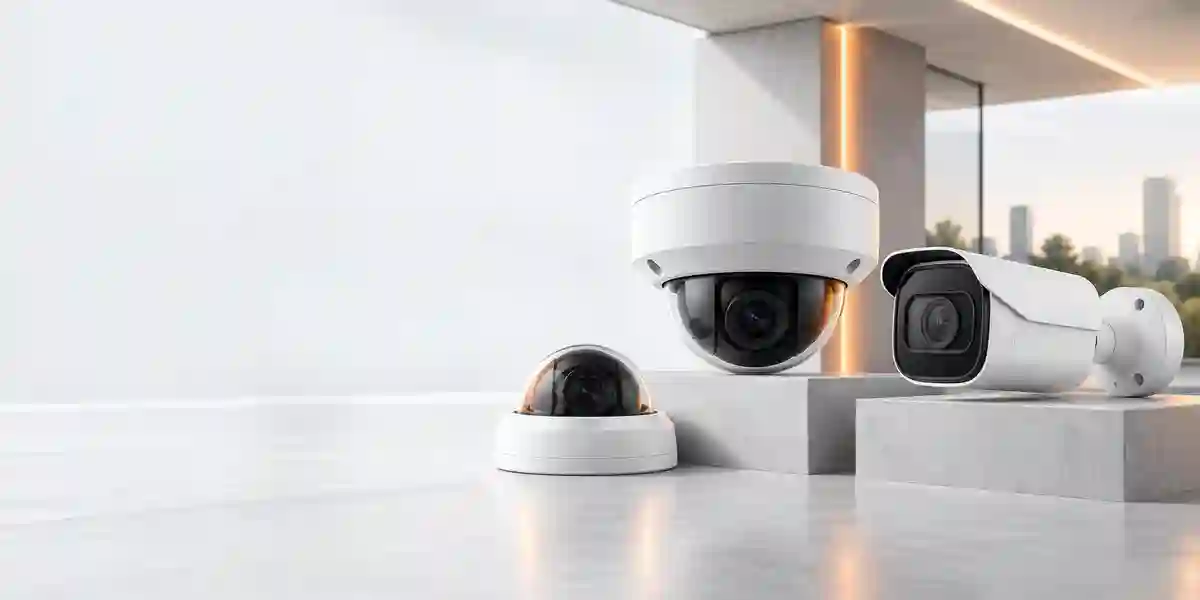
The Hanwha Vision QND-C8023R is an indoor dome network camera for sites that want stronger video detail and smarter event filtering without moving into a large motorised or multi-sensor platform. Its 1/2.8-inch CMOS sensor delivers up to 5MP video and supports H.265, H.264 and MJPEG. The fixed 4mm lens provides an 80-degree horizontal field of view, making it well suited to corridors, entrances, reception spaces, office floors, retail aisles, lobbies and defined indoor zones where the required scene is known before installation.
The camera’s AI engine classifies people and vehicles and supports events including object detection, virtual line crossing or direction, virtual-area loitering, intrusion, enter and exit. This helps a monitoring team focus on relevant activity rather than relying only on basic motion. Business-intelligence functions include people counting, queue management, heatmap and vehicle counting. Actual results depend on mounting height, viewing angle, lighting, scene complexity and configuration, so analytics should be commissioned against the real site rather than treated as a substitute for good camera placement.
The QND-C8023R is designed for indoor use. Buyers who need outdoor exposure or vandal resistance should consider an outdoor-rated Hanwha Q-series variant rather than placing this indoor dome in an unsuitable location. FourTeck can help compare the indoor QND form factor with vandal-dome or bullet alternatives based on weather exposure, physical access, required field of view and mounting position.
Key features and business benefits
5MP detail at up to 30fps
Higher-than-Full-HD resolution gives security teams more scene detail for live viewing and recorded review, while 30fps support can help in locations where smoother movement capture is important.
AI-assisted event filtering
Person and vehicle classification can reduce the number of irrelevant motion events reaching operators and can support more useful search and event rules in compatible systems.
30m infrared illumination
Built-in IR supports surveillance in low-light indoor areas and after-hours spaces. Real usable distance varies with scene reflectivity, mounting and environmental conditions.
120dB WDR
Wide Dynamic Range helps retain detail in scenes with strong contrast, such as entrances with bright daylight behind a person entering from outside.
WiseStream III and WiseNR II
Hanwha’s AI-assisted compression and noise-reduction functions can help manage bandwidth and storage while maintaining useful video quality when correctly configured.
PoE and edge storage
A single Ethernet run can carry network and power through compatible PoE infrastructure. One microSD slot supports local edge recording, with standard edge storage listed up to 256GB.
Verified technical specifications
| Specification | Hanwha QND-C8023R |
|---|---|
| Camera type | 5MP AI IR indoor network dome |
| Sensor | 1/2.8-inch CMOS |
| Maximum resolution | 2592×1944 |
| Frame rate | H.265/H.264 up to 30fps/25fps for 60Hz/50Hz |
| Lens | 4.0mm fixed, F1.6, M12 |
| Field of view | Horizontal 80°, vertical 59°, diagonal 102° |
| Minimum illumination | Color 0.05 lux; B/W 0.005 lux at stated manufacturer conditions |
| IR distance | Up to 30m |
| WDR | 120dB |
| Video codecs | H.265, H.264, MJPEG; WiseStream III |
| Audio | Built-in microphone |
| Network | RJ-45 10/100BASE-T, ONVIF profiles S/G/T/M |
| Storage | microSD/SDHC/SDXC, 1 slot, standard edge storage up to 256GB |
| Power | PoE IEEE 802.3af Class 3; max 8.1W, typical 4.0W |
| Operating temperature | -10°C to +45°C |
| Dimensions / weight | Ø110 × 90mm; 317g |
Compatibility, configuration and deployment guidance
The QND-C8023R supports ONVIF profiles S, G, T and M as well as Hanwha SUNAPI and Open Platform capabilities. ONVIF support can make integration with compatible third-party video-management systems easier, but compatibility should still be verified at the exact firmware, recorder and feature level. A VMS may support live video while exposing a different subset of analytics, metadata, audio, event or edge-recording functions. If a project requires a specific NVR, VMS, cloud service or analytics workflow, confirm that workflow before placing the order.
PoE simplifies cabling, yet the switch design still matters. Count the total PoE budget, uplink bandwidth and resilience for all cameras on a switch. For larger Dubai sites, separate surveillance VLANs, secure management access, network time configuration and documented IP addressing can improve maintainability. Camera passwords, firmware and network access controls should be managed as part of the security design rather than left at generic defaults.
Storage should be sized from resolution, codec, frame rate, scene activity, retention days and recording mode. Edge storage may be useful for local buffering or distributed recording, while an NVR or VMS remains preferable when centralized management, longer retention, multi-camera review or operator workflows are needed. Because the camera uses a fixed 4mm lens, confirm the required viewing width before installation. If the site needs zoom flexibility or very broad coverage, another model may be more appropriate.
Ideal customers and use cases
The Hanwha QND-C8023R is particularly suited to commercial indoor areas where a fixed viewing angle is acceptable and the project benefits from AI-assisted event filtering. Typical examples include corporate offices monitoring reception, corridors and controlled areas; retail stores watching entrances, aisles and service points; clinics and healthcare facilities monitoring public areas subject to applicable privacy requirements; schools and training centres securing indoor circulation zones; hotels covering back-of-house and common areas; banks and financial-service offices monitoring non-sensitive public zones; warehouses using indoor cameras at dispatch or administration areas; and multi-site businesses that want consistent camera configuration across branches.
What to confirm before ordering
- Confirm that the mounting location is indoors and within the stated operating environment.
- Confirm that an 80° horizontal field of view from a 4mm fixed lens suits the target area.
- Check whether the required recorder or VMS supports the desired video, metadata, audio and analytics functions.
- Calculate PoE switch power budget, port count and uplink capacity for the complete camera group.
- Define retention days and recording mode before selecting NVR, server or edge-storage capacity.
- Review privacy requirements, masking, audio-recording rules and local policies for the intended site.
- Confirm optional alarm-I/O cable requirements if physical alarm interfaces are needed.
- Share project quantity, site type and delivery destination with FourTeck for a current quotation and availability check.
Comparison and alternative model guidance
Choose the QND-C8023R when the site is indoor, a fixed 4mm lens is appropriate, 5MP resolution is desired and AI-assisted person/vehicle analytics are useful. If the camera will be exposed to weather, dust or higher risk of physical impact, an outdoor-rated vandal dome or bullet model should be reviewed instead. Hanwha’s QNV-C8023R is a related 5MP AI IR vandal-dome option, while QNO-C8023R is a related 5MP AI IR bullet model with outdoor-rated construction. The right choice should be based on mounting environment, field of view, vandal risk, cable route and installation aesthetics rather than model family alone.
Hanwha QND-C8023R Dubai
Dubai security projects often combine indoor cameras with busy entrances, strong daylight contrast, controlled corridors, reception desks, retail areas and multi-tenant commercial spaces. In these environments, the QND-C8023R can fit projects that need detailed 5MP recording without a large or visually intrusive camera body. The 4mm fixed lens gives an 80-degree horizontal view, which can suit defined areas where the installer already knows the coverage required. For wide lobbies or irregular spaces, the layout should be checked before specifying a fixed-lens camera so that blind spots are not created simply to meet a camera-count target.
A frequent Dubai buying question is whether the camera can handle mixed lighting at glass doors or building entrances. Hanwha lists 120dB WDR, which is useful where a subject can appear against a bright exterior background. For after-hours indoor surveillance, the 30m IR specification provides a strong starting point, while actual night performance depends on room size, wall reflectivity, mounting angle and whether reflective surfaces sit close to the lens. Testing the intended placement remains more useful than relying on the headline IR distance alone.
Dubai organisations also ask about AI analytics, NVR compatibility and storage. The QND-C8023R supports person and vehicle classification, virtual-line and virtual-area events, people counting, queue management, heatmap and vehicle counting. These features are useful for security operations and, in suitable contexts, for operational insight, but their value depends on proper scene design and compatible recording software. FourTeck can help buyers review the camera against an existing Hanwha environment or a third-party VMS before purchase.
For a Dubai quotation, share the number of cameras, floor plans or coverage notes, NVR/VMS preference, retention days, PoE switch details and whether audio or alarm I/O will be used. This allows the discussion to move beyond a camera-only price and toward the complete working surveillance configuration. Current availability, supply route and commercial terms should be confirmed at the time of enquiry through FourTeck Dubai technology solutions or the contact page.
Hanwha QND-C8023R UAE
UAE deployments may involve one office in Dubai or a wider group of branches across Abu Dhabi, Sharjah, Ajman, Ras Al Khaimah, Fujairah and other emirates. For multi-site surveillance, consistency matters as much as individual camera specifications. A common model such as the QND-C8023R can simplify documentation, firmware planning, spare strategy and operator training when the same indoor scene requirements repeat across branches. Its 5MP resolution, PoE connectivity and AI-assisted analytics make it suitable for structured IP-camera designs where central administration is important.
Before standardising on the model, procurement teams should separate indoor and outdoor requirements. The QND version is an indoor dome, so exposed entrances, parking areas, loading bays and external walls require an appropriately rated camera. Likewise, the fixed 4mm lens should be checked against each site type. A branch office corridor, retail entrance and reception lounge may not need the same angle even if they all use dome cameras. Standardisation should reduce complexity without forcing the wrong lens or enclosure into a scene.
UAE buyers commonly compare camera cost, recording capacity, analytics, cybersecurity and compatibility. The QND-C8023R supports H.265/H.264/MJPEG, WiseStream III, HTTPS and secure communication features, 802.1X network authentication and encrypted firmware protections. These features support a more disciplined network-camera deployment, but organisations still need secure credential management, VLAN design, controlled remote access, firmware maintenance and recorder hardening.
For projects across multiple emirates, FourTeck can help consolidate the technical requirement before quotation: camera count by site, required retention, desired event rules, VMS platform, switch capacity, mounting accessories and network readiness. Buyers can also review wider FourTeck UAE technology support for networking, CCTV and infrastructure planning. Pricing, warranty route, stock and delivery schedules remain order-specific and should be confirmed against the final bill of materials.
Hanwha QND-C8023R Kenya
Kenyan organisations evaluating the Hanwha QND-C8023R often need a balance between high-quality indoor surveillance, manageable bandwidth and dependable remote administration. In offices, hospitality properties, education sites, financial-service locations and retail environments, the 5MP resolution provides useful detail while the H.265 and WiseStream III capabilities can help control storage and network demand when configured correctly. Because remote sites may share connectivity with normal business traffic, surveillance bandwidth should be planned rather than left to default settings.
The 4mm fixed lens is best used where the installer can establish the required scene in advance. For an entrance, corridor or defined service area, its 80-degree horizontal field of view can provide focused coverage. Large rooms, broad shop floors or irregular outdoor spaces may require a different lens or camera type. Kenya projects with outdoor mounting should use a weather-rated model; the QND-C8023R itself is intended for indoor use.
AI-assisted person and vehicle classification can be helpful where teams want more meaningful events than generic motion. Virtual-line, intrusion, loitering and enter/exit rules can support security workflows, while people counting and queue-management functions may suit selected customer-service environments. Before relying on these functions, confirm compatible VMS support and test the actual scene, since camera height, angle, crowd density, obstructions and lighting can affect analytics.
Kenyan buyers should also plan power resilience, PoE switching and recording continuity. A PoE camera depends on the network switch and any upstream UPS strategy. For branch or campus deployments, recording architecture may combine central NVR/VMS storage with edge recording. Share required retention days, camera count, available uplinks and whether remote viewing is needed. FourTeck’s Kenya technology support route can be used for localised enquiries, while final product availability and commercial terms should be confirmed before ordering.
Hanwha QND-C8023R Kuwait
Kuwait businesses looking for indoor enterprise CCTV frequently require reliable recording in offices, retail sites, clinics, showrooms, hospitality environments and controlled building interiors. The QND-C8023R addresses this type of requirement with 5MP resolution, 30fps capability, 30m IR, 120dB WDR and AI-assisted analytics in a compact dome form factor. For entrances where bright daylight competes with indoor illumination, WDR can be particularly useful when positioning is planned well.
The main purchasing decision is not simply whether 5MP is enough. Buyers should confirm lens coverage, storage, recorder compatibility and infrastructure. The fixed 4mm lens gives an 80-degree horizontal field, which may work well in corridors, reception areas and defined indoor zones but is less flexible than a varifocal lens. If the viewing distance or width cannot be established before installation, a model with adjustable optics may reduce project risk.
For projects with multiple cameras, PoE switching and storage calculations should be completed before hardware is ordered. The QND-C8023R can operate over standard IEEE 802.3af PoE and has a listed maximum consumption of 8.1W. Switch budgets should include margin, and uplinks should be sized for aggregate camera traffic. Storage calculations should use the intended codec, frame rate, resolution, scene activity and retention days rather than a generic per-camera estimate.
Kuwait customers can also consider how AI events will be handled operationally. Person and vehicle classification, line crossing, intrusion and loitering become valuable only when alerts are mapped to a real response process. If the system integrates with a third-party VMS, confirm metadata and event compatibility. For quotation and project discussion, use the FourTeck Kuwait technology route and provide the proposed camera count, site type, recorder platform, retention requirement and installation conditions.
Hanwha QND-C8023R Ghana
Ghanaian organisations considering the QND-C8023R may be planning surveillance for corporate offices, retail branches, financial-service sites, schools, healthcare facilities, hotels or administrative areas. The camera’s combination of 5MP resolution and AI-assisted events can help teams capture useful evidence while reducing dependence on simple pixel-motion alarms. The 30m IR capability supports indoor after-hours monitoring, and the 120dB WDR specification is relevant at bright entrances and glazed reception areas.
Network design deserves attention in Ghana deployments where sites can vary significantly in available connectivity and power resilience. Because the QND-C8023R uses PoE, the camera can be centrally powered through a compatible switch, which can simplify cabling and UPS planning. However, a PoE design still requires accurate port counts, switch power budget and backup runtime. For remote branches, edge storage can add resilience, while a central NVR or VMS can provide longer retention and unified management.
The camera supports multiple streaming profiles, allowing one profile to be optimised for recording and another for remote viewing where the VMS supports that approach. This can help avoid sending full-quality 5MP streams across limited WAN links for routine monitoring. The design should still preserve the recording quality required for the site’s security objective. Teams should define which views require identification detail, which only need situational awareness and which need analytic event processing.
FourTeck’s Ghana technology support site provides a regional enquiry path for CCTV and broader infrastructure needs. When requesting the QND-C8023R, include the number of cameras, indoor coverage zones, recorder or VMS preference, desired retention, PoE infrastructure and remote-access requirement. This makes it possible to review the complete technical scope rather than quote a camera that may not match the surrounding system.
Hanwha QND-C8023R Uganda
Uganda businesses and institutions can use the QND-C8023R for indoor spaces that need higher-detail IP surveillance with event analytics. Offices, schools, clinics, hotels, retail stores and administrative buildings often have a combination of entrances, corridors and customer-facing areas where a discreet dome form factor is preferable. At up to 5MP and 30fps, the camera offers a useful balance of scene detail and smooth video when the network and storage platform are sized appropriately.
The fixed 4mm lens is an important design point. Buyers should not assume that one dome camera covers every room equally. The 80-degree horizontal angle works well for many defined indoor scenes, but a wide hall, close ceiling placement or long narrow corridor may call for a different optical choice or use of hallway view. A simple floor-plan review before ordering can prevent avoidable blind spots and reduce the need for additional cameras later.
Where power continuity matters, PoE can be integrated with a UPS-backed network switch so cameras and recording connectivity remain powered through brief outages, subject to the UPS design. The camera’s edge storage slot can support local recording, but retention planning should usually be done at the system level. If a project needs several weeks of recording, calculate storage from actual settings and camera count. H.265 and WiseStream III can help manage storage, yet final bitrate depends on motion, detail, frame rate and configuration.
For Uganda project enquiries, the FourTeck Uganda technology desk can be used to discuss CCTV, networking and related infrastructure. Share the exact site type, indoor mounting locations, expected number of cameras, VMS or NVR requirement, retention days and whether AI events such as intrusion or line crossing will be used. Availability, warranty terms and supply timing should be confirmed for the final order rather than assumed from general product information.
Hanwha QND-C8023R Nigeria
Nigeria deployments can range from individual business sites to multi-branch retail, financial, education, hospitality and corporate networks. In these environments, the QND-C8023R offers an indoor 5MP surveillance option with AI-assisted analytics, PoE and edge-storage support. For multi-site systems, using a consistent camera platform can simplify configuration and operator workflows, while each site should still be checked for the correct field of view and environmental rating.
Bandwidth planning is especially important when branch offices are monitored centrally. The QND-C8023R supports H.265/H.264 and multiple streaming profiles, which can help a designer separate high-quality recording from lower-bandwidth live viewing where supported by the VMS. A secure remote-monitoring architecture should avoid exposing cameras directly to the public internet. Use controlled VPN or secure platform access, strong credentials, firmware maintenance and appropriate network segmentation.
The camera’s analytics can classify people and vehicles and trigger line-crossing, intrusion, enter, exit and loitering events. For busy locations, this can provide a more useful alert stream than generic motion detection. However, security teams should decide what happens after an alert: operator review, local response, event bookmark, notification or integration with another system. Analytics are most valuable when tied to a documented operational process.
Nigeria buyers can route enquiries through FourTeck Nigeria technology services. When seeking a quote, state the city, number of indoor cameras, recorder/VMS platform, recording retention, remote-viewing requirements and network conditions. This helps determine whether the QND-C8023R is the correct model and whether outdoor, varifocal or vandal-resistant alternatives are needed elsewhere on the same site. Current availability and commercial terms should be confirmed for the specific project.
Hanwha QND-C8023R Seychelles
Seychelles organisations may deploy indoor surveillance across hotels, resorts, offices, retail spaces, public-facing facilities and operational buildings where a compact dome camera is appropriate. The Hanwha QND-C8023R is designed for protected indoor installation and provides 5MP video, a 4mm fixed lens, 30m infrared illumination and AI-assisted event detection. In hospitality environments, careful placement is important so that security coverage respects guest privacy and applicable policies while still protecting entrances, corridors and operational zones.
Island and remote-site projects should pay close attention to system resilience. The camera itself uses PoE, so a well-designed switch and UPS arrangement can simplify power continuity for multiple cameras. Edge storage can provide an additional recording layer, while a central NVR or VMS can manage longer retention and operator access. Where connectivity between sites is limited, use recording locally and tune remote-viewing profiles so that WAN bandwidth is not consumed unnecessarily.
Environmental conditions should also drive model selection. Although Seychelles has humid and coastal environments, the QND-C8023R is an indoor camera with an operating temperature range listed from -10°C to +45°C. It should not be assumed suitable for exposed exterior locations. Outdoor or marine-adjacent areas require appropriately rated enclosures and mounting hardware, with corrosion and weather exposure considered separately.
For Seychelles enquiries, FourTeck’s Africa technology support route is the recommended regional contact path. Share the site type, island or project location, number of indoor cameras, recording retention, network constraints and required analytics. FourTeck can then review the specification and related infrastructure requirements before quotation. Product availability, logistics and warranty terms depend on the final order and should be confirmed explicitly.
Related FourTeck products and infrastructure
A CCTV project is rarely camera-only. The following verified FourTeck product pages cover supporting security, network or compute infrastructure that may be useful in a wider deployment. Confirm actual interoperability and project fit before purchase.
High-capacity network security platform suited to large sites where surveillance networks are part of a broader segmented enterprise edge.
Edge compute platform that may suit video-processing or distributed infrastructure workloads when configured within the compatible XR4000 architecture.
Face and RFID access-control terminal for projects combining surveillance with managed door entry.
Access-control option that can complement CCTV at staff entrances and controlled doors.
Pedestrian access barrier for reception and controlled-entry projects that may also use cameras for event verification.
A related physical-access product for managed lanes where CCTV and access events form part of one security plan.
Fingerprint time-attendance hardware for businesses integrating security, identity and workforce systems.
Regional FourTeck resources
For broader infrastructure planning, use FourTeck.com for Dubai and regional solutions, FourTeck UAE, FourTeck Kenya, FourTeck Kuwait, FourTeck Ghana, FourTeck Uganda, FourTeck Nigeria and FourTeck Africa. These regional routes help customers frame CCTV requirements alongside networking, servers, security and deployment services where applicable.
Why contact FourTeck for the QND-C8023R
A correct CCTV quotation depends on more than model number and quantity. FourTeck can help buyers review camera suitability, field of view, indoor or outdoor placement, recording architecture, retention, PoE capacity, network design, compatible access-control or server infrastructure and deployment scope before a commercial proposal is finalised. This approach is particularly useful when an organisation is replacing an older system, expanding to additional branches or integrating cameras with an existing VMS.
No fixed price, stock position, delivery time, authorisation status or warranty term is assumed on this page. These items should be checked against the exact supply channel and approved order at the time of purchase.
Hanwha QND-C8023R FAQs
Is the Hanwha QND-C8023R a 5MP camera?
Yes. Hanwha lists the QND-C8023R as a 5MP AI IR indoor dome camera with a maximum resolution of 2592×1944. It can deliver up to 30fps in H.265 or H.264 under the stated 60Hz mode. Recording quality and storage consumption depend on the selected resolution, frame rate, codec, bitrate and scene activity.
What lens does the QND-C8023R use?
It uses a 4.0mm fixed lens with an F1.6 aperture. Hanwha specifies an 80° horizontal, 59° vertical and 102° diagonal field of view. Because the lens is fixed, confirm the viewing width and target distance before installation rather than assuming the camera can be optically adjusted later.
How far can the infrared illumination reach?
Hanwha specifies an IR viewable length of up to 30 metres. Real usable performance varies with surfaces, room geometry, mounting angle and scene reflectivity. For critical night coverage, the planned location should be tested or reviewed against the required identification distance.
Does the QND-C8023R support AI analytics?
Yes. The camera can classify people and vehicles and supports AI-based object detection, virtual-line crossing or direction, and virtual-area events including loitering, intrusion, enter and exit. It also supports business-intelligence functions such as people counting, queue management, heatmap and vehicle counting. Feature availability in a VMS should be confirmed.
Can the camera be powered by PoE?
Yes. The QND-C8023R supports IEEE 802.3af Class 3 Power over Ethernet. Hanwha lists a maximum PoE consumption of 8.1W and typical consumption of 4.0W. Size the PoE switch with adequate total power budget and spare capacity for the complete surveillance system.
Does it support microSD recording?
Yes. The camera includes one microSD/SDHC/SDXC slot, with standard edge storage listed up to 256GB. Edge storage can support local recording or resilience, but the correct capacity depends on recording settings and retention. Larger projects usually need an NVR, VMS server or other central recording architecture.
Is the QND-C8023R suitable for outdoor use?
It is described by Hanwha as an indoor dome camera. Do not assume it is suitable for exposed outdoor locations. For exterior mounting, weather exposure or higher vandal resistance, review an appropriately rated Hanwha model such as a compatible vandal dome or bullet alternative.
Does it support ONVIF?
Yes. Hanwha lists ONVIF profiles S, G, T and M. This supports interoperability with compatible third-party systems, but specific analytics, metadata, audio and event functions can vary by VMS and firmware. Confirm the exact integration required before standardising on a recorder or management platform.
What should Dubai buyers provide for a quote?
Provide the required quantity, indoor mounting areas, coverage objectives, preferred NVR or VMS, retention period, PoE switch information and any analytics or audio requirements. A site plan or simple camera-location list can make model validation more accurate. Current price, availability, warranty route and delivery terms should then be confirmed for the final bill of materials.
Can the QND-C8023R be used for corridors?
Yes, depending on the corridor geometry. The camera supports Hallway View with 90°/270° video rotation, which can make better use of pixels in vertically oriented scenes. Mounting height and required identification distance should still be checked, especially where a long corridor may benefit from different optics.
Plan your Hanwha QND-C8023R deployment
Share your camera quantity, indoor coverage zones, recording platform, retention period and deployment location. FourTeck can help review whether the QND-C8023R is the right indoor camera and identify any outdoor, varifocal, recorder, PoE or storage requirements that should be included in the same project scope.
Reviews
There are no reviews yet.